





 Portuguese
  English
  Spanish
  3 min of reading
  12 comments


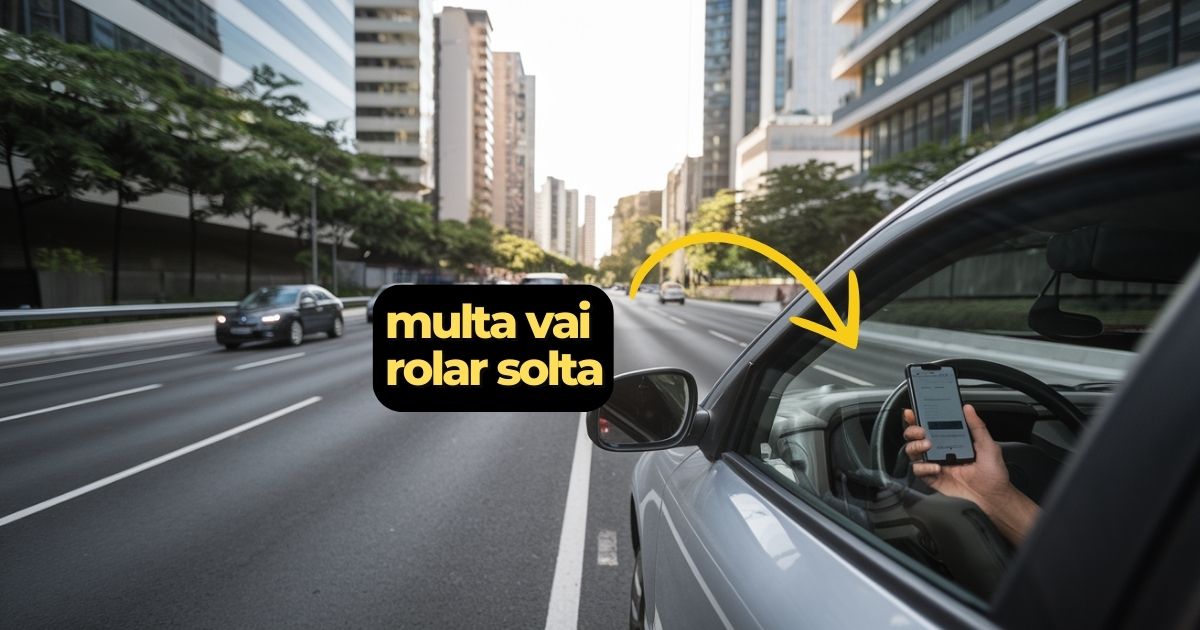

Drivers, Attention! Smart Radars With Artificial Intelligence Can Now Detect Cell Phone Use Behind the Wheel, Issuing Automatic Fines.
Imagine driving peacefully on a highway and, unknowingly, receiving a fine directly at home because your cell phone was in use.
This is the latest reality for drivers in São Paulo with the arrival of updated smart radars, capable of identifying violations with surgical precision.
The innovation, which has been in operation in São Paulo and Curitiba since 2023, uses high technology to curb dangerous practices and promises to change the way we behave behind the wheel.
-
“No one will make us change the Pix,” says Lula after the US report.

-
Less than a Tera TSI, up to 710 km of range and charging in 9 minutes: the new BYD Song Ultra expands the Chinese brand’s bet on increasingly faster, more technological, and competitively priced electric SUVs.

-
Lula responds directly to Trump and says that Pix is from Brazil and will not change under pressure from anyone, after a report from the United States pointed out the Brazilian payment system as an American trade barrier.

-
Amazon has just announced a new fee on all deliveries, and your online purchases will become more expensive starting April 17, including for those buying from the United States here in Brazil.


In the second half of 2024, the radars received a significant upgrade, adding the ability to flag drivers who use their cell phones while driving.
According to traffic authorities, this functionality aims to reduce the number of accidents caused by distraction while driving, one of the leading causes of deaths in Brazil.
How the Radars Work
Smart radars are equipped with high-precision sensors and technology based on the Doppler Effect, which measures speed variations in real time.
Since 2023, these devices had already detected drivers who braked when approaching the radar and accelerated right after passing it.
Now, the technology has been enhanced with the use of artificial intelligence (AI) and high-definition cameras.
These devices capture clear images of violations, such as cell phone use, and automatically send the data to traffic systems.
The fine is generated automatically, including information such as time, location of the violation, and vehicle details.
This approach eliminates the need for human intervention, making the process more efficient and indisputable.
Cell Phone Behind the Wheel: A Risk Comparable to Drunk Driving
According to data from the Brazilian Association of Traffic Medicine (Abramet), using a cell phone while driving is one of the most dangerous violations.
Studies indicate that, even with hands-free devices, answering a call can distract the driver for about 8 seconds, enough time to travel two blocks without full control of the vehicle.
The World Health Organization (WHO) highlights the danger, stating that using a cell phone while driving increases the risk of accidents by 400% and delays the driver’s reaction time by up to 35%.
This places the practice at the same level of risk as driving under the influence of alcohol, according to the organization.
Impact on Fines and Safety
Drivers caught by the smart radar using their cell phones will commit a serious violation, according to Article 252 of the Brazilian Traffic Code.
This implies a fine of R$ 293.47, in addition to 7 points on the National Driver’s License (CNH).
Traffic authorities believe that the new functionality will help save lives.
According to experts, by increasing enforcement, a change in driver behavior is expected, significantly reducing the number of accidents.
Artificial Intelligence as an Ally in Traffic
Technology is not limited to radars. Artificial intelligence is also being employed in traffic lights to optimize the flow of vehicles, prioritizing busier roads.
These innovations are part of a broader strategy to modernize traffic management in Brazilian cities.
Drivers who persist in disregarding the rules need to be prepared to feel it in their pockets. With the high precision of cameras and AI, traditional excuses for contesting fines are becoming obsolete.
Future of Enforcement in Brazil
With technological evolution, it is likely that radars like these will become standard in other Brazilian cities.
In addition to reducing accidents, this measure helps reinforce the need for more conscious and safe traffic for everyone.
And what do you think, will this new functionality transform traffic safety or do you believe that enforcement is going too far?







industria da multa, sim senhor, coitado do povo brasileiro!!!!!!!!
Não adianta focar aqui reclamando! Comprem uma ferramenta, desparafusem o poste das câmeras e os jogue no chão! Se der, quebre a câmera para dar ainda mais prejuízo!
Acho que se os governantes investissem nas estradas teriam mais sucesso do que encher as rodovias de radares e as cidades ainda é pior, radares, olho vivo, policia militar, guardinhas municipais e câmeras filmando as pessoas dentro do carro enfim.quase que é melhor deixar o carro em casa.virou uma verdadeira indústria de multas e perseguição aos motorista.eu discordo em se tratando de liberdade que nos foi retirado.