





 Portuguese
  English
  Spanish
  4 min of reading
  0 comments


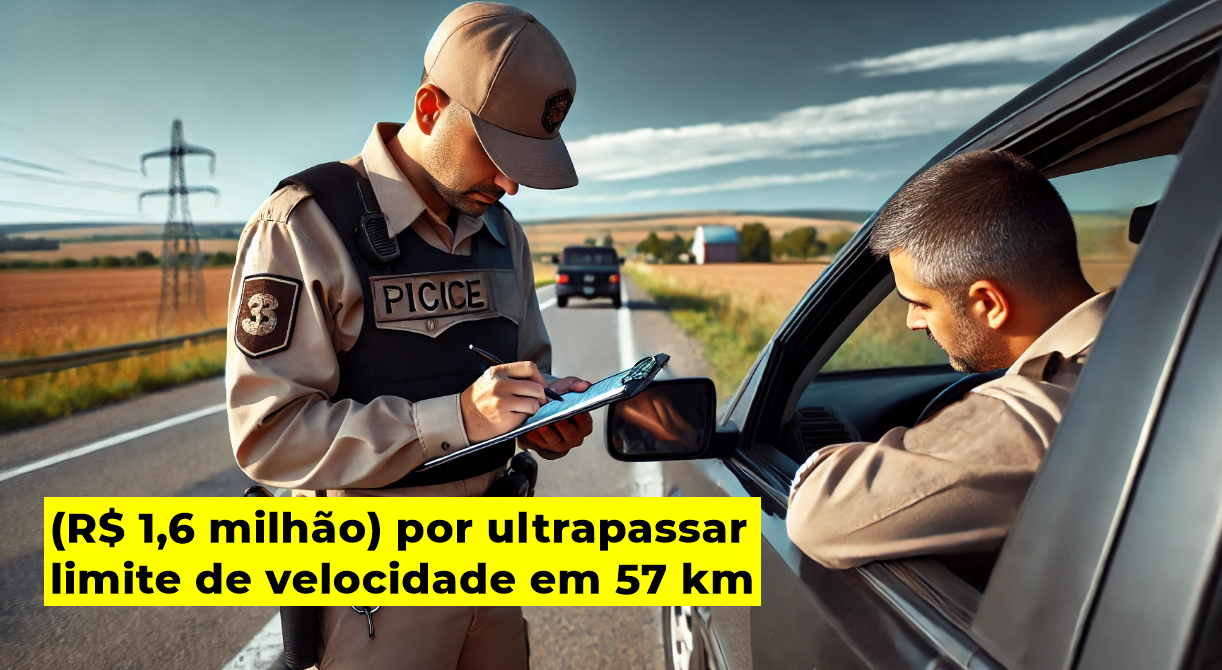
Do You Think Fines Are Expensive? A Driver Was Fined Approximately € 270,000 (R$ 1.6 Million) for Exceeding the Speed Limit by 57 km/h. Discover the Countries with the Highest Penalties!
In traffic, respecting the laws is essential to ensure safety and order. However, in many countries, breaking these rules can result in extremely high fines, which vary according to local legislation and, in some cases, even based on the offender’s income offender.
In nations like Finland and Switzerland, this approach aims to ensure proportionality, making penalties fairer and more effective.
Traffic Fines Around the World
How countries set their fines can vary drastically. While some nations impose fixed amounts, others utilize a progressive system based on the driver’s income.
-
A French brand placed a car on four huge red balloons to prove that its suspension made the vehicle “float,” and the surreal scene became one of the most iconic and unusual images in automotive history.

-
Jeep Avenger begins production in Brazil, debuting as the brand’s new entry-level SUV and inaugurating an unprecedented phase by becoming the first national Jeep manufactured outside of Goiana, as part of a R$ 3 billion plan.

-
Costing R$ 12,490, the new Shineray Urban Lite 150 “cheap one” arrives in Brazil with a CVT transmission, digital dashboard, and LED lights, making it more affordable than the Biz and targeting those who want to abandon the bus.
-
Ducati brings to Brazil the Superleggera V4 Centenario: 228 hp that become 247 with a track kit, carbon fiber and carbon-ceramic brakes, estimated price between R$ 1.5 and 2 million, deliveries only in 2027.

The main goal of these policies is to ensure that punishment is a real deterrent to reckless behavior, regardless of the offender’s financial situation.
Furthermore, many of these high fines are justified by the commitment to reducing accidents and increasing road safety.
Finland
Finland is one of the strictest countries when it comes to traffic fines. Its system is based on the driver’s income and the severity of the offense.
In a landmark case in 2023, an entrepreneur was fined an astonishing €121,000 (around R$ 620,000 at current exchange rates) for speeding.
As the fine is calculated based on the offender’s available income, high-earning drivers can be penalized with astronomical amounts.
This measure aims to ensure that fines have a real impact, regardless of the offender’s purchasing power.
The Finnish government emphasizes that this approach has been essential in reducing recidivism rates.
Switzerland
Following a similar approach, Switzerland also imposes traffic fines proportional to income. In 2010, a driver was fined approximately €270,000 (around R$ 1.6 million at current exchange rates) for driving at 137 km/h in a zone with an 80 km/h limit.
Penalties can be extremely severe, especially for repeat offenders, serving as one of the most effective ways to deter dangerous behaviors on the road.
A distinguishing feature of the Swiss system is the possibility of jail time for severe infractions, such as speeding in residential areas.
Norway
Norway is known for its strict traffic laws. The country imposes high penalties for offenses like speeding and drunk driving.
Fines can exceed €800 (approximately R$ 4,400) for those who exceed the speed limits, and even harsher penalties are applied to repeat offenders.
Additionally, in serious cases, drivers can lose their licenses for extended periods, reinforcing the country’s commitment to road safety.
Another important factor is that Norway continuously invests in electronic monitoring, making violations more easily detectable.
Sweden and Iceland
Other Scandinavian countries, such as Sweden and Iceland, also impose fines proportional to the driver’s income.
This approach primarily aims to prevent wealthier individuals from feeling immune to penalties, creating a more equitable and effective system.
Thus, regardless of the offender’s financial situation, the fine is felt significantly, reinforcing the importance of adhering to the rules.
In addition to fines, these countries implement reeducation programs for offending drivers, aiming for long-term behavioral change.
Impact and Effectiveness of Fines
The implementation of income-proportional fines has been effective in reducing serious offenses.
Studies show that this model increases the perception of risk among drivers of all social classes, making traffic safer.
Moreover, the application of severe penalties directly contributes to the reduction of fatal accidents. A survey by the European Transport Safety Council indicated that countries with stricter fines tend to have lower rates of accidents related to speeding.
In Finland, for example, the traffic mortality rate is approximately 3.5 deaths per 100,000 inhabitants, one of the lowest in Europe.
In contrast, countries where fines are relatively low, such as the United States, have higher rates.
Another relevant factor is that the allocation of funds collected from fines in many European countries is directed towards traffic safety programs and improvements in road infrastructure.
This means that the money collected serves not only as punishment but also as a means to make the streets safer.
How It Works in Brazil
In Brazil, traffic fines follow a fixed model, varying according to the offense but not taking into account the driver’s income.
This system can be ineffective in deterring high-income drivers, who can pay the fines without feeling a significant impact on their finances.
As a result, some drivers end up reoffending, as the fine is not a real deterrent to their reckless behavior.
Adopting a progressive model could make penalties fairer and more effective, ensuring that all drivers comply with traffic laws more equitably.
Additionally, measures such as increasing enforcement and boosting educational campaigns could further enhance road safety.
Brazil could also invest more in transparency regarding the allocation of funds collected from fines, ensuring that these resources are directly applied to traffic safety.
With information from El Pais.









Seja o primeiro a reagir!