





 Portuguese
  English
  Spanish
  4 min of reading
  0 comments


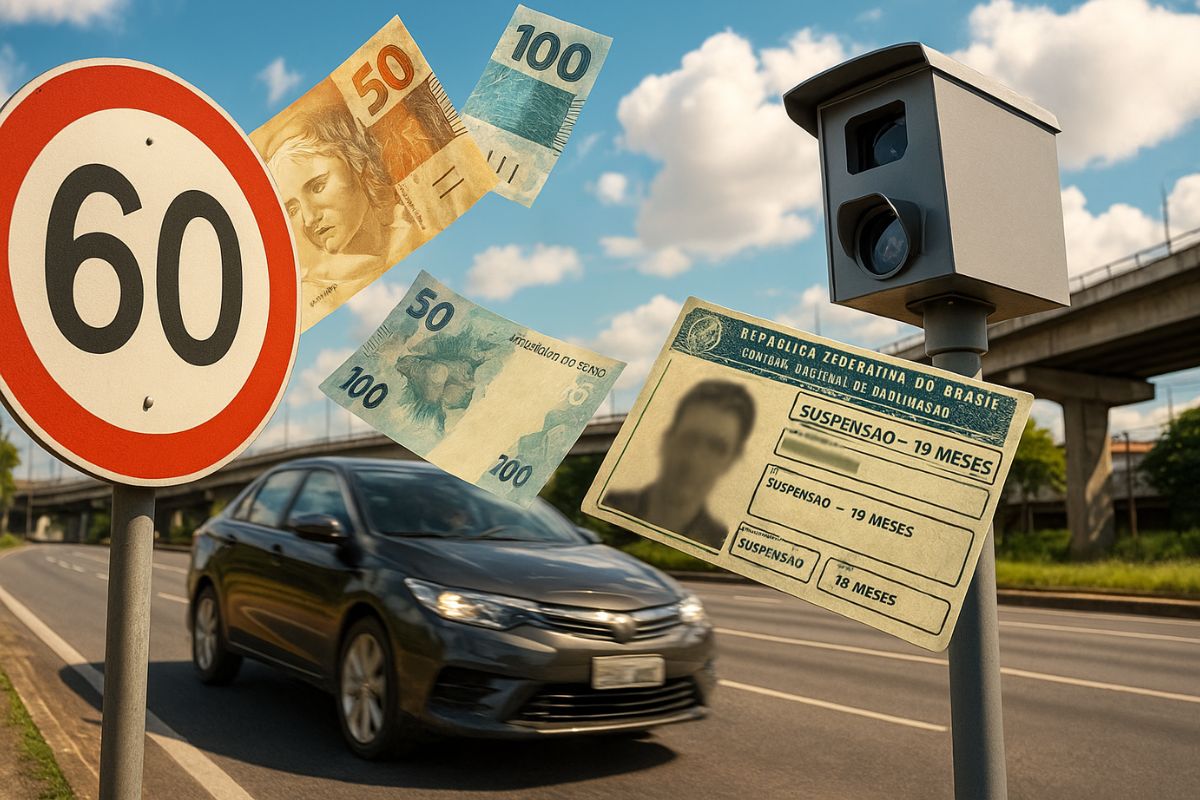
CTB Defines Three Speeding Violation Tiers and Establishes When the Driver Can Appeal Penalties.
Exceeding the speed limit is one of the most common violations on Brazilian roads and also one of the most expensive. According to the Uol portal, the Brazilian Traffic Code (CTB), speeding fines range from R$ 130.16 to R$ 880.41, depending on the severity, and can result in suspension of the driver’s license for up to 18 months.
Before understanding the values, it is important to remember that the CTB classifies violations into four types according to Article 258: light, medium, serious, and very serious. This gradation determines both the fine amount and the number of points deducted from the driver’s license.
How the CTB Defines Violation Categories
The CTB establishes progressive punishments according to the severity of the act. Violations are classified as follows:
-
The Senate approves a bill that criminalizes misogyny, hatred, or aversion towards women, and includes the crime in the Racism Law with a penalty of up to 5 years.

-
Chamber Approves Bill That Allows Pepper Spray for Women Over 16 and Imposes Strict Rules for Purchase, Possession, and Use as Self-Defense

-
Chamber Approves Law to Combat Leucaena, Fast-Growing Plant That Dominates Land and Threatens Native Species in Various Regions of the Country

-
Asset Division: Know What Cannot Be Divided in Case of Divorce


- Light: R$ 88.38 and 3 points on the driver’s license
- Medium: R$ 130.16 and 4 points
- Serious: R$ 195.23 and 5 points
- Very Serious: R$ 293.47 and 7 points
The amount of the very serious violation can be multiplied according to the type of infraction.
In cases of speeding fines, the highest penalty occurs when the driver exceeds the limit by more than 50%, raising the charge to R$ 880.41 (R$ 293.47 × 3).
In addition to the fine, the driver loses 7 points on their license and has their right to drive suspended for 2 to 8 months.
In cases of reoffending within 12 months, the suspension can reach 18 months.
Speed Ranges and Applied Values
Speeding fines follow three levels of severity, defined according to the percentage over the limit on the road:
- Up to 20% over the maximum allowed → medium violation, fine of R$ 130.16 and 4 points
- From 20% to 50% over the maximum allowed → serious violation, fine of R$ 195.23 and 5 points
- More than 50% over the maximum allowed → very serious violation, fine of R$ 880.41 and 7 points, with possible suspension of the driver’s license
This scaling reflects the direct relationship between risk and penalty.
Excessive speed significantly increases braking time and the severity of collisions, which is why the CTB tightens sanctions in higher ranges.
When and How to Appeal a Speeding Fine
Every driver has the right to appeal traffic fines.
The first step is to identify the issuing authority (such as Detran, PRF, DER, or city hall), mentioned in the notification received.
There are two main types of appeals:
- Preliminary Defense – used to point out formal errors (such as incorrect license plate, color of the vehicle, or incomplete location). It must be submitted within 30 days after the notification of the offense.
- Administrative Appeal – contests the merit of the fine, questioning the validity of the infraction. It can be submitted after the Notification of Imposition of Penalty (NIP), also with a deadline of 30 days.
If the request is denied, the driver can still appeal to second instance at the Cetran (State Traffic Council) or equivalent authority, depending on who imposed the penalty.
It is possible to submit the appeal by mail, online, or in person.
What Happens If the Appeal Is Denied
When both instances deny the appeal, the driver must pay the fine and serve the penalty, including suspension of the right to drive, if applicable.
In the case of suspension, the driver needs to return their driver’s license to Detran and take a recycling course before being allowed to drive again.
However, the submission of a defense suspends the collection of the fine until the final judgment.
Therefore, appealing is also a legitimate way to ensure the right to contest, especially when there are signs of error in the infraction record.
How to Avoid Penalties and Keep a Clean Record
More than just appealing, prevention is the safest way to avoid losses. Respecting speed limits, observing signage, and checking the speedometer are simple actions that prevent fines and reduce accident risks.
Additionally, monitoring accumulated points on the driver’s license helps avoid suspensions due to excess violations. Each state’s Detran offers free online consultation for monitoring the record.
Speeding fines may seem just financial punishments, but they carry a larger goal: to protect lives and discipline traffic.
Understanding how the CTB defines each violation, knowing the defense rights, and practicing preventive driving are steps that make a difference in cost and safety for everyone.
And you, do you believe that current fines really educate drivers or just collect more? Share your opinion in the comments.










Seja o primeiro a reagir!