





 English
  Francês
  Alemão
  Italiano
  Japonês
  Norueguês
  Portuguese
  Spanish
  3 min of reading


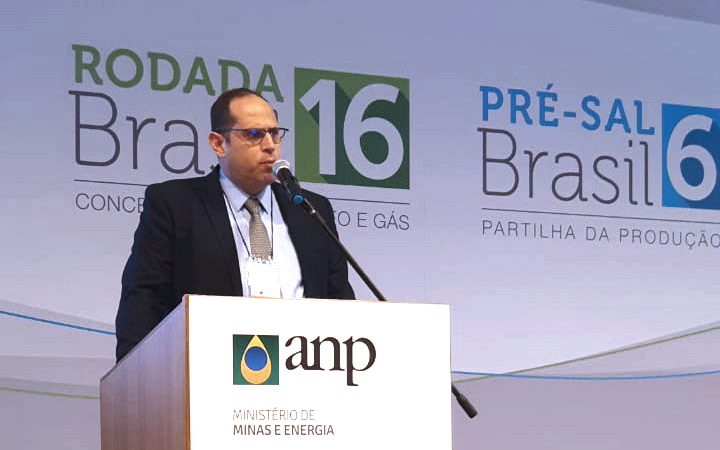
The Oil Companies That Are Already Charting Their Plans on the Coast of São Paulo Are the Norwegian Equinor, the Australian Karoon, the French Total, and the British BP. There Is Also the Brazilian Cosan.
In São Paulo, Baixada Santista Will Have a Second Chance to Profit from Oil. After the Investments in the pre-salt Failing, a New Wave of Projects Logistically Close to the São Paulo Coast Should Attract Many Resources and Generate Jobs. Total E&P Starts Drilling Its First Production Well in the Lapa Field in the Santos Basin.
There Is Vast Capacity in the Southern Region of the Santos Basin for Oil and Gas Production. According to Sources from Petrobras, the Ideal Situation Is for the Region to Collaborate with the São Paulo Government on Ways to Boost These Businesses.
-
Government unlocks R$ 554 million for a highway that has been requested for decades and accelerates the duplication of BR.
-
Without bricks, without cement, and without endless construction: the cardboard house that is assembled in modules and can be moved.

-
Billions of barrels on the equatorial margin could lead Amapá to double its oil production in Brazil — the state aims to enter the route of companies in the Campos Basin, attract investments, and boost jobs and businesses in the oil and gas sector.
-
Without bricks, without cement, and without endless construction: the cardboard house that is assembled in modules and can be moved.
The First Phase of Investments in the Pre-salt Focused on Rio de Janeiro by Strategic Decision of Petrobras, While the Second Phase of Exploration of the Santos Basin Is Taking Place through Projects from Foreign Oil Companies That Are Advancing over the State-Owned Company’s Retreat.
The Oil Companies That Are Already Charting Their Investment Plans Are the Norwegian Equinor (Formerly Statoil), the Australian Karoon, the French Total, and the British BP. There Is Also the Brazilian Cosan.
In São Paulo, Executives from Equinor and Karoon Met with Government Authorities. Cosan Also Expressed Interest in Building a Gas Pipeline Called Rota 4 to Supply Baixada Santista and Greater São Paulo.
Cosan Reported That It Is Seeking Ways to Enable the Gas Produced in the Pre-salt through “Flow and Treatment Infrastructure” in Baixada Santista. The Company Has Not Set Timelines.
According to a Statement from the State Secretary of Infrastructure and the Environment, “The Private Initiative Is Discussing with the Exploration and Production Concessionaires the Construction of a New Gas Flow Route in the Santos Basin (Rota 4), Along with Investments in an LNG (Liquefied Natural Gas) Terminal.”
Equinor Operates in Carcará and North of Carcará; the Company Acquired These Fields in 2017 through a Sharing Round (Bidding Format), and the Expectation, According to the Company’s Website, Is a Reserve of 2 Billion Barrels.
Karoon Owns Three Areas, One of Which Is Baúna, Purchased from Petrobras, Where the ANP Will Evaluate the Acquisition by 2020. There Are Also Neon and Goiá, with Development Plans Under Review by the Agency.
BP Is a Recent Arrival in the São Paulo Region; the Company Acquired Block S-M-1500 for R$ 307.7 Million, Which Is Directed Toward the Southern Coast, on Thursday, the 10th.
Petrobras Does Not Have the Capacity to Make Heavy Investments That the Santos Basin Will Demand Until 2023 or 2024. Therefore, the Expansion of Foreign Oil Companies Is Positive. “The State Does Not Have Resources, and Petrobras Does Not Have That Volume of Capital,” Said the Chief Economist of Reag Investimentos, Simone Pasianotto.
Pasianotto Highlights That the Flow of Capital from Foreign Oil Companies Is Still Modest. In the 16th Round Held by the National Agency of Petroleum, Out of 36 Blocks Offered, Only 12 Were Auctioned, with Petrobras Acquiring Only One.
- Petrobras Will Pay R$ 210 Million to the Union Regarding Its Participation in an Oil Field in the Campos Basin
- In Niterói, the Advancement of the Naval and Oil Industries Gains New Momentum









Seja o primeiro a reagir!