





 English
  Francês
  Alemão
  Italiano
  Japonês
  Norueguês
  Portuguese
  Spanish
  5 min of reading
  0 comments


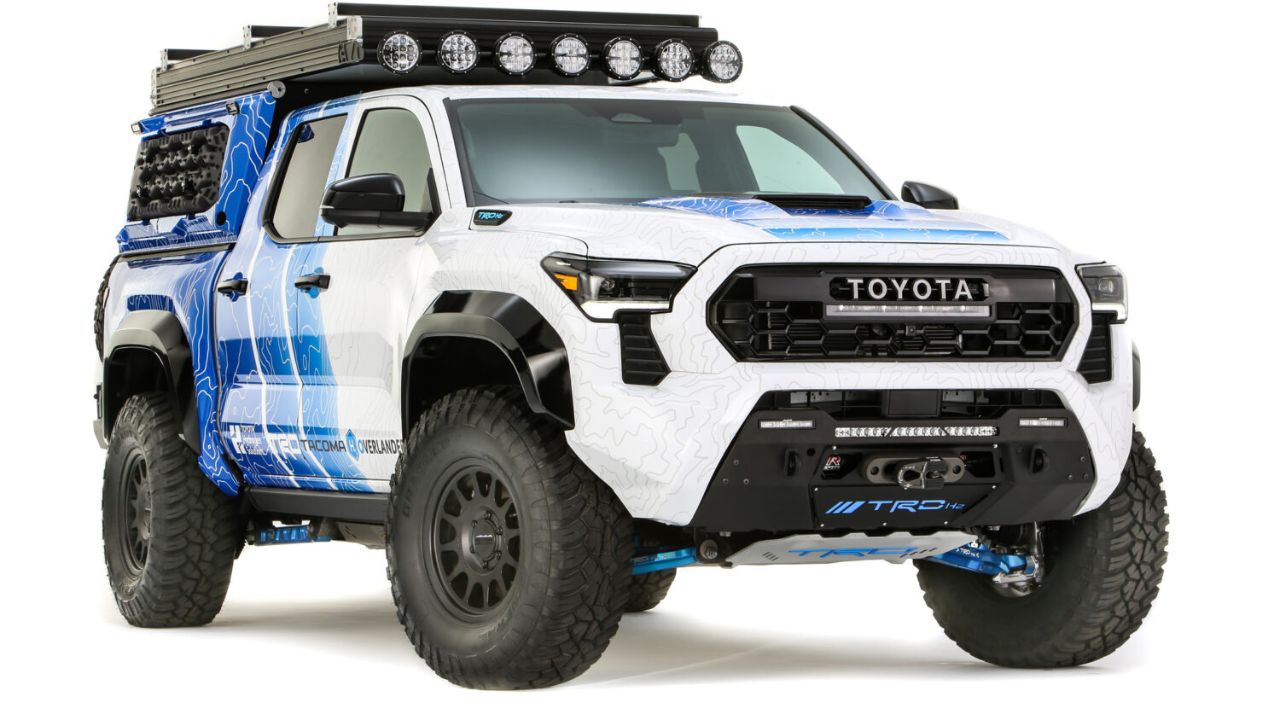
Toyota Reveals The Tacoma H2-Overlander, An Innovative Hydrogen-Powered Pickup Truck With 547 HP And Zero Emissions, A Symbol Of The New Era Of Sustainable Mobility And The Future Of Clean Off-Roading
Toyota introduced the concept Toyota Tacoma H2-Overlander, an hydrogen-powered pickup truck that combines hydrogen, 547 horsepower, off-road performance, and zero emissions of pollutants.
According to an article published by Garage 360 on Monday (3), the model was unveiled during the SEMA Show in the United States, representing an important advancement in Toyota’s commitment to sustainable mobility and marking a new chapter in the development of fuel cell vehicles (FCEV).
Main Information About The Toyota Tacoma H2-Overlander
According to Garage360, the Toyota pickup is equipped with two electric motors — one front motor with 301 HP and another rear motor with 252 HP — totaling 547 combined HP. The model uses three hydrogen tanks with a total capacity of 6 kg, as well as a 24.9 kWh battery that stores additional energy.
-
With earth, bamboo, straw, and lime mortar, a specialist builds a house for just over $460 and draws attention for its cost being much lower than traditional construction.

-
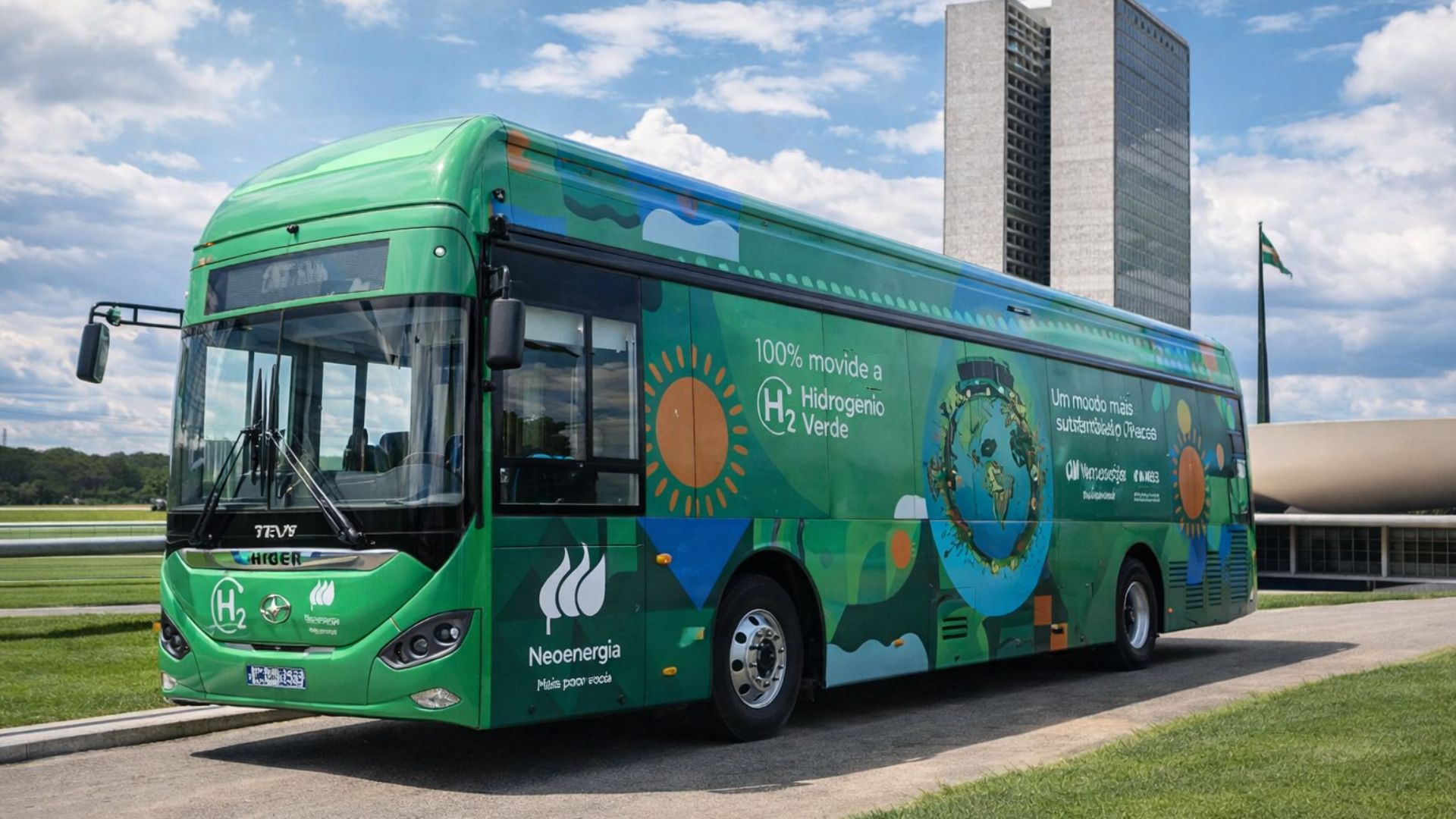
The Federal District bets on innovation and sustainability by launching a hydrogen-powered bus on a new tourist route, promising to reduce emissions and transform the urban experience for residents and visitors.
-
Rodrigo de Freitas Lagoon advances in environmental recovery with sanitation, elimination of irregular sewage, and the resumption of water sports in Rio de Janeiro.

-
Sustainable housing gains strength with a nationally awarded project in Campo Grande, highlighting innovative solutions that combine sustainability, urban integration, and efficiency in the use of natural resources.


The byproduct of the system is only water, and Toyota implemented an innovative recovery system that allows this liquid to be reused in camping activities. The Tacoma H2-Overlander also offers an energy supply capacity of up to 15 kW, being able to charge other electric vehicles or power equipment in remote locations.
In addition, the pickup is equipped for extreme overlanding, with TRD reinforced suspension, 35-inch tires, 17-inch wheels, a front winch, robust auxiliary lighting, and a rooftop tent — features that highlight its adventurous vocation.
Structure And Performance Of The Hydrogen-Powered Pickup Truck
The base of the Toyota Tacoma H2-Overlander is the TNGA-F platform, the same used in robust models like Tundra and Land Cruiser. It accommodates three hydrogen tanks that power the fuel cell derived from the Mirai sedan — a reference vehicle for Toyota in energy efficiency.
The fuel cell converts hydrogen into electricity, which in turn powers the electric motors. The result is a Toyota pickup truck capable of delivering instantaneous power and high torque, while maintaining zero emissions.
The 4×4 configuration and the electric all-wheel drive system allow it to tackle rugged terrains, while the 24.9 kWh battery acts as an energy reserve for peak situations. The setup is ideal for off-road applications, where performance and range need to coexist with efficiency.
In terms of performance, the 547 HP of the Tacoma H2-Overlander places the model among the most powerful pickups in the segment, proving that sustainability and strength can go hand in hand.
Applied Sustainability: From Exhaust To Energy Source
One of the most striking features of the concept is the water recovery system. The chemical process of the fuel cell generates water vapor as a byproduct, and Toyota created a system capable of collecting, filtering, and storing this water for external use.
This detail symbolizes the philosophy of sustainable mobility: transforming every component into an opportunity for efficiency. Moreover, the pickup operates as a mobile power plant, providing enough energy for camping, temporary residences, or even other electric vehicles.
With external NEMA 14-50 outlets, the Tacoma H2-Overlander delivers up to 15 kW of power, making it an example of versatility and energy independence in off-road environments.
Technical Specifications Of The Toyota Tacoma H2-Overlander: The Hydrogen-Powered Pickup Truck That Redefines Sustainable Mobility
| Specification | Model Details |
| Model | Toyota Tacoma H2-Overlander Concept |
| Manufacturer | Toyota Motor Corporation |
| Category | Hydrogen-Powered Off-Road Pickup Truck (FCEV) |
| Platform | TNGA-F (same base as the conventional Tacoma) |
| Engine | Two electric motors — front with 301 HP and rear with 252 HP |
| Combined Power | 547 HP (estimated) |
| Propulsion System | Hydrogen Fuel Cell (FCEV) + 24.9 kWh lithium-ion battery |
| Hydrogen Tanks | 3 units – total capacity of 6 kg |
| Traction | Electric All-Wheel Drive (AWD) |
| Tires And Wheels | General Grabber A/T 35-in. tires with customized 17×8.5-in. wheels |
| Suspension | Long-Travel TRD with Fox 2.5 Performance Elite Series shocks |
| Off-Road Equipment | Front winch, recovery boards, tow hooks, reinforced bumpers |
| Rooftop Tent | Integrated, with retractable structure for camping |
| External Power | 15 kW outlets (NEMA 14-50) for camping or charging other EVs |
| Byproduct Of The FCEV System | Only water, storable by integrated filtration system |
| Off-Road Capability | Prepared for overlanding and long-duration expeditions |
| CO₂ Emissions | Zero emissions during operation |
| Current Status | Prototype (no plans for mass production) |
Impacts Of The Toyota Pickup Truck On The Automotive Market
The Toyota Tacoma H2-Overlander is not just a technical concept, but a strategic milestone that reinforces the brand’s positioning in sustainable innovation. By bringing FCEV technology into the world of off-road pickups, the automaker demonstrates that it is possible to combine power, range, and environmental respect.
The impact is twofold: it encourages competitors to invest in alternative propulsion solutions and sparks interest among consumers who value performance without compromising ecological responsibility.
In the global landscape, Toyota’s pickup truck represents a bridge between battery electric vehicles and traditional combustion engines. The fuel cell emerges as an efficient middle ground, capable of providing rapid refueling, high range, and total elimination of pollutants.
The Future Of Sustainable Mobility With Toyota
The introduction of the Toyota Tacoma H2-Overlander reinforces the company’s commitment to the evolution of sustainable mobility. The model shows that the transition to hydrogen vehicles can be made practically without sacrificing power or versatility.
Although it is still a prototype, the concept paves the way for future generations of pickups and SUVs equipped with fuel cells. The technology can also benefit corporate fleets, medium-duty trucks, and utilities, sectors where conventional electrification faces challenges in range and weight.
Toyota believes that hydrogen will be the fuel of the future, complementing the role of battery electric vehicles. As infrastructure expands, the automaker continues to demonstrate, with vehicles like the Tacoma H2-Overlander, that transportation can be clean, powerful, and accessible.
The new hydrogen-powered pickup truck represents a real advancement towards a more sustainable planet — and a demonstration that innovation and environmental responsibility can coexist on the trails of the future.








-

-

-

-

-

-

15 pessoas reagiram a isso.