





 English
  Francês
  Alemão
  Italiano
  Japonês
  Norueguês
  Portuguese
  Spanish
  5 min of reading


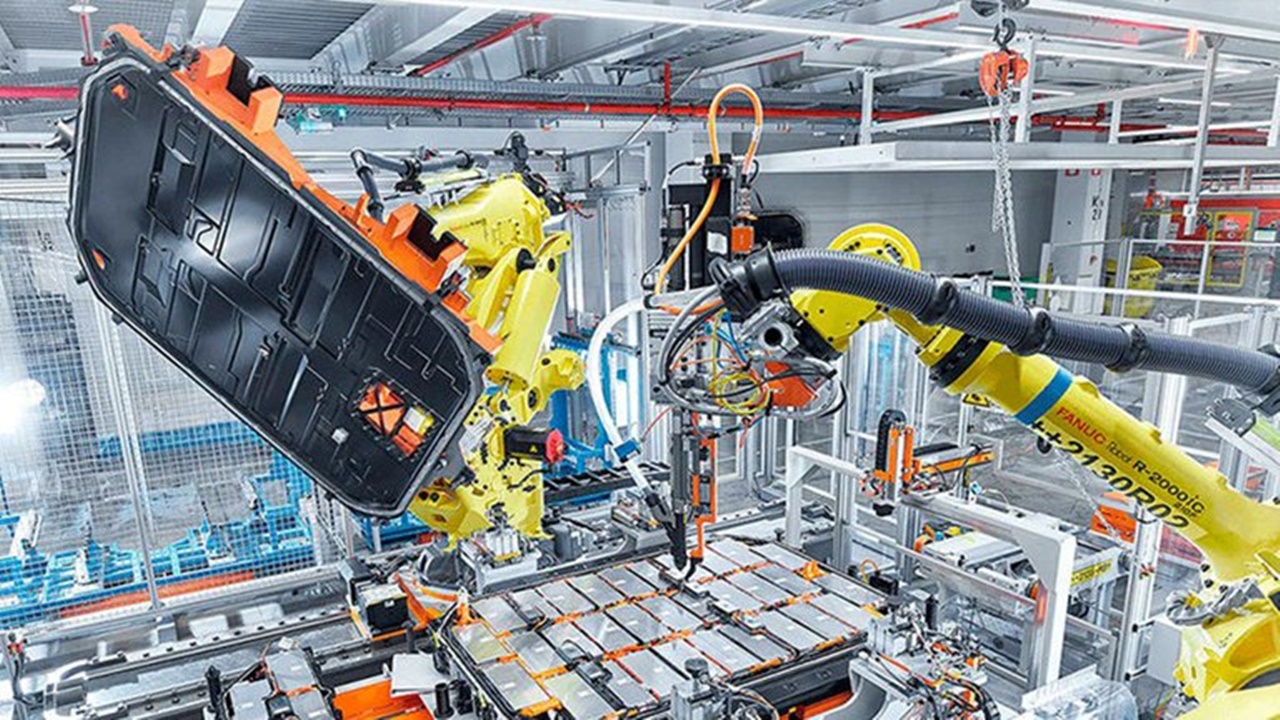
The Great Ghost Of Electric Cars Is In The Lifecycle Of Batteries And The Pollution Generated By Their Waste. The Swedish Company Northvolt Has Just Manufactured The First 100% Recycled Battery.
The Swedish company Northvolt, in partnership with the automotive giant Volkswagen, provided a first hint of something that could relieve a large part of the automotive industry by presenting the first battery made entirely from recycled materials from other decommissioned accumulators. But beyond being a possible solution, this news could generate a potential change in perspective for many critics of new sustainable mobility through electric cars, who constantly question the pollution that the batteries will cause at the end of their useful lifecycle.
Read Also
- The Largest Niobium Producer On The Planet, CBMM, Seeks Solutions In The United Arab Emirates For The Company’s Revolutionary Projects Around The World
- The Indefinite Strike Threat From Truck Drivers Doesn’t Intimidate Fuel Price Adjustments, And November Starts With A 7.2% Increase In Diesel
- Iconic Volkswagen Beetle, Manufactured In 1955, Found After 52 Years In A Junkyard And Costs More Than R$ 391 Thousand
- After Ford, Chevrolet, Honda, And Audi Reduced Or Stopped Vehicle Production In The Country, Multinational Volkswagen Announces R$ 7 Billion Investment In Latin America
Although recycling projects for components have been initiated in many companies owned and associated with the automotive world, achieving that the cells of a battery are made entirely from the discarded parts of others is undoubtedly a significant advancement. And Revolt, the recycling department of the Swedish company, accomplished this by producing its first lithium-ion battery cell with 100% of the nickel, manganese, and cobalt materials used in discarded devices, which are completely reused.
This allows us to say that 95% of the battery is recycled, not 100% because what is being recycled is the cell and not the complete battery. However, this is still the most important contribution, as it is precisely these mineral raw materials that the world needs to recycle.
-
‘Interlocking brick’ made of earth arrives in the construction industry with cost reductions of up to 40% on the project.

-
Espírito Santo will receive the largest engineering project in its history with the duplication of BR 262, which will have 50 viaducts, 28 bridges, and 2-kilometer tunnels cutting through the most challenging mountainous region of the entire state.

-
A project of nearly 9 million reais already has the first kilometer paved in Santa Catarina and promises to completely transform the access between Jaraguá do Sul and Rio dos Cedros in an area where tourism is growing at a rapid pace.

-
A couple builds a system to bring water from the spring to their land, climbs a hill with materials on their backs, and creates a simple, cheap, and sustainable solution to ensure their own water supply.


Ultium Cells LLC, A Company Formed Jointly By General Motors And LG Energy Solution, Were Among The First Brands To Start This Same Process
One of the first brands to start this same process, which promised to present its products by the end of the year, is Ultium Cells LLC, a company formed jointly by General Motors and LG Energy Solution, which announced last May the signing of an agreement with Li-Cycle to recycle battery materials, including cobalt, nickel, lithium, graphite, copper, manganese, and aluminum. This means that 95% of these materials can be used in the production of new batteries or in adjacent industries.
In the case of Northvolt, the automotive company directly related to this venture is Volkswagen, which invested last June to acquire 20% of the company’s share package.
Recycled Battery Is Completely Equal To A Cell Made With More Relevant Metals, Such As Nickel, Manganese, And Cobalt
The Swedish claim that the performance of this battery is completely equal to that of a cell made from new materials. The more relevant metals, such as nickel, manganese, and cobalt, were recovered through a low-energy hydrometallurgical treatment, which uses an aqueous solution to isolate the metals and separate them from impurities.
Now comes the second stage of development, to set up Revolt Ett, the factory where the production of these types of recycled batteries will take place, with an expectation to recycle about 125 thousand tons of batteries per year. The unit is set to begin construction in early 2022 and is expected to be finished by the end of 2023.
The main task of this factory will be to recycle the primary elements of the cells, such as nickel, manganese, and cobalt, and on a smaller scale, copper, lithium, aluminum, or plastic, which will come from batteries that have already exhausted their lifespan in a car, as well as from waste from the main factory for new batteries of Northvolt.
Iconic Volkswagen Beetle, Manufactured In 1955, Found After 52 Years In A Junkyard And Costs More Than R$ 391 Thousand
One of the most coveted classics in the automotive world, the Volkswagen Beetle, has admirers wherever it goes. And it’s no wonder, the old bug was manufactured for 65 years and sold more than 21 million units worldwide! Brazil alone became the third country where more units were produced – 3 million – only behind Germany and the United States.
After Volkswagen declared its end in 2018, a Chinese automaker is attempting to resurrect the bug and has shamelessly produced an electric copy of the iconic Beetle.
The Chinese industry has not yet abandoned some old habits, and multinational Volkswagen was not at all flattered by the electric car manufacturer ORA, which is part of the Great Wall Motors group. The brand presented a clone of the Beetle at the Shanghai Auto Show. Named ORA Punk Cat, the vehicle shares the same traits as the iconic car from VW.
It is possible to see that the ORA was inspired – not to say that it shamelessly copied – the traits of the Volkswagen Beetle in its new Punk Cat. The hood with the curved design, the rounded headlights, and the shape of the rear, complete with oval taillights, refer to the old bug.


Multinational Volkswagen Launches The New Kombi, The Classic That Remained In Production Until 1975 Here In Brazil Will Have An Electric Successor!
After the head of Volkswagen announced the end of gasoline and diesel combustion engine production, the automaker launches the successor of the iconic Kombi.
The iconic Kombi, Volkswagen’s van, continues to evolve, and the German automaker is already preparing a much more advanced new generation. The electric reincarnation of the VW Kombi was seen for the first time with its final body. The camouflage disguises its final appearance, taking advantage of the debut of the ID.5, Volkswagen briefly showcased its long-awaited electric van with a neo-retro design that is getting closer! Watch the video below and discover the Kombi of the future.







Seja o primeiro a reagir!