Portuguese
  Spanish


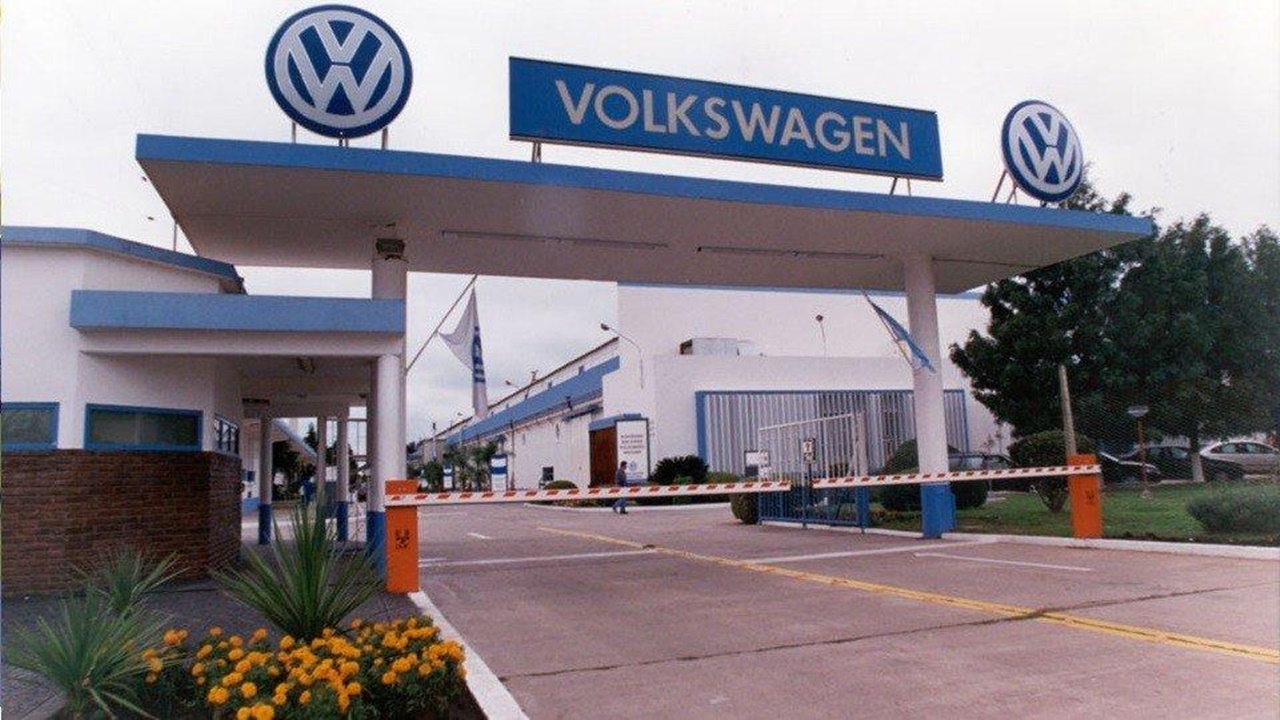

In a Movement Opposite to Ford, the Multinational Vehicle Manufacturer Volkswagen Will Invest R$ 7 Billion in Latin America.
Despite the ongoing challenges of the coronavirus pandemic, the global semiconductor shortage, and Ford’s exit from Brazil, Volkswagen, the world’s largest vehicle manufacturer, expects to report a positive result in 2021 and announced last Friday that it will invest 7 billion reais (approximately 1 billion euros) over the next five years in Latin America. Of the disclosed amount, Brazil is expected to receive the largest share.
Read Also
- Multinational Vehicle Manufacturer Mitsubishi Offers Discounts of Up to 60% on 16,000 Original Parts for Owners of Vintage Cars Mitsubishi Eclipse, L200, TR4, Galant, Space Wagon, 3000GT and More!
- New Portable Battery That Looks Like a Suitcase Promises to Save the Lives of Electric Car Lovers and Provide an Extra Charge of 32 km When They Are in Trouble
- The World’s Largest Wind Turbine Manufacturer Wants to Install an Offshore Wind Turbine Factory in Ceará, and Many Jobs Will Be Generated in the State
- Production Volume on the Lines of Volkswagen, Toyota, Nissan, Honda, Fiat, and General Motors Plummets, Reflecting on the Operations of the Supplier Factory in Taubaté, Which Starts Layoffs at the Unit
The massive investment will be directed towards launching a new family of cars, as well as accelerating the development of digital business models and especially expanding research on biofuels.
The German Automaker Will Radically Renew Its Model Portfolio with 20 New Vehicles
The German company launched a product offensive in 2017 to radically renew its model portfolio with 20 new vehicles from the new family of compact cars adapted to the needs of the South American market, which will debut over four years, most of them manufactured in Volkswagen’s factories in Brazil. The first model is the Polo Track, which will be produced at the Taubaté factory (Brazil) and is based on the MQB platform.
-
End of an era in Brazil: beloved sedan by Brazilians is discontinued despite having a 2.0 engine with 151 hp, CVT transmission, 466-liter trunk, and up to 650 km of range.

-
New Law Proposal in Brazil Could Heavily Penalize Drivers: Dangerous Overtaking May Become a Serious Offense with Fines Increased Tenfold and a 12-Month License Suspension; Update on 2026 Progress

-
Electric Revolution: Watts W125 Motorcycle Offers 160 km Range, 90 km/h Speed, and Affordable Price Starting at $3,000
-
General Motors Replaces Over a Thousand Workers with 50 Cobots at Electric Vehicle Plant, UAW Union Criticizes Move Amid Industry’s Automation Push


“The high level of future investments in our region demonstrates the great importance of the Latin American market for Volkswagen. This is based on three fundamental success factors: the excellent productivity of our factories achieved through consensus with the unions, the outstanding performance of the entire team, and our strong focus on the desires of Latin American customers”, highlighted Pablo di Si, President and CEO of Volkswagen Latin America.
Volkswagen Focuses on Digitalization and Decarbonization
At the same time as expanding its product portfolio, Volkswagen is also accelerating the pace of its transformation to become a provider of “sustainable software-oriented mobility” with additional investments in Latin America.
The group’s objective is to further strengthen its competitive position, focus on sustained profitability, and give a boost to digitalization and decarbonization in South America. This includes a biofuels research center as a cutting-edge technology for this market, to complement Volkswagen’s global electrification offensive.
“Latin America is an important market for Volkswagen’s future. In the past two years, we have achieved a very good position in the region through a very consistent restructuring program. Now we are driving the implementation of our ACCELERATE strategy with a large investment program, strengthening our competitive position in the region and thus preparing for sustained profitability”, said Ralf Brandstätter, CEO of Volkswagen.
In this sense, Volkswagen is making further investments in the existing Biofuels Research and Development Center located in Latin America. Particularly in regions where travel involves long distances, where charging infrastructure is not widespread, and where green energy supply levels are low, biofuels with a positive carbon dioxide balance (CO2) can “build a bridge to the electric era”.