





 Portuguese
  English
  Spanish
  4 min of reading
  1 comment


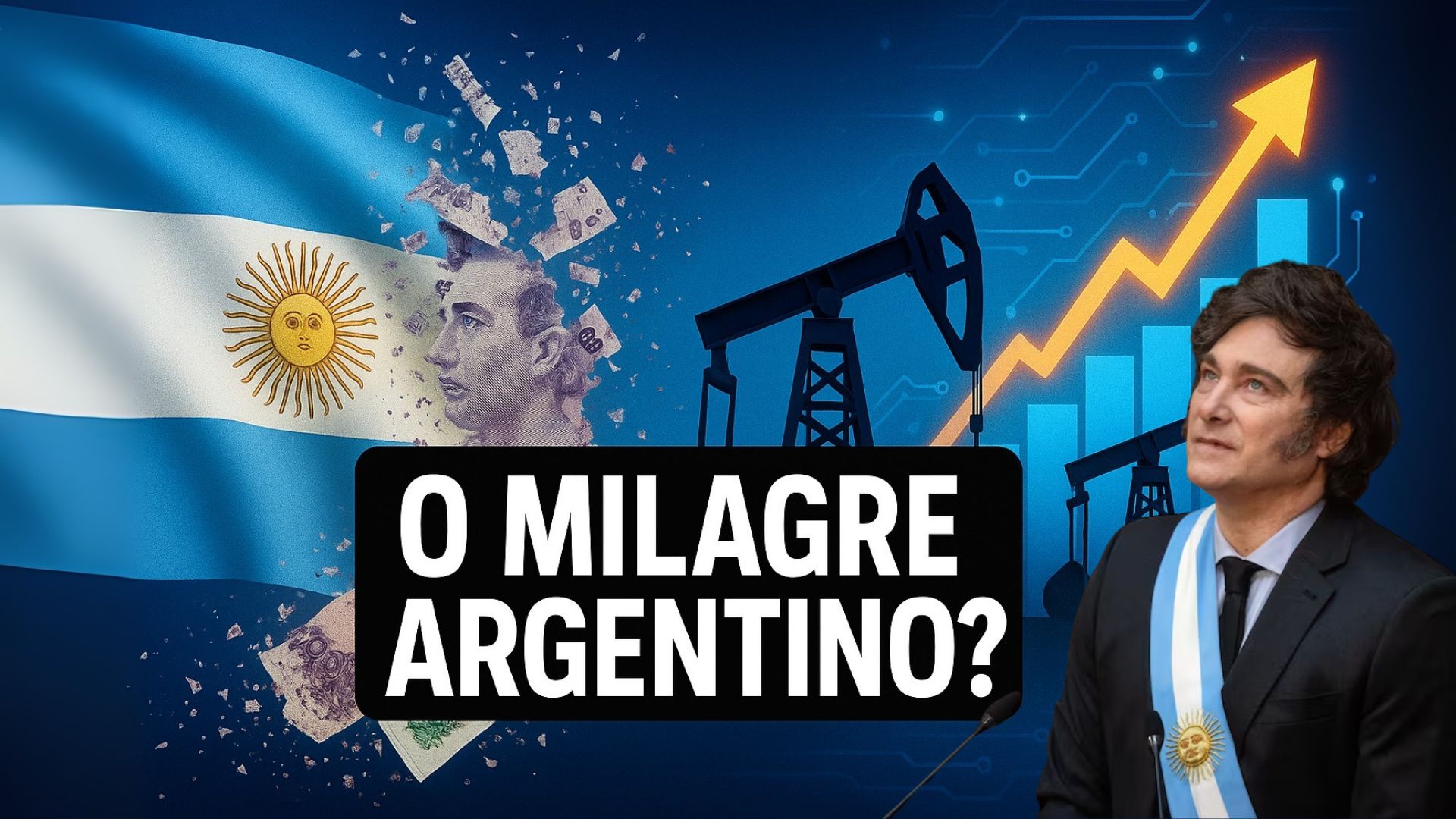


Historian From Harvard and Stanford Bets That Javier Milei’s Reforms Could Transform Argentina Into One of the Great Economic Miracles of the Decade, Highlighting Energy, Geopolitics and Liberalism as Drivers of This Change.
Argentina may be facing one of the most profound transformation processes in its recent history.
For British economic historian Niall Ferguson, a professor at Harvard and Stanford, the reforms led by Javier Milei represent the “best chance in our lifetime” to break over seven decades of recurring crises.
In an interview with Bloomberg News, the academic stated that the neighboring country could be remembered as “one of the economic miracles of the 2020s.”
-
The government requests the Federal Revenue Service for a new system to automate the income tax declaration, reducing errors, time, and bureaucracy for millions of Brazilians.

-
Pix in installments, international Pix, and contactless payment without internet: the Central Bank revealed the new features coming to the tool that is already used by almost every adult in Brazil.

-
Mercado Livre has just started selling medications with delivery in up to three hours to your door, and this move could completely change the way Brazilians buy medicines on a daily basis.

-
In Dubai, rising tensions from the war in the Middle East are causing super-rich individuals to leave the Gulf and direct their fortunes to a new financial refuge in Asia.


Ferguson is not just observing from a distance. He himself decided to invest in the Argentine market.
He bought liquid and illiquid assets shortly after Milei’s election in December 2023, convinced that it was “the best time to take a position.”
According to him, many international investors missed out on “one of the great business opportunities in the world” by not betting on the country.
Regime Change and Liberal Inspiration
The historian sees a difference in the current government compared to other attempts at economic stabilization.
Based on Nobel Laureate Thomas Sargent‘s theory of economics, Ferguson emphasizes that simply changing monetary or fiscal policy is not enough to contain chronic inflation: it is necessary to “change almost everything.”
In his view, that is exactly what Milei is trying to do by implementing a package of measures that, in just a few months, has unprecedentedly reduced public debt.
“Margaret Thatcher took ten years to cut five percentage points of debt relative to GDP. Milei did it in less than a year,” Ferguson compared. For him, the Argentine libertarian stands out as “the most radically pro-market leader ever seen in any country.”
Although he acknowledges that the transition is painful, with economic contraction and increased poverty, the historian believes that Argentines have realized that “it was the end of the game for Peronism and Kirchnerism,” and, faced with the risk of hyperinflation, chose to support the new government.
Energy, AI, and Global Opportunities
In addition to fiscal restructuring, Ferguson sees room for Argentina to reposition itself in the international arena.
He highlights the large unexplored hydrocarbon reserves, such as the Vaca Muerta formation, and the growing role of Artificial Intelligence in global energy consumption.
“Argentina is in a very promising position to become a major exporter of commodities beyond agriculture,” he stated to Bloomberg.
For him, the moment coincides with a favorable context: friendly relations with the United States and the possibility of maintaining business with China, avoiding exclusive alignment amid the new geopolitical dispute between the powers.
Milei and International Politics
Ferguson assesses that Milei’s approach to Donald Trump may be strategic.
For him, the tariffs imposed by Washington have geopolitical aims and not just economic ones.
In this context, the personal relationship with the former Republican president could secure favorable conditions for bilateral trade.
“I would be surprised if Argentina makes a bad deal with the U.S. Just like Britain, it is a country that Trump views positively,” he stated.
The Weight of Internal Politics
When asked about Milei’s aggressive style, Ferguson acknowledged differences compared to former president Mauricio Macri but argued that the current leader has managed to connect with the population in an unprecedented way.
“There are two Mileis: the one on Twitter, which many find hard to tolerate, and the sophisticated intellectual, passionate about books and ideas, who is transforming Argentine political economy,” he said.
According to him, the continued popularity of the government, even amid initial tightening, is a surprising factor that increases the chances of medium-term success.
Personal Investment and Bet on the Future
Ferguson also has direct interests in the Argentine private sector.
He is on the board of the fintech Ualá, valued at over US$ 1 billion and founded by Pierpaolo Barbieri, his former student and partner in the consulting firm Greenmantle.
Speaking about his own portfolio, the historian was emphatic: “I am invested in Argentina. I encourage other investors to stop sitting on the sidelines because they’ve already missed the opportunity. The day to buy was the day of Milei’s election.”
His conviction, he said, is not limited to liquid financial assets.
He is betting on technology and innovation companies in the country, which he considers essential for the regional economy in the coming years.
Challenges and Risks
Despite the optimism, Ferguson acknowledges that Argentina’s future will depend on Milei’s ability to maintain political support, overcome internal divisions, and ensure that reforms progress without setbacks.
The risk, according to him, is that polarization may hinder the consolidation of a new consensus.
Still, he believes that the signals so far are positive.
“Argentina is facing a historic chance. Nothing changes overnight in economics, but if Milei can maintain his base and advance in future elections, the country could be remembered as one of the great success stories of the decade,” he concluded.
If Argentina can sustain this liberal path, it may finally overcome its cycle of crises or risk repeating the failures of the past?








Você tá de brincadeira falar uma mentira dessa, a Argentina deve até o cabelo do xicote ao FMI isso não é individado
Falou a voz do mercado, o povo é que se danem.