





 Português
  Inglês
  Espanhol
  5 min de leitura
  0 comentários


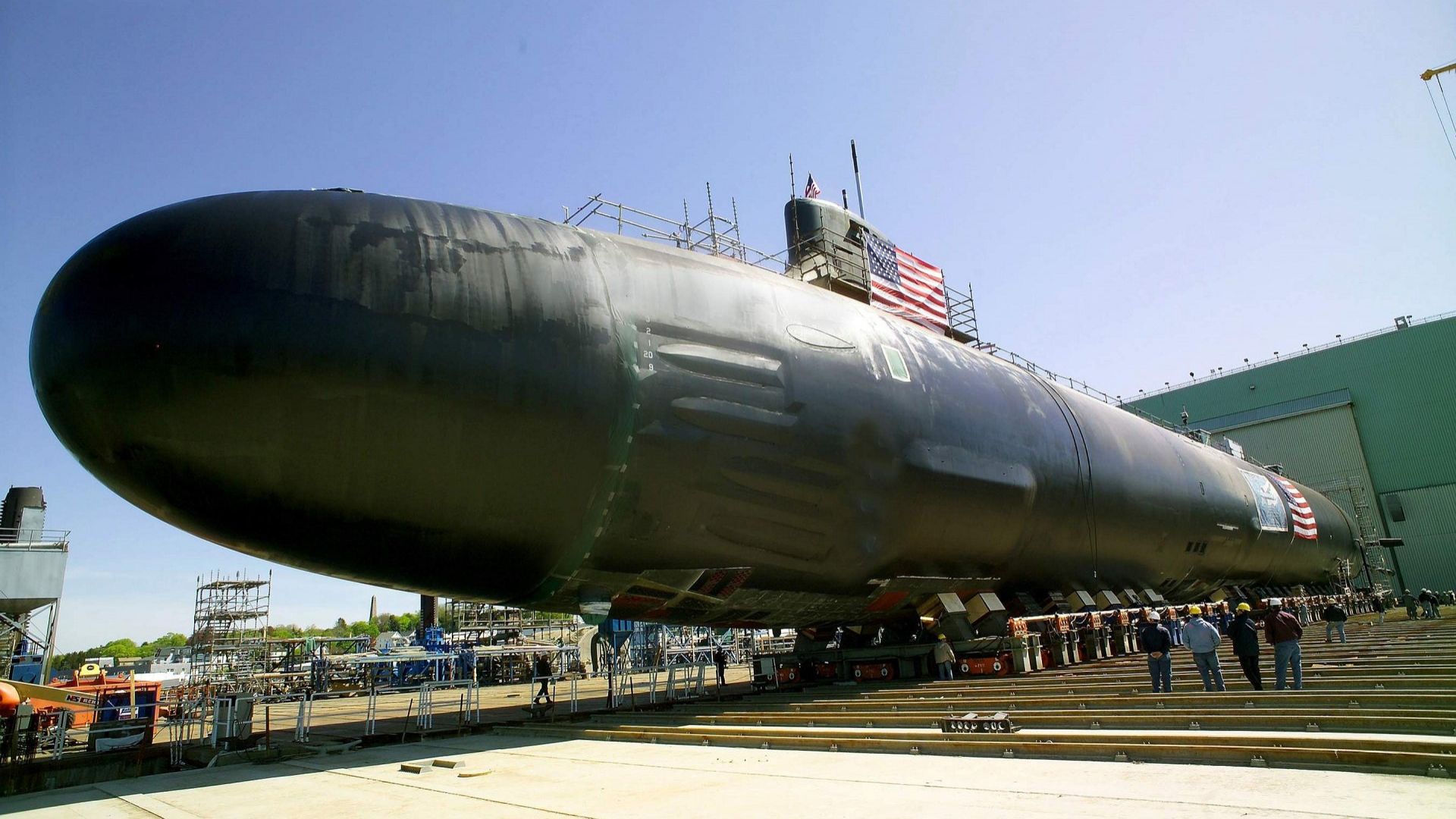
30-Meter Extension Transformed USS Jimmy Carter into a Unique Piece of the American Fleet, Increasing Cargo Capacity, Classified Technology, and Combat Power Within the Already Restricted Seawolf Class, Which Includes Some of the Most Advanced Nuclear Submarines in the U.S. Navy.
The USS Jimmy Carter, a nuclear attack submarine of the United States Navy, has become a case apart within its own fleet after receiving an additional section of 100 feet, about 30 meters, inserted into its hull to expand cargo space and accommodate technology related to classified research and development.
This extension, officially described as a multi-mission platform, brought the ship to 453 feet in length and a submerged displacement of 12,158 tons, figures that place it above the other two submarines in the Seawolf class in terms of scale and internal capacity, according to data from the Navy itself.
Nuclear Submarine of the Seawolf Class Outside of Standard
In the Seawolf class, made up of only three units, the contrast appears directly when comparing the hulls, as the USS Seawolf and the USS Connecticut are 353 feet long, while the Jimmy Carter adds 100 feet to the design, reaching 453 feet.
-
Drought may be creating stronger superbugs in the soil and helping antibiotic resistance reach hospitals, warns a study highlighting a problem that could grow alongside extreme weather.

-
The biggest scam in history: Napoleon’s France deceived the United States by selling them a territory that was Spanish.

-
Why is the Danakil Desert so dangerous? It has unstable terrain and how extreme temperatures and toxic gases turn the region into one of the most hostile environments on Earth.

-
With a height of 221 meters and a capacity for trillions of liters, Hoover Dam still holds a trick that makes water defy logic.


In addition to length, the submerged displacement also changes levels, because the first two ships in the class are listed at 9,138 tons, while the third submarine, with the extra section, rises to 12,158 tons, always according to the official technical specifications.
Adding a new segment to a pressurized hull is not equivalent to “stretching” a common vehicle, as nuclear submarines are designed to withstand pressure, operate quietly, and integrate sensors, systems, and compartments in a continuous manner without compromising performance.

Therefore, the logic behind the extra module is to create a volume dedicated to loads and equipment that can vary according to the mission, avoiding the need to redesign the entire ship for each new configuration, a point emphasized in institutional descriptions from the Navy.
What is the Multi-Mission Platform and Why Does It Matter
In public documents, the Navy describes the multi-mission platform as a section of the hull that “provides” capacity for additional payloads, aimed at accommodating advanced technology used in classified research and development, as well as contributing to “enhanced combat capabilities.”
In the same vein, a text from the Naval Sea Systems Command about a period of dry-docking and maintenance of the submarine defines the Jimmy Carter as “the last and most advanced” of the Seawolf class, highlighting that it retains the capabilities of the original model while adding the 100-foot extension.
This type of public formulation delineates what can be confirmed without delving into sensitive content, as official recognition focuses on the physical fact of the module, its general purpose, and the gain in flexibility, without detailing which systems are installed.
By treating the additional section as a multi-mission platform, the Navy also reinforces the notion of adaptability, as the extra internal space allows for different sets of equipment to be accommodated over time, with configuration adjustments as operational needs arise.
Weapons Capacity, Cargo, and Strategic Missions

The discussion about volume and payload makes more sense when observing the employment profile of an attack submarine, as the Navy itself defines this type of ship as capable of seeking and destroying submarines and surface ships, in addition to performing intelligence and reconnaissance tasks.
In this spectrum, power projection with Tomahawk cruise missiles and support for special operations forces are also included, while other missions involve participation in mine warfare operations and support for battle groups, according to the institutional description of this segment.
Within the Seawolf class, the Navy’s profile highlights that the submarines do not use vertical launchers but operate with eight torpedo tubes, which helps explain why the weapons compartment and internal cargo management become a central point.
According to the official material, the class can maintain up to 50 weapons in its compartment, which may include torpedoes and missiles such as the Tomahawk, a feature often cited to describe the expected combination of firepower and stealth of this type of platform.
When a ship is already designed with a large capability for weaponry and advanced sensors, gaining an additional hull section tends to expand the available space for other types of cargo, without this publicly implying any description about what is actually carried.
Naval Engineering, Stealth, and Operational Adaptability
The uniqueness of the Jimmy Carter is not just in the numbers, as what stands out is the decision to make permanent an engineering solution aimed at special missions, creating a dedicated area for equipment and configurations that can be associated with classified activities.

In surface ships, structural changes are usually more visible and photographable, while submarines operate away from cameras and rely on reducing traces, which makes a confirmed and measurable modification, such as the extension of the hull, carry symbolic weight.
The Navy’s technical specifications also help to gauge the impact of the “plug” by listing the construction by General Dynamics Electric Boat, nuclear propulsion, and a single shaft, and the width of 40 feet, parameters that need to remain balanced after significant changes.
Even with official confirmations about the existence of the module and its broad purpose, the details of what is onboard and how it is employed in each mission remain out of public reach, precisely due to involving classified research and development and sensitive operational routines.
If the Navy assumes that this submarine received an entire section of the hull to accommodate advanced technology and extra payloads, what kind of capability is considered strategic enough to permanently justify such a structural change in an attack ship?







-

Uma pessoa reagiu a isso.