





 Portuguese
  English
  Spanish
  3 min of reading
  4 comments


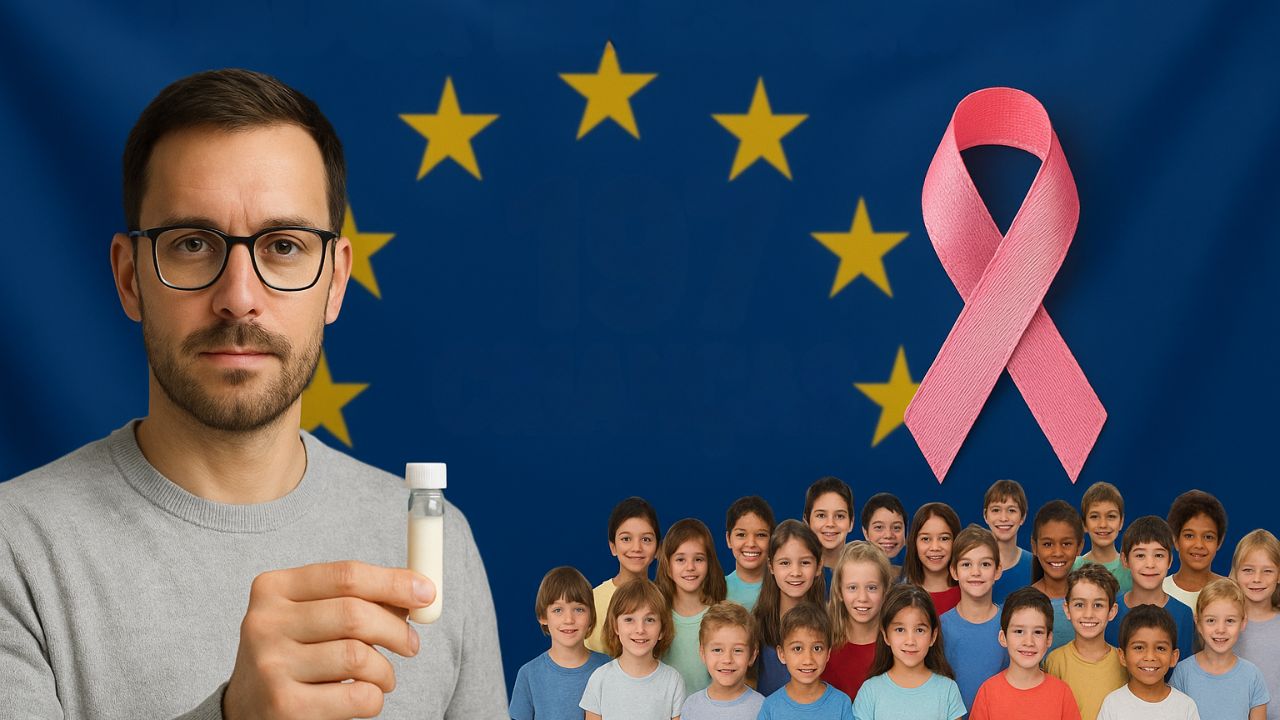


Investigation Reveals That A Sperm Donor With A Serious Genetic Mutation Fathered At Least 197 Children In Europe. Understand How The Case Was Discovered, Why It Raised Alarm In Clinics, And What Risks The Mutation Involves.
An international investigation revealed that a sperm donor with a serious genetic mutation is linked to the birth of at least 197 children in 14 European countries.
The discovery, made by media outlets that analyzed records from fertility clinics, shows that the man continued donating for almost two decades without tests identifying the alteration in the TP53 gene — which is responsible for drastically increasing the risk of cancer.
The case, identified in sperm banks distributed throughout Europe, exposed screening failures and raised concerns among families who are now seeking to understand how the mutation went unnoticed and why the material was used so widely over the years.
-
A 3,000-year-old city found in a “hidden treasure” in Uzbekistan reveals a preserved wall, interconnected rooms, and artifacts that help explain how urban life emerged along the ancient Silk Road.

-
Central Asian country will install devices capable of inducing artificial rain to combat drought and extreme heat, and the project could completely change the air quality in the region by 2027 using large-scale cloud seeding.

-
Rare phenomenon of silent electric flashes in trees on the east coast of the United States intrigues researchers, confirms century-old suspicion, and raises alarm about invisible environmental impacts.

-
A leak shows that Sony is preparing a more ambitious PlayStation in the PS6, with a handheld running current games natively.

Sperm Donor And Genetic Mutation: Investigation Expands Numbers And Concerns
An investigation coordinated by the European Broadcasting Union (EBU) with the participation of 14 public broadcasters in Europe identified that a sperm donor carrying a rare genetic mutation — linked to Li-Fraumeni syndrome — is responsible for at least 197 births in 14 countries on the continent.
This syndrome, caused by a change in the TP53 gene, is associated with up to a 90% risk of developing various types of cancer over a lifetime, including tumors at an early age and breast cancer in adulthood.
How Was The Material Used For Almost Two Decades?
According to the investigation, the man began donating sperm while still a student and continued for about 17 years.
Although he appeared healthy and passed standard screening tests, a mutation in some of his sperm went unnoticed.
It is estimated that up to 20% of the sperm cells carried the TP53 mutation.
When a child inherits this change, the mutation is present in all the cells of the body, drastically raising the risk of cancer over a lifetime. This hereditary condition is known as Li-Fraumeni syndrome.
Affected Families And Initial Cases Of Cancer
Reports from healthcare professionals indicate that among the tested descendants, some children who carry the mutation developed cancer, and some have died.
Doctors identified dozens of cases with the mutation among the approximately 67 children that were initially analyzed.
Experts warn that this number could be even higher, as not all children conceived with this donor’s sperm have been tested or identified.
European Sperm Bank And Failures In Control
The sperm was distributed by the European Sperm Bank (ESB), based in Copenhagen, Denmark, to 67 fertility clinics in various European countries.
The bank acknowledged that the material was used beyond recommended limits in some locations and stated that it immediately blocked the donor after the mutation’s discovery.
Although the bank claimed that the mutation could not be detected by the tests at that time, the situation raised doubts about screening criteria and the need for a review of genetic protocols in sperm banks and fertility clinics.
Variation In Donation Rules Among Countries
The regulations governing sperm donations vary significantly from one European country to another.
In some countries, there are strict limits on the number of families that can use sperm from the same donor, while in others, this restriction is more flexible, allowing a single donor to be used repeatedly.
This lack of standardization contributed to the material from this donor being used in numbers far beyond what health authorities consider safe or recommended, increasing the scope of this singular case.
Experts Call For Global Review Of Screenings And Usage Limits
The case of the sperm donor with a genetic mutation not only exposes gaps in verification procedures but also highlights the need for a broader debate on genetic screening and ethical limits for anonymous donations in a globalized context.
Researchers and healthcare professionals are calling for stricter and updated rules, as well as greater cooperation among countries to ensure that similar cases do not occur again.







Simples… Talvez teoria da conspiração, mas indústria farmacêutica investe agora para ficar bilionária daqui 30 ou 40 anos
Nao duvido, essa industria é podre
Banco de esperma é a coisa mais **** do planeta. Imagina criancas irmãos se relacionando sem saber no futuro que sao irmãos de sangue. Se nao pode ter filhos de forma natural é so nao ter e pronto.
Penso o mesmo. ADOTA!!!!