





 Portuguese
  English
  Spanish
  5 min of reading
  1 comment


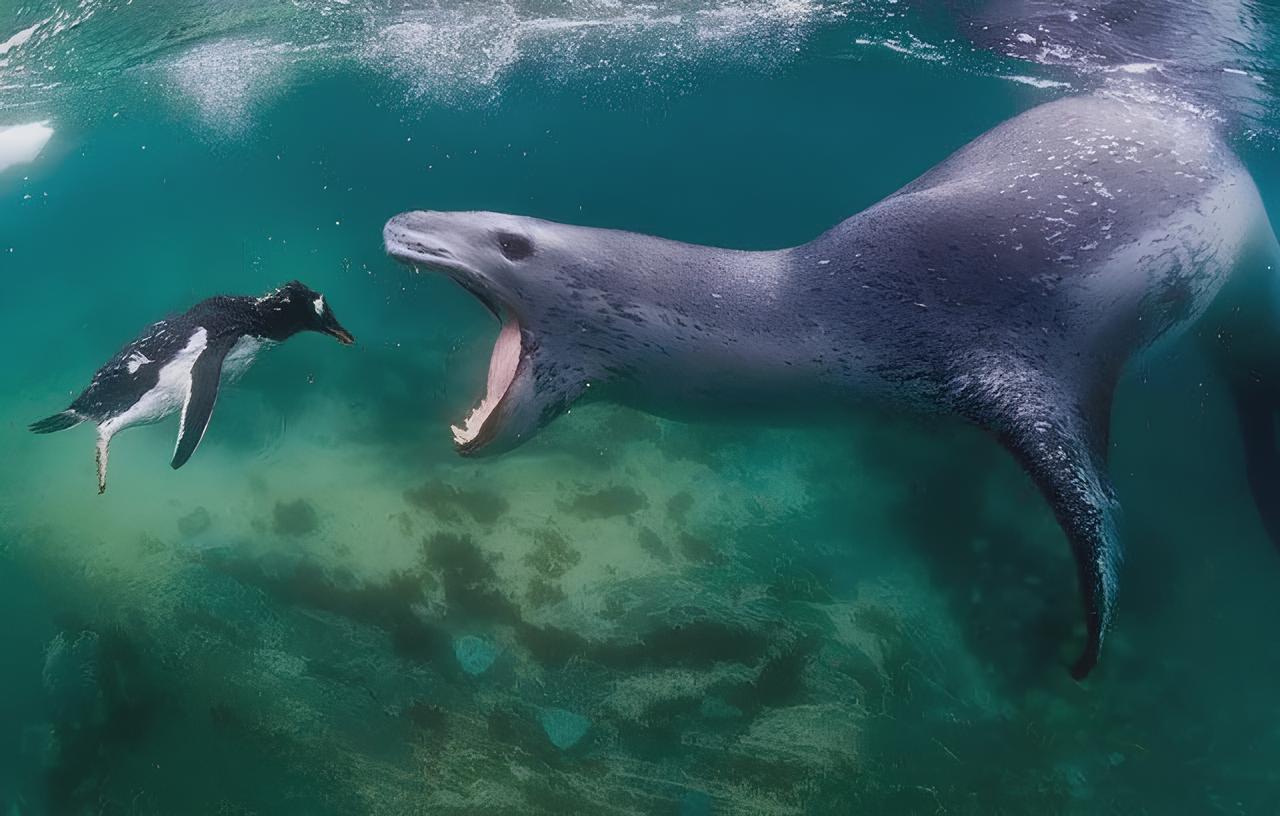


Leopard Seal Uses Water, Ice, and Underwater Ambushes to Hunt Penguins with Extreme Efficiency in Antarctica, Intriguing Polar Biologists.
Few people imagine that, in the southernmost part of the planet, where the sea freezes and the wind can cut like a blade, there exists a predator so agile that uses ice as a tool and water as a weapon. This is the leopard seal (Hydrurga leptonyx), a marine mammal up to 3.5 meters long and over 500 kilograms, which has one of the most surprising hunting behaviors ever documented in the polar fauna. Unlike other predators that rely on brute force or open chases, the leopard seal adopts a strategy that mixes stealth, patience, explosive power, and intelligent use of underwater topography.
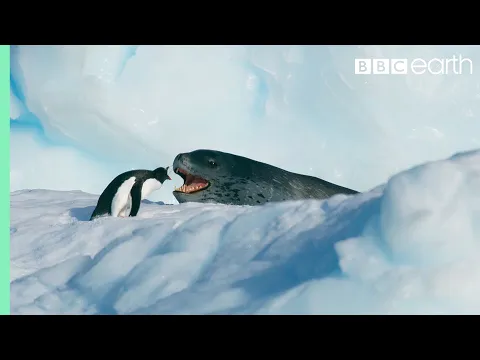
The most well-known scene involves penguins. While these birds jump from the ice or land in the water to fish, the leopard hides under ice platforms, remaining partially motionless. When the opportunity arises, it accelerates with the force of its flippers and captures the prey before the penguin can emerge. This behavior is not casual, but part of a set of anatomical and ecological adaptations that allow the leopard seal to dominate a food chain that appears inhospitable from a distance.
A Solitary Predator in the Kingdom of Ice
Unlike sea lions, fur seals, and whales that form large groups or interact socially, the leopard seal is markedly solitary.
-
With a cost per shot close to zero, the DragonFire laser could change naval warfare in 2027 and provide British ships with nearly unlimited defense against drones.

-
A British startup creates tires that generate electricity in electric vehicles when passing over potholes, speed bumps, and cracks.

-
Scientists have created robots made with living cells that have their own nervous system, swim on their own, explore the environment, and self-organize without any genetic engineering, and now they want to do the same with human cells.

-
Students create a solar-powered ambulance that operates without a plug, without fuel, and still keeps medical equipment running in remote areas.




Adults travel large areas of the Southern Ocean, frequently alternating between ice-covered regions in winter and open waters in summer. This broad geographical distribution requires ecological flexibility, as prey are not always concentrated in the same location.
The diet is varied and opportunistic. In addition to penguins, the leopard seal can capture:
- icefish adapted to extreme cold,
- krill, one of the main energy bases of the ecosystem,
- various seabirds,
- young seals when the opportunity arises.
This versatility helps explain how it remains at the top of an environment where food fluctuates seasonally to an extreme degree. While other marine predators depend on schools of fish or migrations, the leopard employs ambush tactics and environmental reading.
Anatomy for Chasing, Crushing, and Processing Prey
Physically, the leopard seal seems built for underwater pursuit. It has:
- hydrodynamic body, capable of gliding with low resistance,
- powerful flippers, used for quick bursts,
- robust head, with a wide and muscular jaw,
- conical teeth, perfect for gripping and holding live prey.
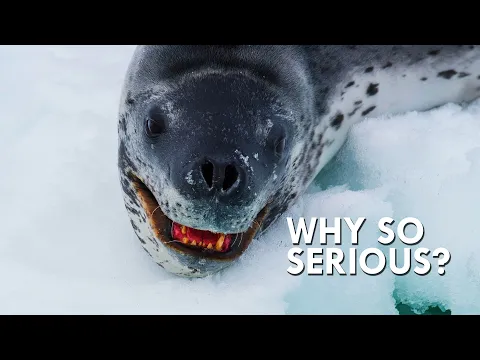
Its skull is proportionally larger than that of other seals, and the jaw structure resembles that of terrestrial predator mammals. This makes sense when we observe how it deals with penguins: after capturing the animal, the leopard surfaces, shakes it vigorously, and removes feathers and skin before consuming the muscle.
Polar biologists have described this process as “whipping off,” a technique that allows access to the most nutritious parts of the prey without choking on feathers.
Despite this, the leopard seal also has smaller sieve-type teeth, allowing it to filter krill, a behavior that reveals a rare anatomical flexibility: a single predator capable of using two distinct feeding strategies.
Water as a Trap and Ice as a Tool
The most fascinating aspect of predatory behavior involves the use of physical elements from the environment. Ice serves as:
- camouflage for the predator, which remains hidden under edges or platforms,
- barrier for penguins trying to escape,
- resting platform for consuming the prey.
Water, in turn, is used as a three-dimensional environment, where the leopard can accelerate vertically, horizontally, or diagonally with immense control. For penguins, the sea is both a source of food and a field of vulnerability. If a penguin dives into an opening in the ice and the leopard is below, the chance of escape decreases drastically.
This relationship between prey and predator creates spectacular images: penguins leaping from the sea to the ice at perfect angles, often with the leopard emerging right behind. Footage captured by researchers and documentarians has turned this behavior into one of the icons of Antarctic ecology.
Field Studies and Observations: What Science Knows
Researchers monitoring leopard seal populations in regions such as King George Island, Ross Sea, and Antarctic Peninsula have noted that:
- individuals display distinctive identifying marks on their faces,
- many have deep scars, suggesting aggressive interactions,
- females are larger than males, a common reversal in pinnipeds,
- young depend on their mothers for months before acquiring hunting skills.
Despite this, many biological gaps still exist. There are few studies on:
- true longevity in natural environments,
- territoriality among adult individuals,
- energy needs and metabolic rate,
- effects of ice melt on predatory behavior.
Antarctica is one of the least accessible and most expensive ecosystems to study, which explains why we still know less about the leopard seal than about felines and whales.
Climate Change and Ecological Pressures
An important point is the impact of climate change on the leopard’s habitat. Seasonal ice reduction may alter:
- availability of platforms for ambushes,
- penguin migration patterns,
- krill distribution,
- competition with other predators.
The Antarctic krill is highly sensitive to changes in the extent of sea ice, as it depends on phytoplankton associated with the ice. If the krill decreases, the entire food chain — whales, seals, penguins — is impacted. There is still no scientific consensus on how the leopard will adapt to scenarios of reduced ice. Its flexible diet may help, but polar ecology is complex and interconnected.
Adaptation in a World of Extremes
The leopard seal is proof that life finds strategies in the most unexpected places. While penguins need to dive for food and return to the ice to breathe, the leopard has learned to turn this back and forth into an opportunity.
What seems merely brutal at first glance is actually the result of millions of years of selection, refined physiology, and environmental reading.
In the end, observing a leopard appearing under the ice to capture a penguin is not just seeing a predator in action; it is witnessing a demonstration of how ecology, geophysics, and animal behavior intertwine in one of the most extreme environments on the planet.
The question that remains is: in a world that is changing too fast, how many of these behaviors will still be observable in the future?








Matéria excessivamente extensa, obviamente gerada por IA, com clara intenção de prender o leitor para monetização, sem ao menos agregar informação
Assim como a ilustração, a qual mostra um **** que mais se assemelha a um dinossauro do que a uma foca. Lamentável chamar a isso de jornalismo