





 Portuguese
  English
  Spanish
  4 min of reading
  0 comments


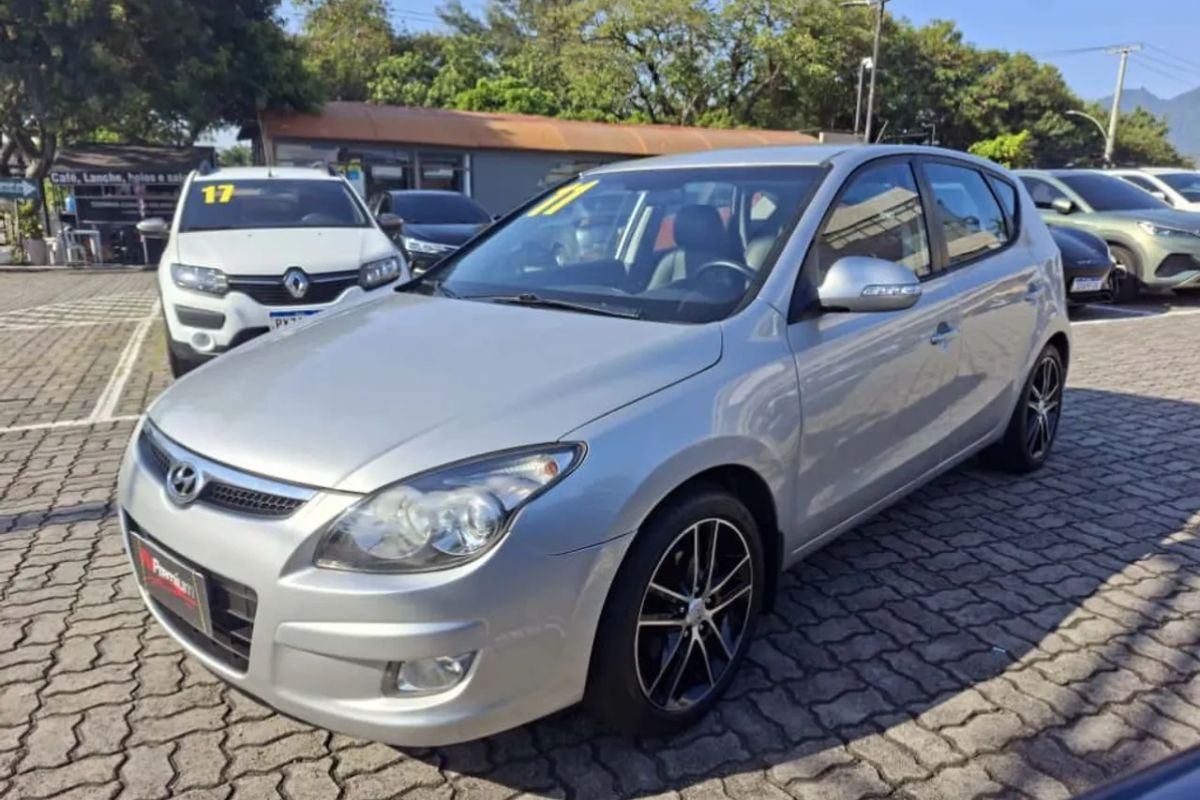
Hyundai i30 2011 Automatic Still Relevant Around R$ 40 Thousand
Hyundai i30 2011 remains a compact hatchback that has aged well, offering a complete package, ample equipment, and solid driving for those looking for a rational and comfortable used car in the R$ 40 thousand range, with a balanced urban and highway proposal.
Hyundai i30 2011 automatic combines a 2.0 16V engine, a four-speed transmission, a good level of finish, and a list of features typical of higher versions, delivering what many newer models still owe to consumers who value content, ergonomics, and a sense of robustness.
Package and Positioning in the Used Market
The Hyundai i30 2011 was launched at a time when compact hatchbacks needed to prove their value through content, and it responded with a generous setup from diamond wheels to a sunroof. In the used market, it remains interesting precisely because of this package, which includes disc brakes on all four wheels, integrated parking sensors, and solutions that make daily life easier.
-
The car stored for 38 years: when opening the barn door, what appears is breathtaking and looks like a scene from a movie!

-
Fiat works miracles in the Brazilian market, lowers the price of its 0 km hatch to R$ 69,990, reestablishes the model as the cheapest car in the country, and reignites the battle against Kwid and C3.
-
Chevette with cooking gas: How the gas cylinder ends up being used in cars clandestinely and why this makeshift solution can result in leaks, explosions, damaged engines, and seized vehicles.

-
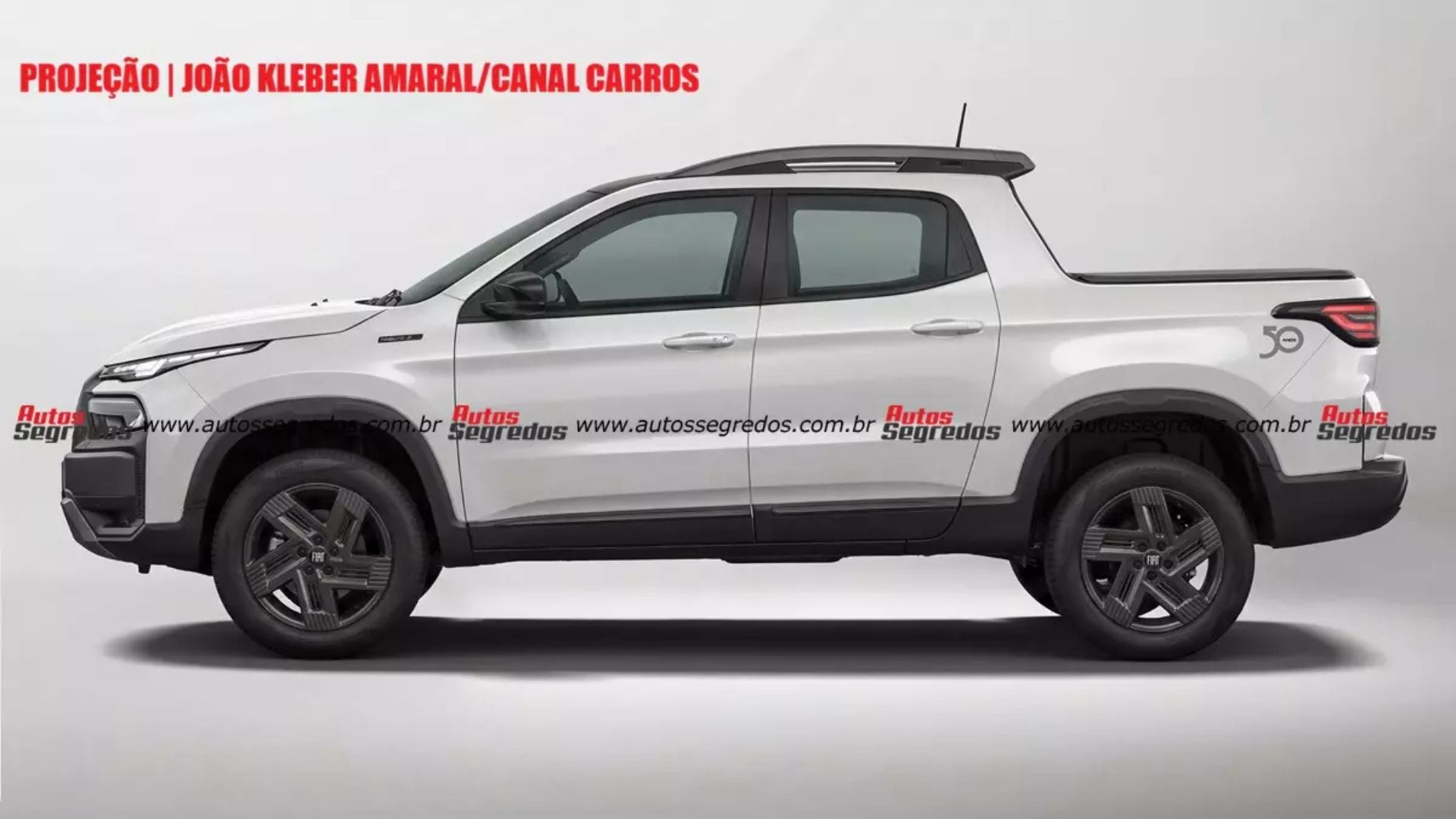
Fiat launches the new 2027 Toro hybrid with 48V, 176 hp, an electric motor of 15.5 hp, a 0.85 kWh battery, up to 7% fuel savings, 8% fewer emissions, and possible exemption from IPVA.

In terms of proposal, it is a comfortable compact hatch with steering that inspires confidence and an interior that conveys solidity.
The focus here is to deliver “everything together”: design, equipment, adequate space for the family, and ease of use, without relying on screens and recent trends.
Powertrain and Transmission
Under the hood, the Hyundai i30 2011 features the well-known 2.0 16V engine with 145 hp and approximately 19 kgfm at 4,600 rpm, a setup that prioritizes linearity and smoothness.
The calibration works well with the mass of approximately 1,320 kg and communicates with a four-speed automatic that, although simple, is progressive in shifts and has a sequential option.
It’s important to note the technical choice: the 4AT limits efficiency and cruising RPM, but offers mechanical robustness and smooth operation when in good condition. In urban use, the response is relaxed, and on the highway, the engine maintains speed with ease, especially with the cruise control activated.
Consumption and Real Performance
In user reports, the Hyundai i30 2011 automatic has figures consistent with the architecture of the setup: about 6.5 to 7 km/l in the city and around 13 to 13.5 km/l on highways, always running on gasoline and with moderate driving. It’s not a hatch for economy records, but it delivers consistency and mechanical silence, points that matter for those who drive a lot outside of heavy traffic.
In terms of performance, the 2.0 offers honest acceleration and safe overtaking when kept within the torque range. The dynamics in corners is a strong point, with good stability and a “planted” feel thanks to the suspension and tire width compatible with its size.
Space, Ergonomics, and Finish
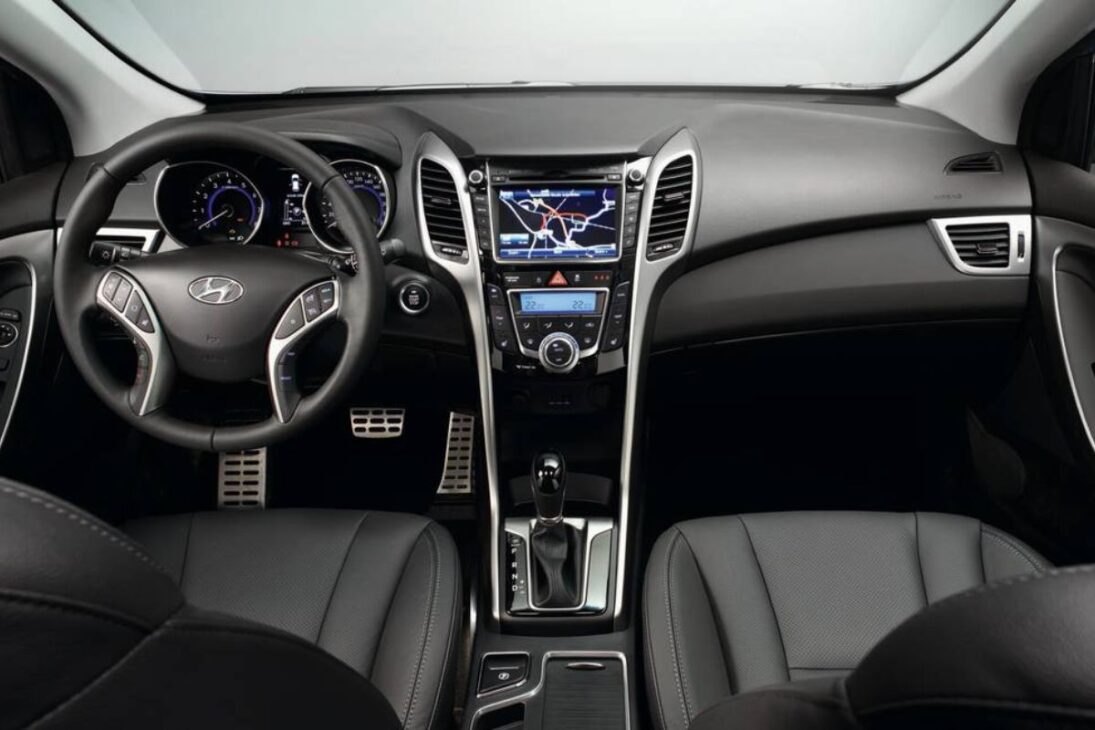
The interior of the Hyundai i30 2011 is one of its strong points. There’s soft touch on the dashboard and doors, comfortable seats with height adjustment, and a well-gripped steering wheel with height and depth adjustments. In the back, the knee space is satisfactory for adults, and the sunroof takes up a bit of headroom without compromising usability.
In the center, the sound system reads MP3, has USB and auxiliary, but does not offer native Bluetooth, something to consider for those who rely on phone streaming.
The air conditioning is digital with automatic function, and the convenience package includes automatic headlight activation, rain sensor, and auto-dimming rearview mirror, features that enhance the daily experience.
Trunk and Daily Use
The 340-liter trunk is fully lined and illuminated, with electric opening and good geometry for medium luggage.
The spare tire is temporary, intended for short trips until replacement, and the lid has a neat finish, reinforcing the sense of a well-thought-out design.
In the rear seat, there’s an armrest with cupholders, automatic power windows, and curtain airbags. There are no air vents or dedicated outlets for those sitting in the back, a reflection of the time. The center rear seat belt is not a three-point, a point of attention for families that prioritize the middle seat.
Safety and Driver Assistance Features
In addition to disc brakes on all four wheels and curtain airbags, the Hyundai i30 2011 features switchable traction and stability control, useful on wet surfaces or during sudden maneuvers.
The parking sensors are integrated into the bumper and help in urban routines, especially where rear visibility is more limited.
In practice, the body conveys rigidity and the chassis responses are predictable. It’s a hatch that communicates well what it’s doing, which translates into confident driving on fast roads and sweeping curves.
Attention Points and Purchase Verdict
Like any used car, the Hyundai i30 2011 requires a standard checklist: condition of the 4AT transmission (smooth shifts without slipping), air conditioning system, integrity of the rain and light sensors, operation of the sunroof, and presence of up-to-date maintenance.
In terms of finish, it’s worth inspecting the handbrake trim and upholstery, which may show signs of wear over time.
The verdict is simple: if city fuel consumption is not the deciding factor, the first-generation automatic i30 remains a rational purchase for those looking for a compact hatch with a rich package, solid driving, and above-average finish.
In the R$ 40 thousand range, it still delivers everything it promises and supports a proposal that has aged little, focused on comfort and real use.
For you, what weighs more when choosing a used hatch in this range: low consumption or a complete package like that of the Hyundai i30 2011?









-

Uma pessoa reagiu a isso.