





 Portuguese
  English
  Spanish
  3 min of reading
  0 comments


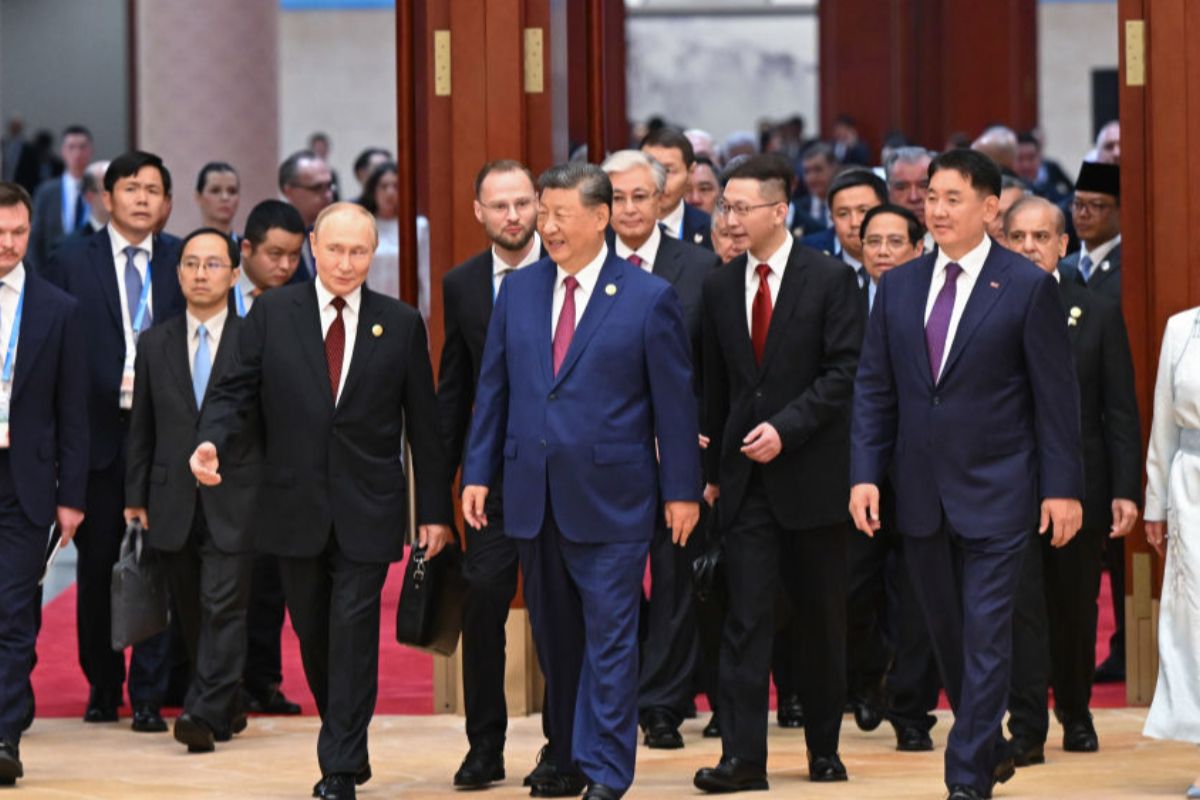
Shanghai Cooperation Organization Summit in Tianjin Brings Together More Than 20 Leaders; Xi Announces US$ 84B and 10,000 Luban Scholarships, Defends AI Cooperation and Rejects “Cold War”
According to the newspaper CNBC, the largest summit of world leaders, held in Tianjin, China, brought together more than 20 heads of state from the Shanghai Cooperation Organization (SCO). The meeting concluded with the announcement of US$ 84 billion already invested by China in member countries and the creation of 10,000 slots in the Luban educational program, aimed at technical and vocational training. President Xi Jinping’s message was clear: reinforce economic and technological cooperation, especially in areas such as artificial intelligence, and reject what he referred to as the “Cold War mentality.”
The initiative comes at a time of significant global tension, with war in Ukraine, crises in the Middle East, and trade disputes between China and the United States. Beijing’s bet is to present itself as an alternative to global leadership, combining money, education, and diplomacy to expand its influence in Eurasia.
What’s at Stake in the SCO Summit
The Shanghai Cooperation Organization is a bloc that brings together China, Russia, India, and Central Asian countries, focusing on security, economy, and regional integration. Established in the early 2000s, the SCO is now seen as a counterweight to U.S. and European Union influence on strategic issues.
-
A new Brazilian shopping center worth R$ 400 million will be built in an area equivalent to more than 4 football fields, featuring 90 stores, 5 cinemas, a supermarket, a college, and parking for 1,700 cars, potentially generating 3,000 jobs.

-
Larger than entire cities in Brazil: BYD is building a 4.6 km² complex in Bahia with a capacity for 600,000 vehicles per year, but the discovery of 163 workers in conditions analogous to slavery has shaken the entire project.

-
With an investment of R$ 612 million, a capacity to process 1.2 million liters of milk per day, Piracanjuba inaugurates a mega cheese factory that increases national production, reduces dependence on imports, and repositions Brazil on the global dairy map.

-
Brazilian city gains industrial hub for 85 companies that is equivalent to 55 football fields.


This edition saw the participation of leaders such as Vladimir Putin (Russia), Narendra Modi (India), and Recep Tayyip Erdogan (Turkey), in the midst of pressure from the 50% tariffs imposed by the U.S. and military tensions in different parts of the world. For Beijing, ensuring a strong presence and announcing concrete measures strengthens its image as a country willing to “build bridges” rather than deepen divisions.
Investments and Scholarships: Eye-Catching Numbers
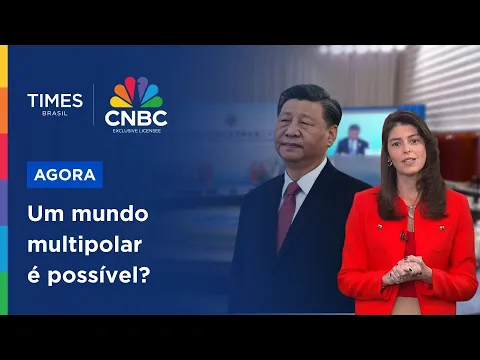

According to data released by the Chinese press and echoed by CNBC, China has already invested US$ 84 billion in SCO member countries, in projects ranging from energy to infrastructure. Furthermore, Xi Jinping announced 10,000 scholarships for the Luban program, aimed at training young people in technical fields.
This educational package is seen as a complement to the investment strategy. By training qualified labor in partner countries, China expands its network of influence and ensures that its projects find professionals already adapted to the Chinese technological and productive logic.
Message Against the “Cold War”
The most symbolic point of Xi’s speech was the rejection of what he called the “Cold War mentality.” The phrase directly echoes Beijing’s criticisms of the U.S. government, accused of creating trade barriers and dividing the world into political blocs. For China, the path is to bet on technological cooperation, regional integration, and joint development.
By advocating for artificial intelligence as a priority area, Xi attempts to position China not only as an industrial power but also as a reference in innovation, capable of leading discussions on ethics, regulation, and the strategic use of technology.
Impact on Brazil and the World
Although it is not part of the SCO, Brazil closely monitors the developments of the summit. As a major exporter of commodities and a trading partner of China, any progress in regional projects could change global investment and trade chains. Additionally, the alignment between China, India, and Russia within the SCO creates new geopolitical dynamics that could directly influence debates within BRICS and in international forums.
The largest summit of world leaders sent clear messages: money, education, and technological cooperation will be Beijing’s weapons to consolidate influence and attempt to reduce reliance on power structures led by the West. The challenge, however, will be to turn promises into concrete actions in a bloc that brings together countries with often divergent interests.
And you, do you think these announcements from China can really change the global balance or are they just another move of influence? Leave your opinion in the comments — we want to hear from those who live this in practice.






-

-

4 pessoas reagiram a isso.