





 English
  Francês
  Alemão
  Italiano
  Japonês
  Norueguês
  Portuguese
  Spanish
  7 min of reading
  0 comments


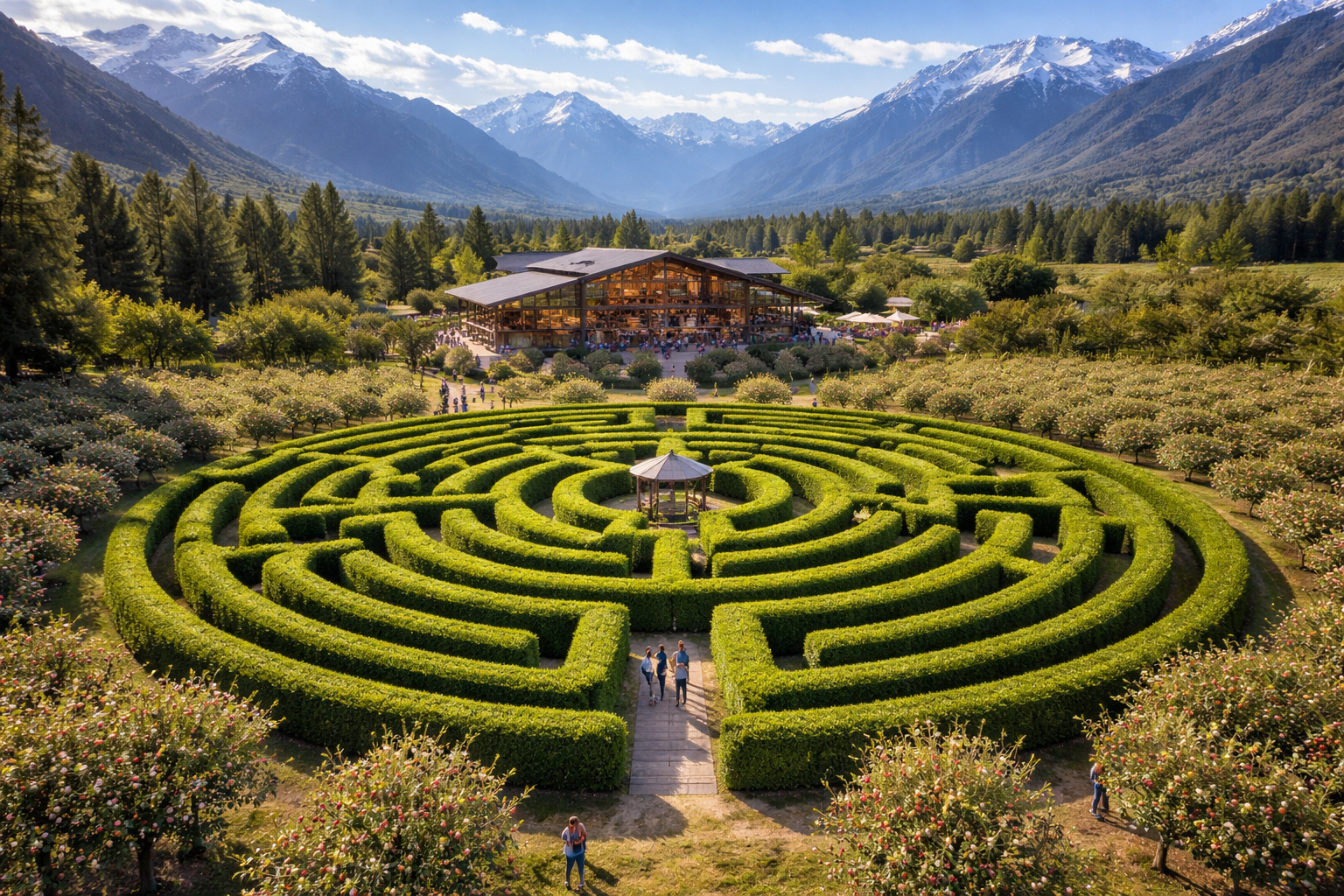
In The Midst Of The Patagonian Mountains, A Restaurant Born From A Family Orchard Combines Seasonal Gastronomy, Tourist Maze, Artisan Confectionery And Exclusive Ciders Produced On The Farm
In the heart of Argentine Patagonia, a unique culinary project has been winning over travelers and food lovers. Located in the region of El Hoyo, in Chubut, the restaurant Sidra offers an experience that goes far beyond a traditional meal. The space brings together seasonal gastronomy, artisanal cider production, a tourist maze, confectionery, and an apple orchard that gave rise to the entire story of the venture.
The information was shared by La Nación, which reported on the behind-the-scenes of one of the most curious culinary projects in the Andean region of Patagonia. According to a report published by the Argentine outlet, the restaurant arose from the journey of a family that has been producing cider for over 40 years at the 42nd parallel, transforming agriculture, tourism, and cuisine into a single gastronomic ecosystem.
Although today the Sidra restaurant is a sought-after tourist destination, its origins trace back to a simple and family story. Long before there was a restaurant, a menu, or a structured gastronomic space, there was only an orchard and a family tradition tied to artisanal cider production.
-
Seen from space, a colossal ‘Y’ cuts through the largest desert in China, blending a jade-filled river, red and white mountains, and revealing the absurd scale of the transformation of the Taklamakan surrounded by a green wall with billions of trees.

-
The Pacific Ocean reveals what the cliffs of Big Sur have hidden for millennia: Pfeiffer Beach, in California, features swirling purple sand formed by garnet crystals and displays a stone arch that is illuminated by the sun in winter for just a few days each year.

-
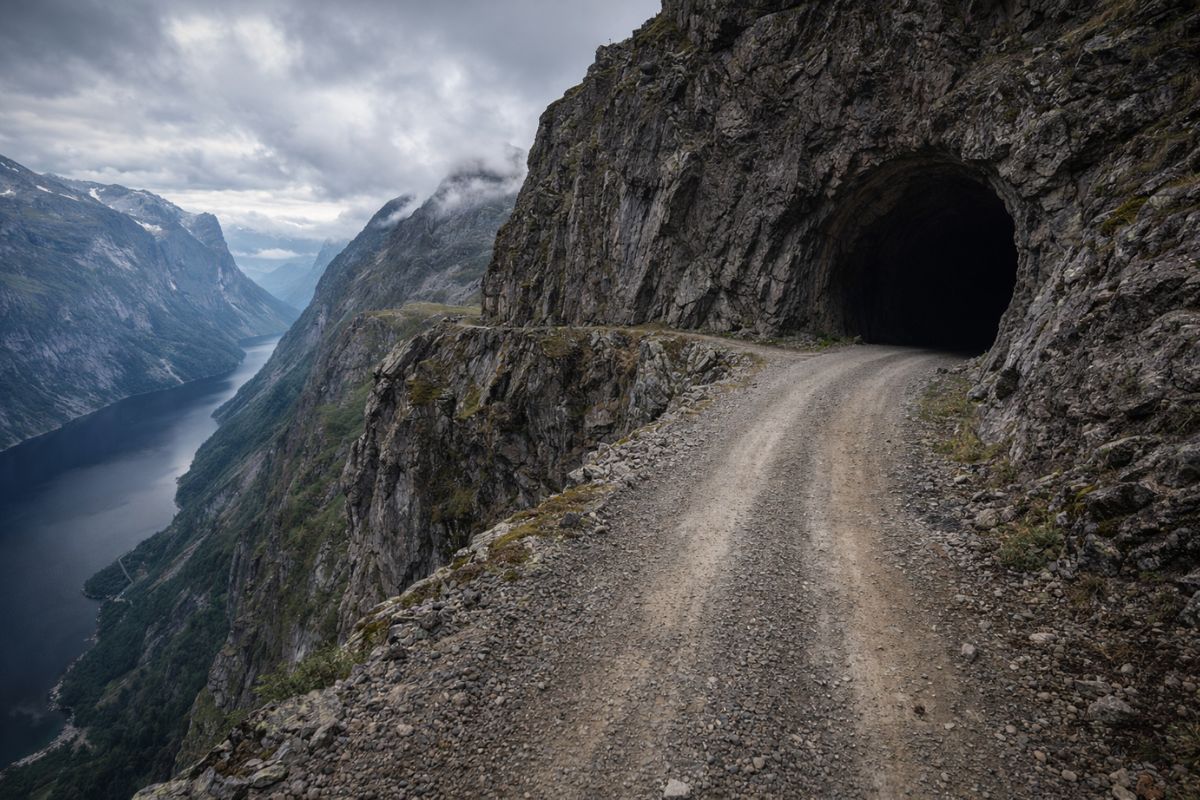
Aursjøvegen in Norway is a 100-kilometer gravel road that crosses chasms and dark tunnels carved into the rock at an altitude of 947 meters in the fjords and is only open for four months a year.
-
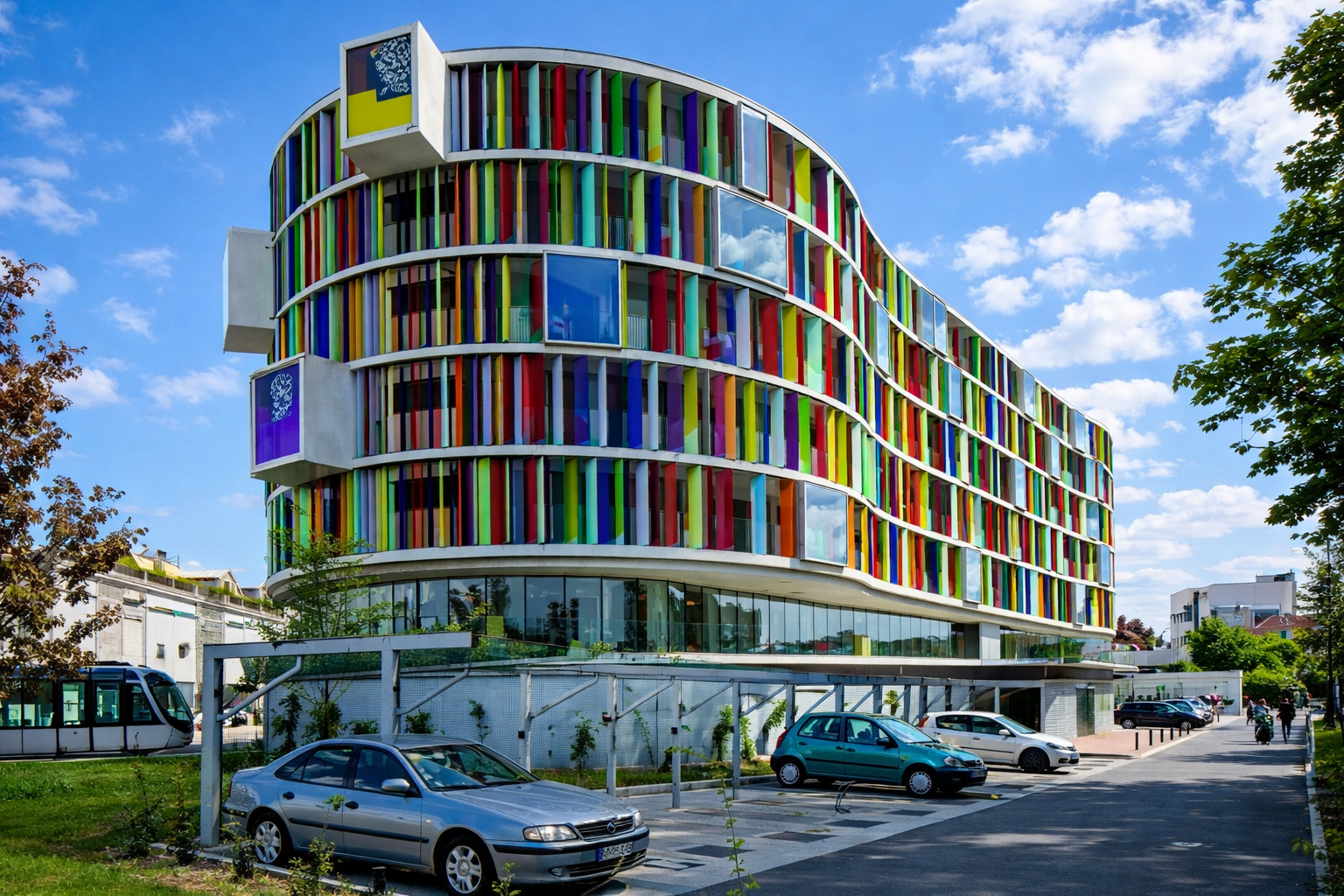
With about 4,000 m², the building constructed in a traditional neighborhood in France looks like a rainbow, has a colorful facade, mixes vibrant glass, and creates one of the most unusual visuals in Bordeaux.

The Family Story That Transformed An Orchard Into A Gastronomic Experience
The origins of the project date back to 1984, when Claudio Levi, Lucía Romera’s brother-in-law, began producing traditional apple cider in the valley of the region. At the time, production followed a simple method: natural fermentation using the fruits grown on the farm.
Together with Doris, Lucía’s sister and the creator of the famous tourist maze on the property, Claudio planted the first apple trees in the orchard. At that time, Lucía was still a child, but she already participated in the daily work of the farm.
She fondly remembers this period of her childhood.
According to Lucía, growing up among apple trees shaped her relationship with the land and agricultural production.
— “I grew up among apple trees. The harvests marked the family calendar. The cold of the early morning, the aroma of freshly cut fruits, and the warehouses full of boxes were my school”, she recalls.
Over the years, the orchard became a fundamental part of the family’s identity. However, the creation of the restaurant did not arise from a traditional strategic plan.
In fact, there wasn’t a specific founding moment or a formal opening ceremony. The project developed naturally, following the growth of the property and the activities related to cider production.
Lucía was born and raised in El Hoyo, while Fran Firpo, who would become her life and business partner, arrived in Patagonia as a child at the age of two.
Interestingly, the beginning of their relationship is also directly linked to the beverage that now defines the restaurant.
— “When I met Fran, the first thing I did was invite him to make chicha. And now we have our restaurant, Sidra”, she says, still surprised by how events have connected over time.
From Artisan Confectionery To A Gastronomic Destination In Patagonia
For 13 years, Lucía and Fran managed the confectionery located within the property’s tourist park. During this period, they produced cakes and desserts using ingredients from their own orchard.
The recipes featured fruits grown on the farm, organic eggs, and homemade cream, maintaining the tradition of working with natural and local products.
Meanwhile, the maze in the park became increasingly popular among visitors to the region. Tourists walked through the maze’s corridors and inevitably began to show interest in the story of the cider produced there.
Many visitors asked questions: they wanted to know where the cider was produced, what the apple trees were like, and what was happening in the orchard located behind the park.
It was from this curiosity that the idea for the restaurant emerged.
— “We always wanted cider to be more than just a product. We wanted it to be a complete experience”, explains Lucía.
Thus, the project began to take shape almost inevitably. If the cider was born there, if the apples grew in that orchard, and if the landscape was part of the identity of the drink, then the gastronomy should also tell that story.
The result was the creation of the Sidra restaurant, officially inaugurated in 2023, in the same space where the family had already cultivated the apple trees and produced the beverage.
Since then, the project has continued to grow.
A Restaurant That Functions In Harmony With The Seasons Of Patagonia
The operation of the restaurant directly follows the rhythm of nature. Unlike many urban establishments, the routine at Sidra begins very early.
During the harvest period, mornings start in the plantation. The team checks the condition of the fruits, measures sugar levels, and plans the apple harvest.
Lucía explains that the work on the farm is extremely physical and connected to the environment.
According to her, there is something very tangible in this process: the cold in the hands, the silence of the farm, and the direct contact with the earth.
After working in the fields, the action shifts to the kitchen, where the rhythm changes completely. Equipment comes into operation, dishes are tested, and ciders start being served.
This model allows the restaurant to operate in harmony with the climate and the seasons.
When there is frost, the rhythm changes. When the apple trees bloom, a new season begins.
In the summer, the restaurant experiences its most intense moment, with a large flow of tourists, full tables, and constant service.
In the winter, the atmosphere becomes more intimate and quiet.
Lucía explains that the restaurant is not limited to gastronomy alone.
— “We like to think that we work in an ecosystem. Agriculture, orchard, organic products, and gastronomy are part of the same story”, she asserts.
Seasonal Menu Combines Local Products And Artisanal Cider
The menu at Sidra restaurant is intentionally short and changes according to the availability of ingredients.
Instead of following global culinary trends, the team prefers to cook with what the land offers in each season.
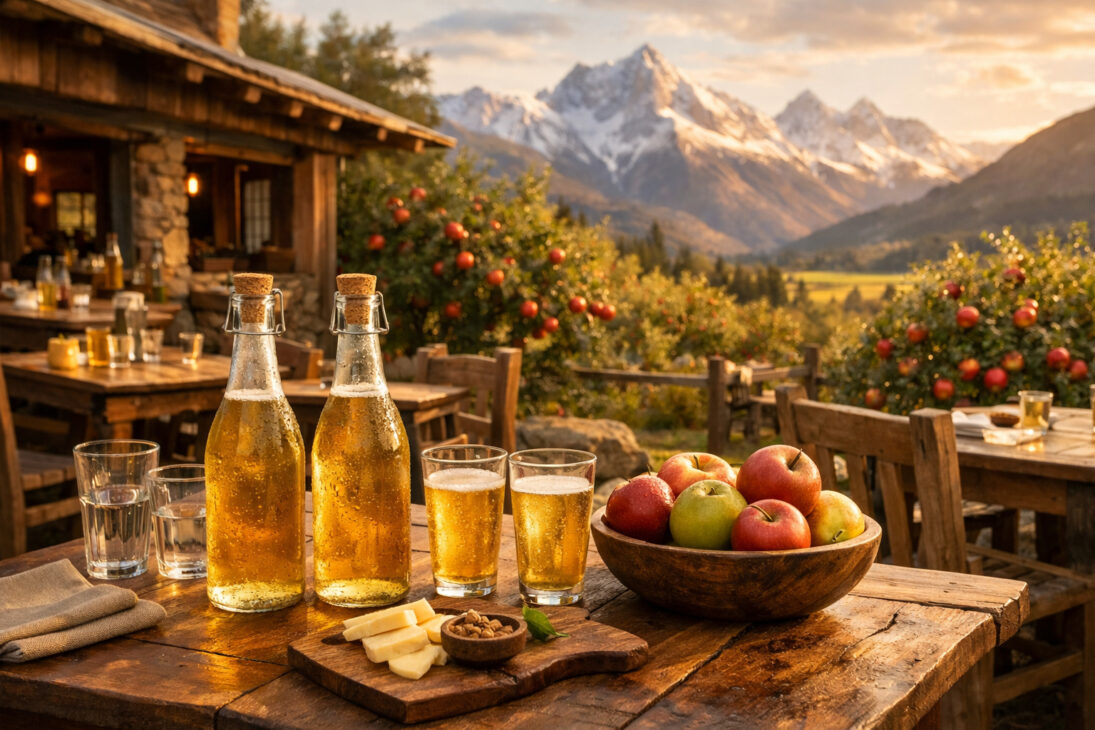
During the summer, for example, the menu includes lighter dishes, such as trout served with organic vegetables and fennel, as well as grilled zucchini and other fresh recipes.
These dishes are designed to pair well with lighter ciders and sparkling wines.
In the winter, the menu features heartier preparations. Among them are lamb curry, smoked ribs with apple puree, and dishes made with local mushrooms.
These recipes pair better with ciders crafted using the traditional method or with special batches of the beverage.
The restaurant’s kitchen is led by chefs Noelia Kielbasa and José Maisonnave, who have been part of the project from the beginning.
Even with the growth of the team, the philosophy remains the same: local products, careful technique, and consistent production.
Artisanal Cider Continues To Be The Heart Of The Project
Although the restaurant has become an important culinary destination in Patagonia, cider remains the true thread running through the entire experience.
The production of the beverage occurs in partnership with winemaker Darío González, but the daily work remains in the hands of Lucía and Fran.
According to them, the goal has always been to produce the most natural ciders possible.
— “We do all the alchemy of production. We try to produce organic ciders, without added sugar”, explains Lucía.
Among the different methods used, one of the most curious is that of ice cider.
In this process, the apples remain on the tree until they naturally freeze.
With the low temperatures, the water from the fruit freezes while the fructose remains liquid.
The result is a naturally sweet cider, balanced by the apple’s natural acidity.
Despite the success of the beverage, production will remain limited.
Lucía states that the scale of the project will always be small to preserve quality.
Currently, in addition to the restaurant, the cider can also be found in just two establishments in Buenos Aires: Don Julio and El Preferido de Palermo.
A Complete Experience That Goes Beyond Gastronomy
The experience at Sidra restaurant does not start or end at the table.
Most of the time, visitors begin their journey by exploring the park’s maze, then passing through the artisan confectionery, visiting the digital art gallery, and finally arriving at the restaurant.
From the high point of the property, the space offers panoramic views of the Patagonian valley.
Additionally, the restaurant works with organic gardens, artisanal fishing, and meats from pasture-raised animals, reinforcing the proposal of gastronomy connected to the territory.
Lucía believes that this whole combination creates something deeper than a simple meal.
— “If you eat something delicious in a beautiful place, accompanied by special ciders, you create an experience. You create a state of mind”, she says.
Recently, the family also opened Estilo Sidra, a gastronomic space dedicated to selling the bottles produced on the farm and other selected products.
However, despite the new additions, the essence of the project remains the same.
In a world dominated by marketing strategies and branding, Lucía prefers a much simpler explanation.
— “For us, it’s not an isolated venture. It’s continuity. It’s part of our environment and our passion”, she concludes.
In the end, the image that summarizes the entire story remains unchanged: a girl watering apple trees on a farm at the 42nd parallel in Patagonia.
Would you travel to Patagonia to experience a culinary journey like this, in a restaurant literally born within an apple orchard?








Seja o primeiro a reagir!