





 Portuguese
  English
  Spanish
  5 min of reading
  0 comments



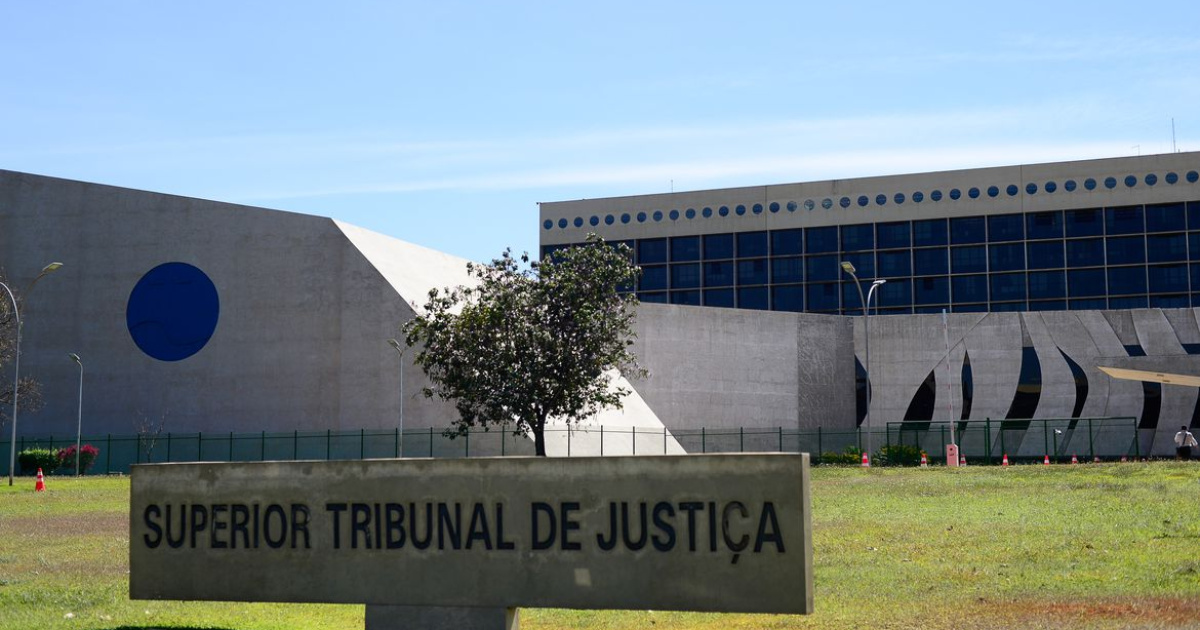
Superior Court of Justice Reinforces That the Penalty for Early Termination Can Only Be Enforced When There Is an Express Contractual Clause, and Must Respect Proportionality in Relation to the Remaining Term of the Contract.
The charging of a penalty for early termination in leases is only valid when there is a clear clause in the contract, and its application observes proportionality in relation to the period that was left to fulfill.
This understanding, reaffirmed by the Superior Court of Justice and aligned with the Tenancy Law, prevents landlords from imposing penalties after the tenant’s departure if there is no specific written provision.
In summary: without a clause, there is no conventional penalty; with a clause, only the fraction corresponding to the remaining time of the contract applies.
-
The noise law will no longer be in effect at 10 PM starting in June with a new rule valid during the 2026 World Cup.

-
The Chamber opens a debate on driver’s licenses at 16 years old as part of a reform that includes around 270 proposals to change the Brazilian Traffic Code and may redesign rules for licensing, enforcement, and circulation in the country.

-
The new Civil Code could revolutionize marriages in Brazil with “express divorce” and changes that could exclude spouses from inheritance.

-
Banco do Brasil sues famous influencer for million-dollar debt and intensifies debate on delinquency, risks of seizure, and direct impact on Gkay’s credibility.


What the Tenancy Law Says
Law 8.245/1991, in its article 4, authorizes the tenant to return the property at any time, provided that the penalty stipulated in the contract is paid, calculated in proportion to the unfulfilled term.
The norm does not make the penalty automatic; it depends on what the parties have agreed upon in writing.
Therefore, checking the contract is the first technical filter for any charges upon vacating.
Consolidated Understanding in the STJ
The jurisprudence of the STJ gave an objective outline to the rule: the penalty arises from the agreement.
It is not enough to terminate early to legitimize the charge.
Courts have dismissed full penalties when a significant part of the contract has already been fulfilled and, in the absence of a penalty clause, reject the attempt to convert the termination into a non-existent conventional penalty.
The message is clear to the market: it is worth what has been written and signed, with proportional adjustment.
Conditions for Charging the Penalty
When there is a penalty in the contract, two conditions must be met.
First, there must be a specific clause written in a clear and accessible manner.
Next, the amount must respect the proportionality of the time remaining.
Without one of these elements, the demand loses its legal basis.
The full penalty, in turn, conflicts with the legal guideline and has been corrected judicially.
Proportional Calculation in Practice
The most common way to calculate starts from the total amount of the penalty stipulated in the clause and applies the fraction of the time still to be fulfilled.
In practice, if the contract is for 30 months, the total penalty corresponds, for example, to three months’ rent, and if the tenant vacates in the 20th month, only the part referring to the remaining 10 months is paid.
The objective is to curb excesses and align the penalty with the time actually not fulfilled.
Lack of Clause and Losses and Damages
When the contract does not provide for a penalty, the charging of a conventional penalty finds no support.
In this case, the landlord may seek losses and damages if they can demonstrate concrete harm resulting from the early departure, with documentary proof and causal link.
This is a different path from the contractual penalty: there is no set amount, proof of damage is required, and case-by-case analysis is needed.
Legal Security and Adhesion Contracts
Binding to a clear provision preserves legal security and upholds the freedom to contract.
In relationships that show characteristics of adhesion contracts, the reasoning also aligns with the Consumer Protection Code to avoid disproportionate advantages.
Still, the starting point remains the contract: without a clause, there is no penalty; with a clause, proportionality limits the demand.
Compulsory Transfer and Waiver of Penalty
The general rule should not be confused with legal hypotheses of waiver of the penalty, such as the transfer of work determined by the employer.
In these cases, provided for in article 4, the exemption occurs even when there is a clause, as long as the tenant proves the compulsory nature and observes the legal notice period.
In the absence of a clause, it is not about waiving; it is about recognizing that the penalty does not even exist.
Impacts on Contracts and the Market
For owners and management companies, the practical consequence is direct.
Those who intend to safeguard the penalty need to insert a specific clause, with objective language and indication of proportionality.
Tenants should carefully review the penalty section and keep a copy of the signed document.
At the time of vacating, the literal verification of the agreed text guides the next steps: with a clause, numbers and deadlines are discussed; without a clause, the conventional penalty does not apply.
Charging Procedures and Communication
Real estate agents and property managers should adapt standard forms, exit checklists, and notification models.
The issuance of full invoices, ignoring the period already fulfilled, contradicts the established guidance and opens the door for administrative and judicial contestation.
Nor do “internal policies” replace the requirement of a clause: generic notices do not create obligations that the instrument did not establish.
How the Justice System Evaluates Cases
In collection actions, documentary proof is decisive.
The contract indicates if there is a penalty and, if so, what the calculation criterion is.
Decisions often reduce amounts when fixed in full and dismiss the penalty if there is no clause.
When the landlord claims specific harm, it is up to them to demonstrate the extent of the damage and the relationship with the early departure.
This standard has made the outcome more predictable and reduced typical controversies in residential leases.
Room for Negotiation Between the Parties
Practice shows that, in a good-faith scenario, landlords and tenants reach agreements below the theoretical penalty, especially when the property returns to the market quickly.
Negotiation, however, does not create a non-existent penalty; it only adjusts values when the clause is present.
Where there is no provision, delivery deadlines, inspections, and account settlements can be arranged, but a penalty not established by the contract cannot be legitimized.
Residential and Commercial Leases
The nature of the property does not alter the essence.
In residential or commercial leases governed by the Tenancy Law, the penalty for early termination is a contractual institution and depends on a clear clause.
Commercial contracts may include more complex apparatuses, such as grace periods, accessory obligations, and attached instruments.
Still, the trigger for the conventional penalty continues to be the specific provision, not the mere allegation of imbalance due to leaving before the deadline.
Practical Guide for the Tenant
For the tenant, the step-by-step is simple.
First, check if there is a clause for early termination penalty.
If there is, calculate the proportional amount and observe any notice periods.
If not, the conventional penalty is not sustained.
In any scenario, records of communication, a copy of the contract, and a report on the condition of the property help avoid conflicts and expedite a final settlement.
In your contractual reality, is the penalty clause written clearly and does the proportionality formula allow anyone to quickly understand how much is owed?









-

-

-

-

14 pessoas reagiram a isso.