





 Portuguese
  English
  Spanish
  4 min of reading
  0 comments


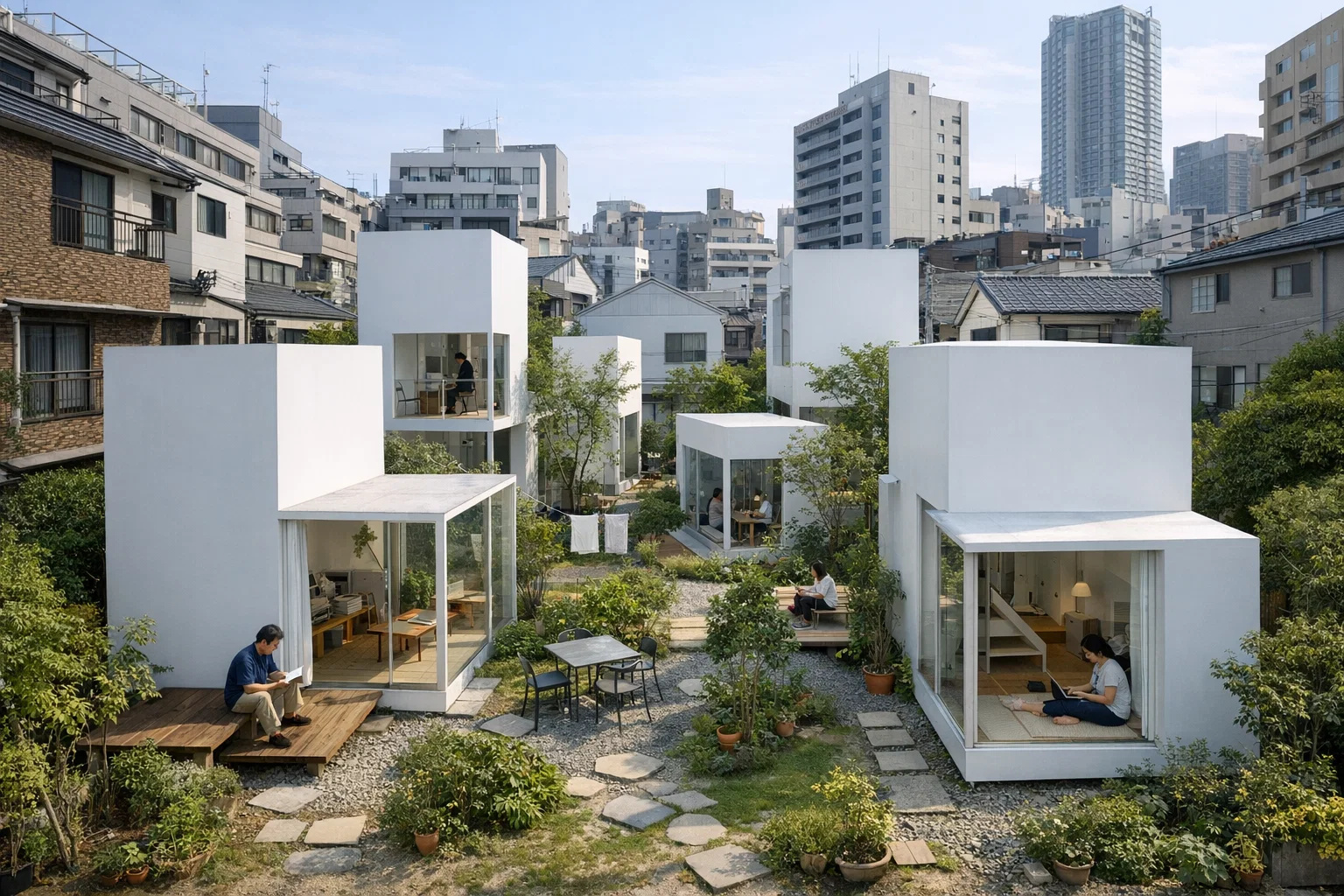
Designed By Ryue Nishizawa On A 290 Sqm Lot, The Moriyama House Fragmented The Traditional Concept Of Housing, Occupied Only Half The Area, And Gained Global Attention By Transforming Urban Density Into A Radical Architectural Solution
In one of the most densely populated neighborhoods in Tokyo, a white house decided to break all the rules with this Japanese project. No single compact block construction, high walls, or endless internal corridors. Instead, 10 independent volumes emerged, scattered across a 290-square-meter lot.
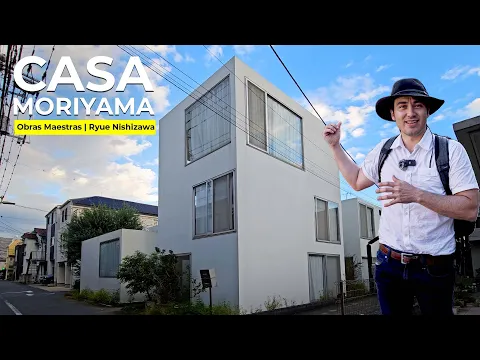

What looks like a set of small minimalist cubes has turned into one of the most influential residential projects of the 21st century and has placed housing engineering under international scrutiny.
The Silent Challenge Of Engineering On A 290 Square Meter Lot Amidst Extreme Density In Tokyo
The Ota Ku neighborhood offers no respite. Clinging houses, narrow streets, and contested lots meter by meter compose the typical scene of the Japanese capital.
-
With 74% of companies facing difficulties in hiring, technicians and engineers in renewable energy are becoming scarce in Brazil and are essential to support the expansion of solar, wind, and green hydrogen projects.

-
The lack of welders, electricians, and operators becomes a structural threat in 2025, with the construction industry and manufacturing already suffering from delays, cost pressures, and labor shortages in Brazil.
-
Brazil and Paraguay are just 46 meters away from a historic union on the bioceanic bridge that promises to revolutionize trade between the Atlantic and the Pacific.

-
With 55 km over the sea, a cost of US$ 20 billion, and enough steel to build 60 Eiffel Towers, China’s largest project has connected Hong Kong, Zhuhai, and Macau in a colossal bridge that defies the logic of engineering.

In this context, architect Ryue Nishizawa, co-founder of the SANAA office, decided to do the opposite of what was expected.
Instead of erecting a single structure occupying the entire lot, he used only half of the available area. The rest transformed into gardens and open pathways.
This simple gesture changed everything.
While the urban standard bets on vertical expansion and complete perimeter closure, the Moriyama House opened internal spaces to the outdoors, creating breathing room amidst the concrete of the city.

According to experts, this decision speaks directly to the Japanese urban fabric, where public and private coexist with less rigid boundaries than in the West.
The Strategy Of The Japanese Project To Divide A House Into Mini Autonomous Units And Create A Micro Neighborhood Within The Lot
The most intriguing point lies in the fragmentation.
The residence doesn’t function like a conventional house. It consists of multiple separate structures, with heights varying between one and three stories.
Each volume operates as a small independent unit, many with their own kitchen and bathroom. The owner occupies the larger block, which focuses on bedrooms, a living room, and a study area.
Other volumes can be rented.
In practice, the lot houses something akin to a horizontal micro-condominium, but with no gates or rigid barriers.
There’s also a detail that stands out: one of the blocks houses only a shared bathroom, a reference to traditional dwellings and Japanese design.
This choice reintroduces the concept of community living in a contemporary metropolis.
The Structural Secret Behind The White Cubes Of Only 6 Centimeters That Challenge Perception Of Space
Behind the minimalist aesthetic lies a technical fact that surprises.
The structural panels are about 6 centimeters thick. This decision creates an unusually light visual sensation for urban constructions.
In an environment surrounded by traditional houses with sloping roofs and heavier structures, the white blocks seem to almost float.
The wide windows further enhance this perception. Natural light floods the spaces and connects the interior and exterior directly.
The result is a spatial experience that contrasts with the common idea of confinement in major Asian centers.
This balance between technique and architectural sensitivity has transformed the project into an international reference.
From Experimental Residence To Global Icon, When A House Becomes A Symbol Of 21st Century Architecture
The Moriyama House has surpassed the status of a private residence.
It was considered the most important building of 2005 and gained prominence in international exhibitions. In 2017, a full-scale reconstruction was presented at the Barbican Centre in London.
This recognition did not happen by chance.
The project raised sensitive topics for major cities, such as housing density, privacy, and land-use flexibility.

While many countries discuss expensive solutions to reorganize their urban centers, this house showed that innovation can emerge from an apparently ordinary lot.
The Domino Effect In Urban Architecture And What This Model Can Teach For Overcrowded Cities
The question echoing in the sector is inevitable: can this concept be replicated?
According to experts, fragmentation opens interesting possibilities for small lots and high-density areas.
By allowing multiple uses within the same lot, the model creates economic flexibility. The owner can live and rent in the same space, adapting occupation according to demand.
In real estate markets pressured by price and area scarcity, solutions like this provoke debate.
More than just a house, the Moriyama has become a case study on how to rethink urban housing without solely resorting to extreme verticalization.
In the end, what seemed like just a set of white cubes turned into a manifesto built in concrete and steel, questioning the traditional way of living in the densest metropolitan areas on the planet.
Would you live in a house divided into several independent blocks in the middle of a big city? Leave your opinion in the comments.








-

-

5 pessoas reagiram a isso.