1. Home
  2. / Automotive
  3. / Not Volkswagen, BYD, or Toyota: Brazil’s Most Modern Car Factory Belongs to the Company Often Overlooked by Brazilians
Reading time 4 min of reading Comments 0 comments

Not Volkswagen, BYD, or Toyota: Brazil’s Most Modern Car Factory Belongs to the Company Often Overlooked by Brazilians

Written by Alisson Ficher
Published on 21/03/2025 at 19:46
Renault, fábrica Ayrton Senna, metaverso industrial, automação automotiva, inteligência artificial, gêmeo digital, sustentabilidade automotiva, inovação Renault
Seja o primeiro a reagir!
Reagir ao artigo

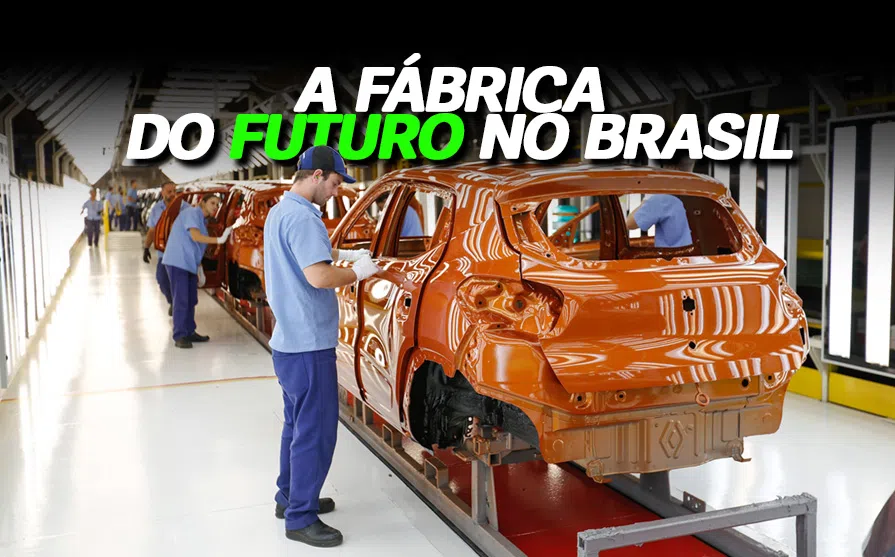
Automaker Surprises with Its Factory in Brazil, Considered the Most Modern in the Country, Where Cutting-Edge Technology and the “Industrial Metaverse” Transform Vehicle Production. The Ayrton Senna Complex Leads in Automation, Artificial Intelligence, and Sustainability, Positioning the Company Ahead in the Race for the Future of Mobility.

You probably thought that the biggest automotive innovations in Brazil would be in the hands of giants like Volkswagen, Toyota, or BYD, right?

Get Ready for a Surprise: The most modern automotive factory in the country belongs to a company that often goes unnoticed by the Brazilian public.

But are we underestimating Renault, which has transformed its operation in Brazil into a true “industrial metaverse”? This is what we will talk about, revealing surprising details about this technological revolution that is redefining the future of the automotive industry.

At the heart of this innovation is the Ayrton Senna Complex, located in São José dos Pinhais, Paraná.

Recognized by the World Economic Forum as one of the most modern factories in Latin America, this complex is an example of how connectivity, automation, and artificial intelligence are being utilized to transform vehicle production.

Factory and the Concept of the “Industrial Metaverse”

As explained by the Fórmula Turbo channel on YouTube, the “industrial metaverse” is a futuristic concept that is already being applied at Renault’s factory in Brazil. Imagine a factory where everything is interconnected: robots, machines, workers, and information systems, all operating in perfect harmony.

At the heart of this revolution is the complete integration of production systems, where every detail is monitored and controlled in real-time.

Unlike traditional factories, where manual processes and in-person checks are still common, in Renault’s industrial metaverse, everything is digitally interconnected.

At the beginning of each shift, employees no longer need to waste time manually checking their tools.

Now, they use mobile devices to perform digital checklists, ensuring everything is in order even before activities begin.

This change results in significant time savings and a drastic reduction in errors.

Automation and Artificial Intelligence in the Production Line

But the revolution doesn’t stop there. Automation at Renault’s factory goes far beyond what is seen in traditional factories.

According to Fórmula Turbo, AGVs (automated guided vehicles) play a crucial role, transporting parts and components without the need for human intervention.

These autonomous vehicles follow predefined routes and adjust their trajectories in real-time, avoiding obstacles and optimizing production flow.

Artificial intelligence (AI) is another essential pillar of this transformation. At Renault’s factory, AI is used to monitor and control each stage of the production process with millimeter precision.

Robots equipped with cameras and AI systems capture images of assembled components, such as engines and transmissions, and compare them in real-time with reference models.

This allows any deviation to be immediately identified and corrected without the need to halt the production line.

YouTube Video

Digital Twin: The Silent Revolution

Another innovation that is redefining automotive production is the digital twin. Imagine an exact virtual replica of the physical factory, where every detail is monitored in real-time.

According to Fórmula Turbo, this technology allows engineers to monitor the entire production process without needing to be physically present.

With the digital twin, efficiency increases significantly, and the quality of the produced vehicles is ensured at an unprecedented level.

Sustainability: Commitment to the Future

In a global scenario where environmental preservation is essential, Renault also stands out for integrating sustainable practices into its operations. One of the major initiatives is the use of clean energy.

The Ayrton Senna Complex is partially powered by a solar energy plant, which reduces dependence on non-renewable sources and lowers greenhouse gas emissions.

In addition, the factory implements water reuse systems and material recycling, reinforcing its commitment to sustainability.

Preparing for the Future of Mobility

Renault is not only concerned with the present but also with the future. To face the future challenges of mobility, the automaker is developing technologies that will define the cars of tomorrow.

At the center of this transformation is the new modular platform, which enables the creation of more sophisticated, safer, and connected vehicles. This platform is prepared for electrification and the introduction of autonomous cars, reflecting Renault’s commitment to a more sustainable and innovative future.

The Importance of the Ayrton Senna Factory for Brazil

The Ayrton Senna Complex is not only a reference in terms of technological innovation but also an important pillar for the Brazilian economy.

With over 20 years of history, this factory has played a crucial role in the production of vehicles for the national and international markets.

In addition to generating thousands of direct and indirect jobs, the complex contributes to the economic development of the region and to the training of highly skilled professionals.

The factory is responsible for the production of some of Renault’s best-selling models in Brazil, such as the Kwid, Sandero, and Duster. This diversity of models produced at the complex reflects Renault’s versatility and ability to adapt to the demands of the Brazilian market.

As can be seen, the evolution of the Ayrton Senna factory represents a milestone in the Brazilian automotive industry. However, the question remains: is this race for electric and sustainable vehicles really about saving the planet, or is it just another strategy by big companies to increase their profits?

Inscreva-se
Notificar de
guest
0 Comentários
Mais recente
Mais antigos Mais votado
Feedbacks
Visualizar todos comentários
Alisson Ficher

Jornalista formado desde 2017 e atuante na área desde 2015, com seis anos de experiência em revista impressa, passagens por canais de TV aberta e mais de 12 mil publicações online. Especialista em política, empregos, economia, cursos, entre outros temas e também editor do portal CPG. Registro profissional: 0087134/SP. Se você tiver alguma dúvida, quiser reportar um erro ou sugerir uma pauta sobre os temas tratados no site, entre em contato pelo e-mail: alisson.hficher@outlook.com. Não aceitamos currículos!

Share in apps
0
Adoraríamos sua opnião sobre esse assunto, comente!x