





 Portuguese
  English
  Spanish
  5 min of reading
  0 comments


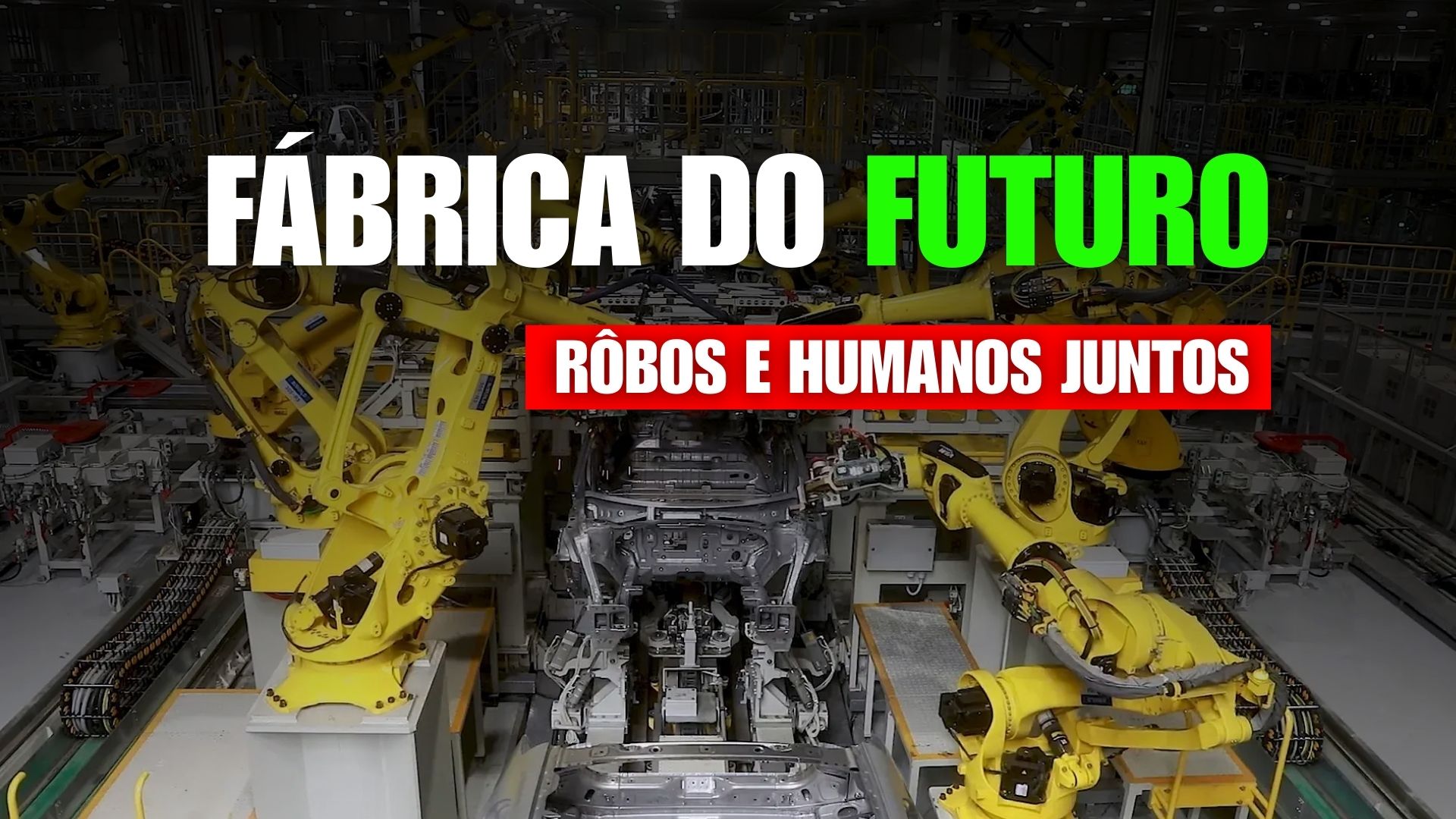
New Hyundai Plant In The United States Combines Robots, Robot Dogs, And Human Workers In A High-Tech Environment, With Starting Salaries Above The Regional Average And Expansion Plans That Promise Thousands Of Hirings By 2031.
The new plant of Hyundai, inaugurated near Savannah, Georgia, operates with approximately 750 robots and 1,450 employees, resulting in a ratio of 1 robot for every 2 humans.
Machines take on tasks such as welding, material handling, and door installation, while robot dogs equipped with cameras patrol the factory floor to detect faults in electric Ioniqs still under assembly.
Workers are responsible for quality control and the final inspection of cars, with a starting salary of US$ 23.66 per hour (around R$ 130), according to a report published by The Wall Street Journal this Monday (1st).
-
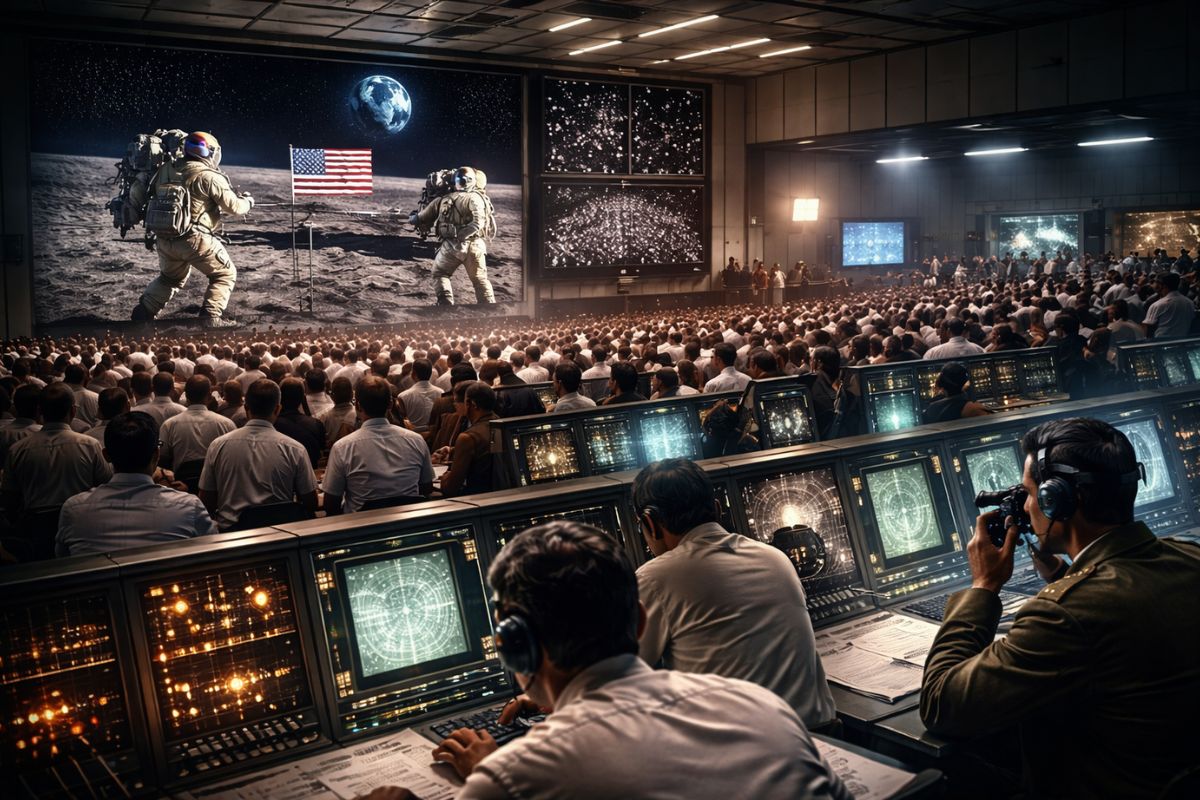
If the trip to the Moon were a hoax, it would be necessary to keep the secret among 400,000 people for more than 50 years and to deceive even the Soviet Union, which was tracking the radio signals coming from the exact direction of the satellite during each Apollo mission.
-
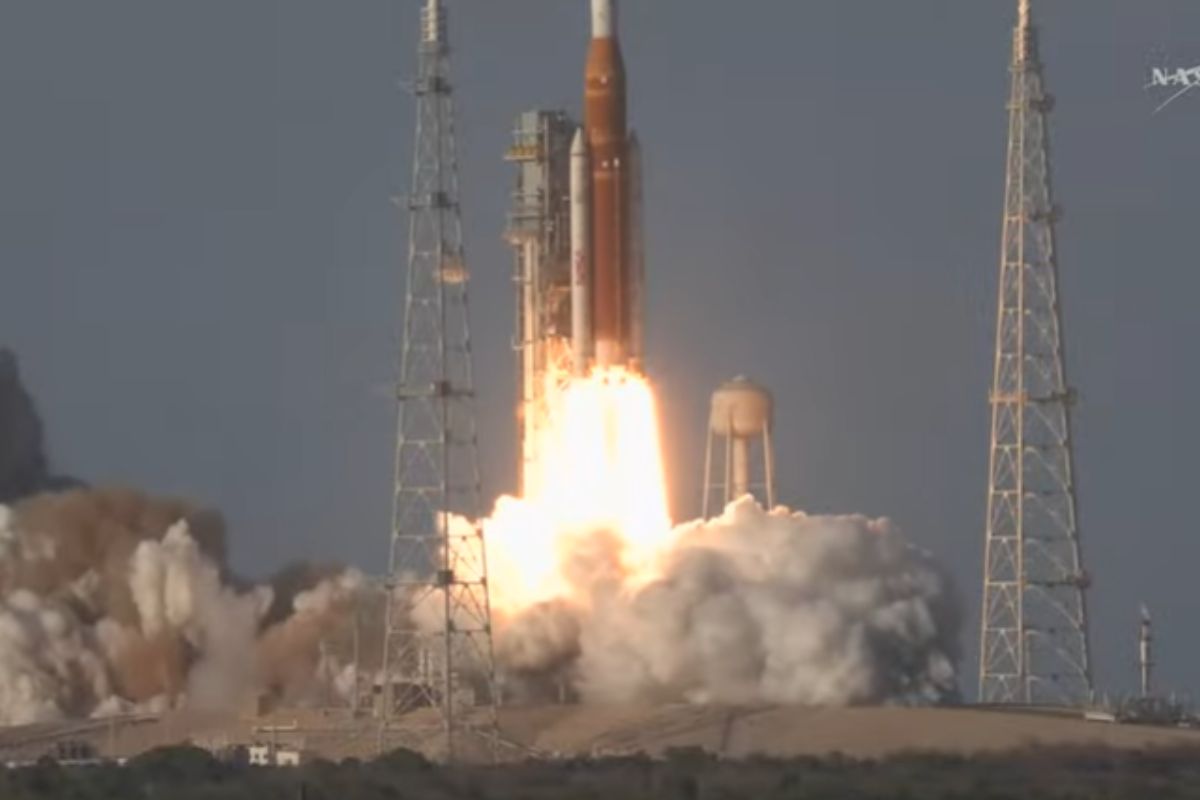
Artemis 2 launches at 7:35 PM with four astronauts and ends a 50-year fast in lunar orbit: the SLS rocket departs from Florida, the mission lasts 10 days, circles the far side, and tests Orion in a free-return trajectory.
-
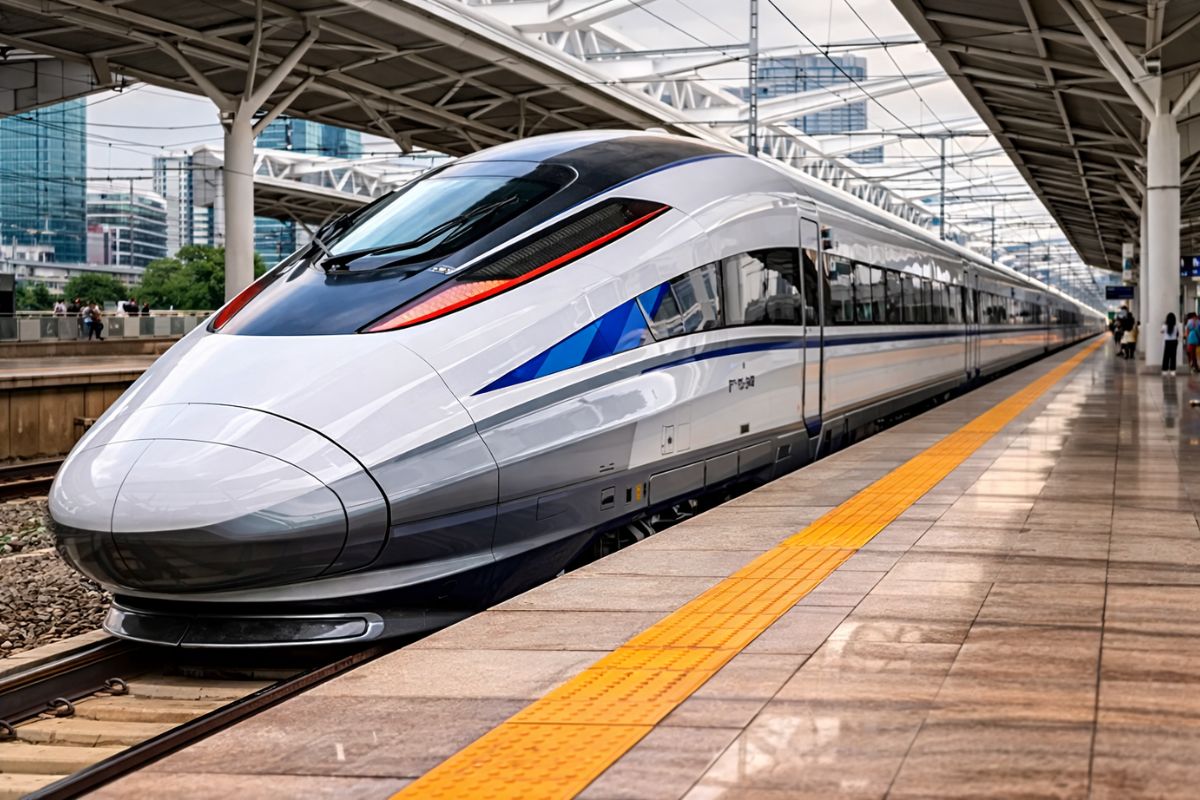
China is testing a train that will operate at 400 km/h in daily service, which is 80 km/h faster than the French TGV, and uses carbon fiber, magnesium alloys, and more than 4,000 sensors to become the fastest commercial train on the planet.
-
Forget about having an air fryer, electric oven, and steam pot taking up space in your kitchen because a 30-liter smart oven combines all these functions, automatically selects the ideal temperature, and even turns off by itself when cooking is done.


Automation At Scale With Human Supervision
In the Ellabell complex, robots perform dangerous, repetitive, or physically intense tasks.
The guideline, according to Hyundai’s CEO, José Muñoz, is clear: machines handle heavy and standardizable tasks; people solve problems, ensure quality, and apply their dexterity.
“We are not trying to minimize human involvement — we are trying to maximize human potential,” he stated in a comment highlighted by The Wall Street Journal.
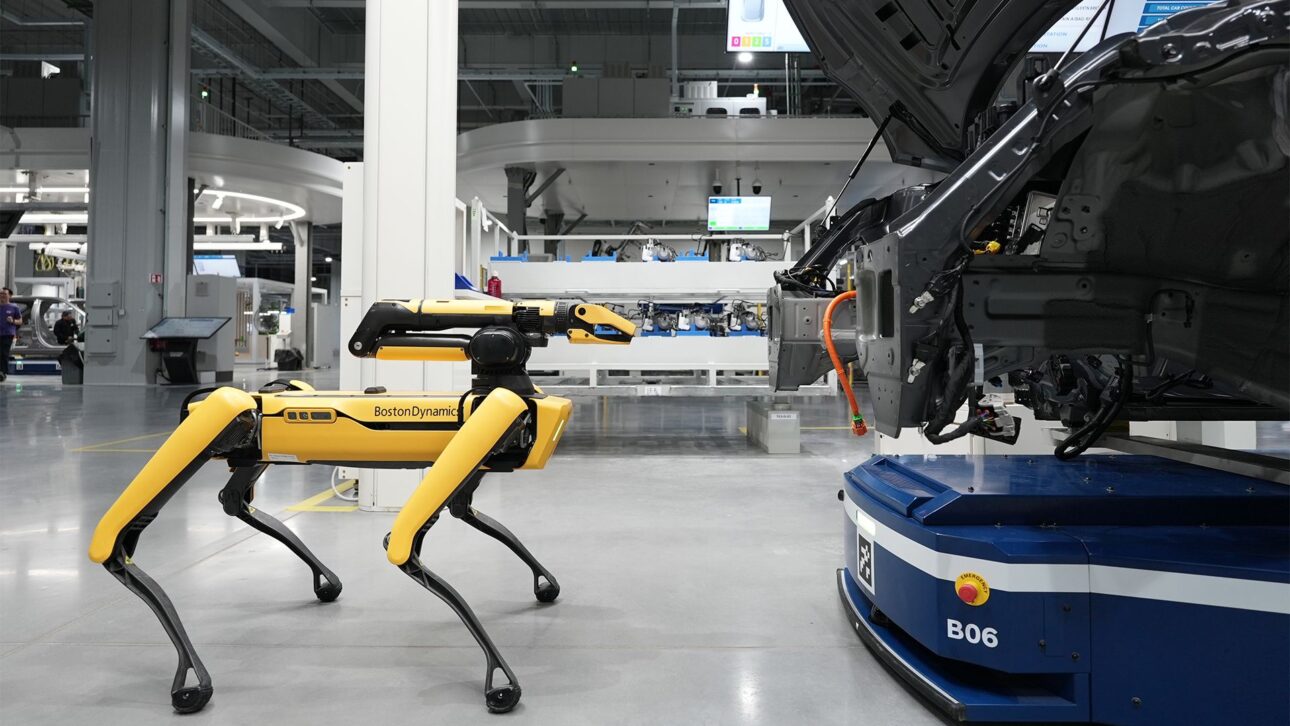
(Image: Hyundai Motor Group Innovation Center via T3 — futuristic factory image, inspection robots)
Although automation dominates large segments of the line, it is up to workers to detect burrs, replace trim pieces, and adjust components requiring touch and adaptation.
They also fit fabric panels with grommets, connect wiring harnesses until the “click” of locking, and position themselves in hard-to-reach areas to secure seats and shock absorbers.
Routine On The Hyundai Assembly Line
In the initial flow, mechanical arms move sheets and feed presses that stamp parts of the body.
Sequential robots carry out welding without the need for constant supervision.
Human intervention increases after painting: along two lines, professionals install seats, panels, and other modules.
At one station, a robot positions the powertrain under the structure and tightens main screws; two operators, with torque tools, finalize the tightening.
For the head of general assembly, Jerry Roach, the difference is in the detail.
The tactile sensation to confirm the full fit of a clip, the reaction to the variability of the process, and the handling of a misaligned wiring harness are examples of what “people really do well”.
Quality Control Depends On People
There are tasks that automation still cannot replace.
Unice Youmans, from the metal finishing line, removes dents, sands imperfections, and eliminates residues before painting.
“I don’t think it’s something a machine can do, because it requires a lot of interaction with these cars,” she said.
The account summarizes the current frontier: machines excel at repetition; humans, in fine perception and adjusting to the unexpected.
Training And Salaries Above Average
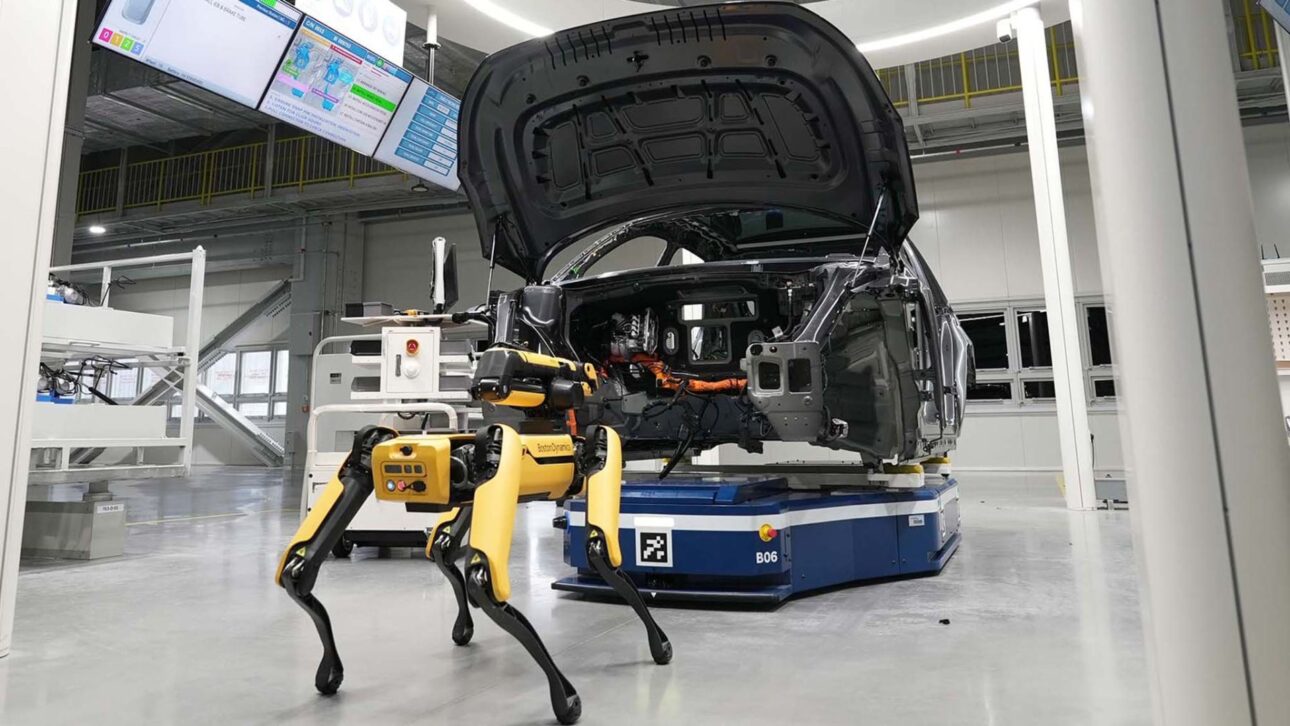
(Image: MotorTrend — smart factory with robot dogs in action)
The Hyundai has committed to hire 8,500 people by 2031 as part of a state incentives package worth US$ 2 billion.
Initially, the salary of US$ 23.66 per hour for beginners exceeds equivalent jobs in the region, according to the factory management.
New hires undergo training at a state-funded center, where they learn basic programming concepts to guide robots in simple trajectories — a preparatory step for operations such as welding and handling parts.
The curriculum includes practical exercises.
Under fluorescent lights, trainees inspect a sports utility vehicle for scratches and misalignments, as well as train on handling screws until they can accurately feel the correct amount to hold at once.
Concerns And Expectations Of New Hires
Among a group of 20 new hires in training, reactions to working alongside robots vary.
Some fear being held responsible for failures of the automated system; others worry about potential job replacement in the long run.
Conversely, some see opportunity.
Coming from retail in Houston, Stephanie Redmon stated she is motivated to join a high-tech environment.
“I just think it’s going to be really cool,” she said. Researcher Salem Elzway from Vanderbilt University analyzes that the concerns of workers are not unfounded.
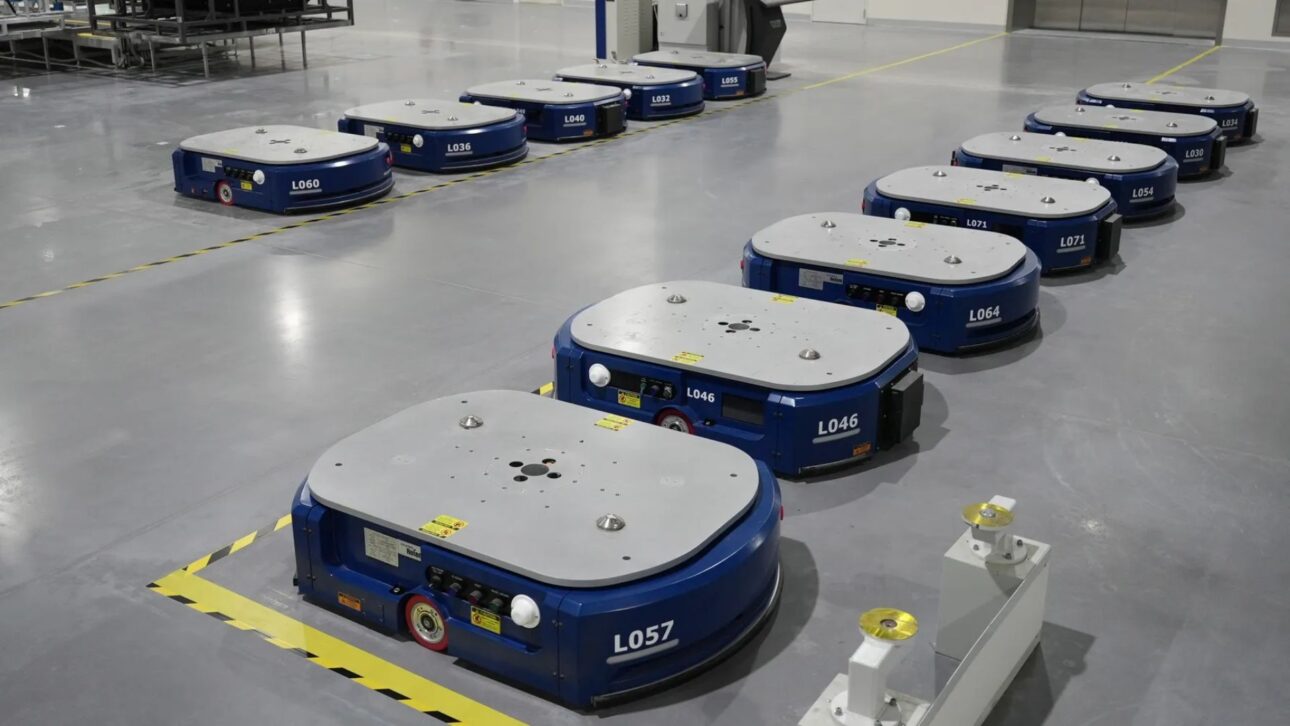
(Image: TopGear — automation with transport robots on the production line)
In his assessment, the more expensive and less conforming humans become, the greater the pressure for automation tends to be.
The Evolution Of Robots In The Automotive Industry
The presence of machines in the automotive sector dates back to 1961, when General Motors installed the Unimate in New Jersey to unload overheated parts from a press.
The novelty gained the spotlight on television, and shortly after, it spread through factories, not without resistance.
In 1972, a 22-day strike in Lordstown, Ohio, led by the United Auto Workers union, contested production rhythms dictated by machines.
Today, automation is intense, especially in South Korea, Hyundai’s home country and a benchmark for robotic density.
In the United States, despite there being hundreds of thousands of vacancies in the industry, the Ellabell plant claims to meet its hiring goals, anchored in training and salary packages, as highlighted by The Wall Street Journal.
Spot And Atlas Robots: Present And Future Of Hyundai
In addition to the Spot robot dogs, which sniff out imperfections with cameras on their “snouts” and circulate between stations, Hyundai plans to incorporate Atlas humanoid robots, equipped with arms, legs, and fingers, developed by Boston Dynamics, a company in which the group has a majority stake.
Videos from the manufacturer show Atlas sorting and loading parts.
However, Hyundai has not detailed what functions the humanoid could assume in Ellabell.
Experts urge caution with predictions.
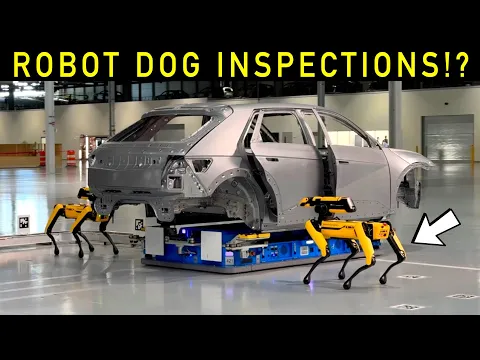

For Jorgen Pedersen from the Advanced Robotics for Manufacturing Institute, it will take decades before robots completely dominate a line.
According to him, machines still face challenges with fabrics and flexible materials, and executing complex tasks will depend on advancements that are still not in development.
This assessment echoes the idea that human flexibility and adaptability have been underestimated.
Final Tests And Human Approval Seal
Even with the gain in efficiency, the decision about the delivery of a vehicle remains human.
After assembly, Ioniqs go, via internal autonomous vehicles, to an outdoor testing track.
There, Chico Murphy, the track team leader, drives a sports utility vehicle over potholes, measures braking, performs stops on inclines, and accelerations on straight roads to identify noises and play.
Any problems are reported and corrected before being released for sale.
In Murphy’s assessment, as long as people drive, they will seek the confirmation of another person on the final quality seal.
“I think they like to know that there is a human there, ” he said.
“It makes them feel a little more secure than relying solely on a machine.”
How can one balance the pursuit of productivity with the preservation of human skills that, for now, remain irreplaceable in car manufacturing?






Seja o primeiro a reagir!