





 Portuguese
  English
  Spanish
  3 min of reading
  0 comments


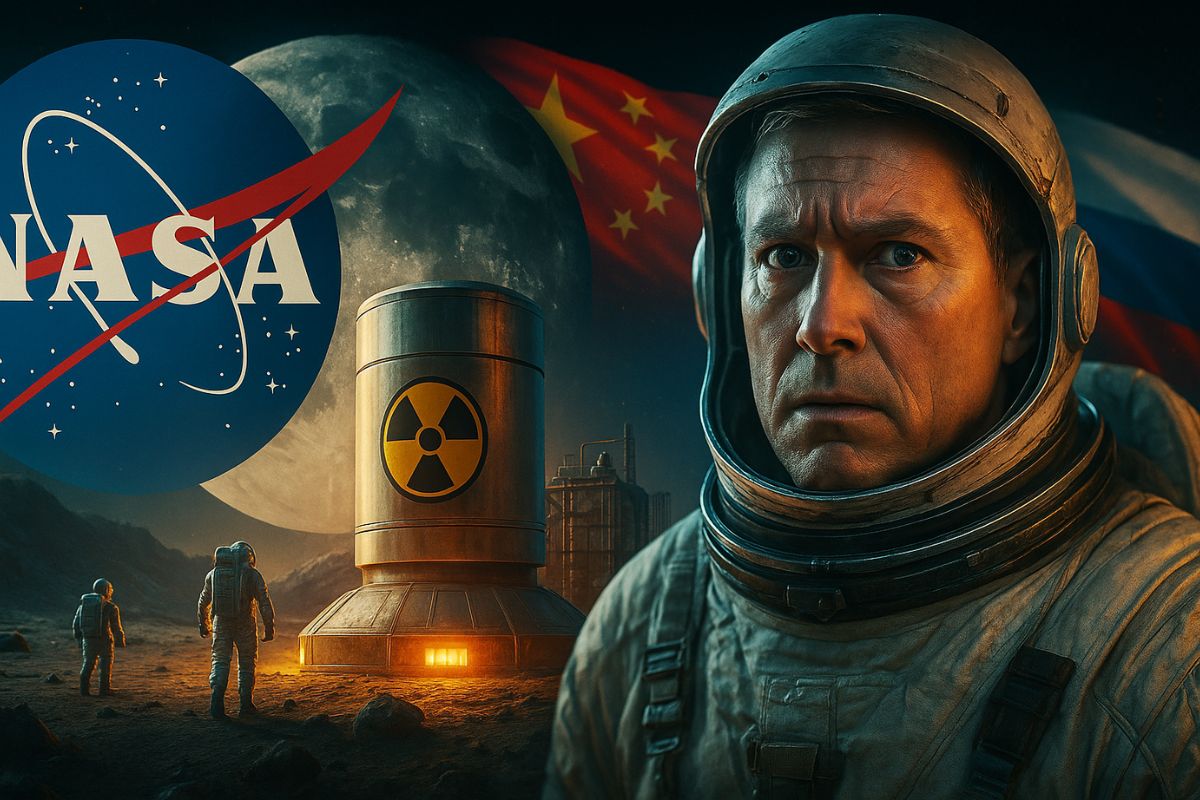
Project Plans Continuous Energy Generation for Crewed Missions and May Redefine Geopolitical Dispute in Space
NASA has released an official directive to anticipate the installation of a nuclear reactor on the Moon’s surface by the end of 2029. The initiative, led by acting administrator Sean Duffy, aims to ensure U.S. leadership in space exploration in light of the strategic approach between China and Russia, who are also planning a lunar base with its own power.
The plan includes the construction of a generation system of at least 100 kilowatts of power enough to power around 80 houses and seeks commercial solutions to accelerate the project. The measure represents a shift in pace and scope in the race for space, with technical, energy, and military implications for the future of human presence beyond Earth.
Why Is a Nuclear Reactor on the Moon a Priority?

The biggest challenge to keep equipment and astronauts on the lunar surface lies in the extreme cycle of light and darkness. A single lunar day is equivalent to about four Earth weeks, with two weeks of constant sunlight and two in total darkness.
-
While the world looks at oil, the war with Iran is already disrupting helium supply from Qatar, affecting car and iPhone chips, threatening AI expansion, and putting pressure on aluminum packaging at the highest value in four years.

-
Global warming will expose a treasure hidden under the ice of Antarctica and may spark an international dispute over gold and valuable minerals.

-
A street vendor from Praia Grande built a robot made of scrap from scooters and washing machines that pulls his popcorn cart on the beach, emits sounds, and interacts with customers, becoming an attraction on the coast of São Paulo.

-
The specifications of the Xiaomi 18 Pro Max have been leaked, and the highlight is a dual 200 MP camera with a new 22-nanometer technology that promises to consume less energy and capture details in shadows and bright areas using LOFIC HDR.


In this scenario, solar panels and batteries become insufficient, especially in the lunar south pole region, where the sun barely crosses the horizon and certain areas never receive direct light.
Given this limitation, NASA has decided to prioritize nuclear generation, a constant and robust energy source that can support critical operations even under the most adverse conditions. The proposal includes:
- Appointment of a project leader in 30 days;
- Opening of bidding for interested companies in 60 days;
- Delivery of the reactor by the end of 2029, ready for launch.
What Is the Geopolitical Risk Involved?
According to Sean Duffy, there is a real competition for lunar dominance. The agency fears that if China and Russia manage to install their energy systems first, they could declare exclusion zones and limit U.S. operations on the Moon’s surface.
The Sino-Russian alliance has already declared its intention to establish a joint lunar base by 2035, focusing on the polar region.
If they gain early access to stable power generation, they could control areas of strategic interest, such as craters that host ice, a vital resource for prolonged missions.
What Changes With NASA’s New Directive?
Until recently, studies on lunar energy were focused on 40-kilowatt prototypes weighing less than six tons. Now, NASA wants more power, faster.
The minimum target is 100 kW, with a tight schedule and focus on technologies applicable to the Artemis program, which aims to take the next astronauts to the Moon.
The directive also reflects a shift in priorities within the U.S. government. There is a clear trend to redirect resources to crewed and competitive projects, reducing investments in robot probes, climate research, and aviation.
The strategy is to bolster a permanent human presence on the Moon and, in the future, on Mars.
What Are the Next Steps?
The first crewed landing of the Artemis program is scheduled for 2027, although experts point to a likely delay. Part of the essential system like the lunar Starship from SpaceX has not yet been tested in real operations.
Even without all the technical details defined, NASA’s decision sends a clear message: the race for sustainable presence on the Moon is underway, and the U.S. does not intend to lose the lead.
Do you think the use of nuclear energy on the Moon is inevitable? Could the competition between the U.S., China, and Russia for lunar space change the course of space exploration? Share your opinion in the comments; we want to know what you think about this advancement.








Seja o primeiro a reagir!