





 Portuguese
  English
  Spanish
  4 min of reading
  0 comments


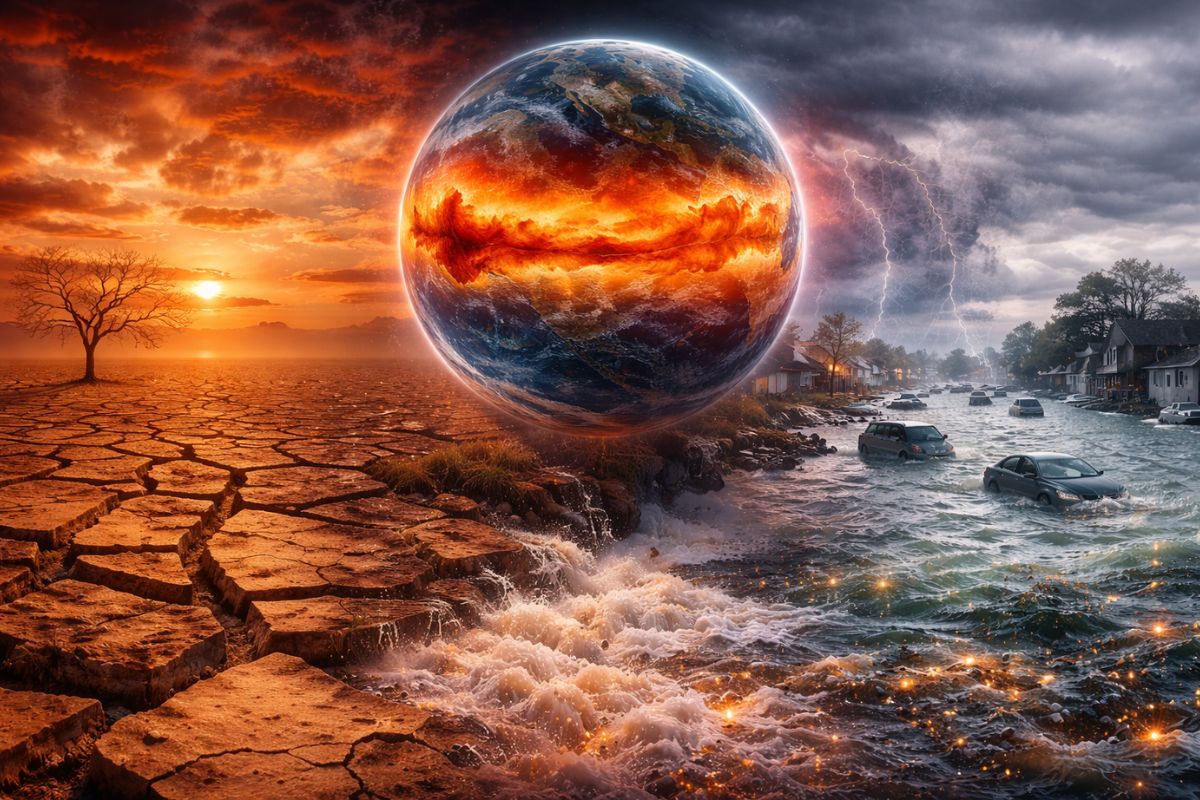
The Godzilla El Niño has raised alarms among scientists again after new analyses indicated climate impacts more intense than previously expected. The extreme warming of the Pacific could cause simultaneous droughts and floods in different regions, affecting food production and the global economy in 2026.
The Godzilla El Niño, an extremely intense version of the traditional El Niño, is back on the radar of scientists and international authorities. New analyses indicate that this climatic phenomenon could manifest in 2026 with enough strength to alter environmental patterns on a global scale, causing abnormal warming of the surface waters of the Pacific Ocean and triggering extreme weather events across entire continents.
The term “Godzilla” is not a rhetorical exaggeration. It was coined to describe episodes in which the Godzilla Niño reaches such extreme proportions that its effects surpass any conventional prediction—devastating droughts in regions that rely on regular rainfall and, simultaneously, historic floods in areas that normally do not experience excessive precipitation. The alert reinforces the need for constant monitoring and proactive preparation by governments and the productive sector.
What makes the Godzilla El Niño different from the common El Niño
The conventional El Niño is already capable of causing significant disturbances in the global climate. It occurs when the surface waters of the equatorial Pacific Ocean warm above average, altering ocean currents and atmospheric patterns that influence rainfall and temperature regimes across much of the planet.
-
Archaeologists find an intact tomb over 2,500 years old, with more than 100 preserved objects, weapons, jewelry, and human remains never touched.
-
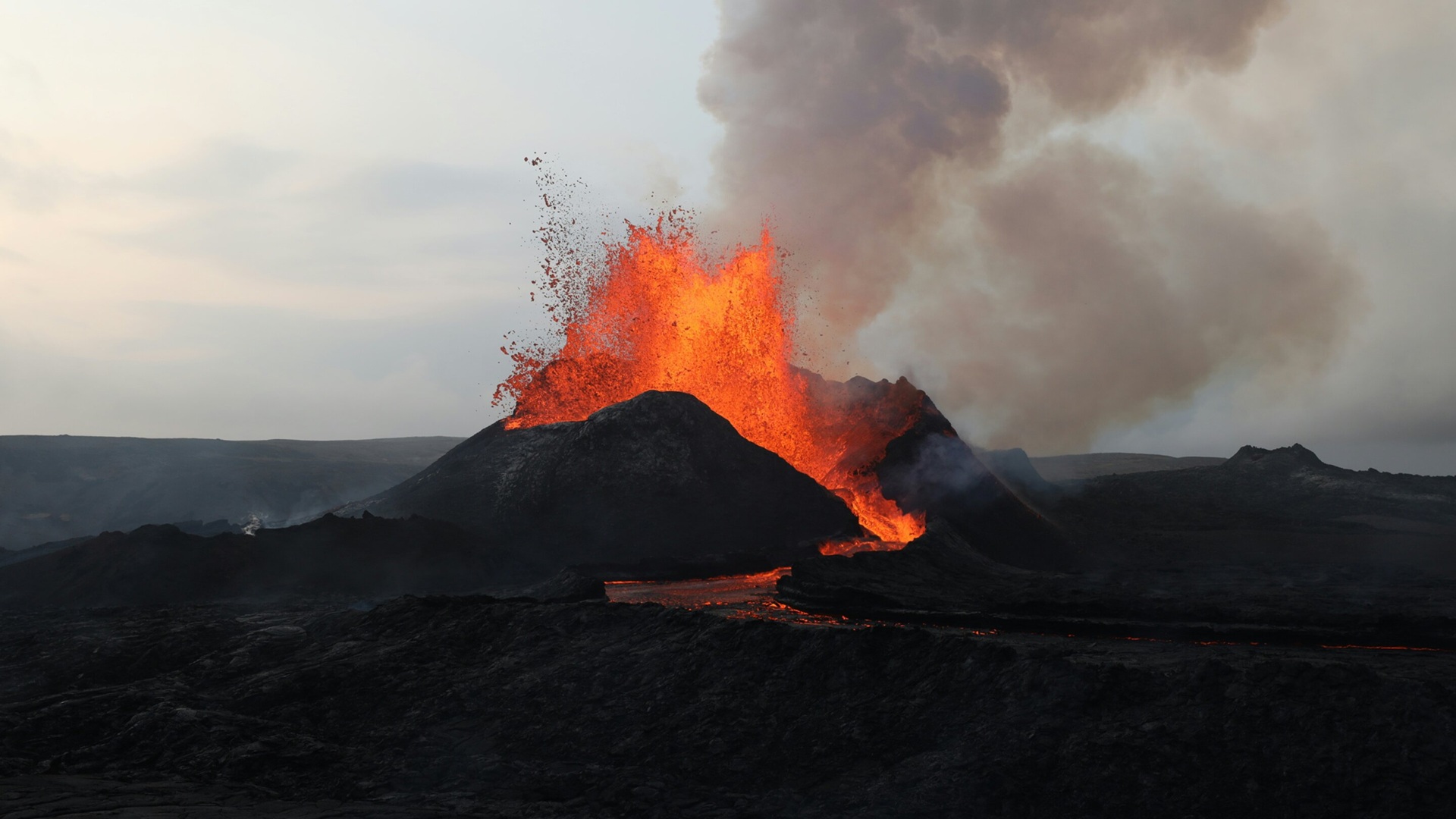
Volcanic lava transforms into threads as fine as human hair that travel over 30 kilometers by wind and fall like cutting rain on roofs and backyards in Hawaii and Iceland.
-
Archaeologists discover a 100-meter ship graveyard in a submerged Greek city, and what has appeared on the seabed of Libya could change what was known about this ancient port.
-
You buy the refrigerator and still have to see ads: Samsung starts displaying advertising on appliances and generates negative reactions among consumers.


The Godzilla El Niño is an amplified version of this process, with considerably higher sea surface temperature anomalies and proportionally more severe effects.
In practice, what differentiates the Godzilla El Niño from the common phenomenon is the intensity and speed with which climate changes manifest.
The surface waters of the Pacific are exhibiting temperatures well above historical norms, and this additional thermal energy translates into more intense, more frequent, and harder-to-predict rainfall and drought events.
The thermal imbalance of the ocean acts as an amplifier that intensifies any existing weather pattern.
Droughts and floods at the same time in different parts of the world

One of the most concerning aspects of the Godzilla El Niño is its ability to produce opposite effects simultaneously in different regions.
While some areas face prolonged periods of severe drought, others receive rainfall volumes well above normal, generating floods, landslides, and inundations that can reach historic proportions.
This extreme climatic contrast is not just an environmental problem; it directly impacts strategic sectors.
Agricultural regions that depend on regular rainfall may have their crops compromised by drought, while urban areas in hydrological risk zones face infrastructure destruction from floods.
The Godzilla El Niño redistributes heat and moisture across the planet abruptly, resulting in a scenario where seemingly contradictory climate disasters occur simultaneously in different parts of the globe.
Impacts on food production and the global economy

The effects of the Godzilla El Niño go far beyond the climate. When agricultural crops are compromised by drought or floods, production costs rise and food prices are pressured at a global level, affecting both producers and consumers.
Grain-exporting regions, such as South America and Southeast Asia, are particularly vulnerable to these fluctuations.
The energy sector also feels the impact. In countries that rely on hydropower, such as Brazil, the reduction in rainfall can directly affect electricity generation, raising costs and increasing dependence on more expensive and polluting thermal sources.
The instability caused by the Godzilla El Niño can be reflected in international commodity markets, exchange rates, and even inflation indices, creating a cascading effect that starts with the climate and reaches the consumer’s table and wallet.
Why 2026 is the year that concentrates concerns
The latest analyses point to 2026 as the period of highest risk for the manifestation of the Godzilla El Niño. The warming of the Pacific waters is being monitored by agencies such as NASA, which uses satellites and computational models to track the evolution of ocean temperatures and project climate impact scenarios.
Experts emphasize that constant monitoring is essential, but not sufficient. Public policies aimed at mitigating climate effects need to be implemented in advance, especially in regions that are already vulnerable to extreme events.
Cooperation between countries is seen as fundamental for sharing data, coordinating responses, and protecting populations most exposed to the impacts of the Godzilla El Niño.
What can be done in the face of a phenomenon of this magnitude
Responding to the Godzilla El Niño requires action on multiple fronts simultaneously. In the short term, governments need to strengthen early warning systems, strategic food stocks, and contingency plans for disasters for both droughts and floods, as both scenarios can materialize at the same time in different regions.
In the long term, the issue involves investments in resilient infrastructure, diversification of energy matrices, and adaptation of agriculture to increasingly unstable climatic conditions.
The Godzilla El Niño serves as a reminder that extreme weather events are not exceptions, but part of a pattern that tends to intensify with global warming. Preparing for the worst-case scenario has ceased to be excessive precaution and has become responsible minimum planning.
With information from the portal ndmais.
And you, do you believe that Brazil is prepared to face the effects of the Godzilla El Niño in 2026? What should be done in advance? Leave your opinion in the comments.




Seja o primeiro a reagir!