





 Portuguese
  English
  Spanish
  4 min of reading
  0 comments


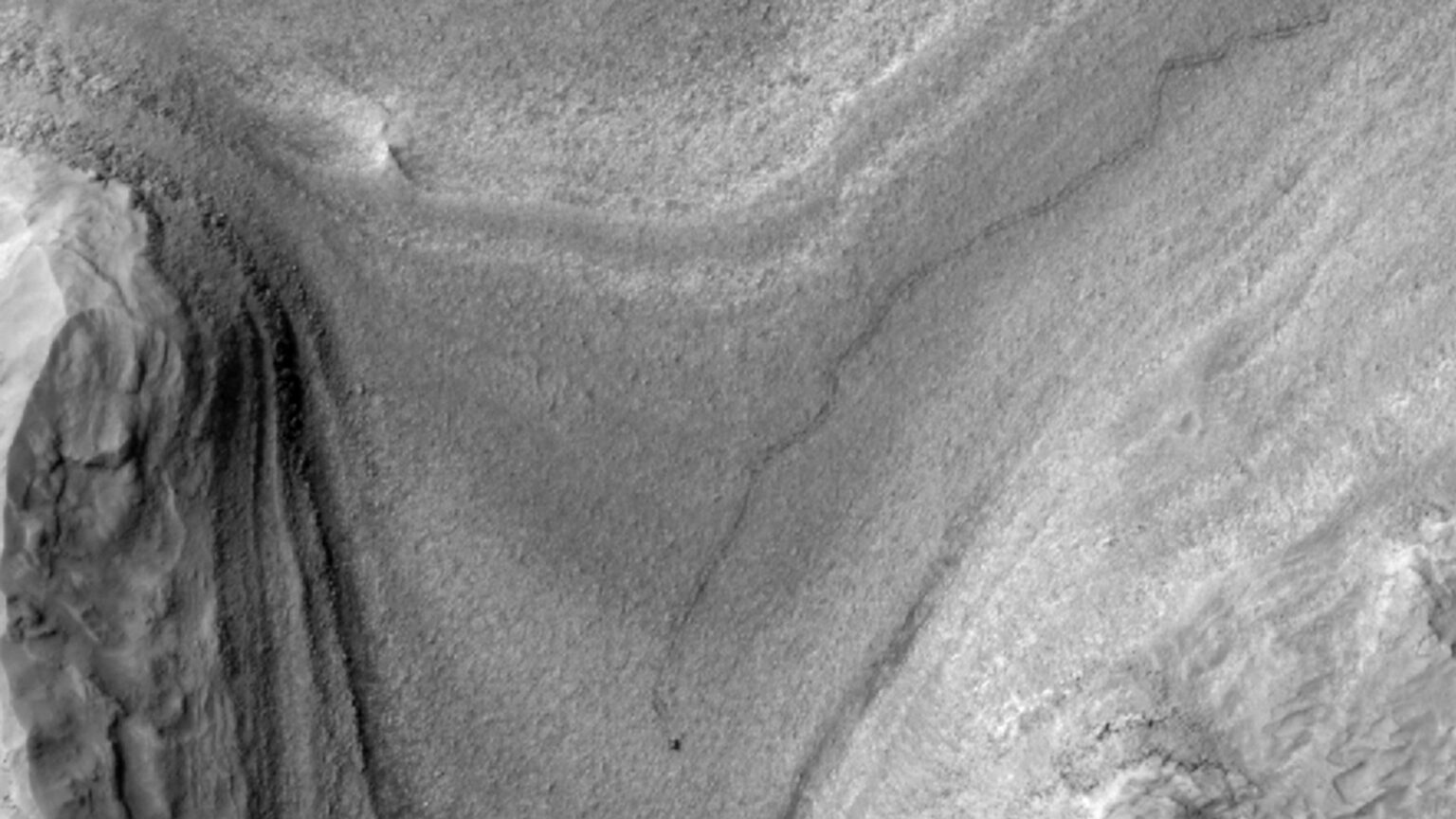
NASA Probe Captures Curiosity Movement Toward a Region Shaped by Ancient Groundwater, Offering New Clues About Mars’ Past.
A historic image captured by NASA marked a new advancement in Mars exploration. On February 28, 2025, the HiRISE camera, aboard the Mars Reconnaissance Orbiter (MRO), recorded a small spot in front of a long trail of tracks, extending over 320 meters.
These tracks represent the journey of the Curiosity rover, heading towards its next scientific destination. The image is part of a recent report from the Jet Propulsion Laboratory (JPL) of NASA and reinforces the rover’s persistence in unraveling the ancient mysteries of the red planet.
The image may be the first to show the rover in motion, representing an important advancement in space observation technology. The visible tracks on the Martian surface are expected to last for months until erased by the wind.
-
While the world looks at oil, the war with Iran is already disrupting helium supply from Qatar, affecting car and iPhone chips, threatening AI expansion, and putting pressure on aluminum packaging at the highest value in four years.

-
Global warming will expose a treasure hidden under the ice of Antarctica and may spark an international dispute over gold and valuable minerals.

-
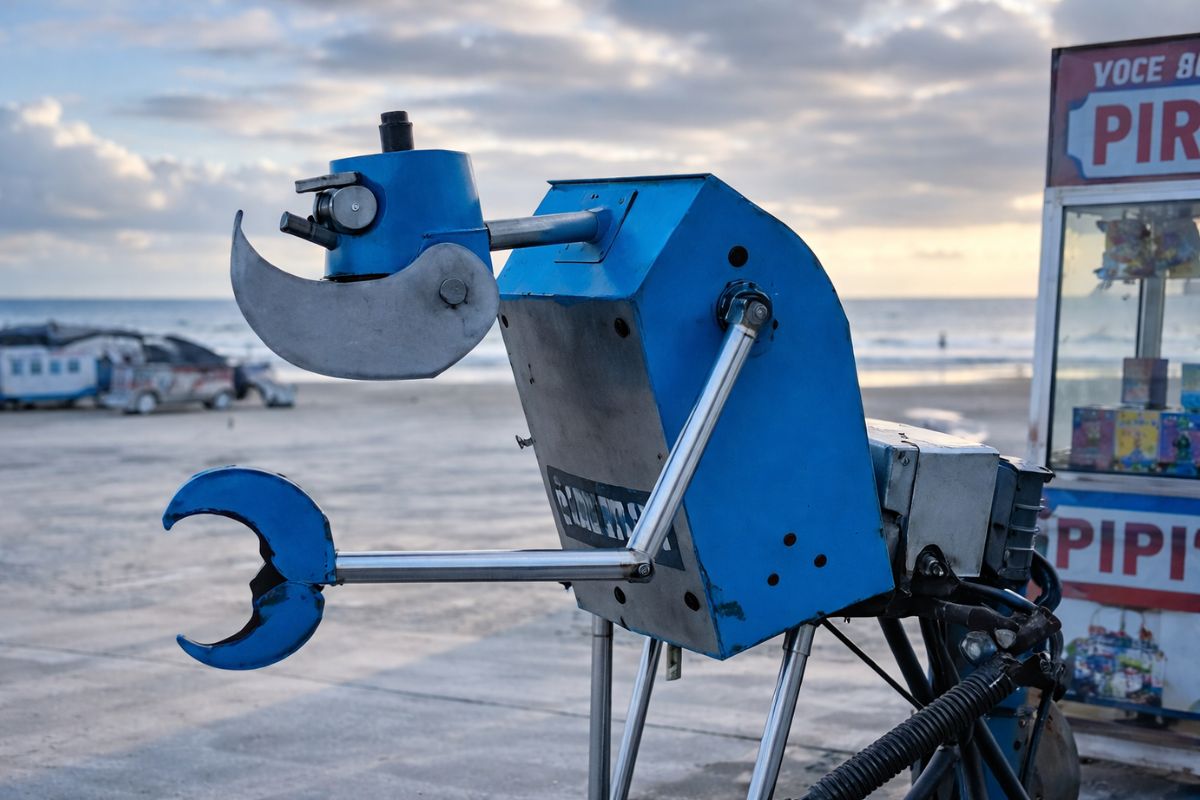
A street vendor from Praia Grande built a robot made of scrap from scooters and washing machines that pulls his popcorn cart on the beach, emits sounds, and interacts with customers, becoming an attraction on the coast of São Paulo.
-
The specifications of the Xiaomi 18 Pro Max have been leaked, and the highlight is a dual 200 MP camera with a new 22-nanometer technology that promises to consume less energy and capture details in shadows and bright areas using LOFIC HDR.


Tracking the Journey of Curiosity
The Curiosity rover’s mission began in 2012. Since then, it has traveled over a thousand different routes across the surface of Mars. Each movement is carefully planned by engineers in collaboration with scientists who define the day’s tasks.
The path shown in the HiRISE image corresponds to a series of 11 trips made since February 2. During these movements, the rover moves at a maximum speed of 0.16 km/h, or 0.1 miles per hour. The goal is to reach a new study area considered scientifically promising.
This area, where Curiosity is approaching, is characterized by box-shaped formations. Researchers believe these structures formed due to the action of ancient groundwater billions of years ago. Studying them could reveal essential information about the history of water on Mars and the possibility of microbial life in the distant past.
A Pioneer in Martian Exploration
Since landing on Mars, Curiosity has made impressive advancements. Its main objective is to investigate the surface, understand geology, analyze the atmosphere, and search for signs of past life.
Throughout the mission, Curiosity has brought important discoveries. Among them, the confirmation of ancient lakes and the identification of organic molecules on the Martian surface.
Although its speed is slow, precision in navigation is one of the rover’s strengths. Equipped with advanced cameras and scientific instruments, it can perform various tasks.
In addition to rock analyses, Curiosity also captures images, including selfies that document its journey.
Doug Ellison, head of the Curiosity planning team at JPL, highlighted the precision of the work: “By comparing the time the HiRISE took the image with the rover’s commands for the day, we can see that it was nearly ready with a movement of 21 meters.”
This rigorous control of the rover’s movements is essential to ensure it is always on the right path, overcoming the challenges of Mars’ uneven terrain.
Heading Toward New Discoveries
The recording of Curiosity’s tracks reinforces the rover’s constant movement toward new areas of scientific exploration. At the moment, it is climbing a steep slope to reach a region of great interest to scientists.
This next stop could offer important clues about Mars’ ancient climate and the history of water on the planet.
The box-shaped formations, shaped by the activity of groundwater, are considered strategic targets for this study.
The JPL planning team is attentive to the challenges of the terrain. Working together with scientists, they adjust the rover’s route as necessary to ensure the safety and efficiency of the mission.
The Importance of the Mission
The Curiosity mission remains a milestone in space exploration. More than a decade after its landing, the rover is still capable of providing relevant data about Mars.
Its discoveries fuel scientific knowledge about the possibility of past life and help to better understand the planet’s climatic evolution.
Each new destination reached by Curiosity represents an opportunity to answer fundamental questions about Mars.
The presence of water, the environmental conditions of the past, and the possibility of life are central themes in the research conducted with the support of data sent by the rover.
As Curiosity continues its slow but precise journey, the hope is that new discoveries will emerge in the coming weeks. The mission keeps alive the hope of unraveling the secrets of the red planet and expanding humanity’s understanding of the universe.
With the help of detailed images like the one captured by HiRISE, space science continues to advance, step by step, trail by trail, on Martian soil.








-

Uma pessoa reagiu a isso.