





 Portuguese
  English
  Spanish
  3 min of reading
  0 comments


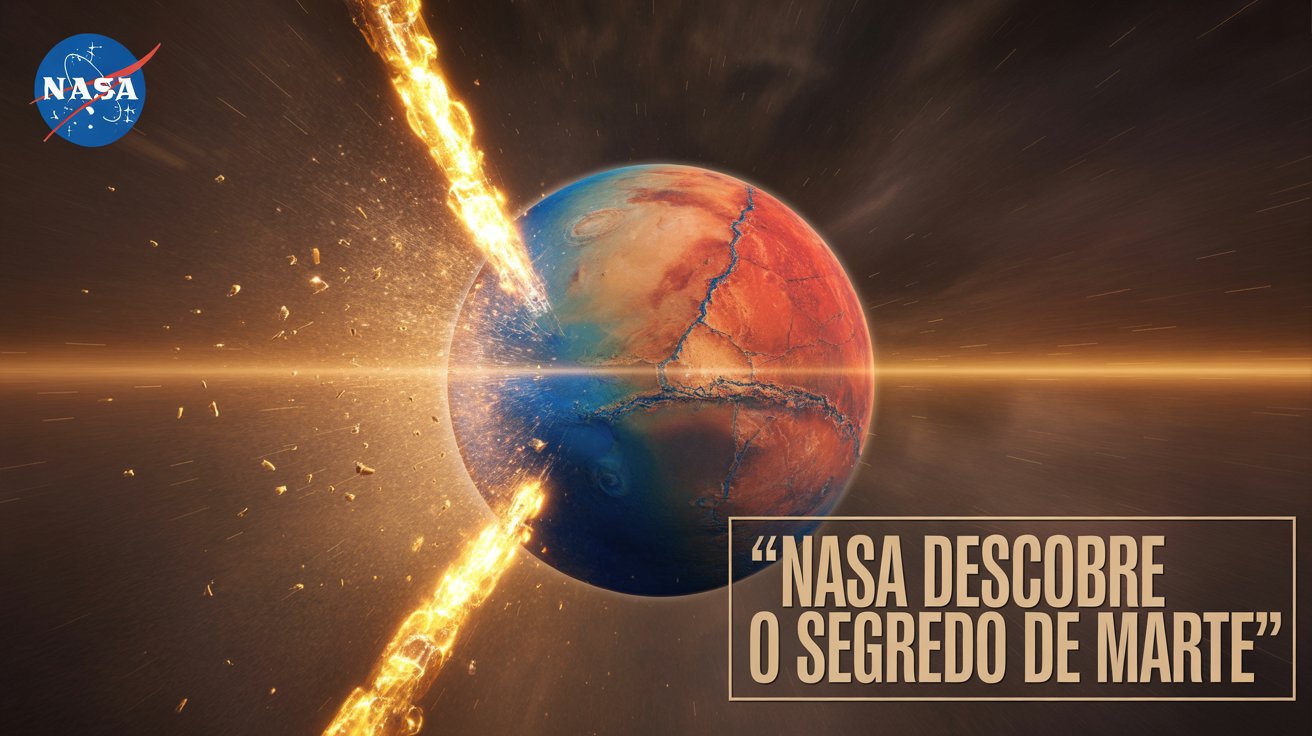
Unprecedented Discovery Reveals How Intense Solar Particles Transformed Mars Into An Arid And Lifeless Planet, Shedding New Light On Processes That Shaped The Martian Atmosphere Billions Of Years Ago.
Right from the start, the message is clear: intense solar particles were responsible for the process that made Mars lose its water.
Researchers identified that, billions of years ago, Mars lost its magnetic field and was exposed to solar wind — a stream of charged particles emitted by the Sun.
-
Motorola launched the Signature with a gold seal from DxOMark, tying with the iPhone 17 Pro in camera performance, Snapdragon 8 Gen 5 that surpassed 3 million in benchmarks, and a zoom that impresses even at night.

-
Satellites reveal beneath the Sahara a giant river buried for thousands of kilometers: study shows that the largest hot desert on the planet was once traversed by a river system comparable to the largest on Earth.

-
Scientists have captured something never seen in space: newly born stars are creating gigantic rings of light a thousand times larger than the distance between the Earth and the Sun, and this changes everything we knew about stellar birth.

-
Geologists find traces of a continent that disappeared 155 million years ago after separating from Australia and reveal that it did not sink, but broke into fragments scattered across Southeast Asia.

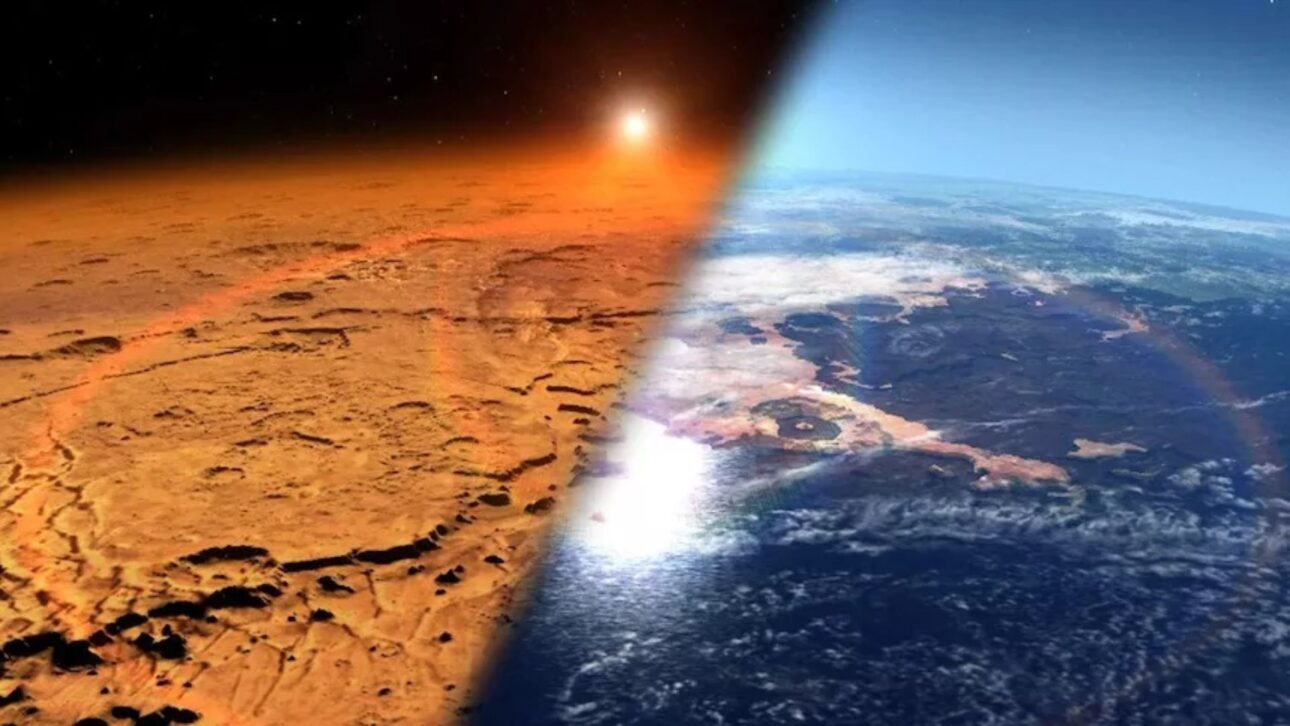
As a result, a significant part of the atmosphere was stripped away, making it impossible for liquid water to remain stable on the surface.
When the shield disappeared, the planet became vulnerable to solar storms that “pierced” the atmosphere like cannonballs, according to Shannon Curry, the principal investigator for the MAVEN mission.
The impact of these ionized particles was measured directly.
For the first time, the configuration of three instruments on the probe — solar wind ion analyzer, ion and neutral mass spectrometer, and magnetometer — simultaneously captured the sputtering event.
As a result, NASA created a three-dimensional map of argon being ejected, recording the phenomenon in real time.
The research found that the effect is up to four times more intense than previously estimated, especially during solar storm events.
The escape rate of argon increased significantly in regions with higher concentrations of solar ions, indicating strong sputtering activity.
What Is Cathodic Sputtering On Mars
When heavy solar wind ions hit the atmosphere, they collide with neutral molecules, propelling them into space — this is the essence of cathodic sputtering.
Pre-MAVEN studies had already detected smaller fractions of argon-36 (the lightest isotope), indicating that this process was occurring remotely.
The difference now is the ability to “see the fire,” not just the ashes — that is, witness the dragged atoms in real time.
Models reveal that the mechanism operates primarily at altitudes above 350 km and is regulated by solar storms and the electric field of the solar wind.
This combination maximized the loss of argon by up to 100 times during extreme events.
Impact On Martian Water
According to Curry and collaborators, the historical throttling of the atmosphere drastically reduced surface pressure.
Without sufficient pressure, liquid water evaporates, making its loss to space possible.
The observation of sputtering resolves one of the missing pieces in this puzzle, proving an essential mechanism for the planet’s transition from wet to arid.

The study, published in the journal Science Advances, reinforces the model’s relevance.
The MAVEN, launched in 2013 and in orbit around Mars since 2014, gathered data between 2014 and 2024 to analyze phenomena in the +E (outward electric field) and –E (electric field directed toward Mars) hemispheres, showing higher concentrations of argon in the –E hemisphere above 350 km.
Why The Discovery Is Important For Science
The research provides empirical evidence that sputtering was a critical factor in the loss of the Martian atmosphere.
The analysis helps estimate Martian climate and atmospheric conditions throughout its history, especially when the Sun was more active.
Understanding this dynamic is essential for assessing Martian habitability — not only in the past but also for planning future crewed missions.
Even though NASA plans to conclude MAVEN in 2026 due to budget constraints, scientists hope to continue extracting valuable data until then.
After that, the reliance on the obtained data may limit future research on similar phenomena.
If cathodic sputtering was so effective in making Mars dry and inhospitable, could similar phenomena compromise the habitability of other planets in the universe?







-

Uma pessoa reagiu a isso.