





 Portuguese
  English
  Spanish
  7 min of reading
  0 comments


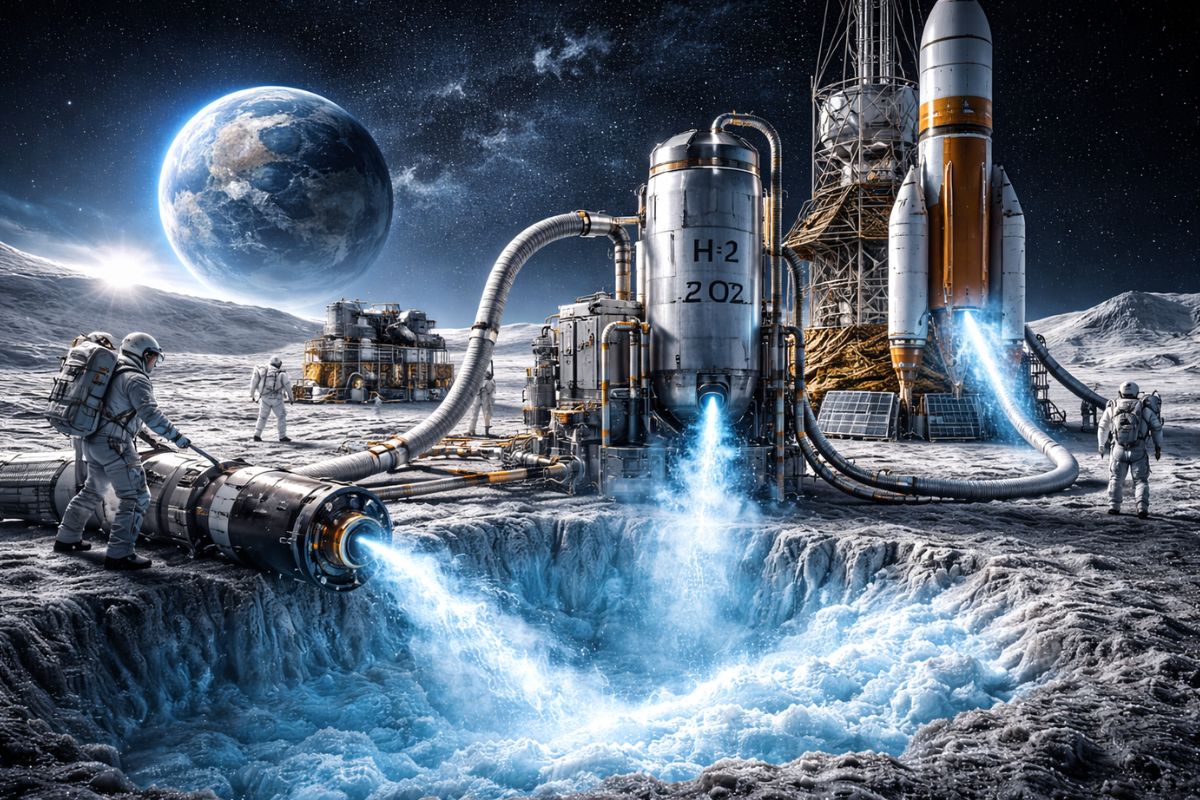
NASA’s New Technology to Produce Fuel from Lunar Ice Could Reduce Spaceship Weight, Extend Surface Operation Time, and Pave the Way for Cheaper and More Ambitious Missions to the Moon, Mars, and Beyond.
Fuel has always been at the center of one of the greatest dilemmas of space exploration: the farther the mission needs to go, the more propellant it has to carry, and the more propellant the spacecraft carries, the heavier it gets and the more expensive the launch becomes. It is precisely to tackle this cycle of weight, cost, and operational limitation that NASA is testing a technology capable of transforming resources found on the Moon into usable fuel for landing modules.
This proposal is part of a larger strategy linked to the Artemis program and the goal of establishing a more permanent presence on the lunar surface. If it works as expected, this solution could allow future missions to produce fuel at the destination itself, rather than relying solely on what was launched from Earth. In practice, this means less mass leaving the planet, greater autonomy in space, and a significant leap in the supply logic of crewed missions.
How the Fuel Problem Limits Space Missions
Every space mission faces the same basic calculation. To go farther, the spacecraft needs more fuel. However, this increase in volume makes the spacecraft heavier, requiring even more energy to get it into orbit and send it to its final destination.
-
In Mexico, a 3,000-year-old Maya site with the dimensions of an entire city may have been built as a colossal map of the cosmos, created to represent the order of the universe and reveal how this people organized space, time, and rituals.

-
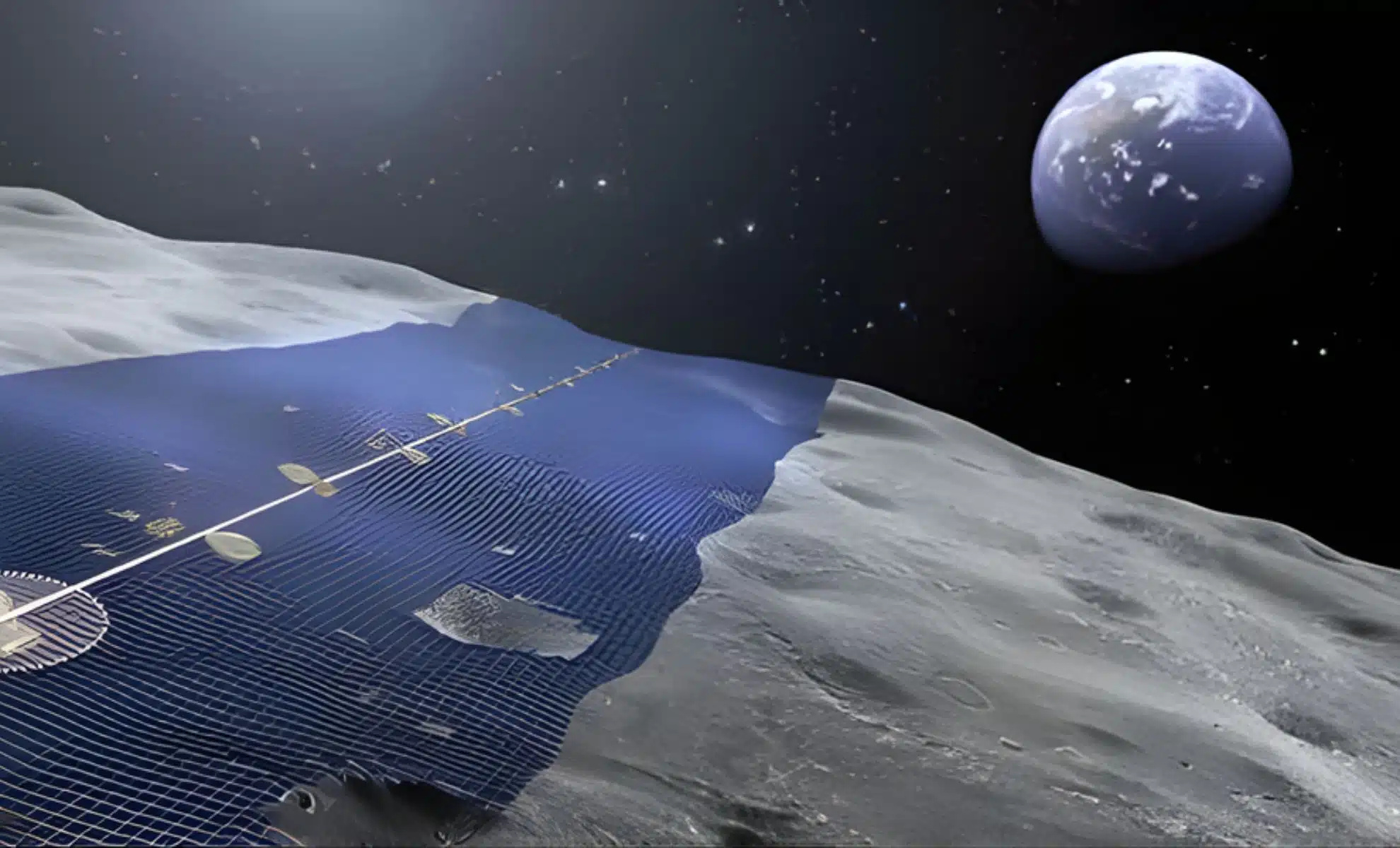
Japan wants to build a solar ring of 10,900 kilometers on the Moon to continuously send energy to Earth.
-
Weighing almost 1 ton, with temperatures of up to 3,000°C, the ability to launch 10,000 fragments within a radius of 1 km, capable of penetrating concrete and melting steel, Turkey’s terrifying bomb emerges as one of the most destructive non-nuclear weapons ever presented.

-
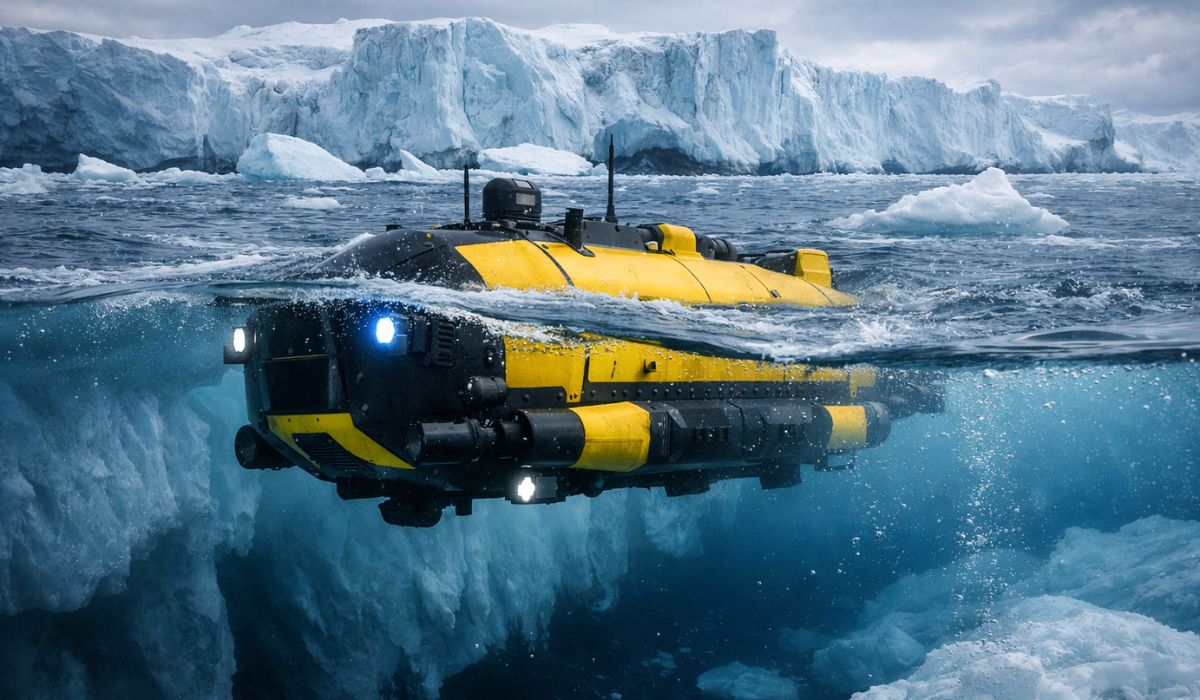
After a submarine disappeared beneath the “Doomsday Glacier,” scientists announce a new monstrous machine capable of operating at 3,000 meters depth to return to the heart of the ice and investigate a threat that could raise sea levels worldwide.

This chain effect turns propellant into one of the most expensive and challenging factors of any space project.
It’s not just about how much will be consumed during the journey, but also the impact that this extra weight has on the entire mission architecture. The greater the distance, the greater the weight, and the greater the weight, the higher the total cost of the operation.
That’s why the idea of producing resources off Earth is so strategic. Instead of transporting everything ready-made, the mission could utilize what already exists in the visited environment.
CryoFILL Project Aims to Transform Lunar Oxygen into Fuel
To tackle this challenge, experts from NASA’s Glenn Research Center in Cleveland are developing the CryoFILL project, which stands for In Situ Cryogenic Fluid Liquefaction for Landing Modules.
The goal of CryoFILL is to create a system capable of producing and liquefying oxygen directly on the surface of bodies like the Moon or Mars. This oxygen can then be used as part of the fuel needed to refuel landing modules and other structures of space exploration.
According to Evan Racine, project manager at NASA Glenn, the logic is simple yet powerful: if the agency can produce and liquefy oxygen off Earth, it will be able to refuel vehicles on-site. This reduces the amount of propellant that needs to leave the planet and profoundly changes the economics of space missions.
Lunar Ice Is Viewed as a Strategic Resource
The basis of this advancement lies in the water ice found in permanently shadowed regions of the Moon. These deposits have been seen for some time as a valuable resource for lunar exploration, precisely because they can provide essential elements to sustain human presence and longer operations on the surface.
In the case of CryoFILL, the focus is on oxygen. This oxygen can be extracted from the ice in gaseous form, but it is not yet ready for direct use as fuel. To become useful for refueling rockets and landing modules, it needs to be cooled down intensely to turn into liquid.
This process may seem technical, but it is crucial. Without liquefaction, oxygen does not meet the storage and utilization form required by landing and propulsion technology for larger scale space applications.
Cryocooler Is the Central Piece of the System
To make this process possible, NASA is using a cryocooler similar to those used in spaceflights, developed by Creare LLC with support from the agency’s Small Business Innovation Research program.
This equipment removes heat from the system responsible for extracting oxygen. As a result, the gas can condense and remain at extremely low temperatures, below minus 184 degrees Celsius. It is this step that transforms the extracted resource into a useful form of fuel for future applications.
The use of a system based on technology similar to that already employed in space missions is important because it reduces the distance between the laboratory and real application.
NASA is not just testing an abstract idea but evaluating a technical path that can be scaled and automated in the future.
Current Tests Serve to Expand the Technology
According to Wesley Johnson, chief engineer of CryoFILL, the tests are being conducted with equipment similar to that used in commercial flights to observe how oxygen liquefies and how the system reacts in different scenarios.
During the months of study, engineers will analyze the condensation of oxygen under various conditions, validate computational temperature models, and demonstrate how the technology can grow for broader uses.
This data set will be essential to determine if the production of fuel in situ can indeed move beyond the experimental stage and advance to lunar and Martian missions.
The current phase is crucial because it turns hypothesis into concrete measurement. Without this type of test, it would be impossible to know how the system behaves under the real demands of an operation outside Earth.
Artemis Program Gives Strategic Meaning to the Project
CryoFILL does not appear in isolation. It is directly aligned with the goals of the Artemis program, which aims to return astronauts to the Moon on progressively more complex missions, focusing on science, lasting presence, and preparation for crewed trips to Mars.
To maintain long-term operations on the lunar surface, NASA knows that it is not enough to land and leave. It will be necessary to use local resources to produce essential items, and fuel is at the top of that list.
Without it, each mission would depend on a massive payload launched from Earth, which would limit the frequency, duration, and ambition of operations.
In this context, producing oxygen from lunar ice fits as a strategic step. It helps transform the Moon from a visit destination into an operational platform for the next phase of space exploration.
Refueling on the Surface Could Drastically Reduce Costs
One of the most promising effects of this technology lies in the final cost of missions. If landing modules can be refueled directly on the surface, the need to transport large amounts of propellant from Earth decreases significantly.
This affects not only the cost of launch but the entire mission architecture, from the design of the spacecraft to the amount of payload that can be carried.
Instead of spending mass and space just on fuel, the mission can free up room for equipment, supplies, scientific instruments, and greater operational flexibility.
The economic gain would come not only from the direct reduction of weight but from the complete reorganization of how space exploration is planned. Lighter and smarter missions tend to be more feasible in the long term as well.
Technology Could Also Serve Mars and Other Surfaces
Although the Moon is the most immediate focus, NASA has already made it clear that the data obtained from CryoFILL can serve as a basis for future applications on Mars and other planetary surfaces.
This makes sense because the general principle remains valid: whenever there is a possibility to use local resources to generate fuel, space exploration gains in efficiency and autonomy. In very long journeys, like those involving Mars, this advantage becomes even more important.
The agency itself sees the Moon as a kind of testing ground for technologies that could later support much more distant crewed missions.
In this scenario, learning to produce and liquefy oxygen off Earth ceases to be a technical curiosity and becomes a key tool for human expansion in space.
NASA Bets on a Broad Cryogenic Development Network
The work related to CryoFILL is part of the Cryogenic Fluids Management Portfolio Project, an interagency initiative based at the Glenn Research Center and the Marshall Space Flight Center.
This portfolio integrates over 20 technological development activities within NASA’s Space Technology Mission Directorate. In other words, the effort to produce fuel off Earth is not isolated in a single experiment, but is part of a broader technological strategy.
This detail is important because it shows that the agency treats the topic as a structural priority, rather than just a one-off bet. The production of in situ resources is already seen as one of the pillars of the next generation of space missions.
Lunar Fuel Could Open a New Phase of Exploration
The technology currently being tested by NASA is still in the validation stage, but the concept behind it is strong enough to change how the space sector thinks about the future.
If the agency can reliably transform lunar ice into fuel, it will be laying the groundwork for more autonomous, sustainable, and financially viable missions.
More than just a laboratory advancement, it represents a change in logic. Instead of bringing everything from Earth, exploration increasingly depends on the ability to produce at the destination the resources that sustain its continuity. And few resources are as decisive as fuel.
If this technology advances as NASA hopes, the Moon could cease to be just a landing spot and become a real refueling point for deep space exploration.
In your opinion, could producing fuel from lunar ice really change the future of space missions?








Seja o primeiro a reagir!