





 Portuguese
  English
  Spanish
  3 min of reading
  0 comments


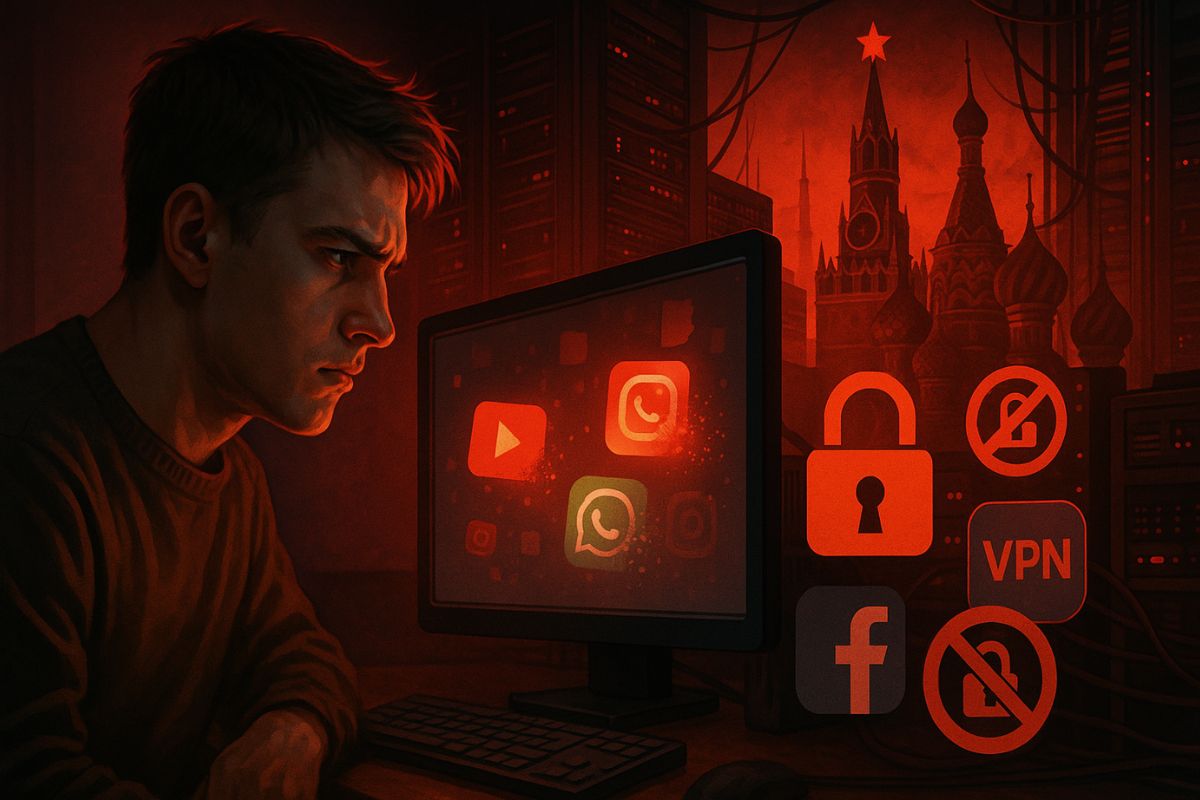
Navigating The Internet Can Be Frustrating In Russia Under Growing Kremlin Control. Censorship, Blockades, And Criminalization Of Online Searches Are Part Of The Strategy To Isolate The Network In The Country
Navigating the internet can be frustrating in Russia, not only due to technical issues but also because of a deliberate plan by the Kremlin to control the digital space. From restrictive laws to platform blockades and the criminalization of searches, the country has moved towards a heavily monitored network model, reducing information freedom.
According to a report by the Associated Press, this policy gained strength after the protests of 2011-2012 but intensified with the invasion of Ukraine in 2022, when major social networks and various western services were banned. The crackdown includes everything from mobile internet shutdowns to the threat of replacing WhatsApp with a national app, MAX, controlled by the state-owned VK.
How The Russian Internet Is Being Controlled
In recent years, the government has imposed requirements on providers and technology companies, such as storing user data on local servers and installing systems that allow the state to monitor and manipulate online traffic. Popular services like YouTube and Signal have already faced restrictions, and even VPNs, a main resource to bypass censorship, are targeted by recurring blockades.
-
Brazilian city bets on the business environment to generate jobs and attract investments in the energy sector — secretary reveals strategy at Macaé Energy 2026.

-
50 viaducts, 4 tunnels, 28 bridges, and 40 kilometers of bike paths: BR-262 in Espírito Santo will receive 8.6 billion reais for the largest engineering project in the state’s history, inspired by the Immigrant Highway in São Paulo.

-
Brazil produces too much clean energy and doesn’t know what to do with it: over 20% of solar and wind capacity was wasted in 2025 while investors flee and 509 renewable generation projects were abandoned in the last year.

-
Piauí will produce a new fuel that replaces diesel without needing to change anything in the truck’s engine and reduces pollutant gas emissions by half: truck drivers from all over the Northeast are already celebrating the news that will arrive later this decade.


The goal is to move towards a “sovereign internet,” capable of operating isolated from the rest of the world, similar to China’s “Great Firewall.” Today, more than half of the IP addresses in Russia are controlled by just seven companies, with the state-run Rostelecom dominating 25% of the total, according to Human Rights Watch.
Criminalization Of Content And Online Searches
One of the most controversial changes was the approval of a law that criminalizes online searches for material considered “extremist”, a concept that includes everything from LGBTQ+ content to publications by opponents like Alexei Navalny. Experts point out that while individual tracking is difficult, isolated cases can serve as examples and intimidate the population.
This type of punishment is already applied in countries like Belarus, where people are fined or imprisoned just for reading independent media. In Russia, the trend is to associate criminalization with the use of foreign platforms, encouraging migration to domestically controlled services.
The Advancement Of The MAX App And The Risk To WhatsApp
The MAX, a national messenger promoted by the government, already has more than 2 million registrations and is designed to integrate messaging, payments, and state services, but also to share data with authorities. A new law mandates that it be pre-installed on all smartphones sold in the country.
For widespread adoption, experts believe the Kremlin will “squeeze” western alternatives, possibly blocking WhatsApp, which has over 97 million monthly users in Russia. Telegram, although popular, is not on the immediate restrictions list.
How Far Does Control Go?
The Kremlin has not yet achieved total isolation of the internet, but experts warn that the country is getting closer to this scenario.
The combination of new laws, concentrated infrastructure, and technical advancements indicates that digital control will be increasingly strict.
And you, do you believe that the blocking of services and the criminalization of online searches can turn the Russian internet into a completely closed system like China’s? Or do you think that the population will always find ways to circumvent these barriers? Leave your opinion in the comments.









Seja o primeiro a reagir!