





 Português
  Inglês
  Espanhol
  5 min de leitura
  0 comentários


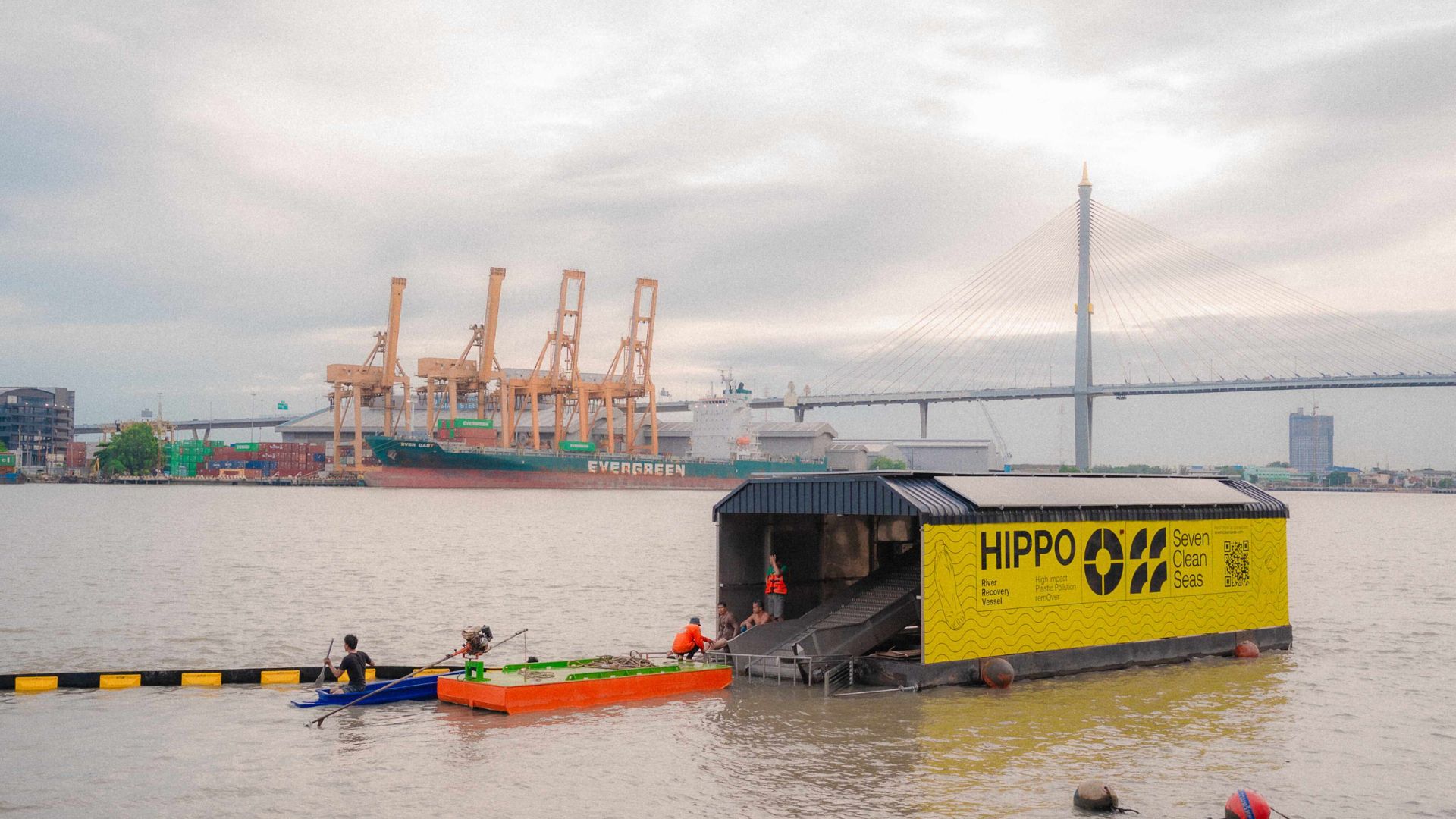
Environmental Vessel Operates Daily in South Bali to Intercept Plastic Before It Reaches the Open Ocean, Integrating Maritime Collection and Land Sorting in One of the Most Tourism-Pressed Coastal Areas with Urban Waste Flows.
A coastal cleanup vessel operates daily in South Bali to intercept floating waste before it reaches the open ocean, in a stretch known as the Serangan–Benoa corridor, where tides and winds accelerate the dispersion of trash in the region.
The operation is conducted by Seven Clean Seas, which claims to have received the equipment as a donation from MOL Indonesia, and focuses its work in the shallow waters near drainage channels and river mouths that carry waste from land to sea.
Critical Point Between Urban Drainage and Open Ocean
Tanjung Benoa, an area used as a base for the routine described by the organization, brings together rivers, canals, and drainage systems that transport discarded trash from urban zones to the coast, creating a scenario where the problem becomes visible on the beach, but originates far from it.
-
Drought may be creating stronger superbugs in the soil and helping antibiotic resistance reach hospitals, warns a study highlighting a problem that could grow alongside extreme weather.

-
The biggest scam in history: Napoleon’s France deceived the United States by selling them a territory that was Spanish.

-
Why is the Danakil Desert so dangerous? It has unstable terrain and how extreme temperatures and toxic gases turn the region into one of the most hostile environments on Earth.

-
With a height of 221 meters and a capacity for trillions of liters, Hoover Dam still holds a trick that makes water defy logic.

In addition to urban flow, tourism pressure and the constant movement of people increase waste generation and heighten the risk of leaks in the collection chain, while coastal currents redistribute the material and complicate manual removal in mangroves and narrow canals.
Against this backdrop, the vessel is presented as equipment aimed at “nearshore” cleanup, able to operate on the boundary between land runoff and the sea, precisely where plastic can still be recovered at a lower operational cost.

The logic is to prevent floating waste from advancing to deeper and more distant areas, where collection becomes more complex, more expensive, and less frequent, as well as increasing the chance of fragmentation and dispersion to other coastal zones.
How the OTTER Intercepts Plastic Daily
According to Seven Clean Seas, the OTTER acts as a recovery funnel by directing debris into the equipment, allowing for the removal of the material on the same day, before the trash circulates back among beaches, marinas, and anchor areas.
Instead of relying on large seasonal campaigns, the team unloads the daily collection and transports the waste to a nearby processing unit, reducing the time from when the trash reaches the water to when it enters sorting routes.
This daily cadence aims to bring predictability to work that, without routine, tends to occur in peaks, with low continuity, and ends up leaving the trash enough time to be redistributed by the tide, reappearing repeatedly at the same spots.
A similar narrative appears in material published by ERIA through the Regional Knowledge Centre for Marine Plastic Debris, which tracked the path of plastic in Bali and described interception in Tanjung Benoa as a step prior to dispersion in the ocean.

When reporting the operation, the institution recorded the use of the OTTER by the Seven Clean Seas team and mentioned local manager I Wayan Eka Ruphina when associating most of the trash found at sea with terrestrial sources, such as leaks related to a nearby traditional market.
Sorting on Land and Separation of 47 Waste Types
The destination of the recovered material is presented as a central part of the project, with Seven Clean Seas stating that the waste goes to TPS3R Panca-Lestari, located in the Desa Adat Tanjung Benoa area, as part of a “capture and channel” strategy.
The organization reports that recyclable items, such as PET bottles and HDPE packaging, are directed to circular economy networks on the island, while non-recyclable fractions follow structured recovery routes, with the stated goal of reducing landfill shipments.
According to ERIA’s report, TPS3R Panca Lestari serves approximately 500 households with collection and sorting and also receives waste from nearby hotels, restaurants, and schools, increasing the processed volume in a high-tourism activity area.

According to the institution, the unit manages 47 types of waste and separates the material by streams, including organic, inorganic, and residual and wet fractions, with a relevant portion of the organics returning to the natural cycle through daily composting.
The ERIA text also points out that the system depends on household engagement, as capacity and awareness limitations make segregation at the source a decisive factor for material quality, especially when it comes to plastics.
At the same time, the participation of community structures and local rules is described as an important component to encourage sorting habits, in a context where customary villages can influence sorting and disposal routines within homes.
Tourism in Bali and International Pressure for Permanent Solutions
Bali is globally known for its landscapes and culture, but the circulation of images of beach waste has also gained international projection, increasing the demand for solutions that can be measured, repeated, and integrated into daily life, without relying on ad-hoc actions.
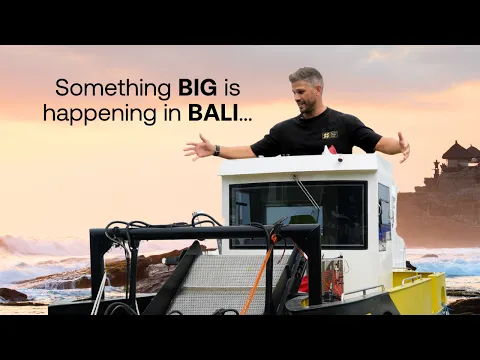

In this scenario, the daily operation in the Serangan–Benoa corridor seeks to combine an immediate water response with a land chain that tries to provide a coherent destination for the material, avoiding that the removal at sea becomes merely a change of the problem’s address.
The very routine of the OTTER underscores a recurring point in the debate over marine debris, as the visible waste on the coast typically arrives from ongoing leaks on land, crossing drainage and urban waterways and only then finding the tide.
While the boat draws attention for operating daily in one of the planet’s most well-known coastal regions, the decisive test lies in the ability to maintain the flow of material until sorting and reuse, despite the constant influx of waste into the system.
While the boat draws attention for operating daily in one of the planet’s most well-known coastal regions, the decisive test lies in the ability to maintain the flow of material until sorting and reuse, despite the constant influx of waste into the system.







-

-

-

-

-

-

18 pessoas reagiram a isso.