





 Portuguese
  English
  Spanish
  5 min of reading
  0 comments


With More Than 60,000 Tons and Capacity to Transport Up to 1,000 Military Vehicles, the Bob Hope Class Ships Are Part of the Logistics Strategy That Allows the U.S. to Rapidly Deploy Tanks, Helicopters, and Supplies to Any Theater of Operations.
In modern wars, the speed of mobilization can decide the outcome of a military campaign. Even before soldiers reach the battlefield, tons of equipment need to be available: tanks, trucks, helicopters, ammunition, fuel, mobile hospitals, and food.
To solve this logistical problem, the United States developed a little-known system outside the military: pre-positioning ships permanently loaded with military arms and vehicles. Among the most impressive of this system are the Bob Hope class ships, giants of military logistics that operate as true floating arsenals.
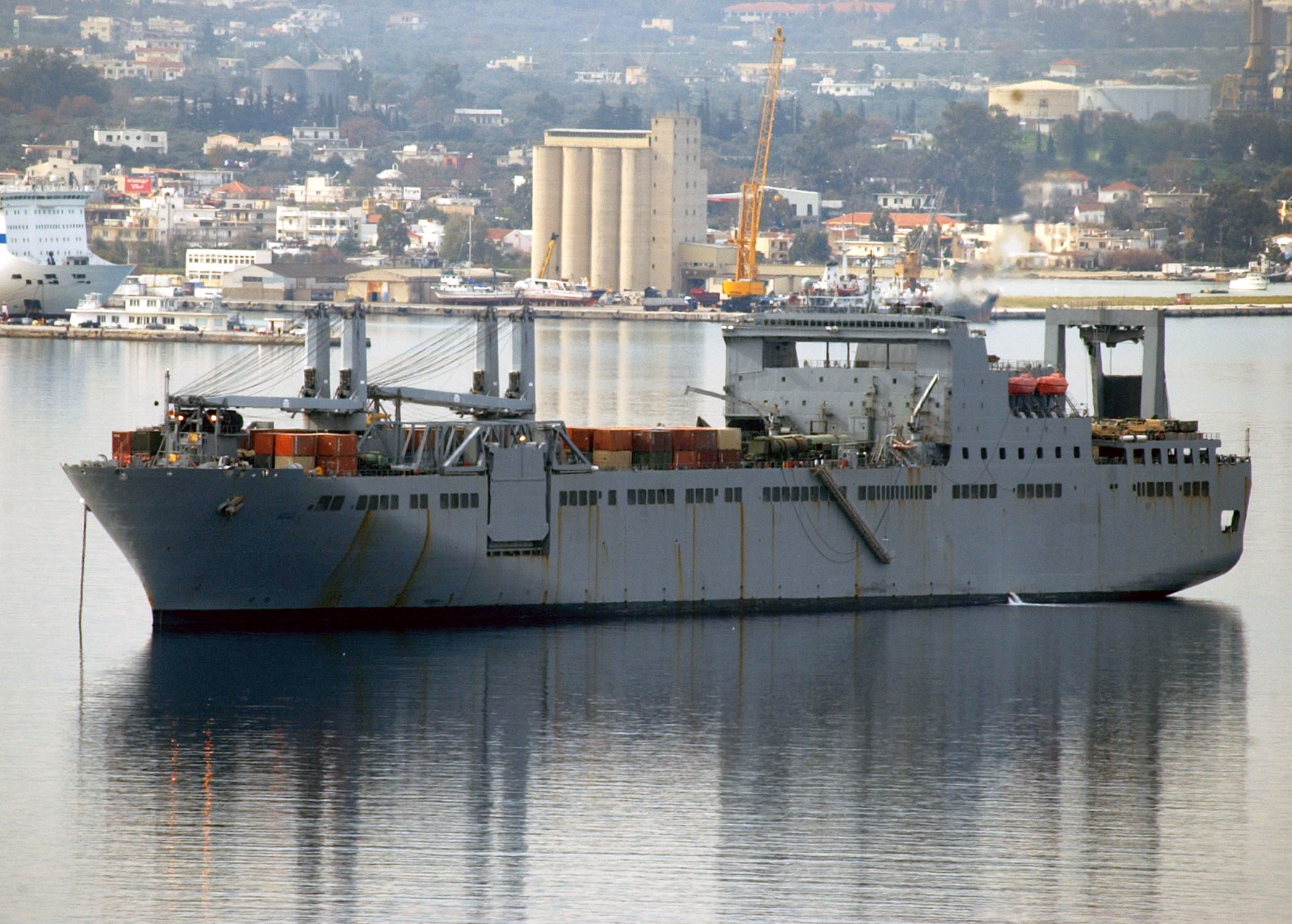
With approximately 62,000 tons of total displacement, these ships belong to the Large Medium-Speed Roll-on/Roll-off (LMSR) category and were specifically designed to transport enormous quantities of military vehicles and equipment to any part of the planet.
-
FAB loses Hermes 900 drone during multinational exercise in Mato Grosso do Sul and is left with only one active aircraft, raising concerns about operational fragility and strategic response capability.
-
The U.S. Army bets on the multifunctional MV 75 aircraft with cutting-edge technology that promises to revolutionize modern warfare by combining extreme speed, greater range, and unprecedented operational efficiency.
-
Built in secret inside a barge with a satellite-proof roof, the 49-meter, 560-ton ship with stealth technology deflected radar waves like an F-117 fighter, sailed invisibly for nearly 10 years at night, and, despite costing 170 million dollars, ended up being dismantled and sold as scrap for only 2.5 million.
-
North Korea tests intercontinental range rocket with a 2,500 kN solid fuel engine supervised by Kim Jong Un and advances in a five-year strategic plan.

In practice, they are part of the strategy that allows U.S. forces to initiate large military operations in a time frame far shorter than would be possible if all equipment had to be transported from United States territory.
What Are Military Pre-Positioning Ships
The Bob Hope class ships are part of a system called Maritime Prepositioning Force (MPF). This concept was developed during the Cold War to ensure that military equipment was already positioned near strategic regions of the planet. The logic is simple:
- the ships are loaded with arms and vehicles
- remain positioned in strategic regions
- troops can arrive quickly by plane
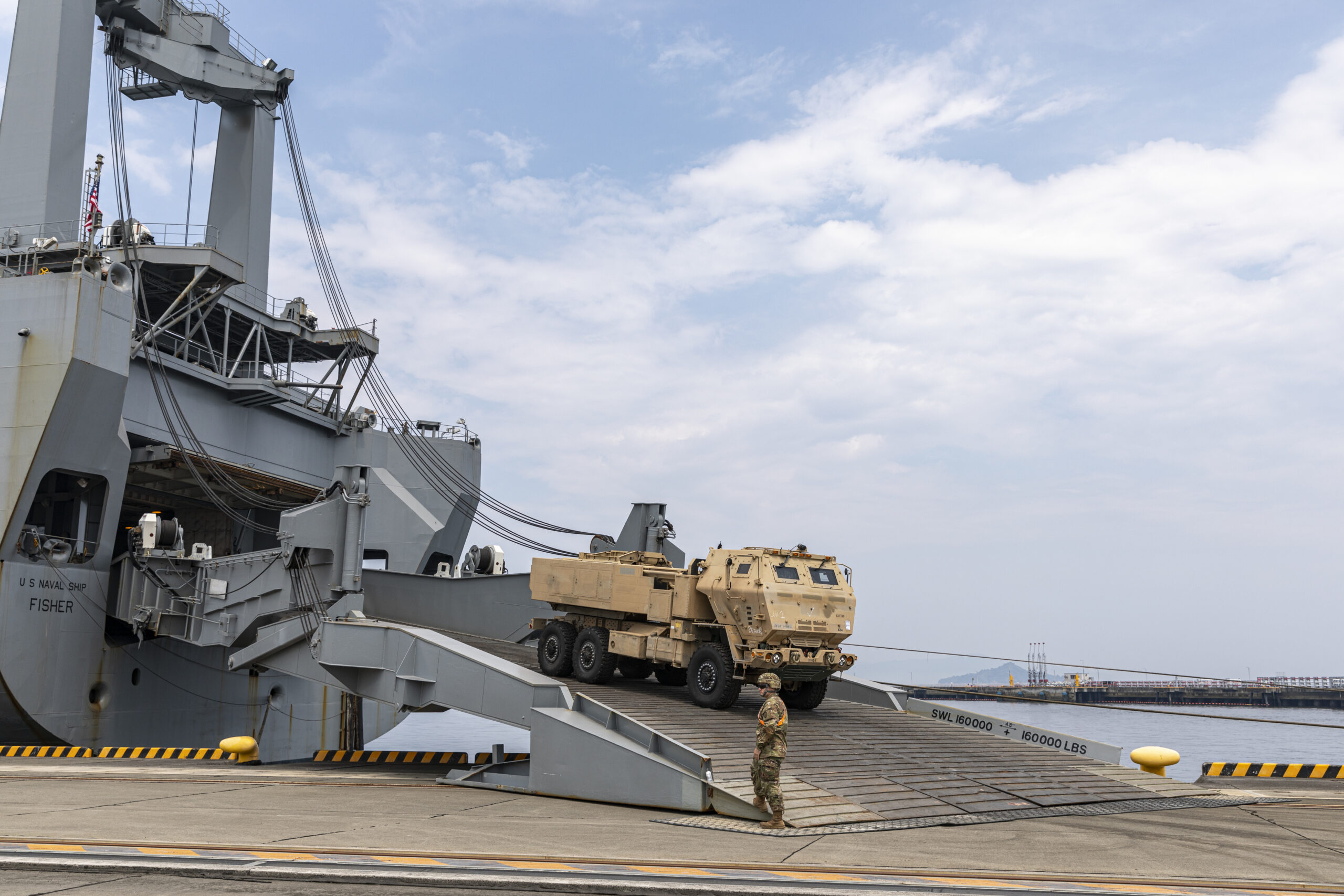
When needed, soldiers disembark and find all the equipment ready for use. This system drastically reduces the time required to assemble a complete military force in distant regions.
According to the United States Marine Corps, pre-positioning ship squadrons carry enough equipment and supplies to sustain a brigade of about 17,000 troops for approximately 30 days of operations.
A Logistical Giant of More Than 60,000 Tons
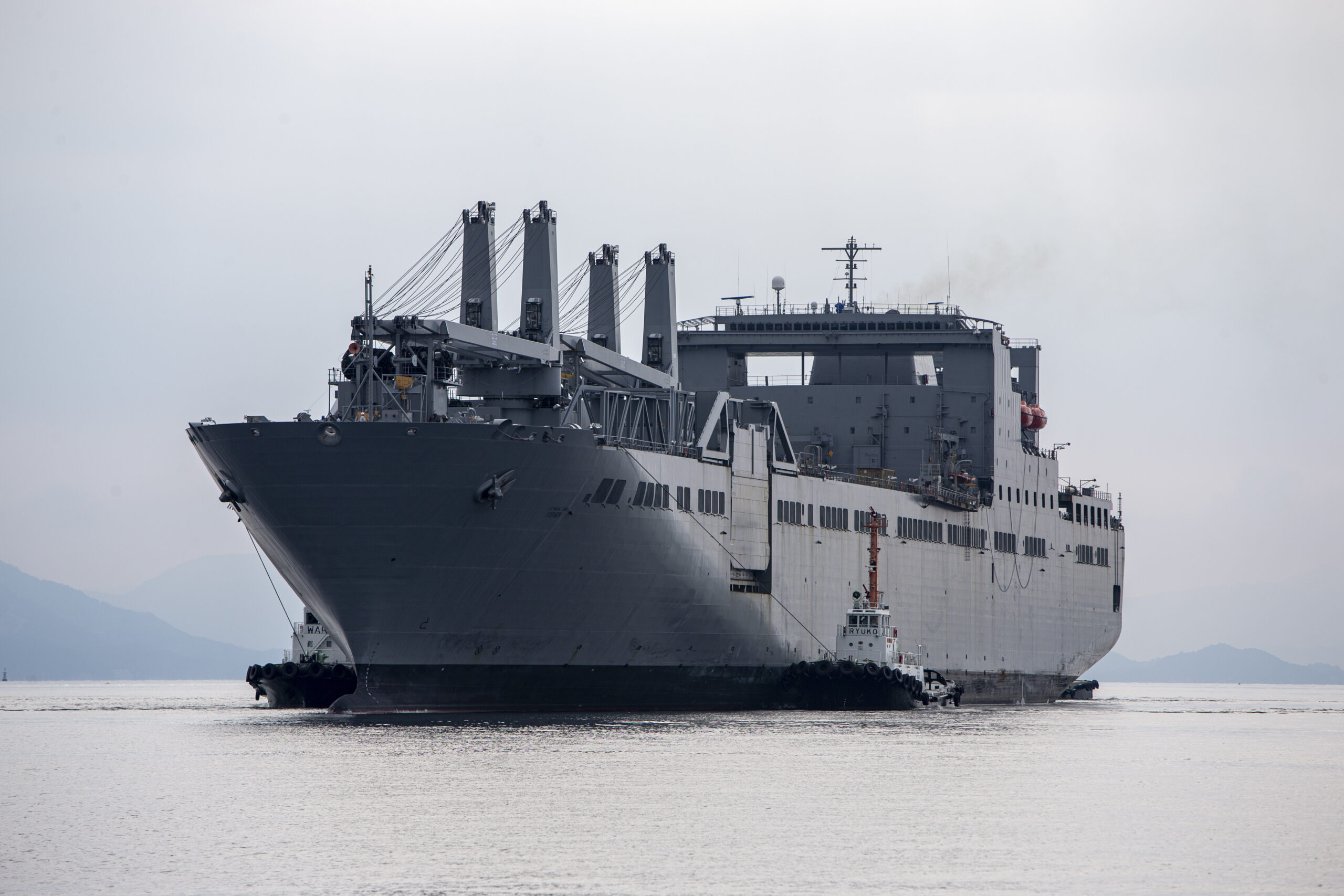
The Bob Hope class ships are among the largest military cargo ships ever built for strategic logistics. The dimensions are impressive:
- total displacement: about 62,000 tons
- length: approximately 290 meters
- width: about 32 meters
- maximum speed: about 24 knots (approx. 44 km/h)
Despite their colossal size, these ships are not combat vessels. They do not have heavy armaments and are primarily operated by civilian mariners from Military Sealift Command, the U.S. Navy’s logistics command.
The goal is to transport equipment, not to fight. Even so, their role can be decisive in military conflicts.
Capacity to Transport Up to 1,000 Military Vehicles
The interior of a Bob Hope class ship is essentially a gigantic floating military parking lot.
The cargo area exceeds 380,000 square feet, equivalent to almost eight football fields. This structure allows for the transport of:
- battle tanks
- armored vehicles
- military trucks
- field ambulances
- artillery systems
- logistical equipment
Some ships of this category can carry up to 1,000 military vehicles with wheels or tracks at the same time. This means that a single ship can transport practically all the equipment necessary to outfit a large combat unit.
Roll-on Roll-off System Accelerates Disembarkation
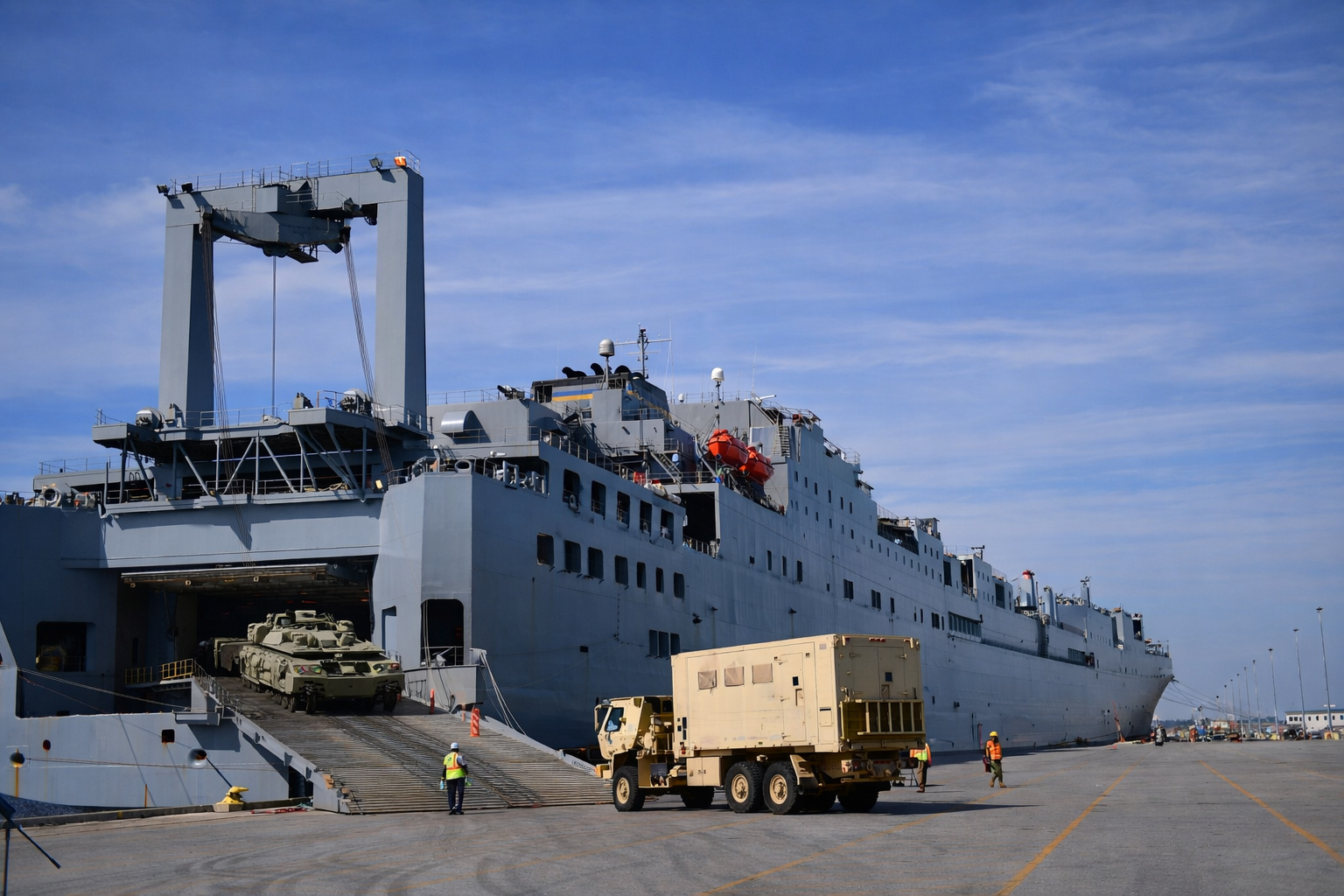
An important feature of these ships is the roll-on roll-off (Ro-Ro) system. This system allows military vehicles to enter and exit the ship by driving directly up the ramps. Instead of using cranes to lift each vehicle, tanks and trucks simply:
- drive onto the ship
- park in the internal decks
- exit quickly upon arrival at the destination
The ships have:
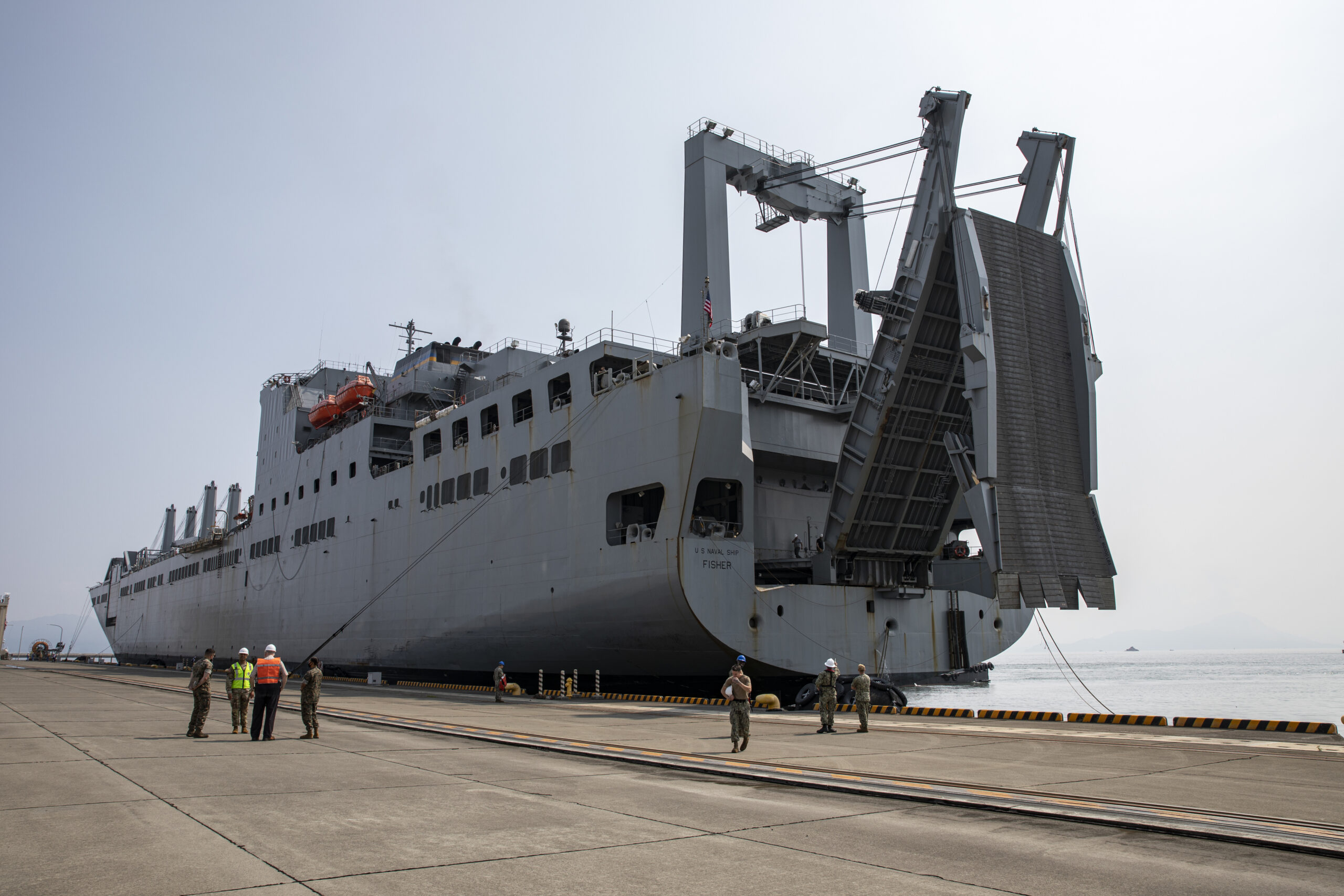
- rear ramps
- side ramps
- internal ramps between decks
This system allows for the unloading of large quantities of vehicles in a few hours.
Structure Capable of Operating Even Without Adequate Ports
In many regions of the world, modern ports are not available. To deal with this problem, the Bob Hope class ships have their own cargo handling equipment. Among them are heavy cranes capable of lifting dozens of tons, allowing for equipment unloading even in locations with limited infrastructure.
In addition, these ships feature a helicopter landing platform, which facilitates logistical operations in remote environments. This capability makes the vessel extremely versatile.
Military Operations and Real Missions
Bob Hope class ships have participated in various military operations and logistical missions. Among the documented examples are:
- transport of equipment for operations in the Balkans
- dispatch of military vehicles for operations in Iraq
- logistical support for international missions
In one of these operations, the USNS Bob Hope transported more than 38,000 tons of military equipment during missions related to the war in Iraq. These ships can also participate in humanitarian operations, carrying construction equipment, water purifiers, and supplies.
Where These Ships Are Positioned
Pre-positioning ships are not only located in American ports. They are distributed in strategic regions of the planet. Some of the most important areas include:
- Indian Ocean
- Western Pacific
- Mediterranean
- Persian Gulf
This distribution allows military equipment to be relatively close to potential crisis zones. Thus, when a military operation needs to be initiated, troops can quickly fly to the region and utilize the equipment stored on the ships.
Small Crew for a Giant Ship
Despite their gigantic size, the crew of these vessels is relatively small. Typically, the ships are operated by:
- about 26 to 45 civilian mariners
- up to 50 additional military personnel when needed
This is because much of the cargo operations are automated or based on the roll-on roll-off system.
An Essential Piece of Modern Military Logistics
Modern wars depend as much on logistics as on firepower. Without fuel, ammunition, vehicles, and supplies, even the best-trained armies cannot operate.
In this context, the Bob Hope class ships represent one of the invisible pillars of American military strategy. They do not possess missiles or cannons, but they carry something equally important: the ability to move an entire army across the oceans.
With tens of thousands of tons of equipment and vehicles ready for use, these logistical giants demonstrate how modern warfare increasingly depends on planning, mobility, and global infrastructure.







-

-

-

-

-

-

90 pessoas reagiram a isso.