





 Portuguese
  English
  Spanish
  5 min of reading
  0 comments


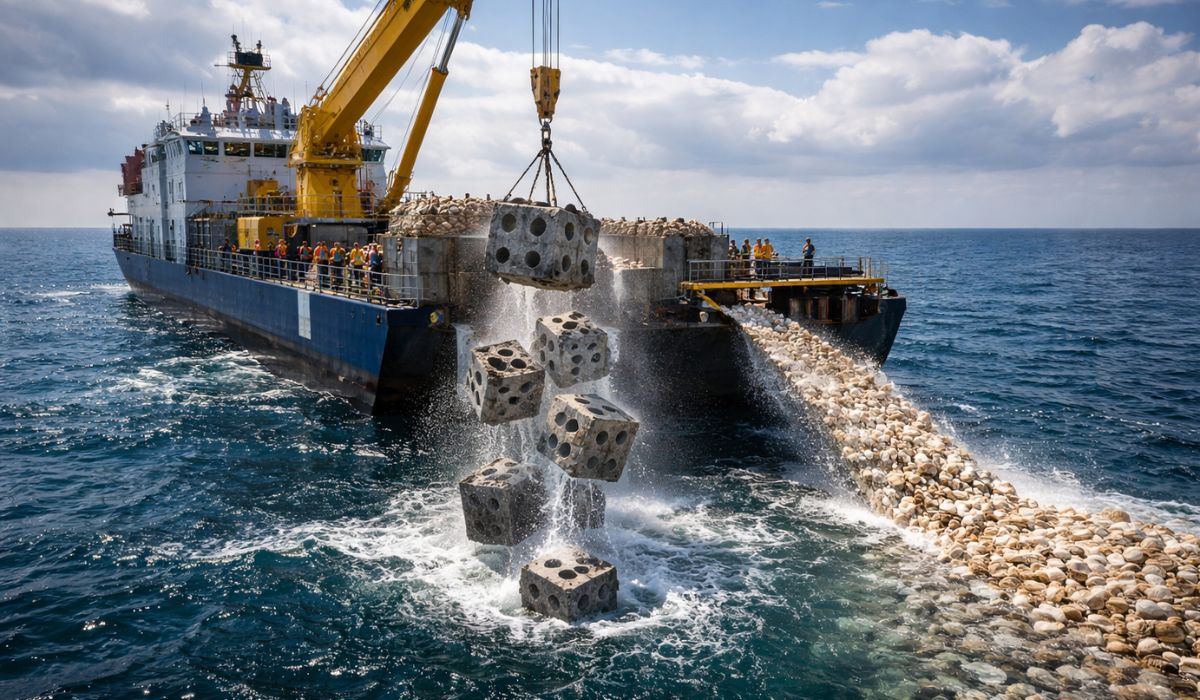
An operation on the British coast mobilizes submerged structures, reused shells, and thousands of oysters in an attempt to restore a historical marine habitat and place the species back at the center of coastal dynamics.
The United Kingdom has launched 40 tons of reused scallop shells and 20 ecological blocks to the bottom of the North Sea in an attempt to restore native oyster reefs that have disappeared from much of the British coast over the last two centuries.
The action was led by the Zoological Society of London (ZSL) and Groundwork North East and Cumbria, in the region of Whitburn, in the northeast of England, as part of a marine habitat restoration project.
The initiative focuses on the native European oyster, Ostrea edulis.
-
Researchers extracted DNA from a bone fragment of a Neanderthal found in the Denisova Cave in Russia.
-
Scientists released one-ton giant bison in the mountains of Romania, and the result surprised even zoologists: the vegetation in the region increased by 30%, and the soil began to capture ten times more carbon than before.

-
In 2016, a plane equipped with billions of laser pulses scanned 2,100 km² of jungle in Guatemala and revealed, beneath the tree canopies, a Maya megacity with 61,480 unknown structures, elevated roads spanning dozens of kilometers, industrial-scale irrigation systems, and a population of up to 15 million, three times more than any previous estimate.

-
Someone released 18 beavers in the upper Ebro River; it seemed like an isolated case, but no one knows who did it or how to stop their expansion, and now they have already reached Catalonia. And there’s a detail that changes the game: they can help restore rivers and even capture carbon.


According to ZSL, the population of the species in the UK has declined by over 95% since the 19th century, in a process associated with habitat loss, intense exploitation, pollution, and disease.
The organization states that the reduction has affected not only the presence of the mollusk but also the ecological structure of coastal areas where natural reefs once existed.
Ecological blocks and oysters on the seabed
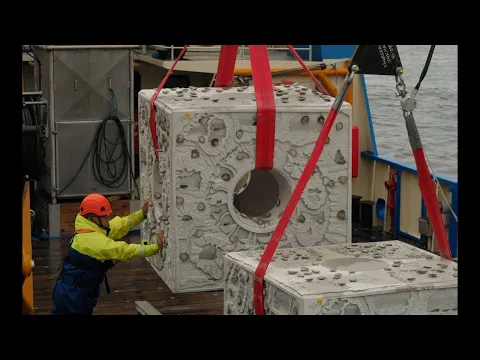
In the restoration area, teams deployed 20 structures known as “reef cubes,” described by ZSL as textured blocks similar to concrete.

Each piece received adult oysters fixed to its surface to initiate reef reconstruction and increase the stability of the set on the seabed.
According to the organization, about 4,000 adult oysters were taken to sea, along with more than 35,000 juvenile oysters already adhered to shells.
The material was distributed over an area of 10,000 square meters, used as a test zone to evaluate the model’s adaptation to local conditions.

Around the blocks, teams spread the 40 tons of scallop shells.
This material serves as a settlement base for oyster larvae, which need hard surfaces to attach and grow.
In practice, the goal is to create conditions for new generations of the species to establish themselves more easily.
Why oyster reefs disappeared
For centuries, oyster reefs were part of the British coastal landscape.
However, with the advancement of human activity along the coast, this environment has been degraded.
ZSL links the species’ collapse to a combination of intensive fishing, alteration of the seabed, water contamination, and disease spread.
The loss of these reefs affects more than just a single population of mollusks.
According to experts involved in the project, the structures formed by oysters serve as habitat for other marine species, providing shelter and feeding areas for fish, crustaceans, and smaller organisms.
Without this type of formation, the coastal ecosystem loses complexity.
Therefore, the recovery proposed in Whitburn is not limited to repopulating the species.
The intention is to gradually rebuild an environment capable of sustaining different forms of marine life.
Whitburn tests more resilient structures at sea
The adoption of ecological blocks is also linked to the results of a previous stage of the work.
In October 2023, the project launched 10,000 native oysters on a reef created off the coast of Whitburn.
After this operation, severe weather events dispersed some of the material deposited on the seabed.
In light of this scenario, the responsible parties decided to test more robust structures.
According to ZSL, the new blocks were designed to better withstand the action of currents and storms, while also keeping the oysters protected in an area subject to rough seas.

The pieces have irregular external surfaces designed to mimic natural substrates, and also internal openings that expand the available space for the fauna.
According to those responsible for the action, the design aims to favor not only the attachment of oysters but also the presence of other marine organisms in the restored area.
Oyster reefs and impact on water quality
One of the arguments presented by ZSL to justify the recovery of the reefs lies in the filtration capacity of oysters.
In the project’s most recent communication, the organization reported that each oyster can filter about 200 liters of water per day, removing suspended particles and contributing to improving water quality.
In previous communications from the organization itself, the reported volume was over 140 liters per day per individual.
As the figure varies between institutional materials from ZSL, the data was maintained with direct attribution to the organization’s most recent communication.
According to the organization, this process can reduce water turbidity and promote balance in the marine environment.
The improvement in transparency, according to ZSL, allows greater light penetration and benefits other organisms present in the coastal ecosystem.
Additionally, oyster reefs often serve as shelter for smaller species.
In the crevices and irregularities of the structures, fish and crustaceans find areas of protection and feeding.
In previous initiatives, ZSL itself reported having recorded thousands of animals living around installations used in the recovery of oysters in different parts of the UK.

Volunteers and monitoring of the restoration project
The operation in Whitburn also involved mobilization of volunteers.
Records related to the project indicate the participation of more than 200 people in community activities associated with the restoration.
In a specific report about the deployment of the blocks, however, the mention was of 100 local volunteers involved in preparing the structures before their launch into the sea.
As the numbers vary according to the described stage, the information was maintained with caution.
There is no consolidated total for all the mentioned work fronts in the consulted publications.
With the installation completed, the next phase became monitoring.
Technicians and researchers monitor the stability of the blocks, the survival of the oysters, and the settlement of new larvae on the shells and structures already deposited on the seabed.
The central point of this stage is to verify whether the set will evolve into a self-sustaining reef.
This result is considered crucial to measure the effectiveness of the restoration and to indicate whether the model can be repeated in other coastal areas, according to those responsible for the project.







Seja o primeiro a reagir!