





 Portuguese
  English
  Spanish
  5 min of reading
  0 comments



Million-dollar investment, energy innovation, and the promise of reducing emissions place Piauí at the center of biofuel production that can replace diesel without requiring changes to current engines.
Be8 announced the expansion of its operation in Floriano, Piauí, with a planned investment of R$ 63.4 million to increase initial production from about 250,000 liters per year to up to 1 million liters annually by 2030.
In the same location, the company also intends to install a new unit dedicated to Be8 BeVant, a renewable biofuel developed for pure use in diesel cycle engines, without the need for adaptation, according to information released by the company and the Piauí government.
Industrial expansion and new energy hub in the Northeast
The movement places Piauí at the center of an industrial front that seeks to increase the supply of fuels with lower environmental impact for cargo transport, public transport, mining, and other diesel-intensive operations.
-
Plastered walls become a trend and end up being the perfect choice for finishing; the secret of the 2 coats that prevent waste in painting.

-
With 333 meters and equivalent to a 20-story building: China launches a supertanker that transports 2 million barrels, has 540,000 m² of area, and saves $5 million per year.

-
Brazil becomes a beacon of hope for ending plastic waste by leading a global plan that could prevent millions of tons from entering the oceans.

-
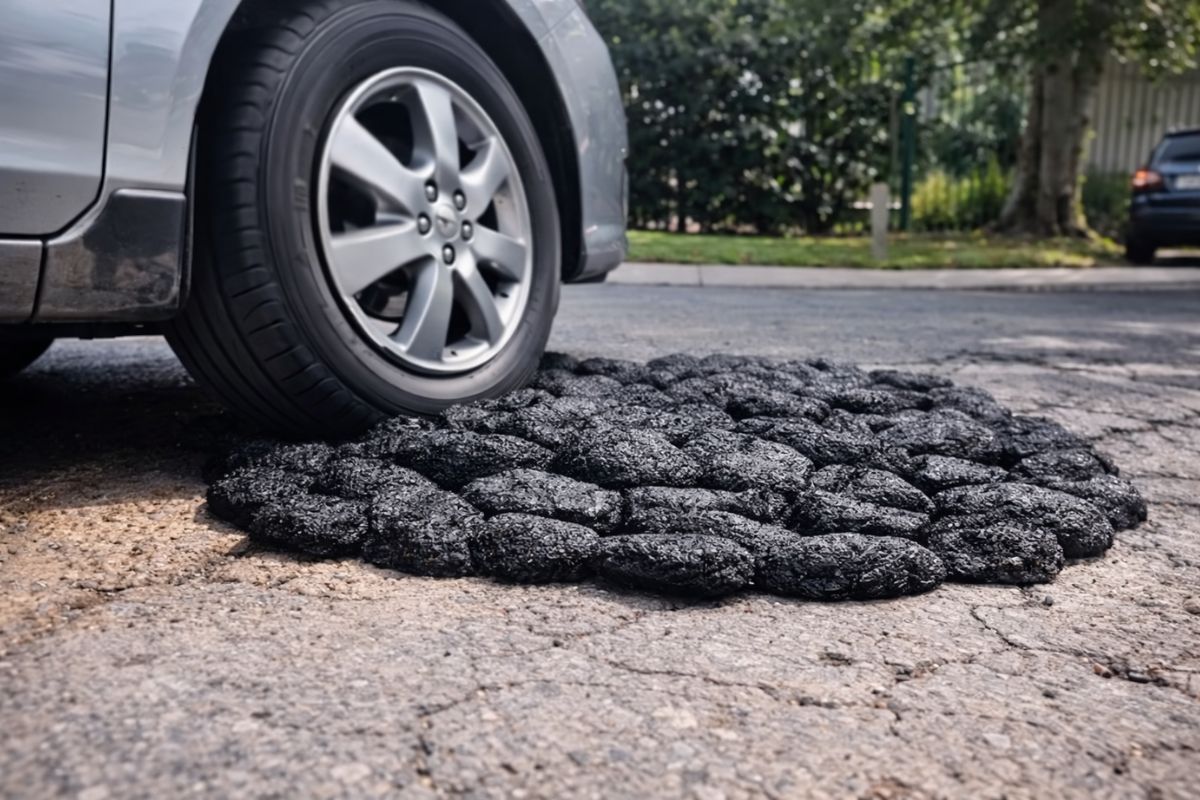
The low-cost solution called PatchPal, invented in South Africa to fix potholes in minutes, does not crack and prevents water from entering, becoming more compact with each car that drives over it, revolutionizing road repairs that governments have forgotten.

Be8 completed the purchase of the Floriano plant on January 14, 2025, when it finalized the acquisition of three Biopar units after approval from Cade.
With this, the company expanded its presence to the North, Northeast, and Central-West regions and reinforced its national distribution strategy.
What changes with the expansion in Floriano
The Floriano unit is already part of Be8’s industrial structure, and the plan now is to combine the expansion of biodiesel capacity with the installation of the second industrial unit of the company dedicated to Be8 BeVant.
The initiative was formalized in a letter of intent signed between the company and Investe Piauí during COP 30, with participation from the state government.
According to publicly available information, the project is still undergoing technical and economic-financial feasibility studies, in addition to the definition of a detailed implementation schedule.
In addition to the financial investment, the project is expected to impact the regional economy.
The Piauí government reported an estimate of 30 direct jobs and a forecast for delivery in 2026 for the announced phase.
The operation is also connected to the agribusiness chain in the southern part of the state, using soybean oil as the main raw material in local biodiesel production, which tends to enhance productive integration within Piauí territory.
How Be8 BeVant works
Be8 BeVant is presented by the company as a renewable biofuel aimed at the complete replacement of fossil diesel in certain applications.
According to Be8, the product can be used in 100% in diesel cycle engines, without engine replacement or additional investment in refueling infrastructure, a characteristic that differentiates the technology from other decarbonization routes that are more dependent on operational adaptation.
The composition of the fuel is based on renewable raw materials and waste, such as vegetable oils, animal fats, and recycled oils, within a circular economy logic adopted by the company.
In official material, the company states that BeVant has a low acidity index, is free of contaminants, has a high ester content, improves combustion, and offers greater lubricity, which can reduce the need for chemical additives compared to low-sulfur fossil diesel.
The regulatory authorization for commercial production was granted by the National Agency of Petroleum, Natural Gas, and Biofuels, according to a statement from Be8 released on November 28, 2024.
After this license, the company reported that it had begun operation of the first phase of the production unit with a capacity of 28 million liters per year, aimed at serving companies interested in reducing emissions in the short term.
Emissions and tests of the new biofuel
In corporate communications, Be8 states that the product has undergone proof of concept with engine manufacturers and fleet operators, as well as validations with companies such as Mahle and FPT.
The company also declared the use of the fuel in agricultural machinery at Fazenda Compostela and in the diesel machines of its manufacturing park in Passo Fundo, Rio Grande do Sul.
These tests and applications were presented by the company as steps to demonstrate technical performance and operational viability before expanding the supply.
Regarding environmental performance, there is a point that requires precision.
In a previous release, the company reported a reduction of up to 50% in carbon monoxide emissions, up to 85% in particulate matter, and up to 90% in black smoke.
Later, when announcing ANP’s authorization, Be8 began to claim that the fuel reduces greenhouse gas emissions by up to 50%, based on tests and proof of concept released by the company itself.
Impact on transport and logistics
The main attraction of BeVant for transporters and logistics operators lies in the promise of direct use in the already circulating fleet.
Instead of relying on the complete renewal of vehicles or the installation of a new refueling network, the proposal is to offer a solution compatible with diesel engines, something particularly relevant in a country where logistics heavily depends on road transport.
This characteristic helps explain why the company targets the product to segments such as cargo, public transport, waterway, railway, maritime operations, and mining.
At the same time, the advancement in Floriano reinforces a broader business strategy.
After acquiring Biopar units, Be8 reported that it now has a total capacity of 1.47 billion liters of biodiesel per year, combining previously operated plants and the incorporated units.
The Floriano plant, in turn, has an installed capacity of 90 million liters of biodiesel per year, according to the company itself, although the announced project for BeVant in the state follows a specific schedule for progressive expansion.
Piauí on the path of energy transition
In the discourse of the state government and Investe Piauí, the installation of the new production front in Floriano is treated as part of a strategy to insert the state into the energy transition and industrialization agenda linked to the green economy.
The recent announcement associates Be8’s expansion with strengthening the regional raw materials chain, attracting investments, and consolidating Piauí as a hub for renewable fuel production in the Northeast.
With the operation already incorporated into Be8 and the expansion in the structuring phase, the Floriano project now brings together three central elements: increased production capacity, diversification of the company’s industrial base in the Northeast, and opening space for the regional production of a renewable fuel that the company presents as a direct alternative to fossil diesel in high-consumption sectors.







Seja o primeiro a reagir!