





 Portuguese
  English
  Spanish
  3 min of reading
  2 comments


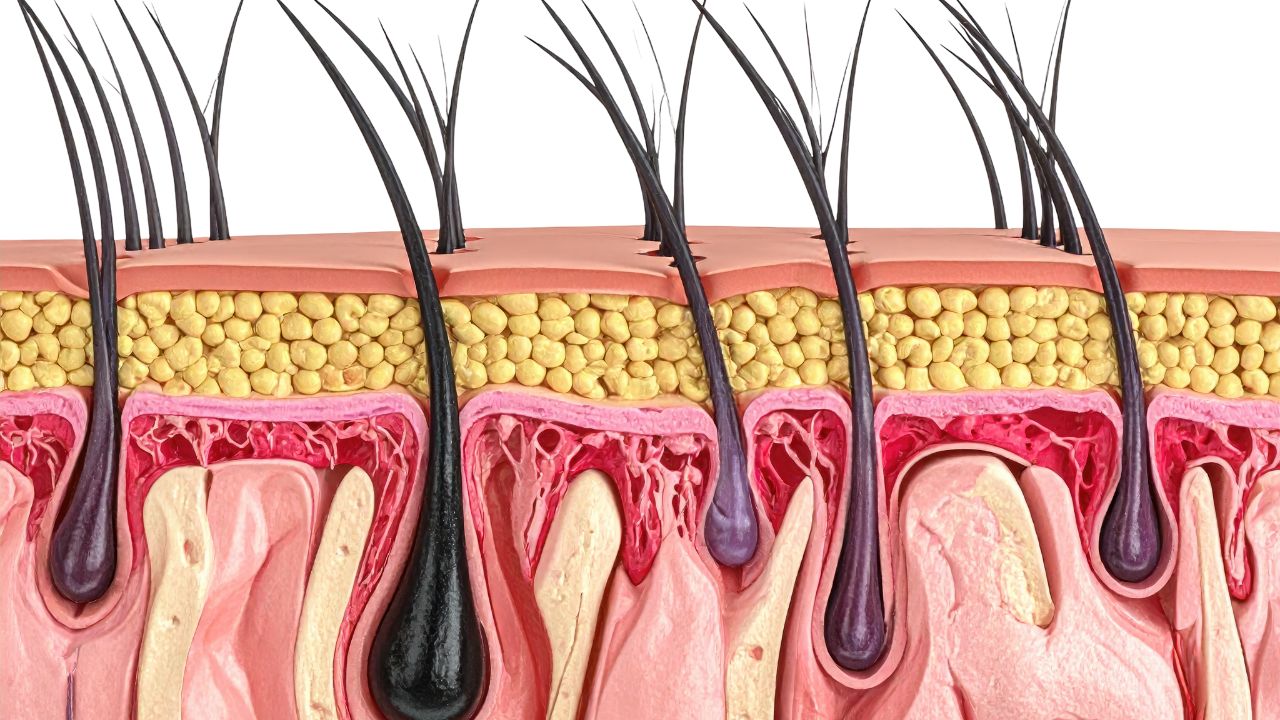


Study Reveals That Hair Is Not Pushed Out of the Root, But Pulled by Cells in Spiral Motion, Changing What Science Knew About Hair Growth.
Anyone who has dealt with hair loss or sought to understand how strands actually grow may need to reconsider old concepts. A new scientific study showed that human hair does not emerge from the scalp simply because new cells “push” the strand out.
In fact, it is pulled by a complex cellular mechanism, similar to a biological gear, identified by researchers from Queen Mary University of London in partnership with L’Oréal Research & Innovation.
The discovery was made recently, in the lab, through direct observation of living human follicles.
-
With a cost per shot close to zero, the DragonFire laser could change naval warfare in 2027 and provide British ships with nearly unlimited defense against drones.

-
A British startup creates tires that generate electricity in electric vehicles when passing over potholes, speed bumps, and cracks.

-
Scientists have created robots made with living cells that have their own nervous system, swim on their own, explore the environment, and self-organize without any genetic engineering, and now they want to do the same with human cells.

-
Students create a solar-powered ambulance that operates without a plug, without fuel, and still keeps medical equipment running in remote areas.

The study helps explain how hair grows, where this process occurs, and why traditional treatments do not always work as expected.
What Changes in Understanding Hair Growth?
For decades, biology books taught that hair grew due to the rapid division of cells at the base of the follicle, creating enough pressure to push the strand out of the skin.
However, by using real-time 3D microscopy, scientists observed completely different behavior.
Instead of pressure, hair growth occurs through traction. Cells located around the strand move in a coordinated, spiral manner, creating a continuous force that pulls the hair upward.
The movement occurs primarily in the so-called outer root sheath, a layer that surrounds the strand inside the follicle.
Cells in this region do not remain static. They slide in a helical pattern, similar to the functioning of a microscopic gear.
This organized displacement creates a constant mechanical force, responsible for making the hair emerge from the scalp.
According to the researchers, without this cellular movement, growth simply does not happen in the same way.
Experiments That Proved Cellular Traction
To test the hypothesis, scientists conducted controlled experiments. In one of them, they blocked cell division within the follicle. Even so, hair continued to grow almost normally, contradicting the classical theory.
On the other hand, when they interfered with actin — a protein essential for cellular movement — hair growth decreased by more than 80%.
The result made it clear that the movement of cells is the central factor in the process.
This discovery changes how science can approach hair-related problems.

So far, most treatments have focused on stimulating cell division or blocking hormones associated with baldness.
With the new model, researchers are starting to consider therapies aimed at cellular mobility and follicle organization.
In other words, keeping the “gear” functioning may be as important as producing new cells.
Hair Growth: Impacts Beyond Aesthetics
Although hair is often associated with appearance, the study goes beyond aesthetics.
The hair follicle is one of the most active regenerative systems in the human body, and understanding its functioning also helps in areas such as regenerative medicine and tissue engineering.
Moreover, the imaging technique used allows real-time observation of how medications and cosmetic products affect hair growth, which can accelerate the development of more effective treatments.
Knowledge That Could Change Books and Treatments
The authors of the study themselves state that the classical model of hair growth needs to be revised.
The idea that hair is merely pushed out by the root no longer explains the observed data.
As a result, educational materials, future research, and even clinical approaches may undergo updates, incorporating the role of mechanical forces and cellular movement.
For the public, the finding helps to understand why some solutions for hair loss work for some and not for others.
If the problem lies in the cellular gear — and not just in the production of cells — treatment needs to go beyond chemical stimulation.
By revealing that hair grows because it is pulled, not pushed, science paves the way for a new generation of studies and therapies, more aligned with the real functioning of the human body.
Source: Xataka








Que interessante essa matéria que acabei de ler, até compartilhei no meu Facebook. Uninove Whatsapp
Então com esta nova versão dos factos o que estimula o crescimento do cabelo?