





 Portuguese
  English
  Spanish
  5 min of reading
  0 comments


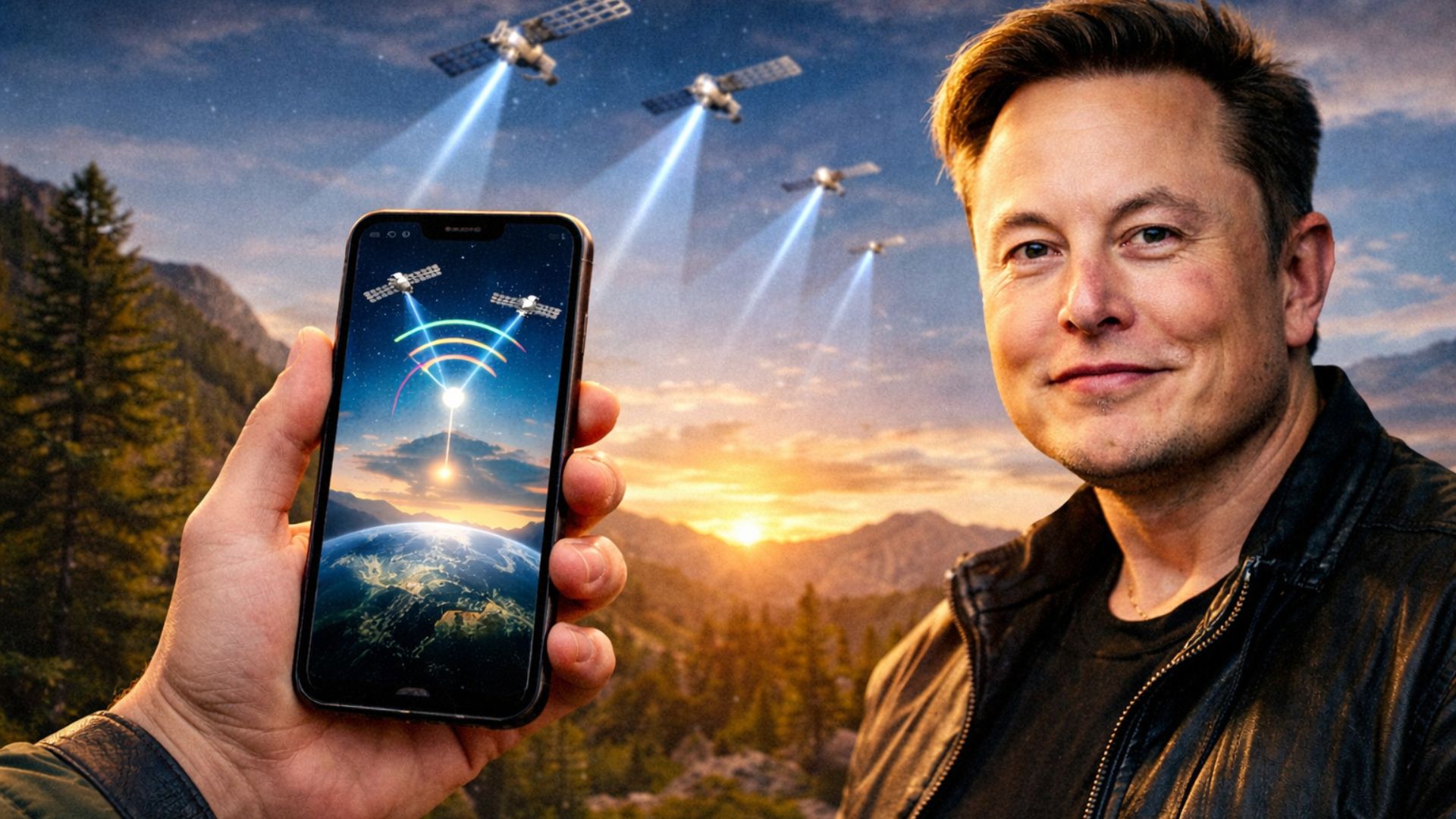
Satellite connectivity advances and expands mobile coverage in remote areas, with integration between operators and new models of smartphones prepared to function beyond traditional terrestrial networks.
The direct connection between cell phones and low Earth orbit satellites is beginning to move from the realm of promise into an initial commercial phase, focusing on messaging, emergency features, and complementary coverage in areas where terrestrial networks do not reach.
The proposal from Starlink is to transform the satellite itself into a kind of cell tower in space, capable of communicating with common devices, without external antennas or additional accessories for the user.
How direct connection with satellites works
The advancement draws attention because it addresses an old problem in telecommunications: areas without signal.
-
Not even Starlink, Elon Musk’s internet, has succeeded: Iran enters the 37th day of a digital blackout with over 864 hours without internet, surpassing all previously recorded blockades and forcing millions to use the isolated national network after military attacks.

-
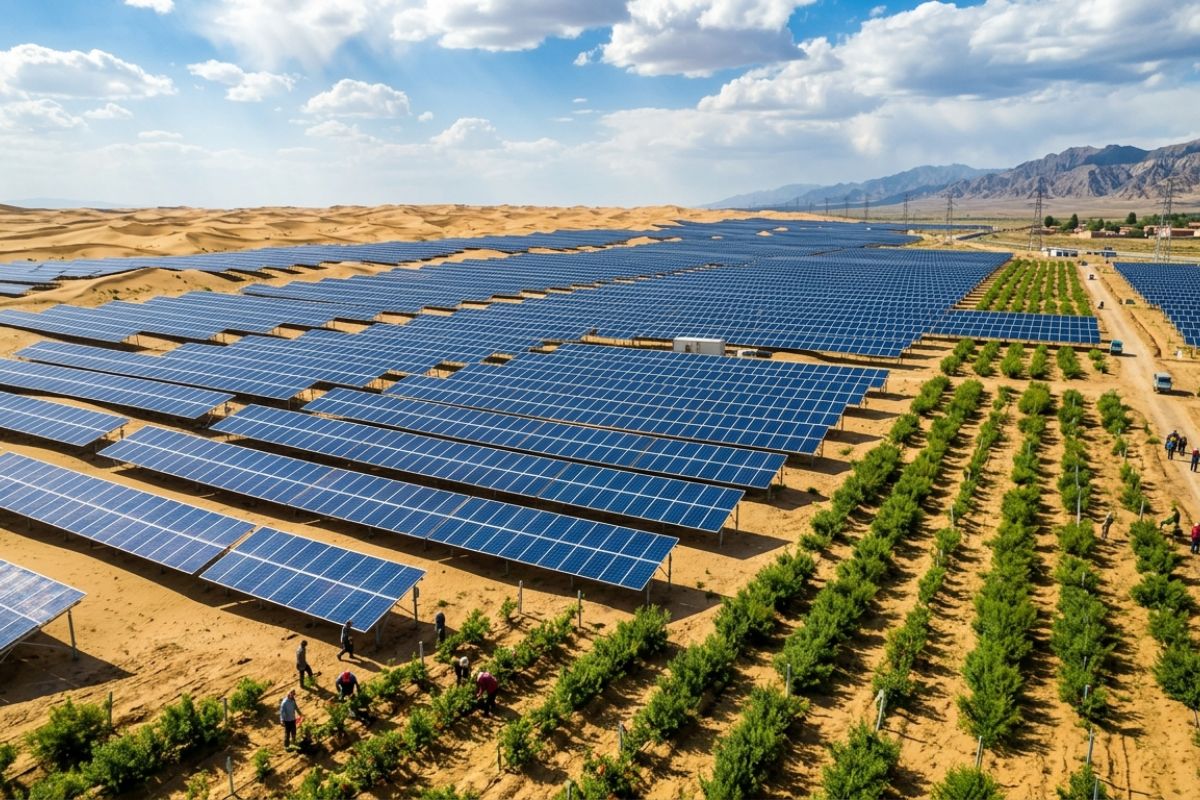
China arms a solar panel shield against the advance of the desert: a 1 GW project in Ningxia creates shade for shrubs and goji, and the official plan aims for 253 GW by 2030 to recover 7,000 km².
-
MetSul issues alert for 72 hours of severe weather in the South of Brazil with an extratropical cyclone, a line of instability, and a cold front that will hit Rio Grande do Sul from Monday to Wednesday with strong winds and heavy rain.

-
Scientists have built a prototype of a quantum battery that actually works, charges faster as it gets larger, stores and releases energy using quantum physics instead of chemical reactions, and can be wirelessly charged by laser.

In mountainous regions, trails, isolated roads, rural areas, forested areas, and sections far from urban centers, traditional coverage depends on terrestrial infrastructure that is not always economically viable or technically simple to install.
In this scenario, satellite connectivity appears as an extra layer of service, rather than an immediate replacement for conventional mobile networks.
In practice, the model works with satellites equipped to communicate directly with 4G LTE phones.
Starlink reports that these devices orbit a few hundred kilometers from Earth and use phased array antennas, custom silicon, and specific software to compensate for limitations of the mobile signal, such as low transmission power, latency, and variations caused by the satellite’s movement.
This technical design explains why the connection does not depend on a parabolic antenna like the already known fixed internet from Starlink.
In the direct mobile service to the cell phone, the phone remains a conventional smartphone, with the difference that, upon losing terrestrial network, it can begin to see supplemental coverage via satellite, as long as it is in an open area and within an ecosystem enabled by the partner operator.
Current limitations of the service and expected evolution
The current phase of the service is still limited.
Starlink announced that commercial operation began with satellite messaging and that the expansion roadmap includes support for voice, data, and Internet of Things applications.
T-Mobile, Starlink’s partner in the United States, reports that the available offer today includes sending messages, location sharing, contacting emergency services, and, on eligible devices, gradual evolution to messaging with images and satellite data in some applications.
This means that the promise of global mobile internet cannot yet be treated as a broad reality for consumers.
The project has advanced quickly, but it continues to be implemented in phases, with limitations in capacity and performance that vary according to the device, the operator, the region, and the availability of the constellation in operation.
Supplementary coverage exists, but it is still far from reproducing, with the same stability, the experience of a mature terrestrial cellular network.
List of compatible cell phones grows worldwide
Another central point is compatibility.
The base of devices capable of using this type of connection has already surpassed 50 models, and in markets where the offer is active, it exceeds 60 phones, according to T-Mobile.
The list includes different generations of iPhone, recent lines from Samsung, devices from the Google Pixel ecosystem, and models from Motorola, showing that the technology is no longer restricted to a tiny group of premium devices.
Still, device compatibility does not mean automatic access to the service in any country.
Starlink itself states that the operation depends on integration with mobile operators, who provide LTE spectrum and handle the commercial and regulatory connection with end users.
In other words, it is not enough to have a compatible cell phone: there must be a partner operator with an effectively enabled service in that market.
Situation in Brazil and dependence on operators
Today, the confirmed commercial offer from Starlink is in the United States, with T-Mobile, and in New Zealand, with One NZ.
The company also reported tests and preparations for expansion in other countries, such as Australia, Canada, Chile, Japan, Peru, Switzerland, and Ukraine, indicating international advancement of the model, but without a uniform launch schedule for all markets.
In Brazil, the situation is different.
Anatel has already monitored demonstrations of direct-to-device technologies in the country and has been treating the topic as a strategic opportunity to expand connectivity in remote areas.
In April 2025, for example, the agency witnessed a test by Viasat in Brasília, where cell phones exchanged messages via satellite, and highlighted the potential of the resource to complement terrestrial mobile service and meet IoT applications.
Despite this regulatory and technical movement, the Brazilian market still does not have a commercial operation from Starlink for direct connection of cell phones to satellites.
Reports published in 2026 indicate that the local offer depends on an agreement between the satellite company and a mobile operator operating in the country, in addition to the necessary regulatory approval.
Therefore, even with the global advancement of the technology, use by Brazilian consumers remains in the realm of expectation.
Where the technology already makes a practical difference
This gap between technical compatibility and commercial availability helps explain part of the confusion surrounding the topic.
A phone may be on the list of models capable of operating on this type of network and, at the same time, still lack access in Brazil simply because the entire service chain has not yet been activated locally.
The decisive point, at this moment, is not just the hardware of the device, but the existence of commercial partnership and regulatory authorization.
It is also advisable to separate promotional discourse from concrete utility.
The most immediate use of this technology is in contingency situations and in movements through areas without coverage, such as trails, national parks, road crossings, and rural zones.
In such places, the ability to send a message, share location, or activate emergency services already represents a significant change.
At the same time, the expansion of direct-to-cell reignites the competition between satellite groups and traditional operators.
What we see today is a race for agreements on space roaming, spectrum, and certifications that allow filling the so-called coverage gaps without requiring the consumer to change devices or purchase dedicated equipment.
The interest exists because the model combines commercial appeal, emergency response, and pressure for universal access.
In the Brazilian case, the debate should advance alongside the definition of rules and the maturation of the tests already observed by Anatel.
The agency has made it clear that it considers D2D a complementary technology, useful for reaching areas where the terrestrial network is faulty or nonexistent, and not a direct replacement for the already installed cellular infrastructure.
This tends to guide the local discussion on licensing, spectrum, and integration with national operators.
Therefore, the idea that more than 50 cell phones are already ready to communicate with satellites needs to be read with the necessary nuance.
The advancement is real, but the service still operates with a restricted scope and depends heavily on the country, the operator, and the version released for each model.







Seja o primeiro a reagir!