





 Portuguese
  English
  Spanish
  7 min of reading
  0 comments


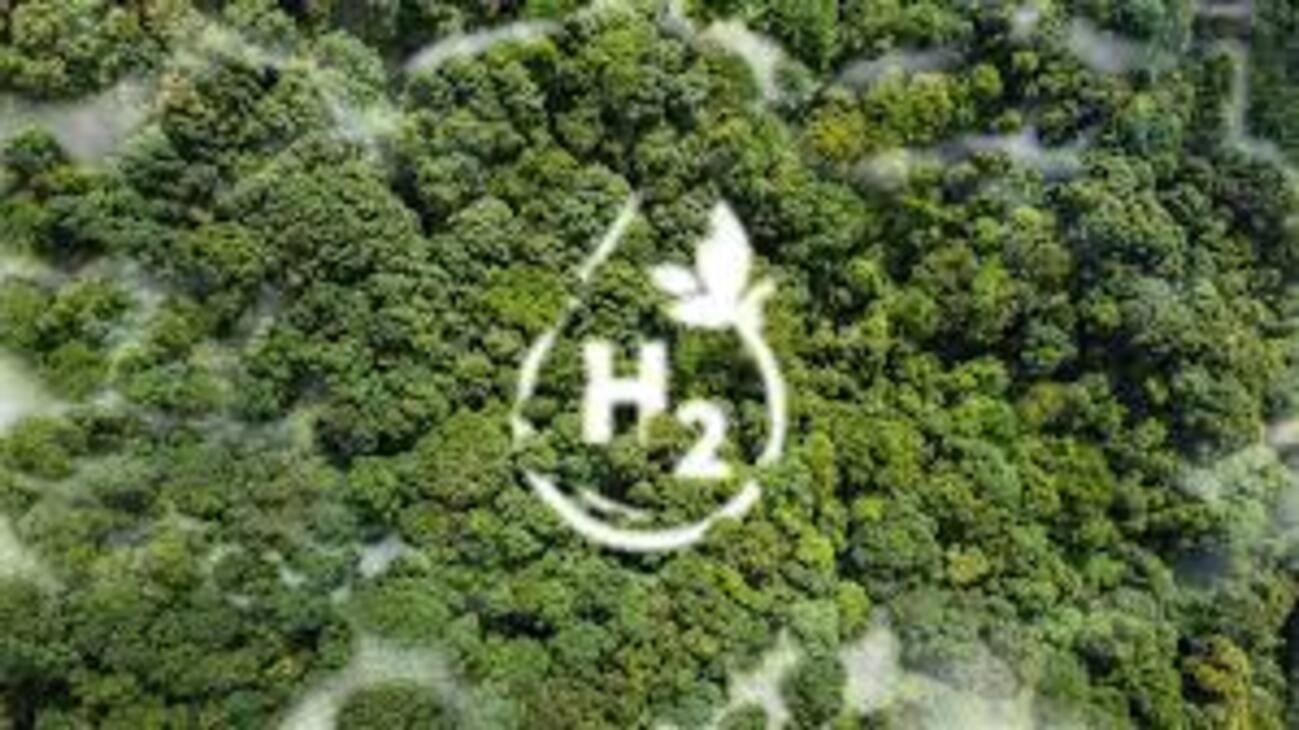
Brazil consolidates its energy strategy with a new detailed study that identifies the most promising geographical areas for the production and use of green hydrogen in Brazil, highlighting the Northeast and Southeast as fundamental hubs.
A recent study mapped Brazilian regions with ideal conditions for the production and use of green hydrogen in Brazil, confirming that the country has one of the most competitive matrices on the planet for this technology.
Researchers identified that the combination of constant winds on the northeastern coast and the industrial infrastructure of the Southeast creates a perfect scenario for the installation of clean energy hubs.
The mapping considers crucial variables such as proximity to ports, availability of water for electrolysis, and the existence of robust electricity transmission networks. In 2026, this survey serves as a guide for foreign investors and national companies looking to decarbonize their operations and export sustainable energy to Europe and Asia.
-
Historical drought and lack of snow in the Norwegian Alps threaten the largest clean energy reserve in Europe and could drive up electricity prices.
-
The Brazilian state accelerates industrial competitiveness with a focus on the extraction of strategic minerals to boost the energy transition in Goiás.

-
A Canadian retiree creates a hydroelectric system on a real river, generating energy continuously throughout the day and demonstrating how the power of water can supply a house with stability even in a simple structure.

-
Petrobras reaffirms its commitment to the market and ensures that it will carry out the energy transition safely to maintain national sovereignty.

Green hydrogen (H2V) emerges as the centerpiece for sectors that find it difficult to use batteries, such as steel production, cement, and long-distance maritime transport.
With this new map in hand, Brazil accelerates its energy transition and positions itself to attract billions of reais in new jobs and technological infrastructure in the coming years.
The prominence of the Northeast in generating the fuel of the future
The Brazilian Northeast holds the greatest technical potential for the production and use of green hydrogen due to its excellence in wind and solar generation. The study highlights that states like Ceará, Rio Grande do Norte, and Bahia have, for example, the lowest production costs per kilogram of hydrogen in the world.
The constancy of the trade winds allows electrolyzers to operate with a high capacity factor, ensuring continuous and efficient production.
Ports like Pecém in Ceará already function as living laboratories for this technology. The physical proximity between renewable energy generation and export terminals drastically reduces logistical costs.
Moreover, the mapping indicates that the region could become a major exporter of “green ammonia,” an easier way to transport hydrogen over long maritime distances.
The development of these hubs in the Northeast promotes a real impact on the regional economy, transforming previously underestimated areas into globally relevant technological centers.
The Southeast and integration with heavy industry and the production and use of green hydrogen
While the Northeast focuses on export, the Southeast presents the greatest potential for internal consumption and the production and use of green hydrogen integrated into existing industrial processes.
States like São Paulo, Rio de Janeiro, and Minas Gerais concentrate the country’s steel and chemical industries, sectors that demand large volumes of hydrogen for their thermal and chemical operations.
The substitution of gray hydrogen (produced from natural gas) with green hydrogen in Petrobras refineries and fertilizer factories represents a giant leap in reducing the national carbon footprint.

The study points out that the existing gas pipeline network in the Southeast could, in the future, transport mixtures of natural gas and hydrogen, thus facilitating distribution to industries without the need to build thousands of kilometers of new pipelines from scratch.
This synergy between old infrastructure and new technology ensures a safe and economically viable energy transition.
How did water and electricity become fuel?
Many people are curious about the chemical process that enables the production and use of green hydrogen. The technology uses a device called an electrolyzer.
Basically, technicians apply a powerful electric current, coming from solar or wind sources, to water molecules. This electric discharge separates oxygen from hydrogen.
Oxygen returns to the atmosphere in a pure form, while hydrogen is stored in high-pressure tanks. Unlike traditional hydrogen, “green” hydrogen does not emit a single gram of carbon dioxide during its production.
Another important curiosity lies in water consumption: the study mapped regions with sustainable water availability, including the use of desalinated seawater in coastal areas, ensuring that energy production does not compete with human supply or agriculture.
The impact of the production and use of green hydrogen in the transport and heavy logistics sector
The mapping of production and use of green hydrogen also focuses on the transport sector, especially in cargo trucks and urban buses.
Although battery electric cars work well for short distances, heavy trucks crossing Brazil require a higher energy density. Hydrogen allows these vehicles to travel thousands of kilometers with a refueling time similar to that of diesel.
Major automakers are already testing hydrogen fuel cells in logistics fleets in Brazil. The study identifies strategic corridors on Brazilian highways where the installation of “H2 stations” (hydrogen refueling stations) would be most efficient.

This change removes diesel from the logistics equation, thereby reducing pollution on the roads and protecting freight prices from international oil barrel fluctuations. The real impact appears in the price of food and products on the shelves, which gain cost stability.
Green fertilizers: Food security on the agenda
Brazilian agriculture heavily depends on imported nitrogen fertilizers. Currently, ammonia production for these fertilizers uses natural gas, which generates high emissions.
The mapping study for the production and use of green hydrogen shows that Brazil can manufacture its own green ammonia on national soil, using hydrogen generated from renewable energies.
This achievement ensures the country’s food security, reducing the vulnerability of agribusiness to external geopolitical conflicts.
By producing sustainable fertilizers, Brazilian farmers add value to their crops. They can sell soybeans and corn with low carbon emission labels to demanding markets like Europe. The transition to green hydrogen thus transforms both the energy matrix and Brazil’s trade balance simultaneously.
Technological challenges and cost reduction by 2030
Despite the high potential mapped for the production and use of green hydrogen, the sector still faces the challenge of capital costs. Electrolyzers still have high prices, as they use noble metals in their composition.
However, the study predicts a drastic drop in the prices of these equipment in the next five years, following the same reduction curve that occurred with solar panels and wind turbines in the past decade.
Brazil is investing in research and development to create national technologies that lower the cost of these components. Universities and innovation centers, such as Senai Cimatec, are working on new materials that increase the efficiency of electrolysis.
The production scale mapped by the study indicates that the more Brazil produces, the cheaper the kilogram of hydrogen will become, making it competitive even against the cheapest fossil fuels by 2026.
The role of legislation and regulatory framework
For the mapping of the production and use of green hydrogen to move from paper to industrial reality, Brazil needs clear rules. The National Congress is discussing the legal framework for low-carbon hydrogen, which will define tax incentives, safety standards, and origin certifications.
Without this certification seal, Brazil cannot prove that its hydrogen is truly green to international buyers.

The study emphasizes the importance of standardized technical norms for the storage and transport of gas. Hydrogen has tiny molecules that can easily escape from common tanks, requiring high-tech materials to prevent leaks.
Efficient regulation attracts sovereign investment funds and major oil companies looking to diversify their portfolios beyond oil and natural gas, ensuring the financial sustainability of Petrobras and other giants in the sector.
Job opportunities and regional development
The production and use of green hydrogen generates massive demand for skilled labor. The mapping identifies that the installation of H2V hubs requires chemical engineers, photovoltaic systems technicians, compressed gas logistics specialists, and industrial maintenance operators. The social impact in regions like the Port of Suape (PE) and the Port of Aracruz (ES) will be transformative.
Technical courses and universities are already adapting their curricula to train the “energy professionals of the future.” The creation of green jobs helps retain talent in the interior of the country, promoting more balanced development.
The regional economy gains dynamism with the arrival of service, maintenance, and technology companies that revolve around hydrogen production plants, creating a virtuous circle of economic prosperity by 2026.
The future of Brazilian exports: The “Green Seal”
The study concludes that Brazil has all the tools to be the world’s largest exporter of clean energy. The mapping of the production and use of green hydrogen places the country in a position of comparative advantage over Arab and European countries.
While other countries require heavy subsidies, Brazil relies on the power of nature and an already mature industrial infrastructure.
The export of net energy (hydrogen and ammonia) will allow Brazil to balance its accounts even in scenarios of declining global oil demand. The Brazilian “Green Seal” becomes a powerful diplomatic asset, thus increasing the country’s influence at UN climate conferences.
And attracting car and steel factories looking for a place to produce with zero emissions. Green hydrogen is not just a gas; it is the new currency of the global economy.
Brazil ready for global leadership with the production and use of green hydrogen
The mapping of regions for the production and use of green hydrogen in Brazil proves that the country is ready for the next energy leap.
The synergy between the Northeast sun, the coastal wind, and the Southeast industry forms an unbeatable tripod. Green hydrogen consolidates Brazil’s energy transition, ensuring that the country continues to grow sustainably and technologically.
The challenge now lies in the rapid execution of projects and attracting capital. With the guide provided by this study, the government and companies have a clear path ahead.
Brazil in 2026 is on track to become the “Saudi Arabia of renewable energies,” but with a fundamental difference: our resource is inexhaustible and planet-friendly. The hydrogen era has begun, and Brazil already holds the treasure map.








Seja o primeiro a reagir!