





 Portuguese
  English
  Spanish
  3 min of reading
  0 comments


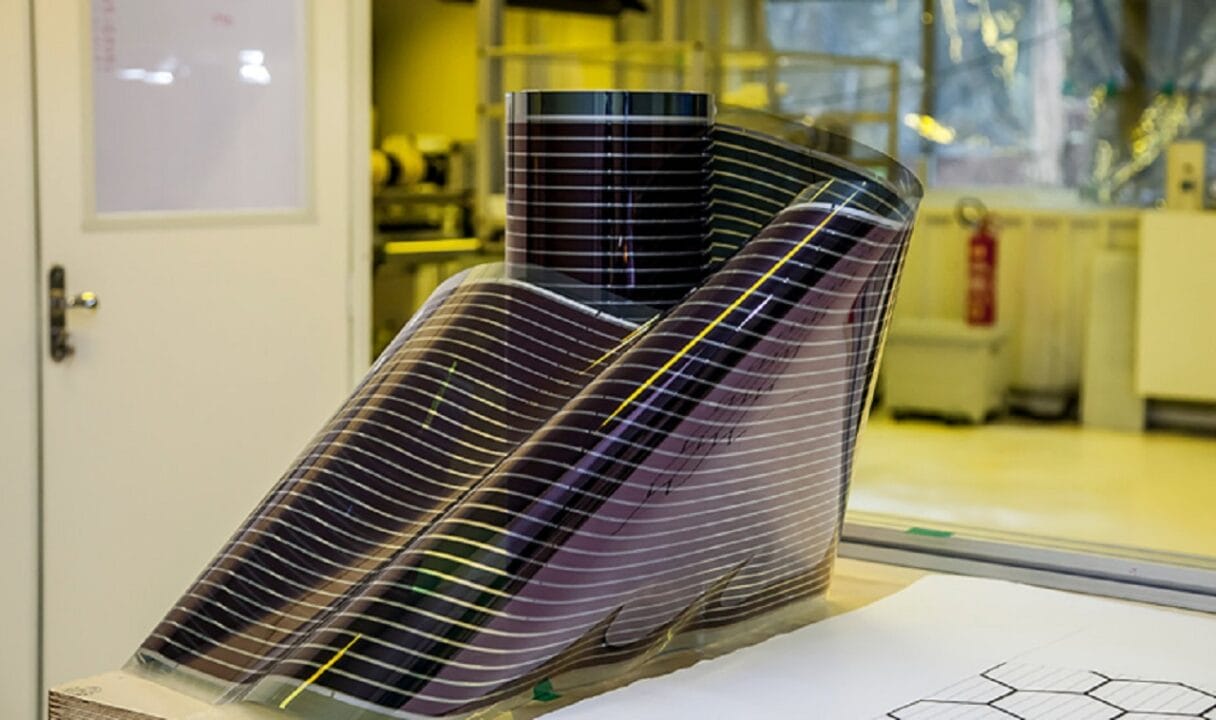
Brazilian Company Innovates With The Development Of Organic Solar Panels OPV, An Advanced Technology That Promises To Revolutionize And Lead The Market, Surpassing Traditional Solar Panel Models.
The solar energy market has been gaining prominence in Brazil thanks to a company that has been achieving impressive feats. Currently, Brazil is experiencing a heatwave, and sunlight is ideal for those who have solar panels. However, traditional panels tend to be large, rigid, and must be affixed to heavy structures. Thus, Sunew is revolutionizing the market with its organic solar panels OPV.
Get To Know The New Technology Of Organic Panels From Sunew
Headquartered in Belo Horizonte, in the state of Minas Gerais, Sunew is a world leader in organic photovoltaic film (OPV) technology. The solar energy company carries out the largest installations of this type of solar panel.


After years of research and development, the company built an industrial production process that is continuous and highly scalable. Despite encountering some problems along the way, it operates with an international team and project and installation partners in over 16 countries. The company claims to have been established with the mindset of revolutionizing the energy production paradigm and providing energy solutions to the world in full transformation.
-
The bizarre train that uses Cold War jet fighter engines to blast air at over 1,000 km/h, melting ice walls and freeing frozen tracks in minutes where ordinary machines would take hours.

-
Japan is transforming dirty diapers from babies and the elderly into an ambitious and surprising project that could forever change the way the world deals with one of the most difficult types of waste to dispose of.
-
Goodbye to waste: a Brazilian created a revolutionary brick that uses construction debris, has already entered the markets of the United Kingdom and the USA, and promises to shake up the global construction industry.

-
China has created a mass-produced hypersonic missile that costs the same as a Tesla, and this is changing everything in modern warfare because the United States cannot defend itself without spending millions.


Thus, it operates in innovation within the energy sector, ensuring comparisons with the Brazilian giant WEG. Traditional solar panels currently use very advanced technology; however, they still have certain limitations, as they are built into large, rigid metal frames that need to be fixed to structures. This can often conflict with the structural design of some buildings, making harmonious integration difficult.
With this in mind, Sunew promises to revolutionize the solar panel market with its extremely flexible and lightweight equipment that can be used on any type of surface.
How Are Sunew Solar Panels Produced?
The OPV becomes organic due to the organic cells present in it. Its application can be performed on glass surfaces and is considered the third generation of solar photovoltaic cells. The OPV, which promises to revolutionize the solar panel market, tends to be very different from conventional panels that use silicon. This is because the cells in the new equipment are printed and deposit a type of carbon-based ink onto the film that will be its support. Thus, multiple layers are created, which contain materials that are electrical conductors, making the photovoltaic plate functional.
The great differential of an OPV solar panel is its adaptability; after all, the applications of organic film cells are immense, and Sunew is obviously leveraging this advantage. It is easy to implement these organic cells anywhere your imagination allows due to their lightness and flexibility.
Sunew Forms Partnerships In The Solar Panel Market
In 2019, Sunew conducted a large installation of organic photovoltaic films at the Natura learning center. At the time, Natura was seeking to intensify its social and environmental responsibility, which perfectly aligned with the expansion and even promotion of the OPV that Sunew was looking to implement.
PepsiCo, one of the largest food and beverage manufacturers in the world, also announced the installation of OPV solar panels on over 250 trucks, including in Brazil.
This initiative aligns with PepsiCo’s goals, which foresee a 40% reduction in greenhouse gas emissions globally by 2030. With the help of solar panels, part of the fuel that would be consumed by the trucks is now replaced by clean energy captured through photovoltaic modules installed on the roofs of the vehicles.







Seja o primeiro a reagir!