





 Portuguese
  English
  Spanish
  4 min of reading
  0 comments


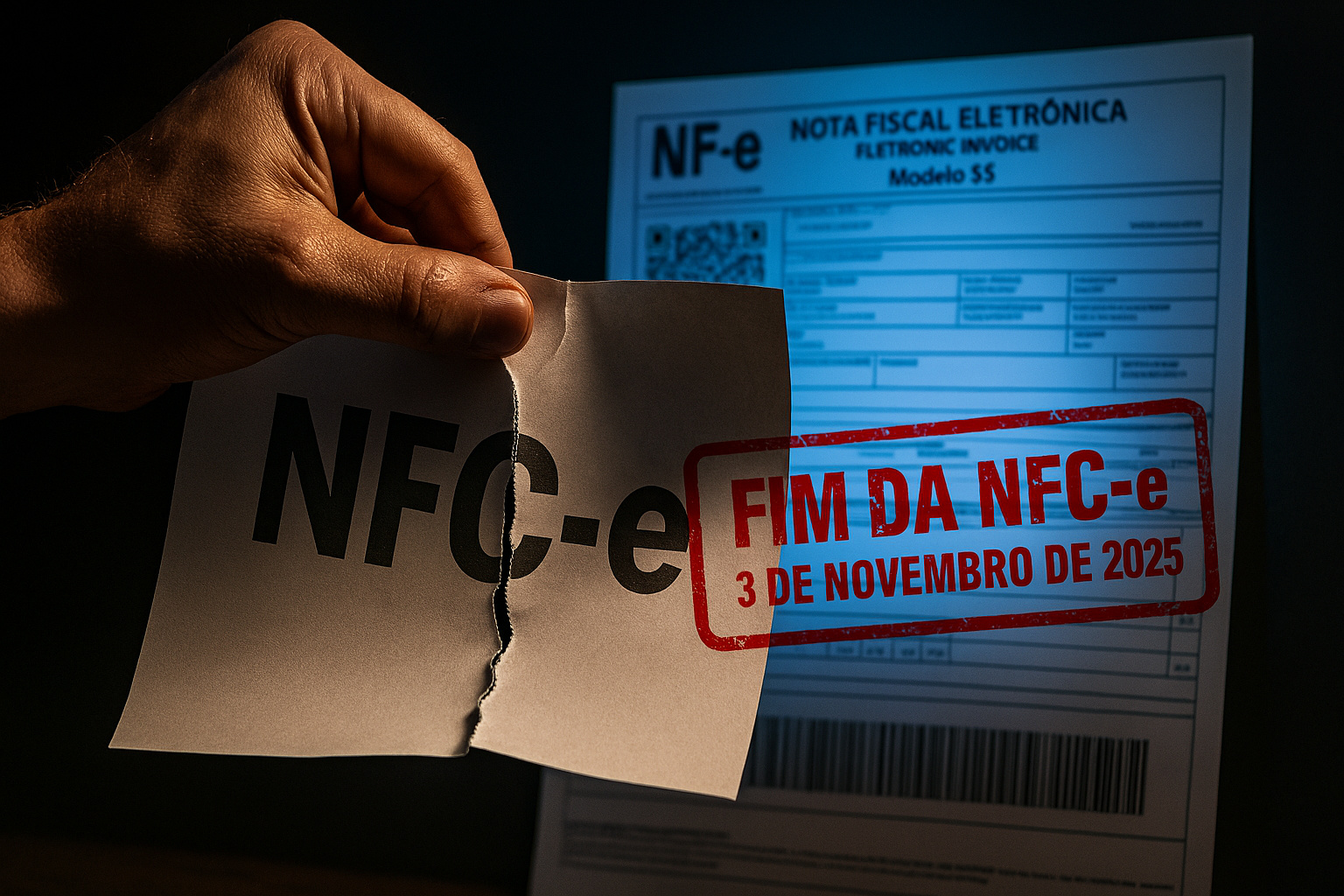
Starting November 2025, the issuance of NFC-e will be prohibited in transactions with CNPJs, and companies will have to adopt NF-e model 55 in all sales to legal entities.
From November 3, 2025, Brazilian companies will no longer be able to issue Electronic Consumer Invoices (NFC-e) when the recipient is a legal entity registered with the CNPJ. The change was determined by Adjustment SINIEF No. 11/2025 and represents an important alteration for retail and wholesale trade in the country. The rule is part of a process to update tax regulations, which aims to more clearly separate operations intended for final consumers from those carried out between companies.
From this date, all commercial operations in which the buyer is a company must be mandatorily registered with the issuance of NF-e (model 55), a document that is already used in most transactions between legal entities.
What Is NFC-e and How It Works Today
The NFC-e (Electronic Consumer Invoice) is mainly used in face-to-face sales to final consumers. It replaced paper documents, such as receipts, and its main characteristic is practicality, as it is transmitted in real-time to the Department of Revenue.
-
The noise law will no longer be in effect at 10 PM starting in June with a new rule valid during the 2026 World Cup.

-
The Chamber opens a debate on driver’s licenses at 16 years old as part of a reform that includes around 270 proposals to change the Brazilian Traffic Code and may redesign rules for licensing, enforcement, and circulation in the country.

-
The new Civil Code could revolutionize marriages in Brazil with “express divorce” and changes that could exclude spouses from inheritance.

-
Banco do Brasil sues famous influencer for million-dollar debt and intensifies debate on delinquency, risks of seizure, and direct impact on Gkay’s credibility.




Currently, even in transactions where the buyer is a company, many establishments issue NFC-e, especially in retail sales involving customers with CNPJ. Starting in 2025, this will no longer be allowed, and taxpayers will have to adapt their systems and processes.
The Change Determined by Adjustment SINIEF No. 11/2025
The new adjustment establishes that, in no scenario, NFC-e may be used in transactions whose recipient is identified with a CNPJ. This restriction aims to reduce fiscal control issues, standardize processes, and facilitate oversight.
The issuance of NF-e (model 55) becomes mandatory in these cases, regardless of the size of the purchasing company or the type of operation. This includes both large purchases and small transactions made by microenterprises in retail.
Complementary Changes from Adjustment SINIEF No. 12/2025
In addition to the main rule, another regulation approved during the same period, Adjustment SINIEF No. 12/2025, introduced additional changes regarding the issuance of invoices involving recipients with CNPJ:
- Optional Address: in face-to-face transactions, the identification of the legal entity buyer’s address will not be mandatory, reducing bureaucracy in small transactions.
- Simplified DANFe: retailers will be able to use the simplified version of the Auxiliary Document of NF-e in face-to-face transactions or home deliveries.
- Authorized Contingency: in situations of technical instability, it will be allowed to issue the invoice in contingency, with subsequent transmission to the Department of Revenue.
Impacts on Commerce
The main practical consequence for commerce is the need to adapt invoice issuance systems. Companies that currently issue NFC-e in all situations will have to adapt their software to differentiate sales to individuals and legal entities.
In the case of retail establishments, the change should generate adjustments in customer service flows. Cashiers and operators will need to identify in advance whether the customer is an individual or a legal entity to determine the correct document to be issued.

For technology companies that provide invoice issuance systems, the alteration may represent new opportunities for updates and support, as thousands of companies will need adaptation by November 2025.
Retail, Wholesale, and Microenterprises
In retail, the change will especially impact small and medium merchants who often sell to microenterprises and were already accustomed to using NFC-e in these cases. Now, it will be mandatory to issue NF-e even for low-value purchases made by CNPJs.
In wholesale, where NF-e is already dominant, the impact will be smaller, but there will be a need to reinforce internal processes to ensure that all operations comply with the new rule.
Preparation of Companies
Experts recommend that taxpayers begin adapting in 2024 to avoid compliance issues in 2025. It is essential to review tax issuance systems, train customer service teams, and, if necessary, hire accounting and technical support.
Another important point is that companies that do not comply may face fines and penalties for improper use of NFC-e in transactions with CNPJs.
Another Step in Tax Digitalization
With this change, the government seeks to better organize the use of electronic tax documents and reduce discrepancies in commercial operation records. The clear distinction between NFC-e (for individuals) and NF-e (for legal entities) should also facilitate data cross-checking by the Revenue Service and state Departments of Revenue.










-

-

-

-

-

-

219 pessoas reagiram a isso.