





 Portuguese
  English
  Spanish
  6 min of reading
  1 comment


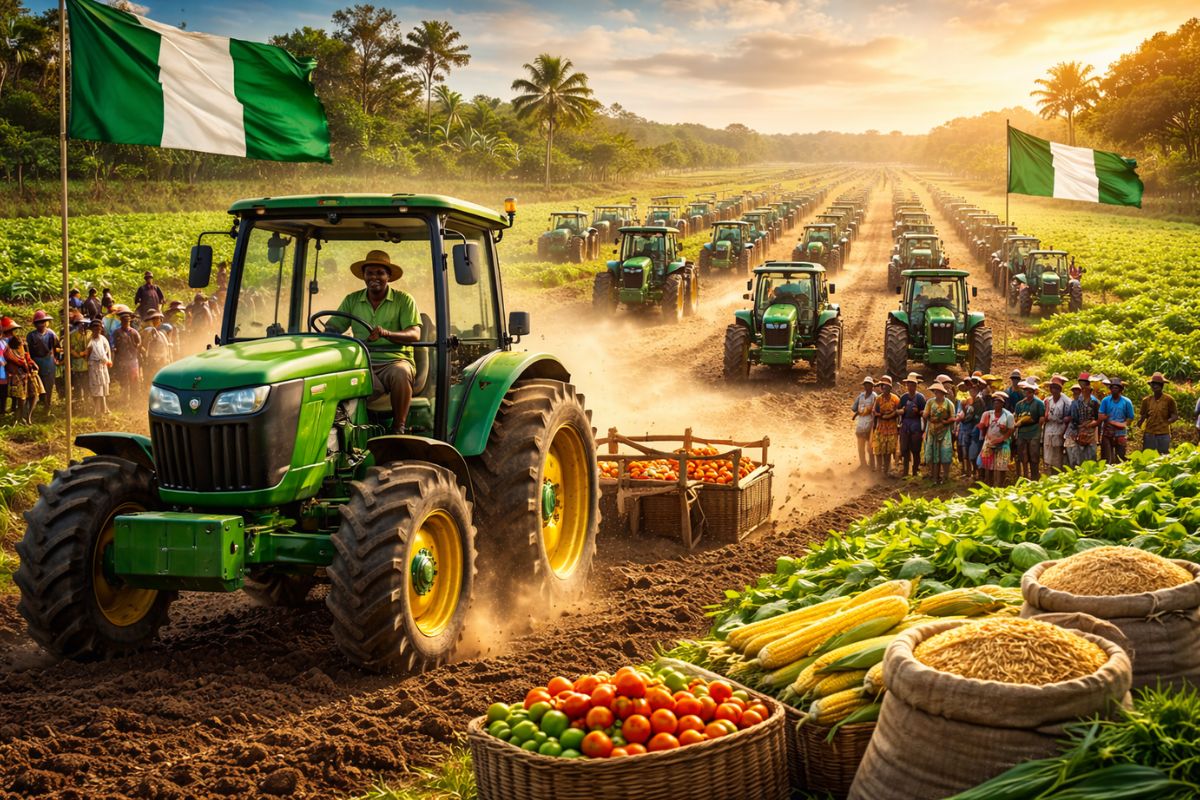


The Tractors Released By The Renewed Hope Program Will Not Be Donated, But Leased With An Option To Purchase, In A Model In Which The Government Of Nigeria Tries To Increase Productivity, Reach 1.2 Million Farmers, Cover 1.5 Million Hectares, And Link Mechanization, Rural Employment, And Food Security In A Same Broad National Package.
The tractors announced by the Nigerian government put agricultural mechanization back at the center of the national food production strategy. With around 2,000 machines and other heavy equipment, the Renewed Hope program aims to respond to a repressed demand that has already appeared clearly: more than 100,000 applications were registered right in the first phase.
The proposal is not limited to delivering equipment to the field. The plan targets scale, permanence, and results. By projecting service for about 600 hectares per tractor per year, the government estimates an impact on 1.5 million hectares and potential benefits for approximately 1.2 million farmers, in an attempt to accelerate food security and push agriculture to a more productive and commercial level.
What Nigeria Has Set In Motion In The Field

The announcement was made as part of the National Agricultural Mechanization Program Renewed Hope, an initiative presented by the Nigerian government as one of the fronts to transform agriculture into a more sustainable and results-oriented sector.
-
They said no to 26 million dollars and would do it all over again: mother and daughter from Kentucky reject a million-dollar offer from a mysterious company that wants to build the largest data center in the state on more than 2,000 acres of rural land.

-
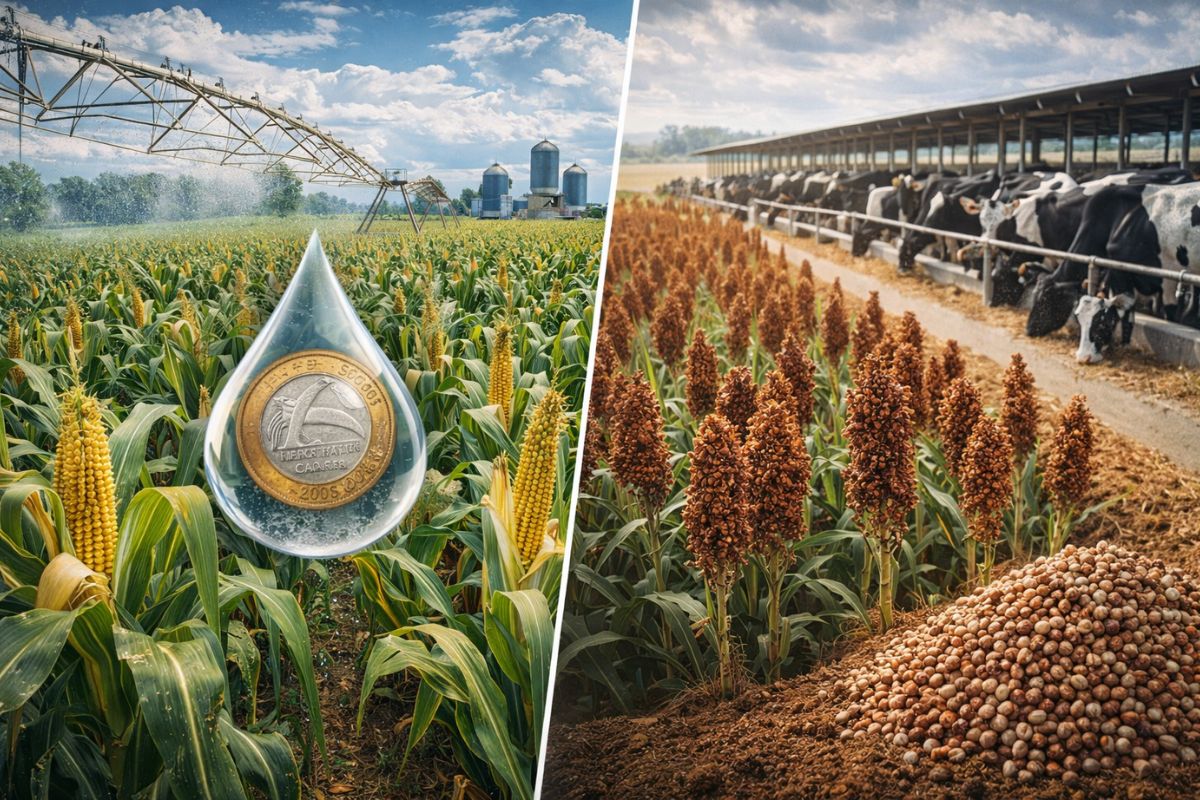
While corn requires rain and is expensive, sorghum produces almost the same volume per hectare at a cost up to 80% lower and uses less water, and it is revolutionizing dairy farming in the Triângulo Mineiro, where producers save hundreds of reais per hectare.
-
A rural producer from Urubici cries as he shows 50 tons of plums thrown on the ground because no one wanted to buy them, and in desperation, he records a video asking anyone to come to the property to pick the fruits before they rot.

-
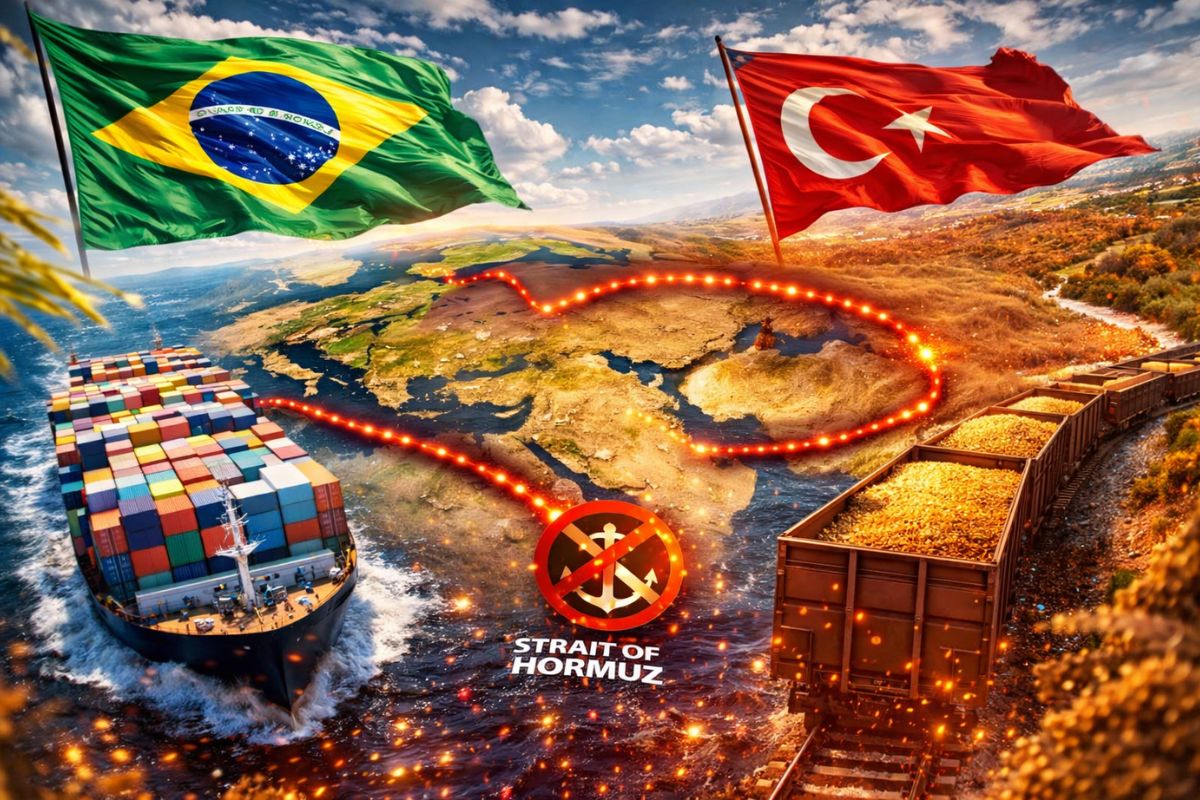
Unable to pass through Hormuz, Brazil activated a plan B that uses Turkey as a gateway to the Middle East: the route through Gibraltar and the Mediterranean is longer and more expensive but ensures that chicken, beef, and corn continue to reach Arab markets.

The package includes about 2,000 tractors and other heavy equipment intended for rural producers in different areas of use.
The scope of the measure draws attention because it attempts to tackle a structural limitation of the field: the low level of mechanization.
When the government talks about productivity, it is also talking about time, scale, and responsiveness.
In regions where manual labor or low mechanization imposes slowness and reduces yield, the arrival of machines alters not only the pace of planting but the entire design of agricultural operation.
The statements from Agriculture Minister Abubakar Kyari help to gauge this scale. According to him, the demand has already exploded at the outset, with more than 100,000 registrations.
This volume suggests that the problem was not a lack of interest in modernization, but a lack of access to equipment within a feasible model for producers.
That is why the program has been treated as part of a broader federal strategy. It is not just about putting tractors to work.
The official goal is to connect mechanization, increased production, and food security in a single movement, something decisive for a country trying to make its agriculture more efficient and less vulnerable to productivity bottlenecks.
How The Tractors Will Be Used And Why There Will Be No Direct Delivery
One of the most important points of the program lies in the format chosen by the government. The tractors will not be transferred as immediate private property to the beneficiaries.
Nigeria adopted a regulated leasing system with an option to purchase, which significantly changes the logic of public policy.
In practice, this means that farmers will use the equipment within a supervised structure, rather than through loose distribution.
This detail is central because it prevents the policy from turning into just a one-time transfer of machines without control over use, maintenance, or productive return. The government thus attempts to build a more organized system, with some predictability in operation.
This design also reduces the risk of unregulated dispersion of assets. Instead of simply handing over machines and leaving, the state seeks to keep the program within a regulated arrangement, where the tractors remain tied to targets, monitored access, and potential future purchase.
It is a way to push mechanization without relinquishing control over the functioning of the initiative.
There is also an embedded message in this choice. The Nigerian government wants to show that agricultural modernization will not be treated as an isolated or symbolic gesture.
The choice for leasing with future purchase suggests an attempt to create operational discipline, avoid waste, and ensure that the equipment effectively produces impact in the field.
The Size Of The Affected Area And What It Represents For Productivity
The official estimate indicates that each tractor can serve about 600 hectares per year. When this number is multiplied by the expected scale of the program, the result reaches more than 1.5 million hectares covered.
This data helps to understand why the initiative was presented as a piece of food security, and not just as a renewal of the rural fleet.
This calculation also pushes the discussion to a more concrete level. Agricultural machinery is not just valuable for the number of units but for the area it can put into motion.
When 2,000 tractors enter the scene with the aim of covering millions of hectares, the potential impact is no longer local or isolated. It becomes systemic.
The number of benefiting farmers reinforces this reading. The estimated reach of 1.2 million producers shows that the government is trying to make mechanization a mass policy, and not a showcase restricted to a few hubs.
In a country with strong pressure on food production, this type of operational expansion has economic and social weight.
At the same time, the volume of applications in the first phase reveals the extent of accumulated need.
If more than 100,000 people tried to access the program right away, it suggests that the demand for tractors and heavy equipment has been pent up in the field for a long time.
The program, therefore, is born large because the deficit it seeks to address was already significant.
Modernization, Rural Employment, And The Long-Term Logic
The Director-General of the Bank of Nigeria, Ayodeji Sontinrin, stated that the action goes beyond the distribution of machines. This statement helps to understand the ambition of the project.
The government wants to build lasting systems that add value to the entire agricultural production chain, rather than limiting the initiative to the immediate use of the equipment.
This formulation matters because mechanization alone does not guarantee structural transformation.
Without trained operators, maintenance, management, and responsible use, even the best tractors become costly and underutilized assets.
Therefore, the program associates the arrival of machines with the need for operator training and disciplined use of the equipment.
This component opens a second front of effect: employment and income in rural areas.
By requiring operators, logistical organization, and monitoring of use, mechanization can generate job positions and stimulate income in areas that increasingly depend on efficiency to remain competitive.
The Nigerian government tries to sell this idea as part of a more commercial and robust agriculture.
At its core, the official reasoning is clear. Mechanization is treated as a tool to reduce labor limitations, increase productive efficiency, and accelerate the transition to a more competitive agricultural model.
The tractors, in this sense, appear less as an end and more as a lever. They are the visible means of a bigger bet: making food production a national strategic priority.
What This Bet Reveals About Food Security
When Nigeria places food security as one of the central objectives of the program, it is admitting that the issue cannot be solved merely with productive goodwill. It is necessary to accelerate operational capacity.
In agriculture, this means preparing soil, planting, managing, and harvesting on time, with less delay and more area covered.
At this point, the tractors cease to be a symbol of modernization and become a tool of urgency. Food security does not depend solely on available land, but on the real ability to transform land into harvest.
The slower, more expensive, or irregular this process, the greater the risk of productivity loss and supply instability.
The Renewed Hope program enters precisely this gap. It attempts to connect machines, agricultural policy, and national response to the demand for food.
It does not solve all the sector’s obstacles alone but signals that the government wants to face a core issue: the low mechanization capacity at a scale sufficient to meet needs.
If the execution matches the size of the promise, Nigeria may not only increase field yields but also alter how its agricultural sector is organized.
The big question now is less about the announcement and more about delivery. Between 2,000 machines on paper and 1.5 million hectares actually impacted, there is a technical, logistical, and political path that will determine the real success of the program.
In the end, the question that remains is straightforward: if you were in the place of these producers, what would make a real difference in the field — access to tractors, training to operate the machines, or a well-monitored leasing model to prevent mechanization from getting lost along the way?







This writer has succeeded in saying nothing! He talks about mechanized farming practices without knowing what it requires.