





 Portuguese
  English
  Spanish
  6 min of reading
  0 comments


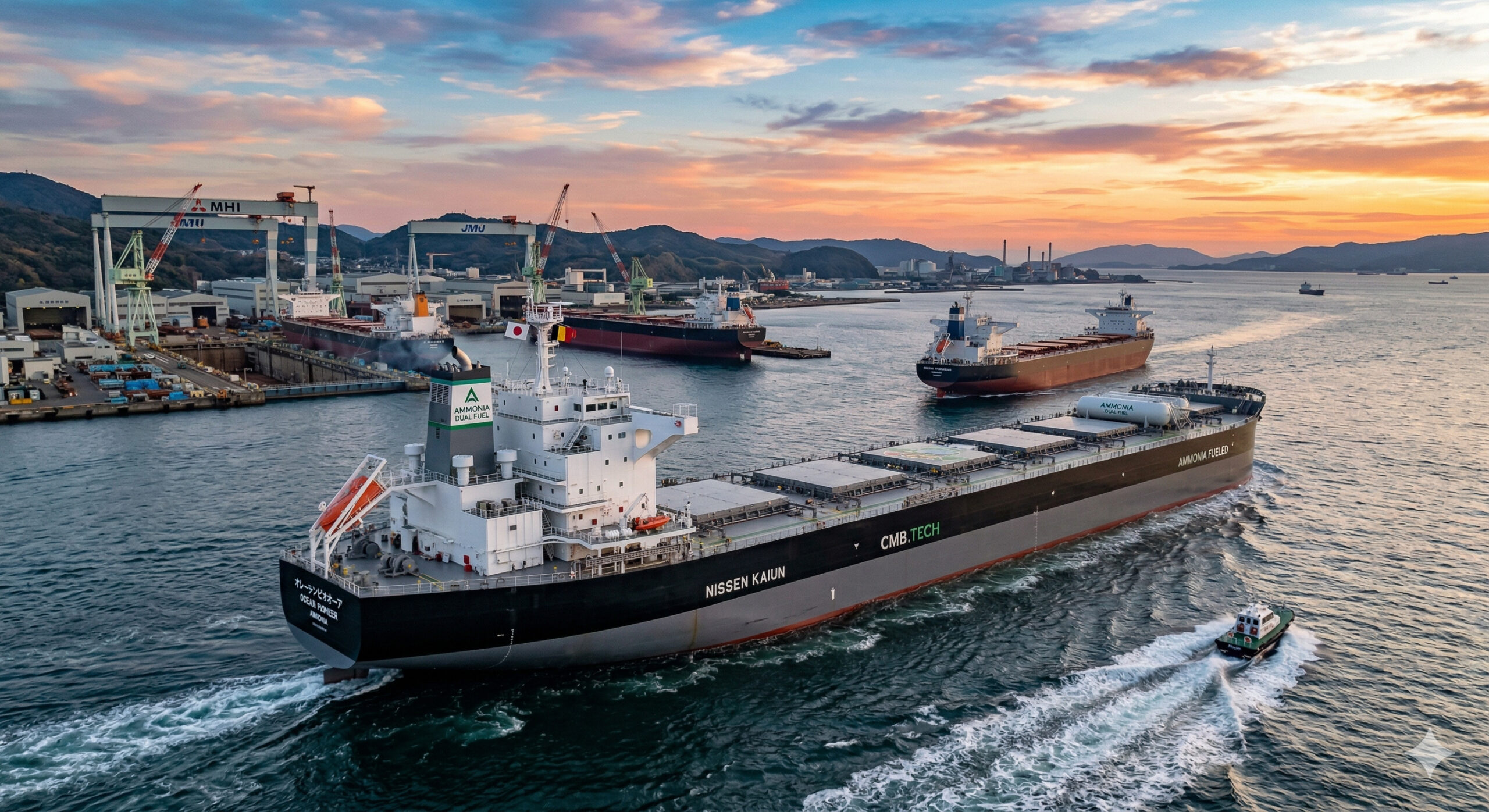
Ammonia-powered ships of up to 210 thousand tons begin operating in 2026 and could change global carbon-free maritime transport.
In March 2025, the Japanese Mitsui O.S.K. Lines (MOL) and the Belgian CMB.TECH formalized one of the most significant agreements in the recent history of commercial shipping: the operation of a fleet of nine ships prepared to use ammonia as fuel. The information was disclosed in official statements from the companies themselves, which classified the initiative as a milestone in advancing the decarbonization of the maritime industry. The ammonia-powered ship project includes some of the largest types of vessels in the world, with three Newcastlemax bulk carriers of 210 thousand tons deadweight, in addition to six chemical tankers. According to the statements, part of this fleet will be delivered already with ammonia-fitted configuration, while another part will be ammonia-ready, within an architecture of engines and systems prepared to enhance the use of ammonia on global ocean routes.
The initiative represents one of the first real attempts to bring ammonia to large merchant vessels in international operation. In the official announcement, MOL stated that the ships will be the world’s first Capesize/Newcastlemax and dual-fuel chemical tankers powered by ammonia, with deliveries expected between 2026 and 2029, signaling that the energy transition in maritime transport has begun to move from the conceptual field to the phase of concrete commercial application.
Capesize ships are the backbone of global commodity transport
Capesize ships are among the largest dry cargo vessels in the world, primarily used to transport iron ore and coal on intercontinental routes. With a capacity exceeding 200 thousand tons, these ships are essential for heavy industrial supply chains, such as steelmaking and power generation.
-
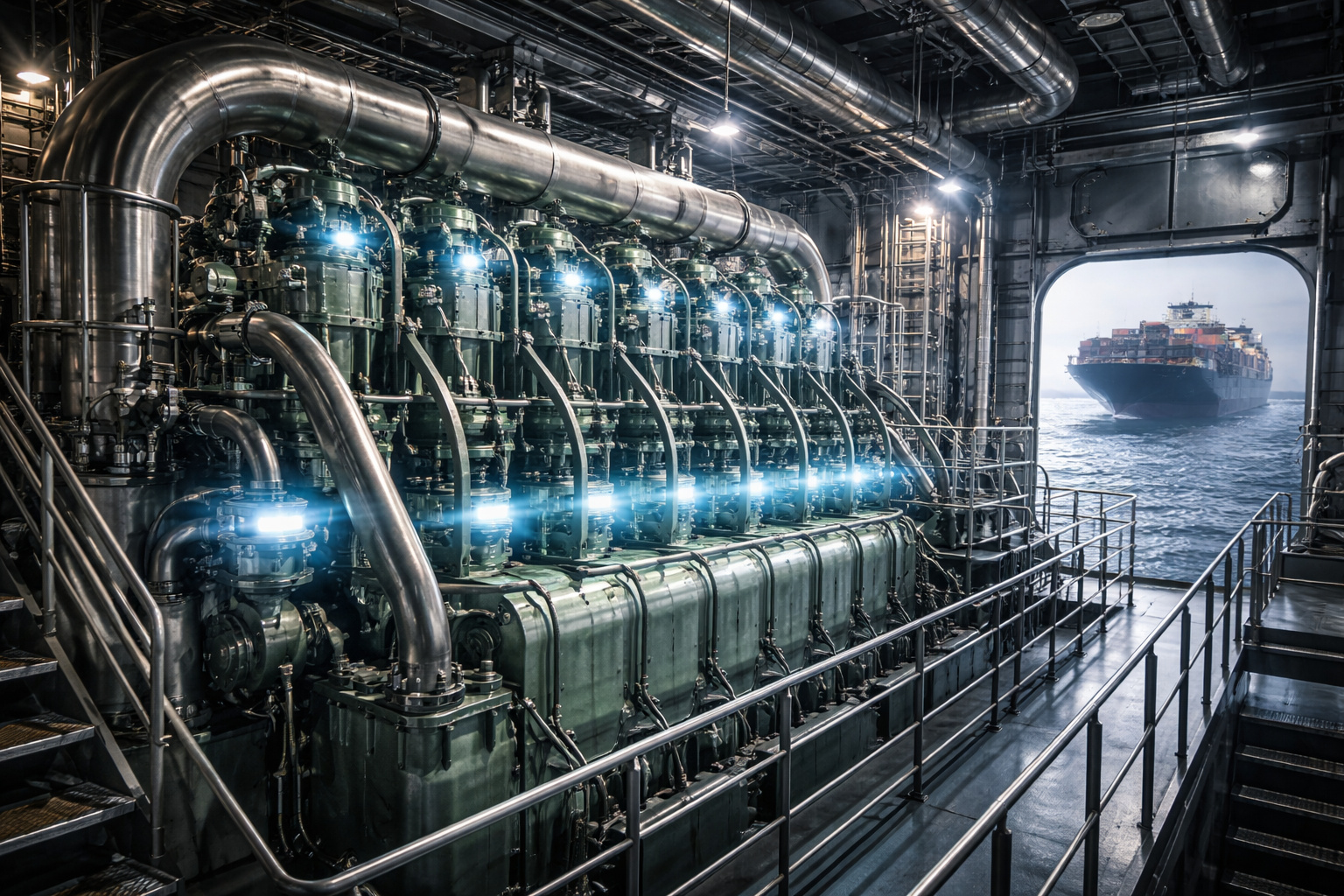
Europe is trying to create an ammonia-powered marine engine without auxiliary fuel, which could unlock the race for giant emission-free ships. The technology aims to eliminate one of the biggest obstacles to clean maritime propulsion.
-
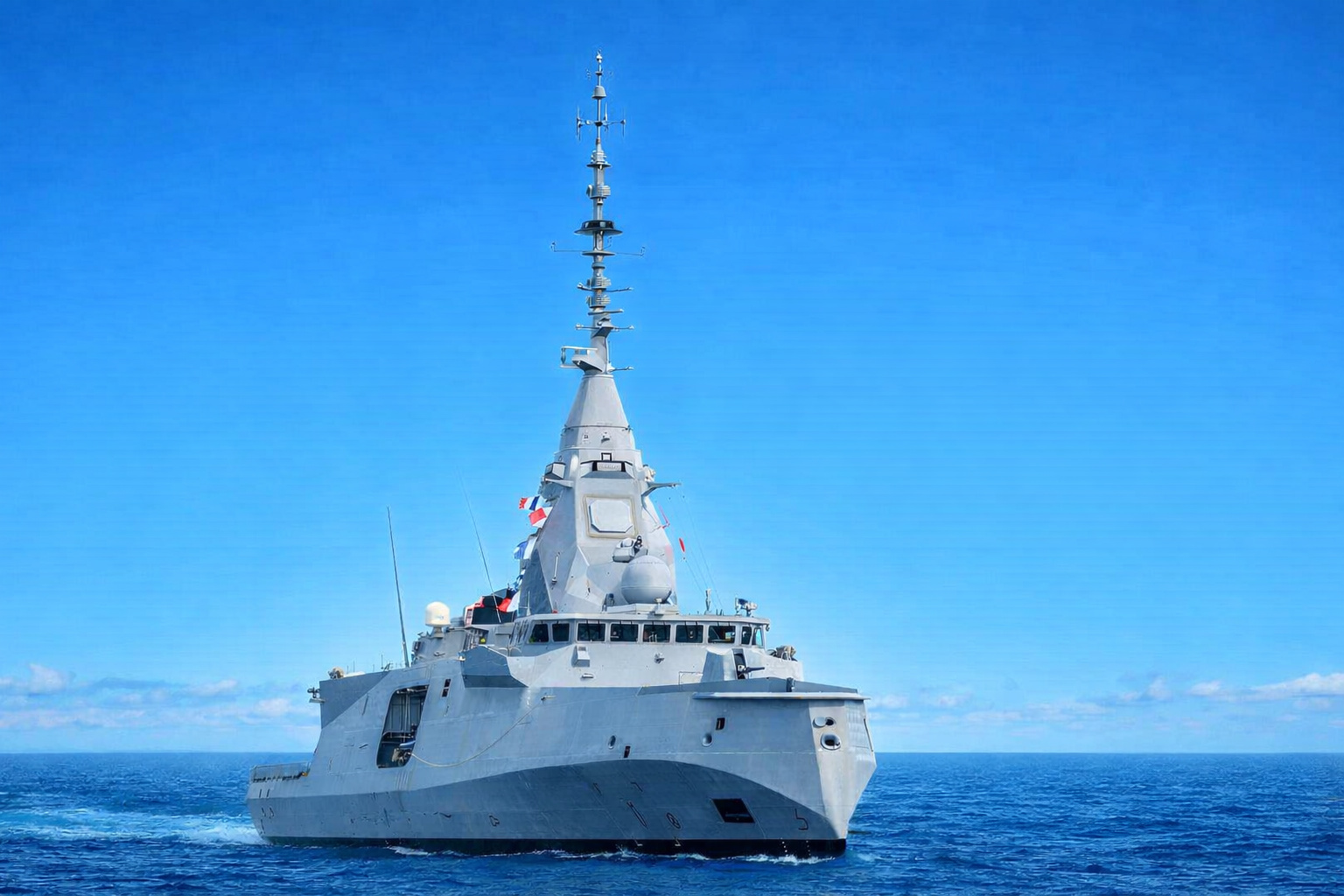
A 4,500-ton frigate with just over 100 crew members, state-of-the-art radar, and cruise missiles is being touted as the new standard of naval warfare in the 21st century.
-
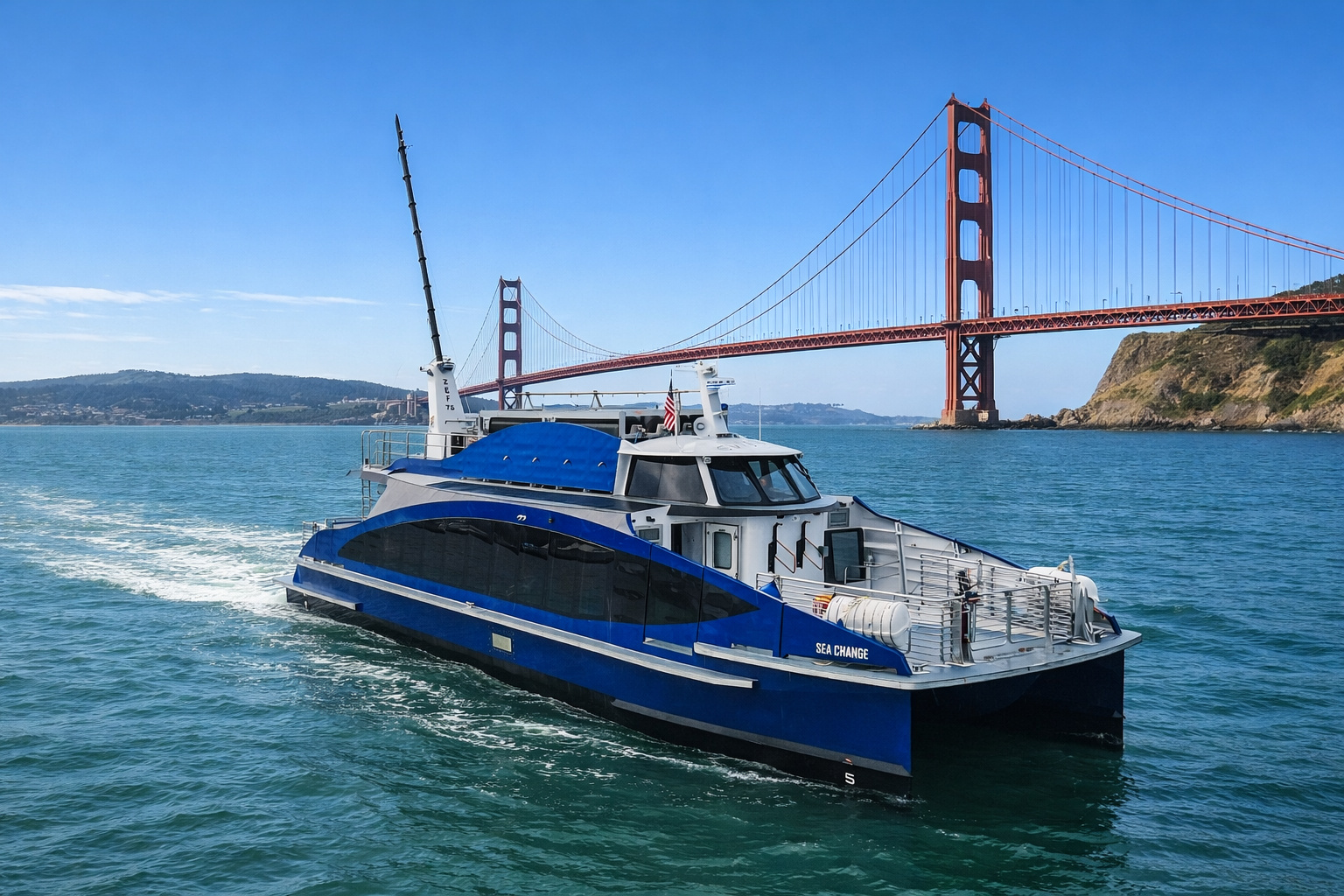
The first commercial hydrogen-powered ferry enters operation in the U.S., eliminates the use of diesel, uses fuel cells to generate clean energy on board, and transforms San Francisco Bay into a landmark of the new era of emission-free navigation.
-
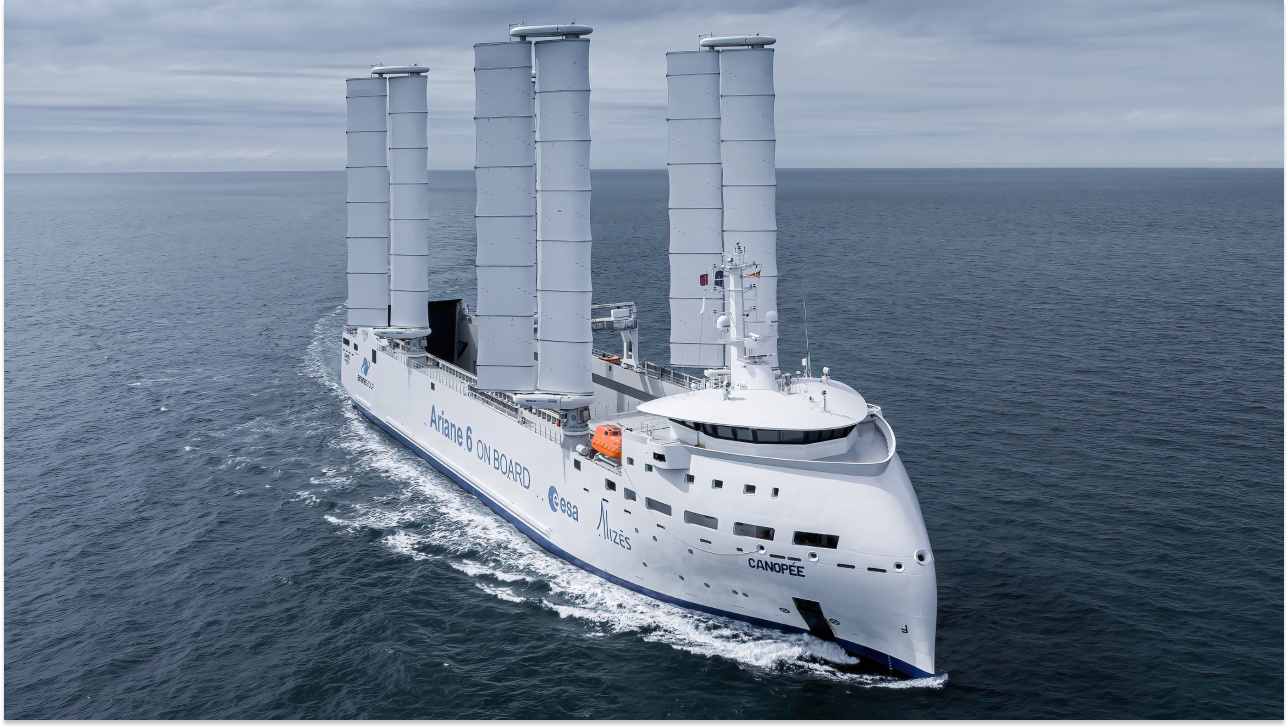
With a length of 121 meters and four rigid sails of 36 meters that automatically rotate to capture the wind, Canopée is the world’s first hybrid industrial cargo ship powered by wind, used to transport rockets and reduce fuel consumption by up to 30% on transoceanic routes.
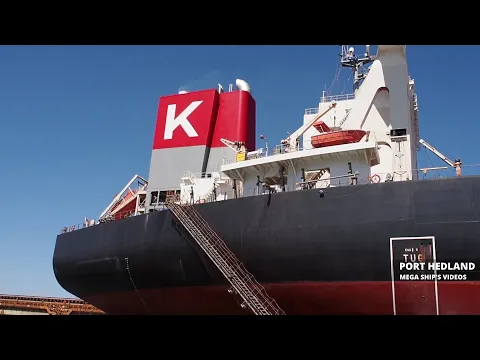

Due to their size, these ships cannot pass through canals like Panama or Suez when loaded, being forced to navigate around continents, which significantly increases fuel consumption.
This means that any reduction in consumption or fuel substitution has a direct global impact, as these ships represent a significant portion of the volume transported across the oceans.
Dual-fuel engines allow gradual transition without interrupting operations
The ships in the project will be equipped with dual-fuel engines, a technology that allows operation with both fossil fuels and ammonia. This model is considered essential to enable the energy transition, as the global infrastructure for ammonia refueling is still under development.
In practice, the system allows ships to use ammonia whenever available and revert to traditional fuels when necessary. This flexibility reduces operational risks and facilitates the adoption of the technology on a large scale, avoiding total dependence on an emerging supply chain.
Additionally, the operational contracts, which can last up to 12 years, indicate that the project is not experimental but rather a long-term commercial bet.
Ammonia emerges as a viable alternative to eliminate carbon emissions in the maritime sector
Ammonia (NH₃) has gained prominence as one of the main alternatives to decarbonize maritime transport. Unlike marine diesel, ammonia does not contain carbon in its composition, which means that its combustion does not produce carbon dioxide.

This factor makes the fuel particularly attractive for a sector responsible for about 3% of global CO₂ emissions, according to data from the International Maritime Organization.
However, the adoption of ammonia involves technical and safety challenges, including its toxicity and the need for specific storage and handling systems on board.
Project involves different types of vessels and multiple applications
The agreement between MOL and CMB.TECH is not limited to a single type of ship. In addition to the Capesize bulkers, the project includes chemical tankers, vessels specialized in transporting liquid chemicals.
This diversity indicates that the technology is being tested in different operational contexts, expanding its potential application in the maritime sector.
The combination of different types of ships allows for the validation of ammonia use in multiple scenarios, accelerating the adoption and technological development process.
Deliveries expected from 2026 mark the beginning of the carbon-free ocean fleet
The first deliveries of the ships are expected to occur starting in 2026, marking the beginning of a new phase in maritime transport. The expectation is that these vessels will begin operating on real commercial routes, transporting large volumes of cargo between continents.
This timeline positions the project as one of the first to move from concept to actual operation, distinguishing it from initiatives that are still in the conceptual stage.
The entry into operation will allow for the evaluation of the actual performance of the technology under commercial conditions, including efficiency, costs, and operational challenges.
Scale of the project indicates structural change in the naval sector
The construction of nine ships of this size with ammonia-based technology is not an isolated move. It indicates that the naval sector is beginning to invest in decarbonization solutions on a relevant scale.
The choice of large vessels reinforces that the energy transition is not limited to smaller or experimental vessels but is already reaching the foundation of global trade, which relies on large volumes transported over long distances.
This movement could influence future investment decisions in new vessels and infrastructure.
Refueling infrastructure is still a challenge for global expansion
Despite the potential of ammonia, the infrastructure necessary for its production, storage, and refueling is still in the early stages of development. Ports around the world will need to adapt to accommodate this type of fuel.
This factor represents one of the main challenges for the expansion of the technology, as viability depends on the creation of a global refueling network.
Parallel initiatives are being developed to produce green ammonia, using renewable energy, which could further enhance the environmental benefits of the technology.
Long-term investment reinforces commitment to decarbonization
The contracts of up to 12 years associated with the project indicate that the companies involved are committed to adopting the technology over a long-term horizon.
This type of financial and operational commitment demonstrates confidence in the viability of ammonia as a maritime fuel. The decision to invest in large vessels with dual-fuel technology reinforces that the energy transition is already underway and is not limited to future plans.
The initiative by MOL and CMB.TECH occurs at a time when different fuels are being tested in the maritime sector, including methanol, hydrogen, and biofuels.
Ammonia stands out for its potential to completely eliminate carbon emissions during combustion, positioning itself as one of the most promising options to achieve global climate goals. The competition among different technologies is expected to accelerate innovation and determine which solutions will become standard in the future.
Do you believe ammonia-powered ships can replace traditional fuels in global transport?
Leave your opinion in the comments and tell us if this new generation of vessels can truly transform the way the world moves billions of tons of cargo every year.






Seja o primeiro a reagir!