





 Portuguese
  English
  Spanish
  4 min of reading
  82 comments


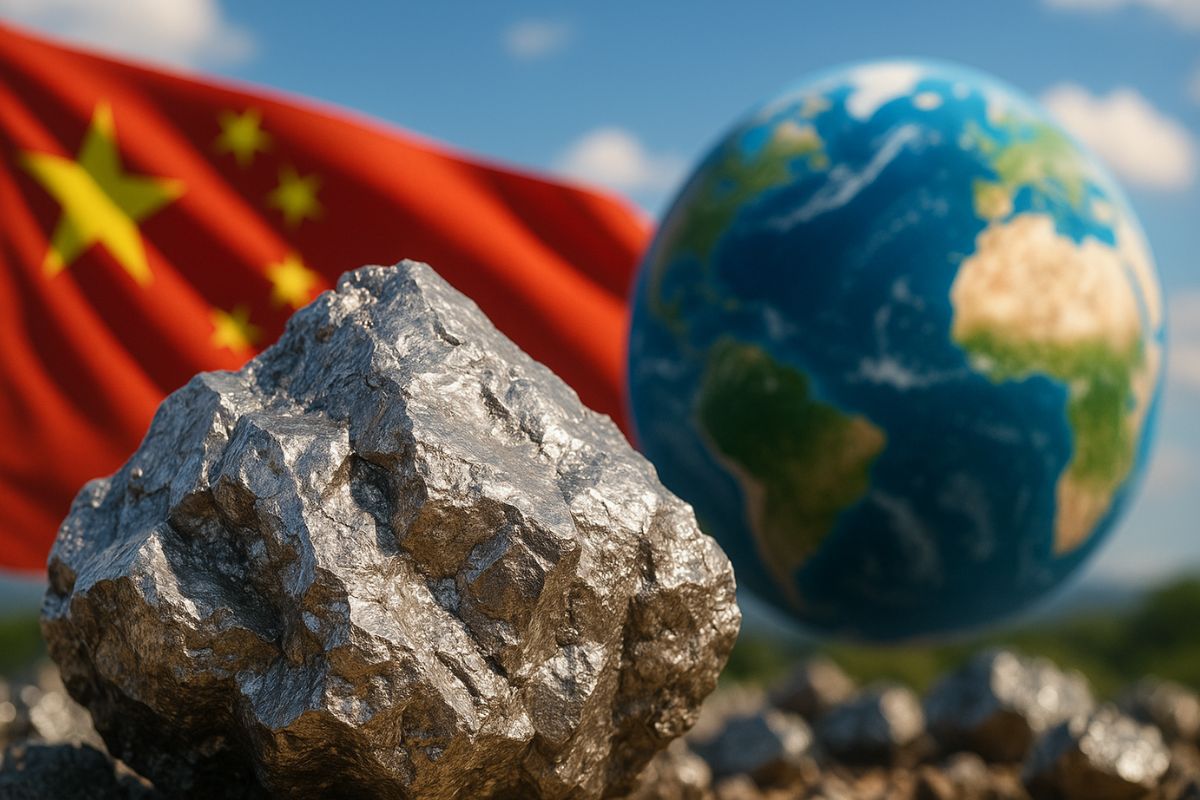


Brazilian Nickel Enters The Heart Of Billion-Dollar Dispute In Global Geopolitics. Sale Of Mines In Goiás And Pará To The Chinese State-Owned Enterprise MMG Raises Alert In The USA And Europe And Places Brazilian Nickel At The Epicenter Of Energy Transition.
The brazilian nickel has ceased to be just a mineral asset and has taken on a strategic space in global geopolitics. The sale of Anglo American‘s operation in Goiás to the Chinese state-owned MMG, valued at US$ 500 million (R$ 2.7 billion), has triggered a dispute involving the interests of China, United States, European Union, and private competitors.
According to Folha de S. Paulo, the transaction includes the Barro Alto and Niquelândia (GO) plants, as well as projects in Pará and Mato Grosso, increasing Chinese presence in a vital sector for batteries and the global energy transition.
What’s At Stake With Brazilian Nickel
Nickel is considered a critical mineral for the production of stainless steel and electric vehicle batteries. With the global race for clean technologies, control over strategic reserves has become a priority for the major powers.
-
Brazilian city bets on the business environment to generate jobs and attract investments in the energy sector — secretary reveals strategy at Macaé Energy 2026.
-
50 viaducts, 4 tunnels, 28 bridges, and 40 kilometers of bike paths: BR-262 in Espírito Santo will receive 8.6 billion reais for the largest engineering project in the state’s history, inspired by the Immigrant Highway in São Paulo.

-
Brazil produces too much clean energy and doesn’t know what to do with it: over 20% of solar and wind capacity was wasted in 2025 while investors flee and 509 renewable generation projects were abandoned in the last year.

-
Piauí will produce a new fuel that replaces diesel without needing to change anything in the truck’s engine and reduces pollutant gas emissions by half: truck drivers from all over the Northeast are already celebrating the news that will arrive later this decade.


China already dominates global nickel, cobalt, and rare earth refining, but still depends on foreign mines to feed its industry. Therefore, the purchase of Brazilian deposits strengthens Beijing’s dominance over 60% of the global supply, according to a complaint from the Dutch competitor Corex Holding.
The Dispute Between China And European Competitors
Corex Holding, controlled by Turkish billionaire Robert Yüksel Yıldırım, claims it offered US$ 900 million (R$ 4.9 billion) almost double the amount paid by the Chinese and still lost the dispute. The company questions the integrity of the process and has contacted the CADE in Brazil and the European Commission in Brussels.
For Yıldırım, the operation represents a threat to the sector’s balance: “This purchase further increases market concentration and jeopardizes the supply security of the European Union,” he stated in an interview.
International Reaction And Regulatory Risk
In the United States, the administration of Donald Trump is closely monitoring the case. The Chinese strategy in Brazilian mines is viewed as part of a broader movement, similar to that already practiced in Indonesia, where Chinese control has driven down international nickel prices.
In the European Union, the transaction may be investigated for concentration risk. In Brazil, CADE is analyzing complaints that the sale may compromise competition. Anglo American, for its part, claims that the decision follows its strategy to focus on copper, high-grade iron, and agricultural nutrients.
The Impact On Barro Alto And The Local Economy
In the small Barro Alto (GO), a city with just over 12,000 inhabitants, the change of control generates expectations. “Mining took Barro Alto out of prehistory, but it hasn’t placed it in the future. We are stuck in the middle. MMG can refresh this”, stated Iran Fernandes from the local commercial association.
For the population, there is hope that MMG’s arrival will bring new investments, jobs, and development. But there is also growing concern that increased Chinese influence will reduce space for local companies and expand external dependence.
Brazilian Nickel As A Piece Of Energy Transition
With the global race for decarbonization, brazilian nickel has become strategic for high-tech industrial chains. Electric vehicle batteries, renewable energy systems, and even military equipment directly depend on this input.
Thus, Brazil, which holds some of the largest reserves in the world, is at the center of a dispute that intertwines economics, diplomacy, and energy security.
The brazilian nickel is not just a natural resource: it is a strategic asset that defines the country’s role in the energy transition and in the global geopolitical landscape. The dispute between China, USA, and Europe for possession of national mines shows that mining goes beyond economics it is a central piece of global power.
And you, do you believe that China’s entry strengthens or threatens Brazil in the global market for strategic minerals? Leave your opinion in the comments — we want to hear from those who live this debate closely.









A manchete leva a crer que foi o estado brasileiro que tirou o níquel da mão dos ingleses e entregou para os chineses preterindo os turcos. Sendo que foram os ingleses que venderam a sua concessão para os chineses (o min. de minas e energia e o incra nao podem opnar apenas verificar a legalidade da operação), e se existe alguma conspiração, algum contrato de gaveta, algum interesse oculto dos ingles em vender sua concessão para a China, aí tem que perguntar para AngloAmerican
DIFERENÇA IRÁ PARA OS COFRES DO PT E CONTA CORRENTE DO LULA DA SILVA EM PARAISO FISCAL!
A DIFERENÇA IRÁ PARA OS COFRES DO PT E CONTA CORRENTE DO **** EM PARAISO FISCAL!