





 Portuguese
  English
  Spanish
  4 min of reading
  4 comments





Report Reveals That In Brazil, Those Who Earn Between R$ 6 Thousand And R$ 26 Thousand Pay Proportionally More Income Tax Than Millionaires Because 71% Of The Income Of The Richest Comes From Exempt Profits And Dividends.
A study by the National Union of Tax Auditors of the Federal Revenue (Sindifisco), based on the 2024 Income Tax Returns (calendar year 2023), exposed one of the biggest contradictions of Brazilian taxation. The data shows that middle-class and upper-middle-class workers pay proportionally more tax than millionaires, highlighting a regressive logic.
According to the survey, those who receive salaries between R$ 6 thousand and R$ 26 thousand per month — a range that concentrates a large portion of salaried professionals with higher education — bear effective rates that can be twice that of the super-rich. Among millionaires, the average effective rate is only 5.28%, less than that of workers earning from 5 to 7 minimum wages.
Who Pays More And Who Pays Less
The study details salary ranges and reveals a reversal of progressivity.
-
Havan buys historic football land in Blumenau for a million-dollar amount protected by a confidentiality clause and is already planning to change even the layout of streets to build a megastore in half-timbered style costing 80 million reais.

-
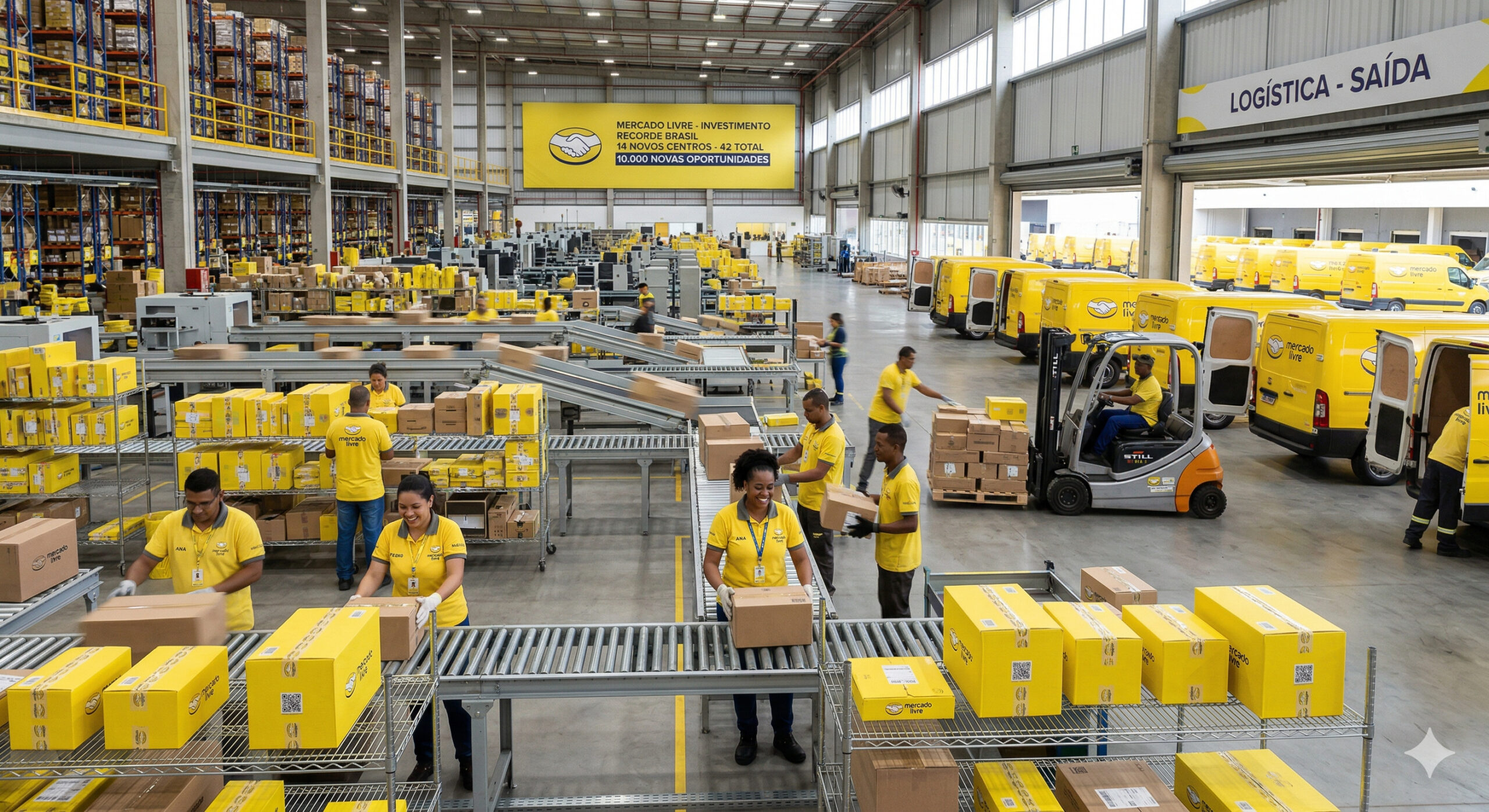
Mercado Livre “opens the vault” and announces a record investment of R$ 57 billion in Brazil in 2026, a value 50% higher than the previous year, with an expansion plan that includes 14 new logistics centers, totaling 42 units in the country and hiring an additional 10,000 employees.
-
How investment in technology can revolutionize the national economy and enhance industrial gains, according to a study that highlights the direct impact on productivity, innovation, and wealth retention within Brazil.

-
The largest food company on the planet, JBS, has just opened a 4,000 square meter laboratory in Florianópolis to develop customized proteins that modulate muscle mass gain, immune response, and metabolic performance.


Workers earning between 15 and 20 minimum wages (R$ 19.8 thousand to R$ 26.4 thousand) face an effective rate of 11.40%, more than double the taxation of millionaires.
On the other hand, those who earn between one and five minimum wages pay from 0.61% to 3.59%.
In other words, from 5 minimum wages, one already pays more than millionaires do in proportional terms.
This phenomenon shows that, instead of weighing on the richest, the Brazilian system burdens the tax-paying middle class, consisting of professionals who rely almost entirely on taxable salaries and incomes.
Why Do Millionaires Pay Less?
The explanation lies in the composition of income. Among the super-rich, who earn above 240 minimum wages per month (R$ 316.8 thousand), 71% of their income comes from exempt profits and dividends.
This means that almost three-quarters of the income of this group is not subject to Income Tax.
In contrast, among salaried workers, only 5% of the income is exempt, which explains the greater tax pressure.
In 2023, profits and dividends totaled R$ 700 billion in exempt income, a 14% increase compared to 2022.
This tax benefit, in place since the 1990s, is cited by experts as one of the main factors of Brazilian tax inequality.
The Pejotization And The Shielding Of The Rich
The exemption of profits and dividends also fuels the phenomenon of pejotization.
Many professionals, especially in health, technology, and legal services, choose to open companies (legal entities) to receive their compensation as distributed profits, instead of salary.
This way, they manage to escape the progressive Income Tax table, which reaches 27.5% on salaries, paying much lower percentages under the legal entity regime.
The result is a distorced system, where those who live off salaries pay more than those who live off capital.
The Concentration Of Income At The Top
The report also confirms the inequality in the distribution of declared income. 94% of filers have up to 20 minimum wages, but they account for only 52% of total earnings.
The 6% richest concentrate 48% of the income, with exempt income predominating in this group.
According to the president of Sindifisco, Dão Real Pereira dos Santos, this reality shows that Brazilian taxation increases social inequality rather than reducing it.
He warns that while the middle class sees their effective rate rise, millionaires benefit from a legal structure that protects them.
The Impact Of The Tax Reform
The topic gained traction with the tax reform approved in 2023, which initially addressed consumption taxes, leaving the income part for subsequent stages.
In August 2025, the Chamber approved the urgency of a project that increases the exemption range for income up to R$ 5 thousand per month, a campaign promise of president Luiz Inácio Lula da Silva (PT).
However, the most controversial discussion is about the taxation of profits and dividends.
If approved, it can significantly alter the current logic, bringing Brazil closer to OECD countries, where this type of income is taxed.
The creation of a minimum rate for high incomes is also under debate, a measure seen as essential to restore the progressivity of the system.
What Can Change And What Still Needs To Be Resolved
For Sindifisco, correcting the Income Tax table and revoking the exemption on profits and dividends would be fundamental steps for a fairer system.
However, as Dão Real Santos warns, this process will not be immediate.
He states that the discussion should conclude in 2026, but not necessarily with definitive solutions.
In the meantime, millions of Brazilians will continue to feel the practical inequality of the system.
The middle class, which supports most of the revenue, continues to pay proportionally more than millionaires, who manage to shield their income.
The study by Sindifisco clearly shows that the Income Tax in Brazil does not fulfill its function of progressivity, as millionaires pay proportionally less than the middle class.
The maintenance of the exemption on profits and dividends represents a privilege that generates distortions and inequality.
And you, do you believe that the taxation on profits and dividends should be reviewed? Do you think it’s fair that salaried workers pay more than millionaires? Leave your opinion in the comments — we want to hear from those who feel this burden every month.








Acho justo isentar os trabalhadores ainda mais, não vejo nesta reportagem uma intenção de amenizar para os trabalhadores e sim criar mais imposto para o governo tributando lucros e dividendos, isso não seria justiça social e sim mais imposto para o governo, quer uma opinião sincera, tribute os dividendos mais isente o trabalhador que ganha até 10,000,00
Esse pessoal da receita federal só fala em aumento de tributação…tem e que diminuir de todo mundo. Monte de parasita esses caras da receita federal
Em vez de aumentar a alíquota do imposto dos mais ricos, diminua a alíquota dos assalariados visto que pagamos cada vez mais impostos e não temos retorno.