





 Portuguese
  English
  Spanish
  8 min of reading
  0 comments


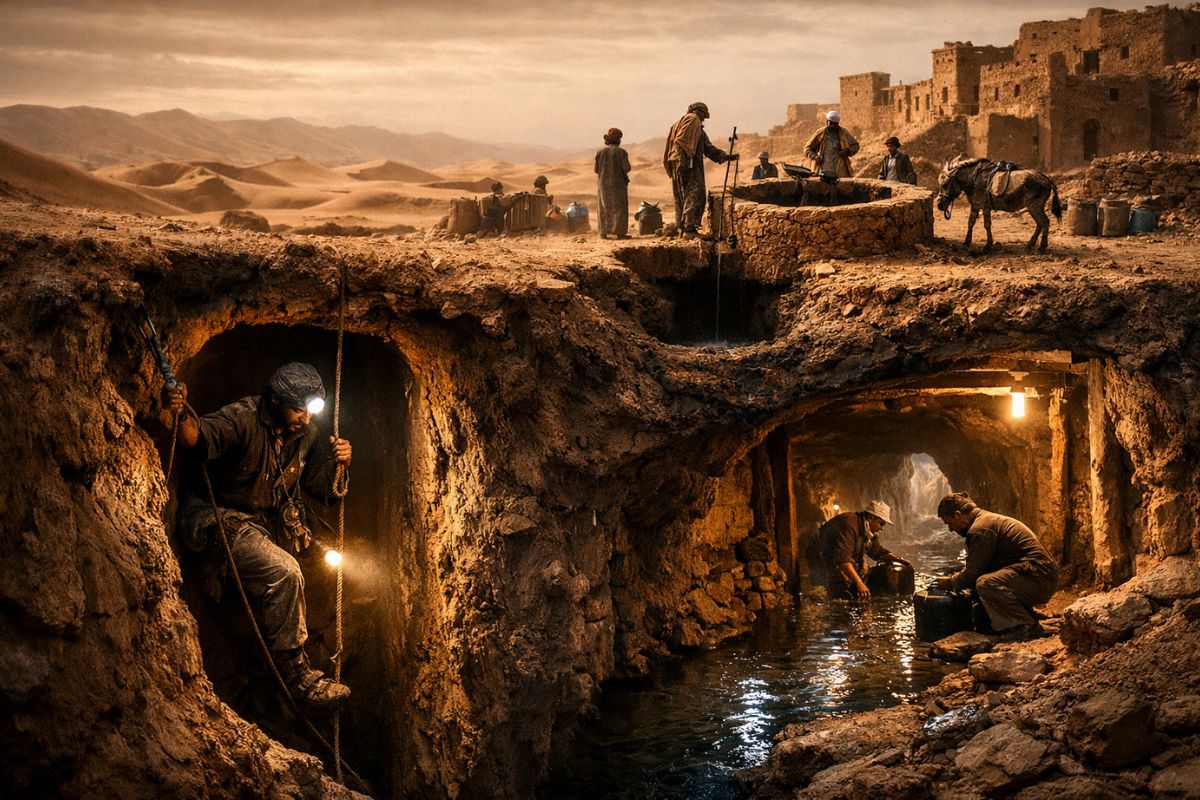
In The Desert Of Morocco, Open Subterranean Channels That Have Been Transporting Water For Centuries Continue To Bring Water To Villages, But Their Maintenance Requires Dangerous Excavations, Collective Decisions, And Extreme Physical Effort That Reveals How Tradition, Agriculture, And Survival Remain Linked To An Invisible Engineering Beneath The Sand And The Fear Of Daily Collapses.
In the desert of Morocco, water does not appear as a detail of the landscape nor as a readily accessible resource. It depends on qanat, subterranean tunnels that crisscross the land and direct the water flow to the palm groves and cultivated areas, sustaining villages that continue to organize their lives around this ancestral structure. When one of these channels clogs, the impact is not localized: irrigation stops, fields dry out, and dozens of families immediately feel the weight of scarcity.
In the small village of Buouya, in the southern region, the obstruction of a qatara mobilizes the entire community. The decision about the repair is neither individual nor improvised. It goes through the jama, the assembly held after the Friday prayers, where the men discuss everything related to water. It is at this moment that it is defined who will go down, who will dig, and who will take the risk of keeping alive a system without which the village could simply stop.
When Water Fails, The Entire Village Enters Alert
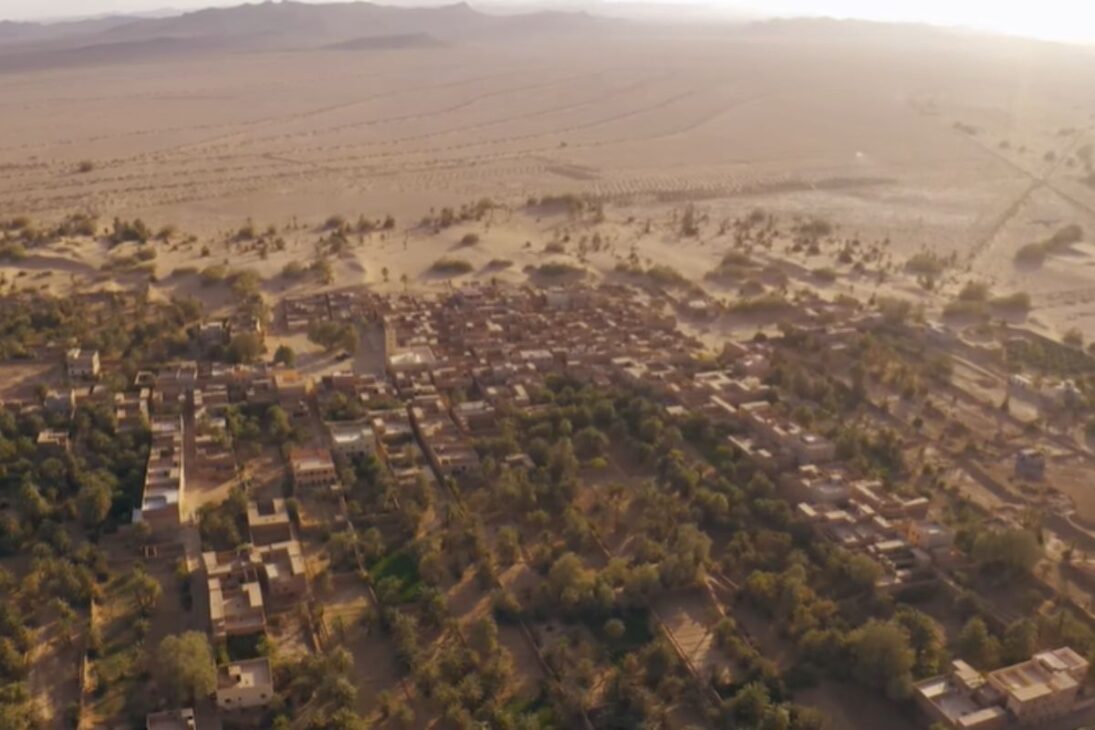
In the daily life of the desert of Morocco, the qanat not only serve as supply channels. They sustain the rhythm of agriculture, the permanence of families, and the very logic of land occupation. In Buouya, one of the blocked galleries had already left fields without irrigation and showing signs of water shortage, demonstrating how the problem quickly transcends the technical dimension and transforms into a collective issue.
-
He found the largest gold shipwreck in the United States with tons of the precious metal at a depth of 2,400 meters in the Atlantic and recovered a treasure that no one thought possible to reach, but 500 gold coins disappeared without explanation.
-
The United States has a serious problem with its F-35s: China is already producing fighters at a pace that exceeds American capacity and could manufacture up to 300 aircraft per year before the end of the decade, shifting the global military balance.
-
A retired IT professional built a 22-meter boat in his backyard in Oklahoma with a school bus engine, light pole masts, and handmade watertight doors to become the redneck version of Jacques Cousteau.
-
China is building a city in Brazil: a complex with an investment of R$ 5.5 billion comes to light, but allegations involving workers draw attention.

Therefore, maintenance is not treated as a different service, but as a shared responsibility. The farmers in the oasis take on this work throughout the year and, during periods tied to the agricultural calendar, return to the galleries to clean sediments, remove sand, and restore water circulation. In the desert of Morocco, repairing a qatara means restoring the possibility of planting, harvesting, and continuing to live in that space.
This process also reveals who directly depends on this system. It is not a distant mechanism, controlled by external authorities or complex machines. It is the residents themselves who monitor the state of the channels, realize when the flow decreases, and gather to decide on the intervention. Water, there, is viewed as a common good, inseparable from the local routine.
The centrality of the qanat becomes even more evident because the interruption of the flow affects much more than a specific field.
When the channel dries up, an entire irrigation network linked to crops and the distribution agreed upon among the farmers is compromised. This explains why cleaning the blocked tunnel is almost described as a ritual: there is technique involved, but there is also memory, custom, and social continuity.
The Subterranean Work That Requires Courage, Shifts, And Resilience
Descending into a qatara is not a simple task nor symbolically neutral. The men gathered in the village choose who will do this work knowing that there is fear involved. Some refuse due to claustrophobia. Others accept even when scared.
The darkness is almost total, the circulation is limited, and moving within the gallery requires constant adaptation, as in certain sections there is enough height to walk more freely, while in others it is necessary to advance bent over.
The difficulty lies not only in the confinement. The physical effort is intense and continuous. Digging the earth inside the gallery requires time, strength, and attention, as maintenance remains manual, just as it was during the original excavation, done with rudimentary tools. In the desert of Morocco, modernization has not eliminated the physical and risky nature of this activity; it still directly relies on the human body.
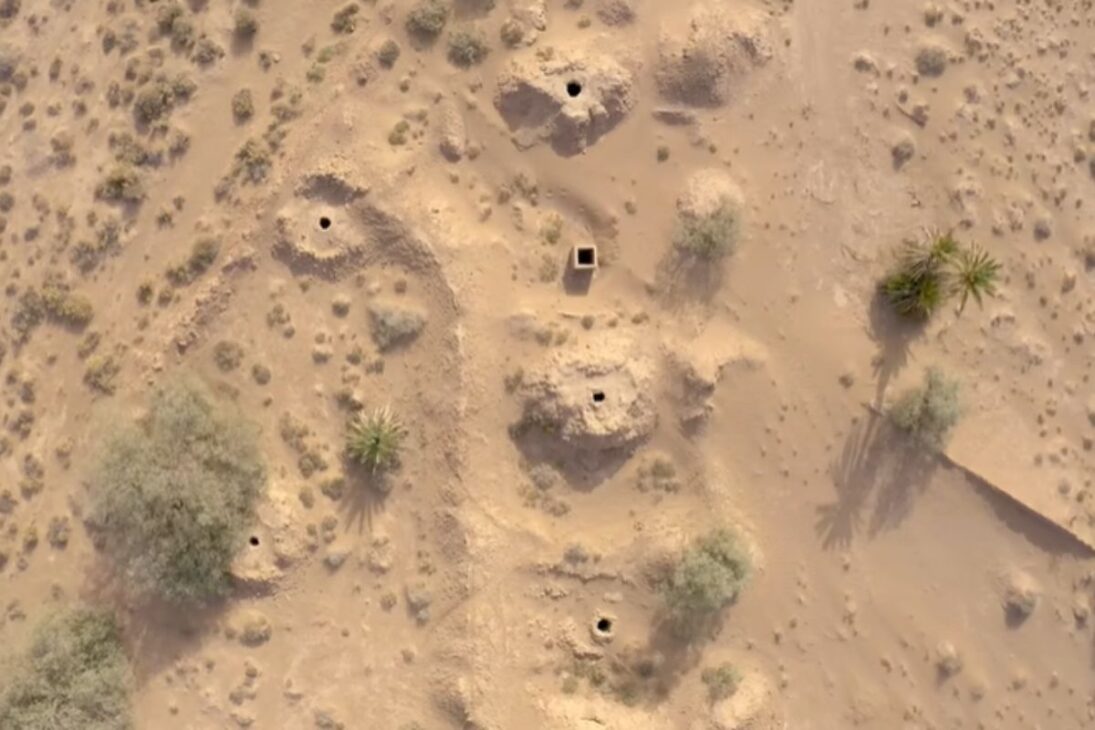
The access structure indicates the complexity of the system. Along the path of each qatara, there are wells spaced about ten meters apart, serving as service hatches for those entering the galleries. These points allow monitoring of the subterranean route and facilitate maintenance, but they also make it clear that the work does not occur in a single spot: it is an intervention spread across various sections of the channel.
The risk increases with internal conditions. Candles are used to warn of a lack of oxygen, the workers operate in shifts, and there is a constant fear of collapse. In some cases, the work occurs about ten meters below ground level, with almost no visibility and the need to dig meter by meter below the water level to clear the passage.
In the afternoon, temperatures can reach around 50°C, which further increases the wear. It is not just maintenance work; it is a work of resilience in an extreme environment.
How The qanat Manage To Deliver Water For Kilometers Beneath The Sand
The survival of this system in the desert of Morocco relies not only on community tradition but also on a very specific hydraulic functioning. In one of the observed sections, the gallery had a much greater free height than expected, nearing three meters. This dimension was interpreted as an indication of two successive levels of excavation: one older and another subsequently deepened, likely in response to a prolonged period of water scarcity.
The reading of the gallery suggests that, between the 16th and 20th centuries, there was enough hydric reduction to force the local populations to dig deeper. More recently, about two kilometers were added to the length of the system. This shows that the qanat are not static structures over time. They have been adapted, deepened, and extended as the need to seek water at increasingly challenging levels has arisen. Each layer excavated is, at the same time, engineering and a historical testimony of adaptation.
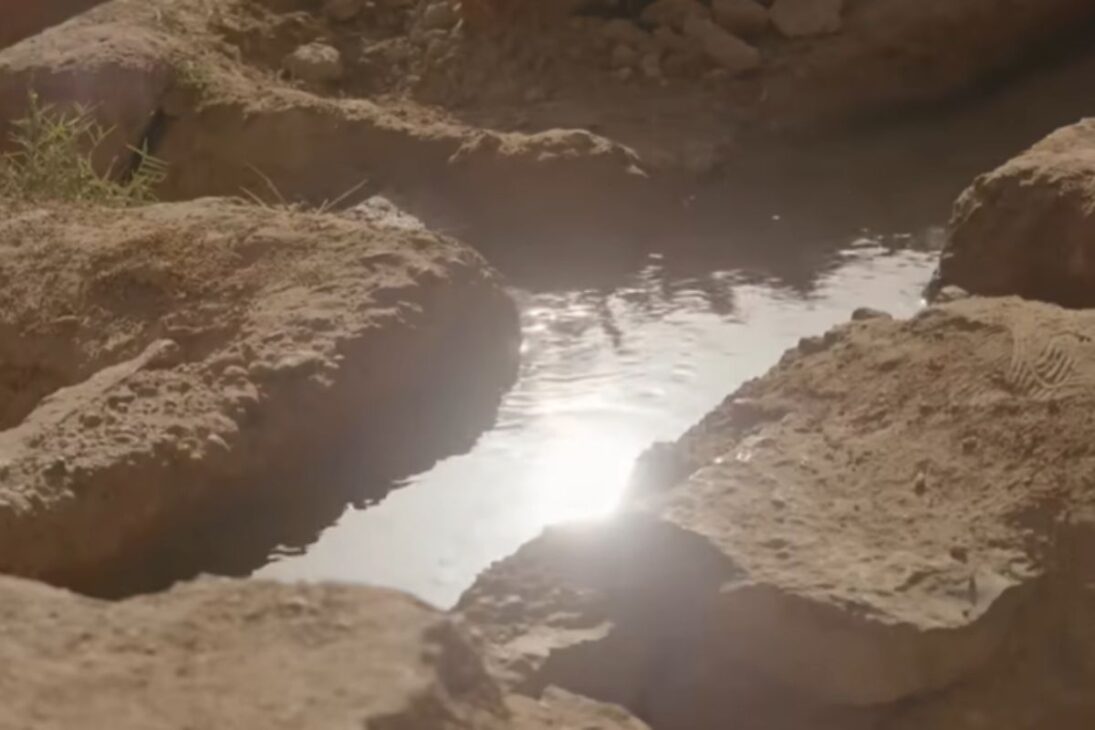
There is also a decisive aspect for the efficiency of these channels: the presence of clay on the gallery floor. This covering makes the bottom almost impermeable, preventing the water from seeping back into the soil. Instead, it follows its downhill course for about three to four kilometers, reaching sufficient quantities in the areas where it will be used. It is this natural impermeability that makes it possible to maintain a steady flow of water in a stark desert environment.
Even within the channel, the balance is delicate. Humidity creates crusts that, over time, fall into the water and contribute to obstructing the passage. Hence, cleaning must be recurring. The water comes from the water table, occupies the bottom of the qatara, and depends on constant clearing to continue advancing. In the desert of Morocco, water flows, but never guaranteed; it must be permanently defended against sand, sediments, and natural wear.
Water, Usage Rights, And Rigorous Discipline In Irrigation
When water finally returns, another essential stage begins: distribution. The flow that emerges from the qatara supplies an irrigation network that crosses the fields through channels known as seg. The layout follows the small undulations and inclinations of the terrain, allowing water to keep moving without stagnating and evaporating easily. The conduction does not end, therefore, in the subterranean gallery; it continues on the surface in an organized and controlled manner.
This organization is rigid because scarcity imposes clear rules. Each farmer waits their turn to irrigate, and everything is discussed at Friday meetings.
The right of access to water is also tied to participation in the maintenance of the qanat. Those who help preserve the system ensure their legitimacy to use it. Water does not circulate merely by gravity; it circulates through social rules, community memory, and commitment to collective work.
The usage is divided into precise cycles. Each producer knows their turn, called “their quarter,” and can only extract the amount that corresponds to them. In Buouya, the turn comes every twelve days, which may occur in the morning or at noon.
The division respects each farmer’s situation, and water can be inherited or purchased, showing that, besides being a physical resource, it also integrates patrimonial and economic relations.
There is also an important distinction between the water linked to a plot of land and the water that can be acquired separately. When it is their turn, the farmer receives what is called “water married,” connected to a specific property. If they need more, they must buy “water single,” which does not belong beforehand to a given plot.
In the desert of Morocco, this difference helps understand how scarcity has been transformed into a detailed management system, in which each portion of water must be measured, respected, and negotiated.
What Water Keeps Standing Beyond Agriculture
Regular irrigation serves not only to save a specific crop. It supports a diverse agricultural set, even if limited by scarce water availability. Farmers cultivate wheat, alfalfa, and vegetables such as carrots, turnips, and peppers, but the primary crop remains the date palm. This variety shows that palm groves function through complementarity, with each planting level supporting the other.
The date palms, for example, provide shade and create conditions for fruit trees at lower levels to thrive. Under them, cereals find space to grow, and these same cereals help provide nitrogen to the soil.
The result is a layered agricultural logic, in which survival relies not only on water but also on how cultivation is organized. In the desert of Morocco, agriculture is a living architecture adjusted to the limits of the environment.
But water also sustains something less visible: human permanence. A worker claims to know every meter of the galleries and the qanat after decades of involvement. Another summarizes clearly what is at stake: without the qatara, the men would leave.
The phrase exposes a direct relationship between water infrastructure and land occupation. Where the channel definitively dries up, the possibility of permanence also weakens.
This pressure is already appearing in new generations. Young people are leaving the village for the cities because agriculture does not provide sufficient income. They earn more outside the oasis than within it. Still, the community insists on preserving the qanat because they see them as a sacred heritage, left by parents and grandparents who worked for years in the subterranean channels. The struggle there is not only against water scarcity but also against the gradual emptying of rural life.
An Underground Monument That Still Defines Life On The Surface
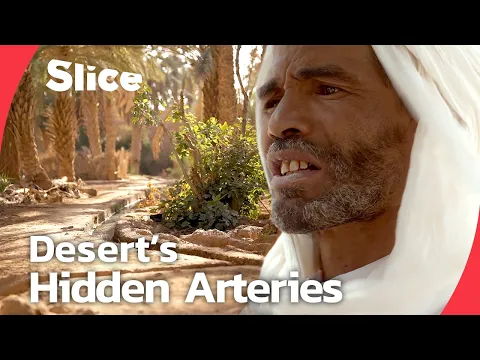

The qanat of the desert of Morocco gather technique, human effort, and historical continuity in a single structure. They are ancient but continue to operate. They are fragile but still essential. They require manual labor, assemblies, shifts, discipline in irrigation, and willingness to face suffocating and unstable environments.
At the same time, they carry the mark of generations that dug deeper, expanded the course of the channels, and adapted the subterranean engineering to keep the water flowing.
More than an architectural legacy, these galleries continue to be the concrete basis of local life. They determine agricultural production, condition land use, organize water access rights, and even influence the residents’ permanence or departure. In the desert of Morocco, preserving a qatara is not about conserving a relic; it is about protecting a living survival system.
Given this, a question truly worth debating arises: should communities that still rely on ancestral structures like these receive more support to preserve this way of life, or does the outflow of young people show that this balance is becoming too difficult to sustain?






Seja o primeiro a reagir!