





 Portuguese
  English
  Spanish
  6 min of reading
  2 comments


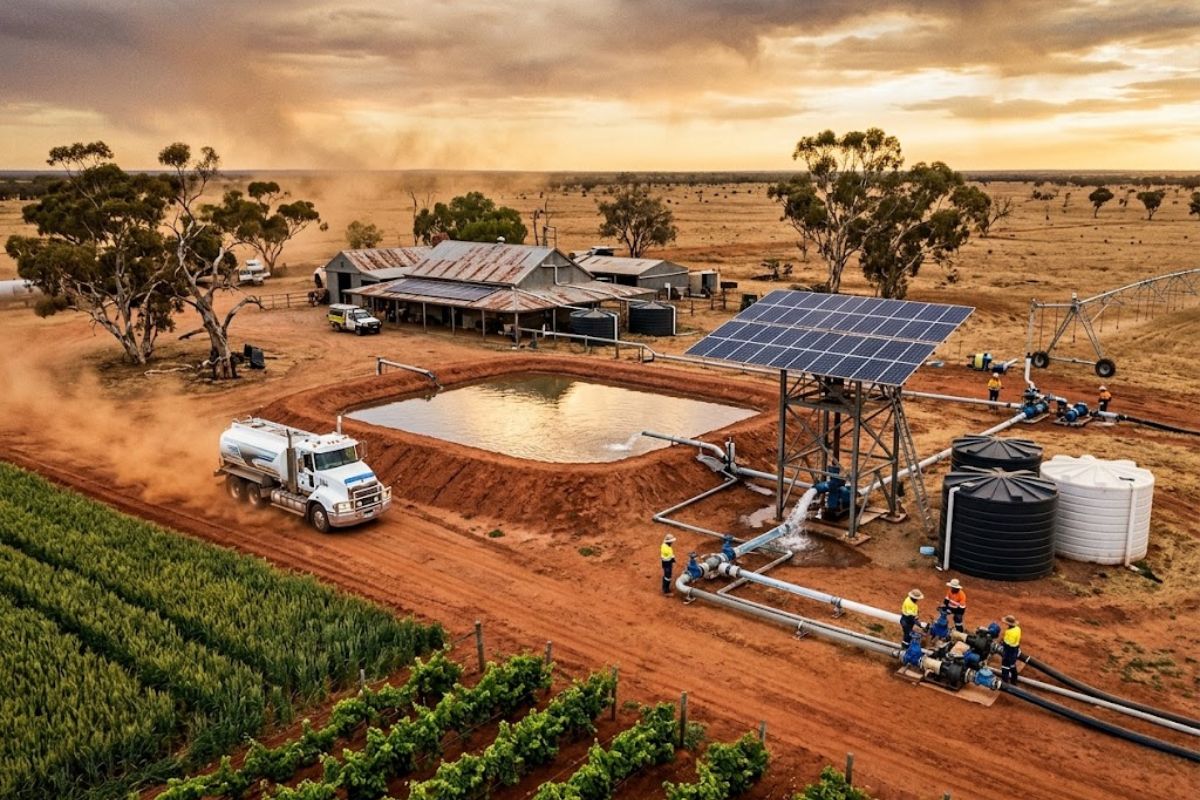


The 10 Thousand Hectare Farm in Western Australia’s Wheat Belt Survives With a Rainwater System, Solar-Powered Artesian Wells, and Truck Transport Because the Annual Rainfall Average is Around 300 Millimeters and Any Mistake Compromises Houses, Sheep, and Crops.
The 10 thousand hectare farm directly shows how rural life in Australia depends on nearly constant water planning. Instead of turning on the tap and waiting for a continuous flow, the routine there begins with roofs designed to capture rainwater, storage tanks, filters, artesian wells, and a solar energy system that supports part of the pumping.
The scenario helps to understand why water management has become a central task of the property. The last recorded consistent rain at the farm occurred on November 25, and by February 8, the environment remained windy, hot, dry, and dusty. When rain fails for so long, water ceases to be comfort and becomes a survival strategy.
When Rain Is Not Enough, the Farm Needs Calculation
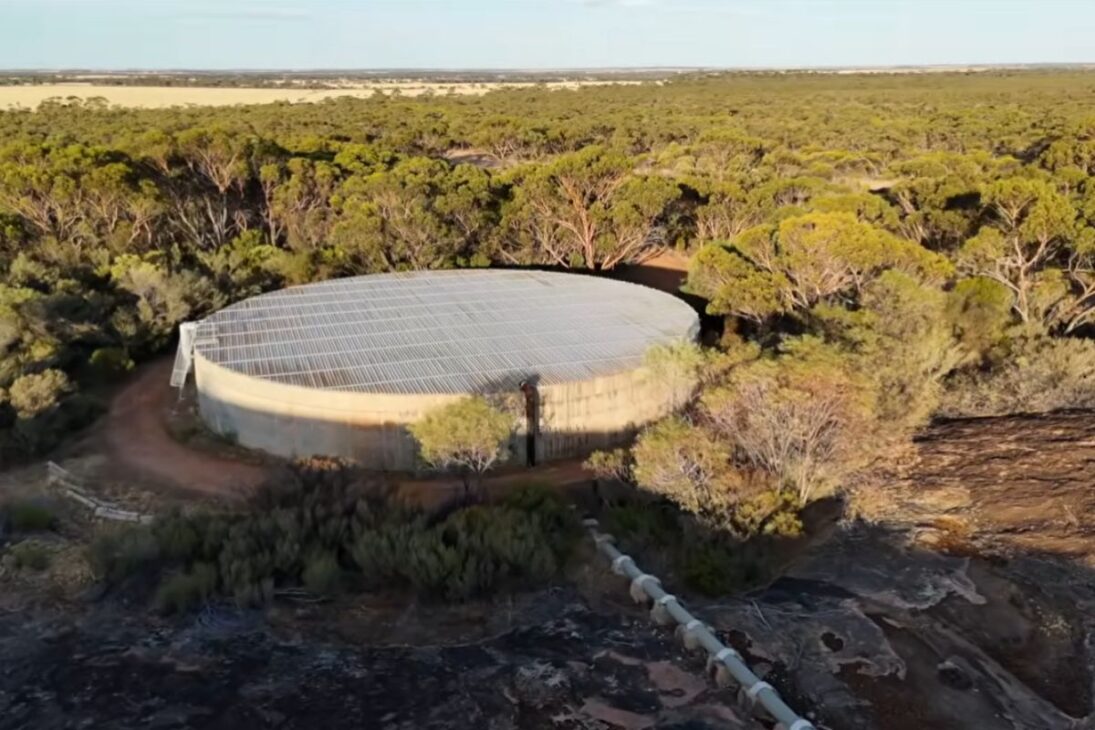
On the 10 thousand hectare farm, rainwater capture is the first line of defense. The roofs of the houses, sheds, and workshop were designed to collect every drop and send this water to the tanks, from where it goes for domestic use after passing through filters.
-
Italian researchers have detected what appears to be a second Sphinx buried under the sands of Egypt, and satellite scans reveal a gigantic underground megastructure hidden beneath the Giza Plateau for over 3,000 years.

-
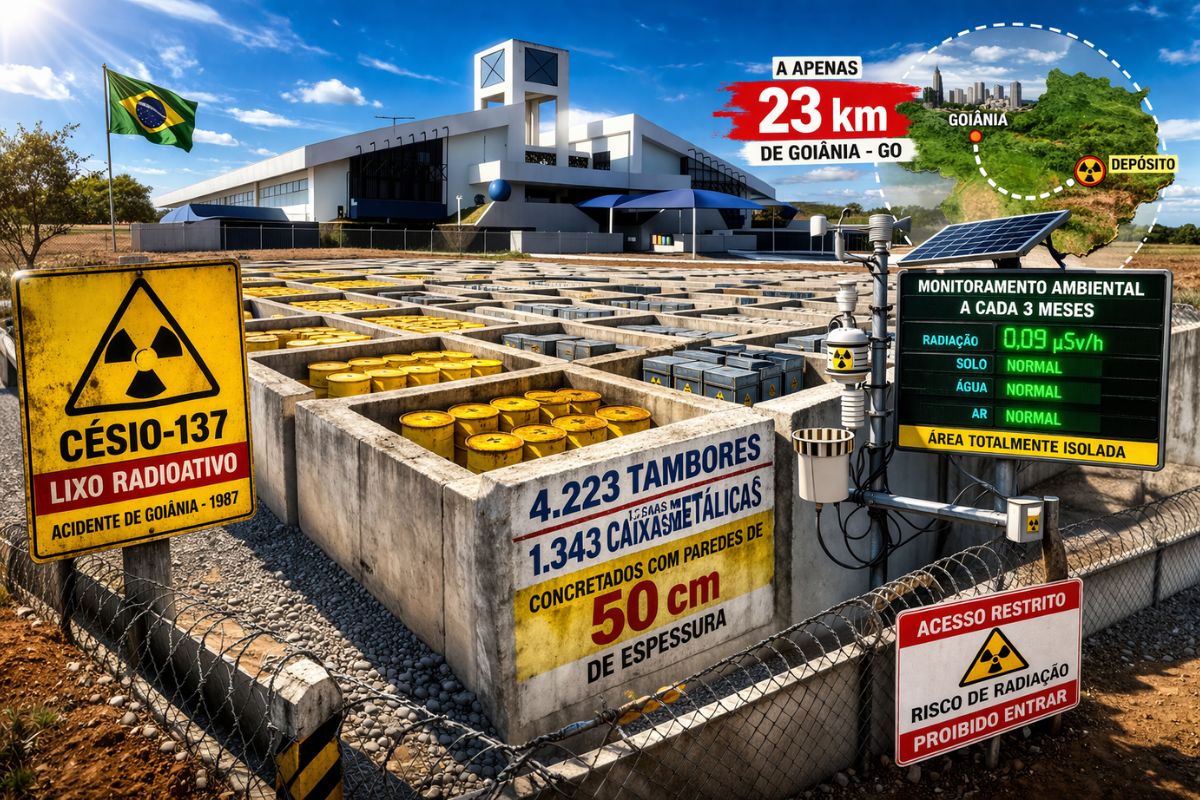
There are 4,223 drums and 1,343 metal boxes concreted with 50-centimeter walls that store the radioactive waste from Cesium-137 in the worst radiological accident in Brazil, just 23 kilometers from Goiânia, with environmental monitoring every three months.
-
Giant Roman treasure found at the bottom of Lake Neuchâtel in Switzerland reveals an advanced trade system, circulation of goods, and armed escort in the Roman Empire about two thousand years ago.

-
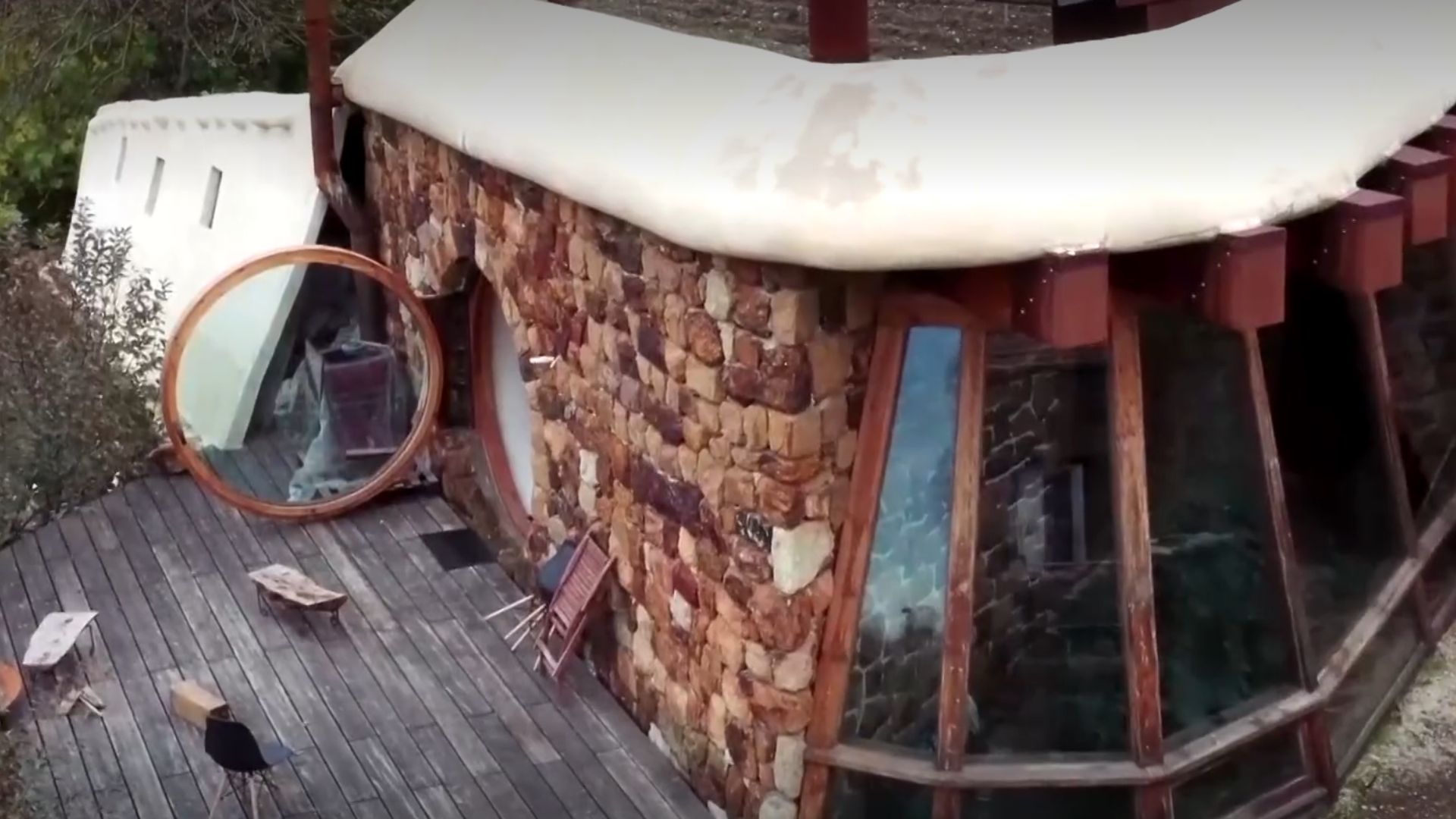
He buried 1,200 old tires in the walls to build his own self-sufficient house in the mountains with glass bottles, rainwater, and an integrated greenhouse.

It is a common system in rural areas of Australia, but there it operates at a permanent limit.
This limit shows up in the numbers. Long-term climate data for the region indicate an average annual precipitation of around 300 millimeters, and a survey between 2020 and 2025 points to an accumulated average of 324 millimeters per year.
This explains why relying solely on rain would be too risky: at the beginning of February, the area had received only 2 millimeters for the year, an insufficient volume to sustain the entire demand of the property.
Rainwater Keeps the House, but Does Not Solve Everything
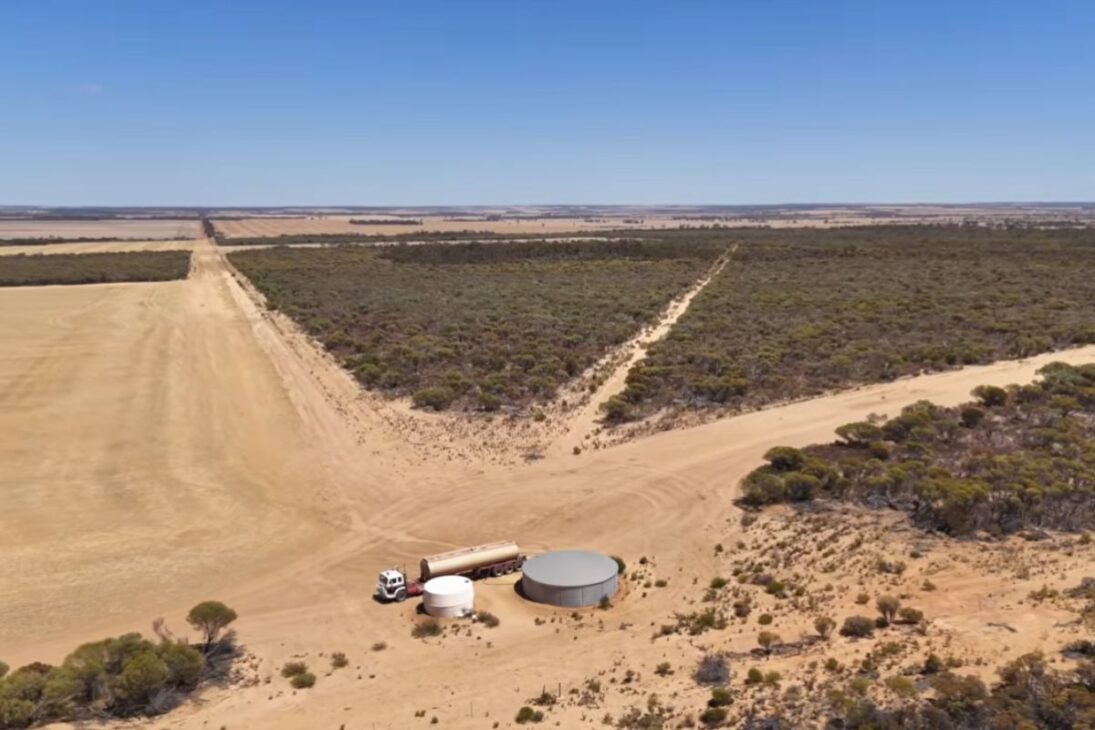
The rainwater collected from the roofs serves the houses and other needs of the farmyard, but it does not alone cover everything that the operation requires.
The property also needs to maintain sheep, dams, and supply points scattered throughout the land. When rain fails, the domestic system and agricultural activities begin to compete for a limited resource.
Therefore, the 10 thousand hectare farm treats water as a series of complementary sources. There is rainwater, there is water from the wells, and there are also community tanks used by local farmers based on withdrawal records and subsequent billing.
The logic is not one of abundance, but of redundancy, because losing one of these stages can compromise the entire functioning of the property.
Artesian Wells and Solar Energy Sustain the Hardest Part of the System


When rainwater capture is insufficient, artesian wells come into play. At the farm, they mainly supply livestock, spraying, and reservoir refilling when necessary.
The water can even be drunk, but it has a bit of salt, which makes the rainwater remain the preferred choice for human consumption. Still, the wells are a decisive part of the supply routine.
That’s where solar energy gains structural weight. One of the pumps shown on the property draws water from a well about 35 to 36 meters deep.
The solar panels power the pump installed down there, which sends the water through pipes to a large tank about a kilometer away.
Without solar energy, the cost and difficulty of pumping water in this dry environment would be much greater.
The Panel That Follows the Sun Reveals How Every Detail Matters
The solar energy system used on the property has a curious feature: the panel tilts its position throughout the day to follow the sun and increase light utilization.
The mechanism uses gas and temperature change to move the weight of the set, making the panel orient itself according to the heating of each side. It’s not a flashy piece, but it is functional.
This detail helps to show the logic of the 10 thousand hectare farm. Nothing there seems designed to impress; everything seems designed to last and function.
The pump may need maintenance, the electric motor may fail, and the unit may need to be pulled for repairs, but the system as a whole was designed to operate with minimal water waste and maximum utilization of the available solar energy.
The Water Truck Comes In When Distance Becomes a Problem
Even with rainwater capture and wells supplied by solar energy, water still needs to circulate within the property. That’s why the International Eagle truck continues to play a central role.
In the described episode, it is used to fill a dam that would temporarily serve as a water source for sheep moved to another paddock.
When the heat dries up the natural barriers, water needs to be brought to where the animals are.
The transported volume measures the operation. The truck’s tank holds 36 thousand liters, and with both pumps working, it takes about 18 minutes to fill.
This is the kind of number that shows how water, there, is not an invisible detail of rural life, but a physical, mechanical, and daily task that requires time, fuel, maintenance, and coordination.
The Dry Interior Turns Water Into Infrastructure
In urban Australia, like in almost any big city, water often hides behind the simplicity of a tap.
On the 10 thousand hectare farm, it appears as visible infrastructure. It’s in the gutters, in the cement tanks, in the filters, in the solar energy panel, in the pipe that crosses the paddock, in the pump that draws water from the underground, and in the truck that crosses the property to keep the system standing.
This also changes the perception of those who live on site.
Marissa shares that she used to treat water as something guaranteed, while now it needs to be planned, stored, and managed with great care.
In the dry interior, water is not background; it is the foundation that sustains the rest of the farm.
The 38 Millimeters of Rain Change Everything, but Do Not Solve Everything
After the main recording, an important update came. On February 10, the region received about 38 millimeters of rain, likely associated with Cyclone Mitchell.
The volume was received with gratitude because it offered a promising start to the 2026 season. In such a dry environment, such rain changes the mood, perspective, and immediate levels of the reservoirs.
But the very need for this registration shows the extent of vulnerability. A 38-millimeter rain is celebrated precisely because there is no guarantee of frequent repetition.
When every rain front becomes news inside the farm, it becomes clear that water management is not an administrative choice, but a condition of existence.
What This Routine Says About Producing in the Dry
The 10 thousand hectare farm reveals a type of agriculture that depends less on the idea of abundance and more on discipline around water.
Rain needs to be collected, the well needs to function, the solar energy needs to maintain pumping, and the truck needs to complete what geography does not deliver naturally.
Production continues only because each piece of this machinery is connected.
That’s why the routine seems less romantic and more technical. There is landscape, there is scale, and there is machinery, but what really defines the rhythm of the farm is water.
Without it, there are no sheep, no reservoir, no functional paddock, and no stability for the crops in the wheat belt of Western Australia.
In the end, the 10 thousand hectare farm shows that surviving in the dry interior of Australia depends on treating water and rain as strategic assets, not as automatic elements of rural life.
With wells, tanks, pumps, trucks, and solar energy, the property has built a system that tries to buy time in the face of a climate that offers little and demands much.
The question that remains is simple and uncomfortable: how many properties can maintain this level of organization when rain fails for months? Do you think this model of the 10 thousand hectare farm is an example of intelligent adaptation or a portrait of a field that is already working at the water limit?










Achei o máximo deveria servir de exemplo para o nordeste brasileiro.
Impressionante a organização e o nível de organização. A inteligência sobrepõe às dificuldades.