





 Portuguese
  English
  Spanish
  2 min of reading
  0 comments


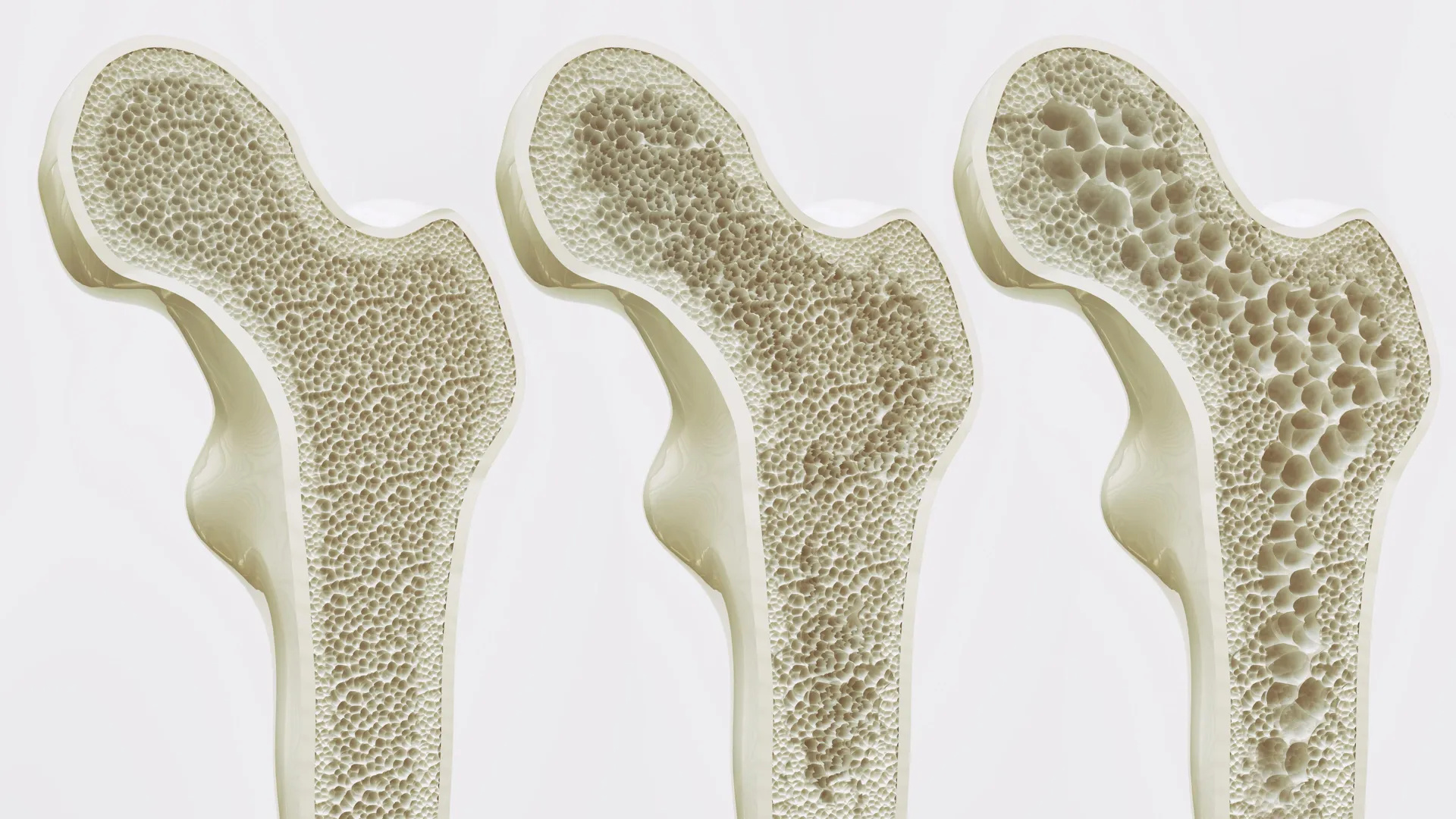
A new scientific approach can reprogram the behavior of bone marrow cells, ensuring that the body continues to produce healthy tissue even in advanced ages.
Researchers from the University of Queensland have identified a cellular mechanism capable of reversing age-related bone weakening. The discovery focuses on reactivating aged stem cells within the bone marrow, allowing them to resume producing healthy bone tissue.
The advancement promises to transform the treatment of degenerative conditions, offering the possibility of maintaining a strengthened skeletal structure throughout life.
The role of stem cells in regeneration
The study details how mesenchymal stem cells lose their natural functionality over the years. In young individuals, these cells are responsible for the constant maintenance of bone density through an efficient renewal cycle. However, the aging process alters the cellular environment, causing these units to produce fat instead of new bone.
-
Artemis II makes historic flyby of the Moon, sets record for distance from Earth, captures the far side, and witnesses a solar eclipse that no one on the planet could see.

-
NASA admits it may lose the space race: China has a crucial advantage to reach the Moon first and build a nuclear base before the United States.

-
Ford’s CEO calls China an existential threat while Stellantis, Mercedes, and Volkswagen rush to adopt Chinese technology in their own cars, and what is happening now could determine who survives in the future of the global automotive industry.

-
While NASA resumes its path to the Moon, Elon Musk pushes SpaceX for a new leap towards Mars, millions of satellites, and a trillion-dollar scale, and Brazil emerges along the way as a billion-dollar market, regulatory pressure, and a space trump card with Alcântara.

The research demonstrated that it is possible to reprogram this cellular behavior through specific molecular interventions. By restoring the correct signaling, scientists were able to make the cells regenerate mineralized tissue vigorously.
This process of bone regeneration is key to combating the fragility that affects a large part of the elderly population globally.
Effectiveness in reversing osteoporosis
The experiments conducted in laboratory models showed significant results in recovering lost mass. After the application of the new method, bones that showed advanced signs of wear regained density and mechanical strength. The bone regeneration technique acted directly on the root cause of degradation, rather than just slowing down mineral loss as current treatments do.
Histological analysis confirmed that the newly formed tissue has the same structural properties as young, healthy bone.
This effectiveness suggests that patients with severe cases of osteoporosis may have a real alternative to regain mobility and quality of life. The treatment focuses on long-term structural integrity, drastically reducing the risk of spontaneous or impact fractures.
Impact on public health and longevity
The discovery has the potential to reduce the astronomical costs associated with hip and femur surgeries and hospitalizations.
With the aging of the global population, the development of bone regeneration therapies becomes a priority for health systems. Maintaining a strong skeleton allows the elderly to remain active and independent for much longer than currently observed.
Scientists plan to advance now to clinical testing phases, aiming to refine the delivery of regenerative molecules.
The expectation is that the treatment can be applied preventively before degradation reaches critical levels.
If the results are confirmed in humans, medicine may finally offer a definitive solution for the preservation of skeletal health throughout the life course.
Click here to access the study.







Seja o primeiro a reagir!