





 Portuguese
  English
  Spanish
  4 min of reading
  0 comments


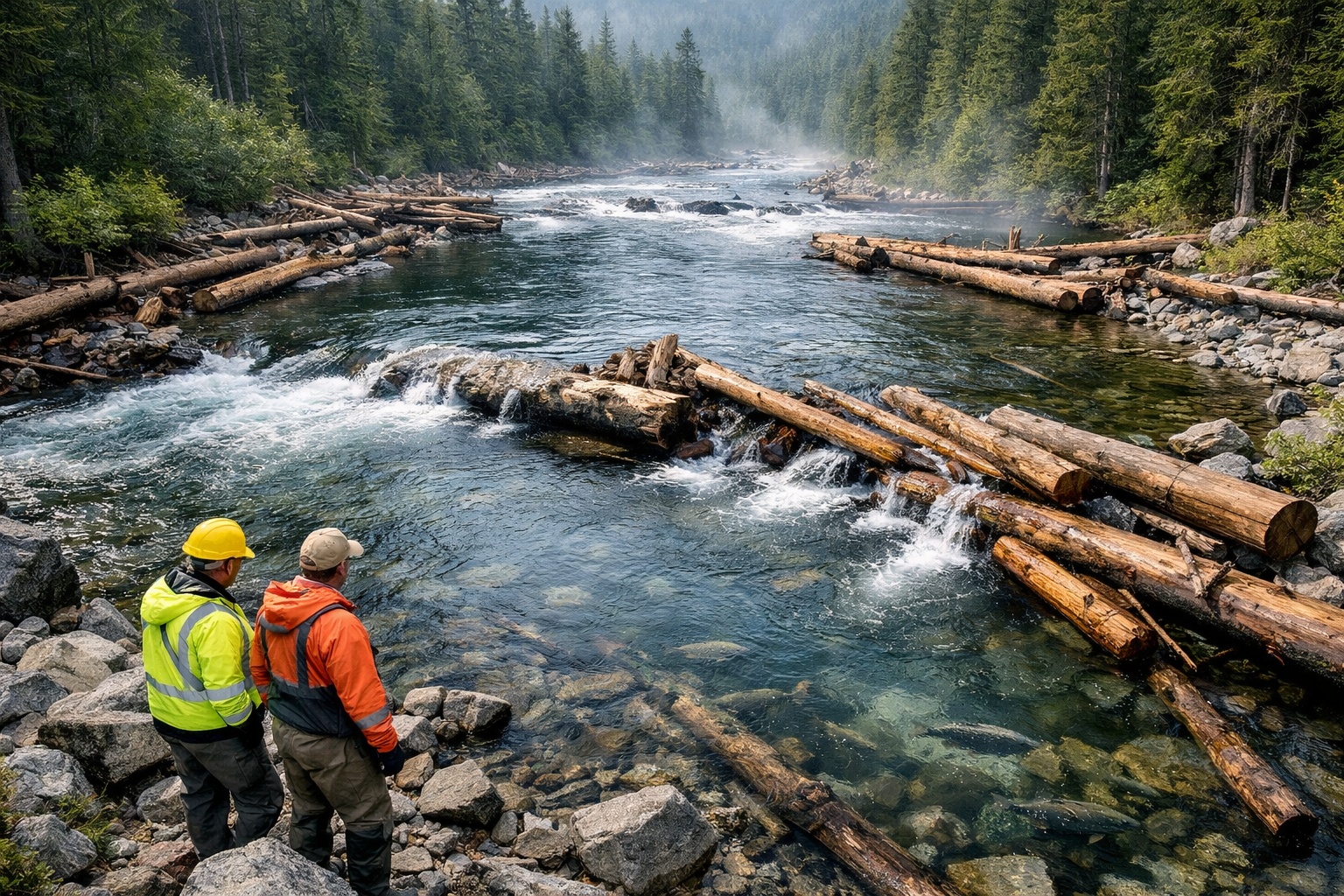
After A Century Of Logging Impact On Pacific River Systems, Canada Is Returning Large Logs And Wood To Rivers To Recreate Pools, Reduce Temperatures And Restore Historic Salmon Habitats.
For much of the 19th and 20th centuries, intense logging in the forested regions along the Pacific coast extending from Canada to the United States profoundly altered what was once a dynamic and complex river environment. Practices such as clear-cutting trees along waterways and the deliberate removal of logs and natural debris to facilitate navigation and drainage literally cleared the banks and beds of many rivers, eliminating elements that for millennia shaped the habitats of fish like salmon.
The absence of Large Woody Debris (LWD), large logs, branches, and natural woody material within the channels is directly responsible for many habitat problems affecting salmon populations: lack of deep pools, simplified channels, and higher temperatures that harm eggs and fry.
Science shows that when large logs are present, they divide flows, creating deeper pools and slow-moving areas that are essential for refuge and the reproduction of young salmon.
-
Motorola launched the Signature with a gold seal from DxOMark, tying with the iPhone 17 Pro in camera performance, Snapdragon 8 Gen 5 that surpassed 3 million in benchmarks, and a zoom that impresses even at night.

-
Satellites reveal beneath the Sahara a giant river buried for thousands of kilometers: study shows that the largest hot desert on the planet was once traversed by a river system comparable to the largest on Earth.

-
Scientists have captured something never seen in space: newly born stars are creating gigantic rings of light a thousand times larger than the distance between the Earth and the Sun, and this changes everything we knew about stellar birth.

-
Geologists find traces of a continent that disappeared 155 million years ago after separating from Australia and reveal that it did not sink, but broke into fragments scattered across Southeast Asia.

Restoration With Wood: Returning Ecological Function
In recent decades, with the growing recognition of the impacts caused by the lack of wood in waterways, environmental agencies, Indigenous communities, conservation organizations, and the Canadian government itself have begun to adopt an innovative approach: intentionally introducing LWD on a large scale to restore river complexity and fish habitat.
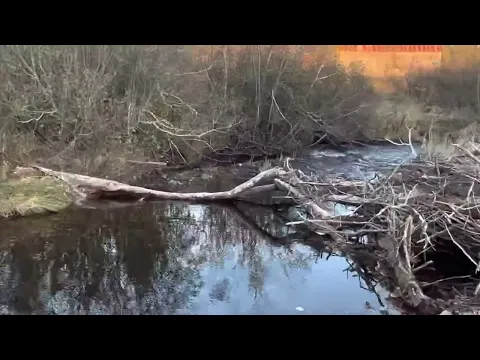

Restoration projects that involve the insertion of large logs and woody structures — often referred to as “instream wood placements” are designed to return the natural hydrological function to the channels. These logs create scour points that excavate pools, accumulate suitable gravel for spawning, provide thermal shelter, and connect the riverbed to the riparian zone.
In some cases, repositioning occurs over stretches of several kilometers, with wood strategically placed to stimulate natural processes of pool and gravel bar formation — habitat features that were common before logging management choked these systems.
Government And Partner Actions
The Fisheries and Oceans Canada (DFO) — the federal department responsible for fishing and conservation policies — has supported and funded habitat restoration projects for salmon that include the use of instream wood.
Through initiatives like the Pacific Salmon Strategic Initiative (PSSI), Canada has managed to restore over 18.5 million square meters of salmon habitat since 2021, working in partnership with Indigenous communities, conservation organizations, and local governments.
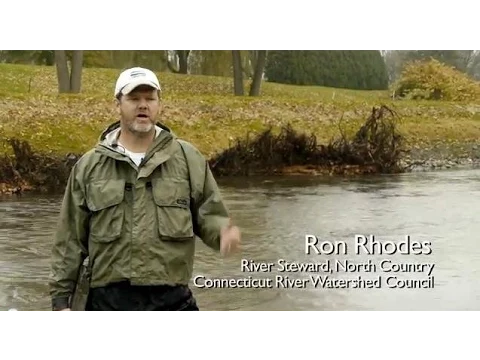
The DFO has also been promoting workshops and technical knowledge exchanges among specialists to strengthen the implementation of this river restoration technique, bringing together biologists, engineers, technicians, and community representatives to discuss impacts and best practices for inserting wood into rivers.
Furthermore, the Canadian government announced in 2025 its first national strategy to restore and rebuild Atlantic salmon populations, with investments that include direct habitat actions and involve Indigenous and regional groups in the restoration process.
How Wood Returns Life To The River
When large logs are introduced deliberately, they trigger a series of ecological responses that were common in natural rivers:
- Deep Pools: Logs divert the current, excavating areas where the water is slower and deeper — ideal for young trout and salmon to rest.
- Accumulated Gravel: Natural debris traps coarse sediments that become ideal spawning sites.
- Water Temperature: Deeper and shaded areas tend to be cooler, which favors the survival of eggs and juveniles.
- Shelter and Food: Logs provide shelter from predators and surfaces where aquatic insects can attach — the base of the fish food chain.
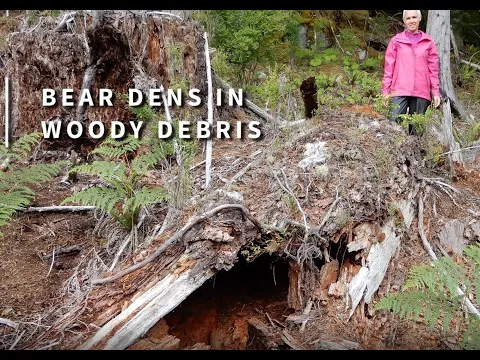
These combined effects are especially important for species like Pacific salmon (including coho, chum, and chinook), which depend on complex and thermally suitable habitats in their growth phase in fresh water before migrating to the ocean.
Social And Cultural Impact
Habitat restoration efforts in Canada also have a direct impact on communities that are historically culturally tied to salmon.
Indigenous peoples who rely on the fish for food, culture, and traditional economy are involved in these restoration programs, bringing local knowledge into scientific practice.
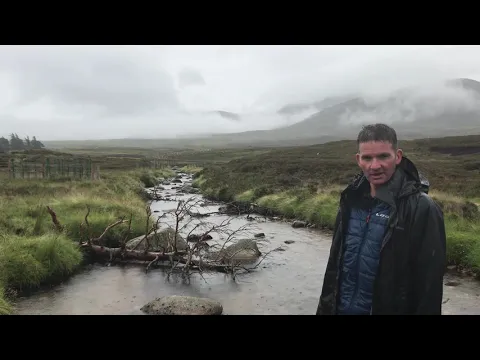
This combination of traditional knowledge and modern science not only strengthens the effectiveness of the projects but creates a more resilient and inclusive restoration model.
The Challenges And What Lies Ahead
While inserting wood into waterways is a proven technique for improving salmon habitat, it is not a standalone solution. Challenges include the logistics of obtaining quality wood of the appropriate size, implementation costs, and the need for long-term monitoring to assess the effects of restoration.
Organizations like the Department of Natural Resources in Washington State are developing complementary initiatives to ensure a sustainable supply of wood for river projects, which could serve as a model for cross-border cooperation between the U.S. and Canada in shared basins.

The repositioning of large wood in Canadian Pacific rivers is not just an ecological experiment; it is a conscious response to decades of anthropogenic changes that have dramatically reduced the capacity of natural habitats to support wild salmon.
By returning logs to the riverbed, Canada is rebuilding pools, lowering temperatures, increasing complexity, and restoring the natural cycles that sustain one of the region’s most iconic species.
This effort shows that, in ecology, sometimes the best way to restore the future is to first remember and reconstruct the natural past.








-

-

-

-

-

-

52 pessoas reagiram a isso.