





 Portuguese
  English
  Spanish
  3 min of reading
  0 comments


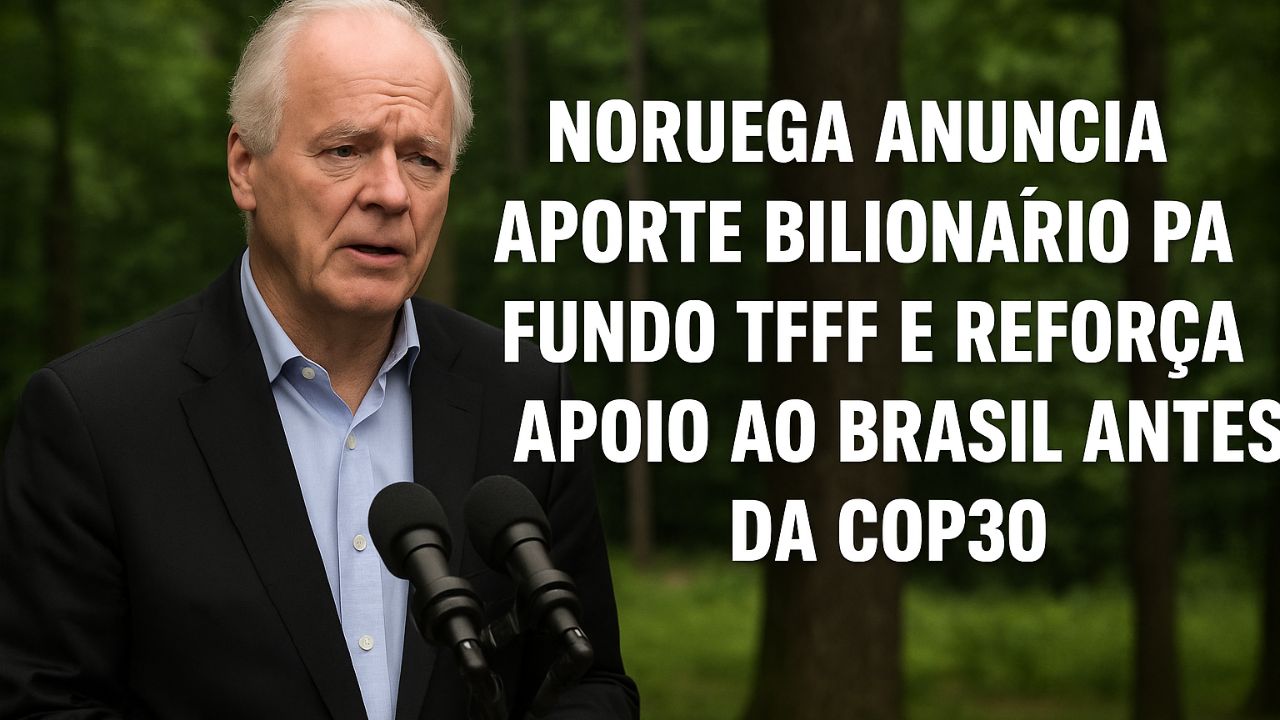
Norway Invests US$ 3 Billion in TFFF, Forest Fund Created by Brazil to Preserve Tropical Forests and Strengthen Its Presence at COP30.
Norway confirmed on Thursday (11/06/2025) the contribution of US$ 3 billion to the Tropical Forest Forever Facility (TFFF), a global fund created by the Brazilian government to finance the preservation of tropical forests.
The announcement was made in Belém (PA), during the Leaders’ Summit, a preparatory event for the COP30, which will take place in the same city in 2026.
The amount will be paid over ten years and represents one of the largest contributions ever announced by a country to the fund.
-
A new Brazilian shopping center worth R$ 400 million will be built in an area equivalent to more than 4 football fields, featuring 90 stores, 5 cinemas, a supermarket, a college, and parking for 1,700 cars, potentially generating 3,000 jobs.

-
Larger than entire cities in Brazil: BYD is building a 4.6 km² complex in Bahia with a capacity for 600,000 vehicles per year, but the discovery of 163 workers in conditions analogous to slavery has shaken the entire project.

-
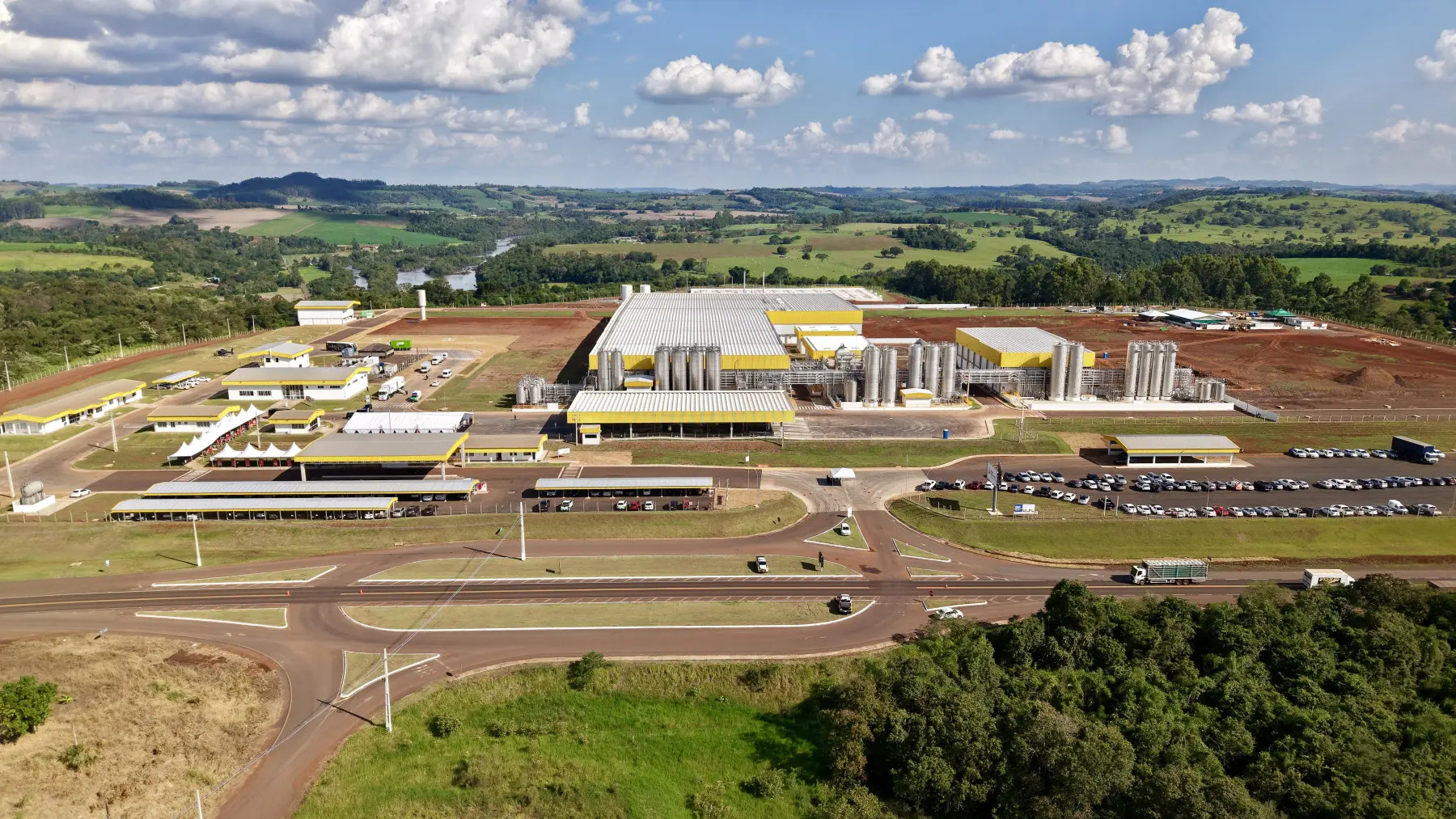
With an investment of R$ 612 million, a capacity to process 1.2 million liters of milk per day, Piracanjuba inaugurates a mega cheese factory that increases national production, reduces dependence on imports, and repositions Brazil on the global dairy map.
-
Brazilian city gains industrial hub for 85 companies that is equivalent to 55 football fields.


According to the Ministry of Finance, the TFFF now totals US$ 5 billion guaranteed, including contributions from Brazil (US$ 1 billion), Indonesia (US$ 1 billion), and the new Norwegian investment.
TFFF Fund Solidifies as Central Bet of the Lula Government
Designed by the Ministry of the Environment and structured by the Ministry of Finance, the TFFF is considered Brazil’s main instrument to demonstrate environmental leadership at COP30.
The initiative aims to financially reward countries that keep their tropical forests preserved, generating economic benefits from environmental conservation.
The proposal anticipates that sovereign governments will contribute up to US$ 25 billion, which would act as venture capital to attract US$ 100 billion additional from private funds and institutional investors.
In total, the fund could reach US$ 125 billion in financial investments, with an estimated annual yield of US$ 4 billion.
These resources would be distributed to countries that demonstrate consistent progress in the protection of forests.
Norwegian Support Reinforces Brazil’s Environmental Leadership
The investment from Norway in the TFFF strengthens a historic partnership between the two countries on climate and forest issues.
The European country is already the main financier of the Amazon Fund, created in 2008 to support projects to combat deforestation.
Now, with the billion-dollar contribution to the new fund, Oslo reaffirms its role as a global leader in environmental diplomacy.
For the Lula government, Norwegian support carries symbolic and political weight. The confirmation of the investment in Belém, home to the COP30, serves as a sign of confidence in Brazilian environmental policy and strengthens the country’s narrative as a leader in combating climate change.
Expectations for COP30 and Ambitious Goal of US$ 25 Billion
The Brazilian government aims to raise US$ 25 billion in sovereign commitments for the TFFF, although the Ministry of Finance considers US$ 10 billion a satisfactory result during the preparatory events for the COP30.
Participation in the fund is seen as a thermometer of diplomatic success for the government. The greater the number of engaged countries and institutions, the higher Brazil’s capacity to influence the international climate agenda and to establish itself as a reference in sustainability.
Criticism and Resistance to the Proposed Model
Despite the positive reaction to the announcement, the TFFF faces criticism from sectors of civil society. A group of more than one hundred organizations launched a manifesto in Belém entitled “No to TFFF, Yes to the Right of Forests”.
The entities question the performance-based remuneration model and fear that it will reduce the role of local communities in managing the preserved areas.
Nonetheless, the Brazilian government maintains the narrative that the TFFF represents a new era of valuing forests and a concrete alternative to turn environmental conservation into a source of income and sustainable development.
Brazil, Norway, and the Future of Environmental Cooperation
With the Norwegian contribution, Brazil reinforces its position as a hub for global negotiations on climate and biodiversity.
The expectation is that the TFFF will serve as a model for new mechanisms of climate financing, especially targeted at tropical countries with high vegetation cover.
Thus, the rapprochement between Norway and Brazil before the COP30 signals not only a financial commitment but also a political one.
Both countries seek to demonstrate that preserving forests can be both a sustainable business and a global climate survival strategy.









-

Uma pessoa reagiu a isso.