





 Portuguese
  English
  Spanish
  5 min of reading
  0 comments


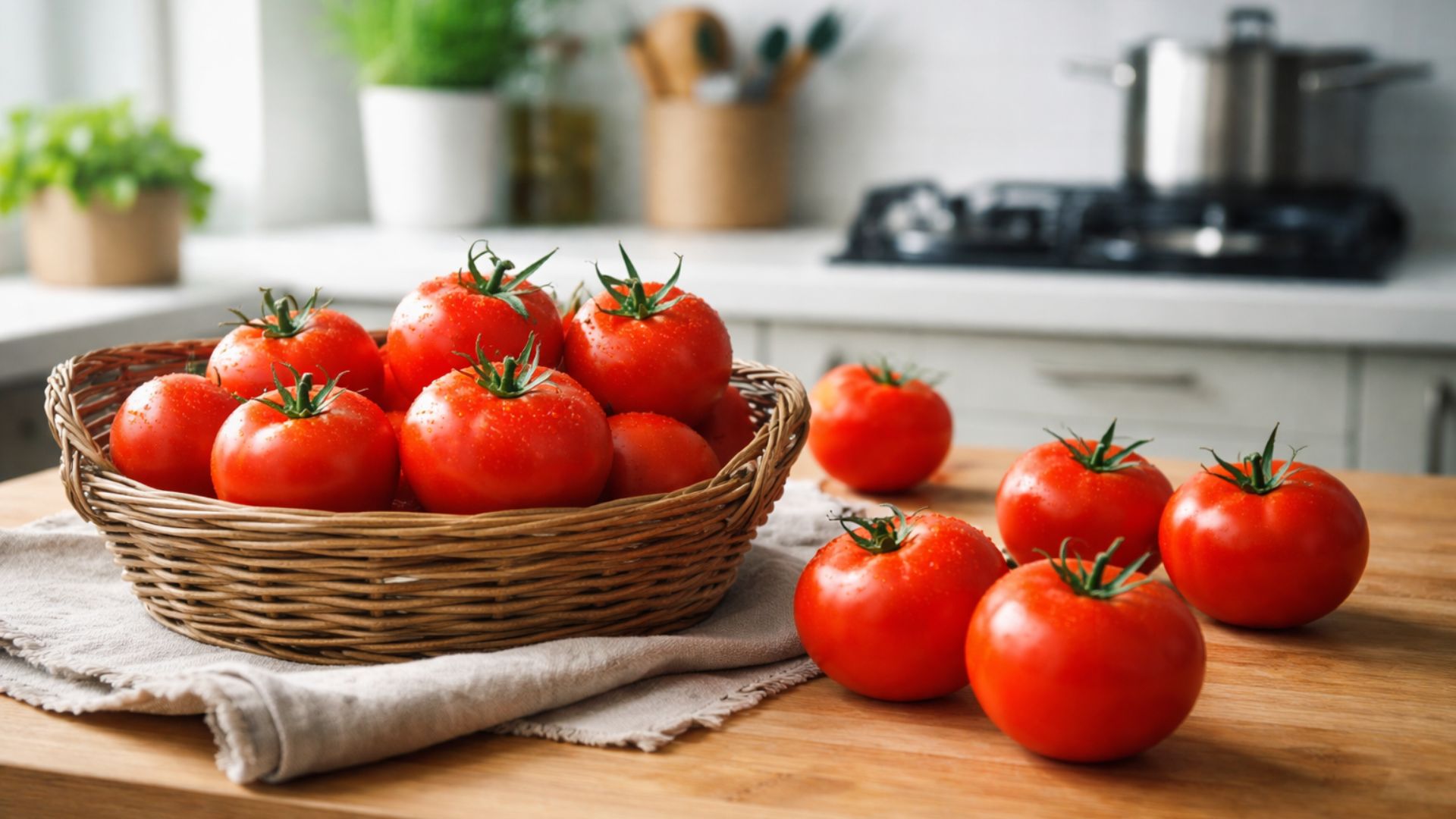
Excessive heat and excessive cold can compromise the flavor, texture, and durability of tomatoes in daily life, which makes the storage location more important than it seems in the kitchen routine and in the way food arrives at the table.
Storing tomatoes in the refrigerator is generally not the best choice for those who want to preserve flavor and texture.
In everyday use, guidelines from universities and food safety agencies recommend keeping the whole fruit at room temperature, in a cool, ventilated place, protected from direct light and intense heat sources.
Refrigeration becomes an alternative when the tomato exceeds the ideal consumption point and will not be used quickly, while cut fruit requires constant cold for food safety reasons.
-
In South Sudan, the Sudd swamp, the size of England, causes the White Nile to lose more than half of its volume due to evaporation, forms floating islands of up to 30 km that move and block entire rivers, and for almost 2,000 years has prevented even armies and explorers from crossing this living labyrinth that changes shape every year.

-
Alone in the forest for 11 days, an indigenous teenager from Acre recounts how he changed his path, got lost in the dense jungle, and survived on wild fruits, water, and calm until he found a way out and was rescued.

-
Psychology has discovered that adults who describe themselves as “non-creative” almost always trace this belief back to a single moment in childhood when someone evaluated what they did instead of asking what it meant, and the wound was so small that they confused it with a personality trait.

-
Archaeologists found a 440-year-old silver coin buried under the ruins of a church in the Strait of Magellan, and it revealed the exact location of a Spanish colony where 300 people were abandoned and died of hunger in the place that the English renamed Puerto del Hambre.

Where to store whole tomatoes in daily life
When considering the final quality of the food, the main factor involves preserving flavor and texture during storage.
In this context, materials from the University of California, Davis, indicate that tomatoes kept on the counter tend to retain their sensory characteristics better compared to those subjected to early refrigeration.
Additionally, the Illinois Extension highlights that temperatures below 54°F already initiate a gradual loss of aroma and texture, which explains why home cold impacts the final result negatively.
Thus, although the refrigerator slows down ripening, this process is usually accompanied by noticeable changes in taste and consistency of the fruit.
Why stoves and ovens accelerate quality loss

Although the external environment is more suitable, not every kitchen space offers adequate conditions to preserve tomatoes.
Areas near the stove, oven, or very hot windows create a constant heat scenario that accelerates ripening and reduces the ideal consumption time of the food.
According to North Dakota State University, storage should occur in cool places away from these sources, avoiding continuous exposure to heat that favors premature deterioration.
Similarly, the Illinois Extension emphasizes that temperatures above 80°F contribute to faster degradation, reinforcing that the problem is not only excessive cold but also unintentional heating.
Ventilation and cool countertops help in preservation
Within the domestic routine, the choice of location makes a significant difference in the durability of whole tomatoes.
Ventilated, dry, and unobstructed environments provide more balanced conditions to keep the fruit for a few days without immediate loss of quality.
According to UC Davis, containers that allow air circulation are more suitable, as they prevent moisture buildup and unpleasant odors.
On the other hand, completely sealed packaging, such as unperforated plastic bags, tends to accelerate deterioration by limiting natural ventilation.
In this scenario, using open fruit bowls, trays, or ventilated containers proves to be more efficient in preserving the characteristics of the food.
Tomato ripening changes storage methods
Another determining factor is the ripening stage at the time of storage.
Firm or partially ripe tomatoes continue to evolve better outside the refrigerator, where they can develop color, aroma, and flavor more completely.
According to the University of Nebraska, using a paper bag can accelerate this ripening process, creating a favorable environment without interrupting the natural evolution of the fruit.
On the other hand, when exposed to cold too soon, these tomatoes have their sensory development impaired, even if they appear to last longer externally.
When the refrigerator becomes useful
In certain situations, however, the refrigerator can play a strategic role in preservation.
When the tomato is already very ripe and there is a risk of waste, refrigeration helps slow down the deterioration process and extends the consumption time.

The USDA’s FoodKeeper indicates this possibility with the caveat that flavor may be affected, while Ohio State University points out changes in texture, such as a softer and slightly mealy appearance.
In this case, the use of cold shifts from being aimed at ideal quality to functioning as a practical measure to avoid immediate losses.
Preserving for longer is not preserving better
This difference between durability and quality often generates confusion in daily kitchen life.
Although the refrigerator prolongs shelf life, tomatoes stored at room temperature tend to offer better sensory results when consumed at the right point.
Those that exceed the ideal stage can be refrigerated to gain time, even if this implies a loss of aroma and texture.
For this reason, it is recommended to take tomatoes out of the refrigerator before consumption, allowing them to return to room temperature and recover some of their original characteristics.
Cut tomatoes require refrigeration for safety
The storage logic changes completely when the fruit has already been cut.
In this condition, the priority shifts from just quality to involving control of microbiological risks associated with food exposure.
The FDA advises keeping cut tomatoes refrigerated at 41°F or less, avoiding long periods at room temperature.
Additionally, the 2022 Food Code includes this type of food among those requiring strict time and temperature control.
In practice, this means storing remaining portions in closed and refrigerated containers, especially in warm environments.
UC Davis Health reinforces that storage should occur within two hours after cutting, reducing contamination risks.
Proper washing also affects storage
Another relevant care involves how the tomato is cleaned before consumption.
The FDA recommends washing the fruit only under running potable water, without using soap or detergent, as these substances can be absorbed by the surface.
Additionally, the guidance includes avoiding soaking tomatoes or storing them in standing water, a practice that does not contribute to preservation.
Complementarily, Ohio State University suggests that washing should be done only at the time of use, avoiding unnecessary moisture during storage.
The difference between whole and cut tomatoes explains the most common mistakes
In everyday life, the main recommendation involves clearly differentiating the state of the tomato before deciding where to store it.
Whole and firm tomatoes should remain outside the refrigerator, in a cool and ventilated environment, better preserving their natural characteristics.
When they are very ripe, they can be temporarily refrigerated to avoid waste, even with possible sensory losses.
Finally, cut tomatoes require mandatory refrigeration and proper storage, ensuring safety in consumption and reducing risks associated with inadequate preservation.







Seja o primeiro a reagir!