





 Portuguese
  English
  Spanish
  5 min of reading
  0 comments


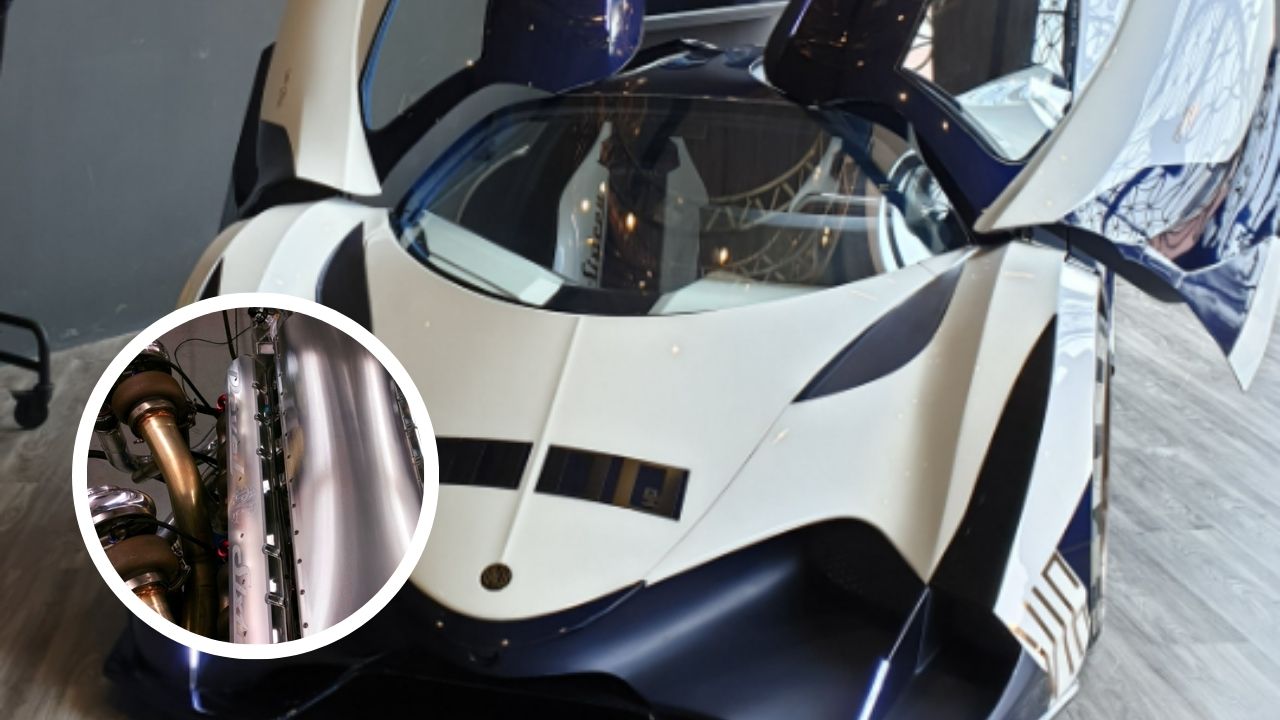
Analysis by Interesting Engineering Reveals That the New Era of Power is Hybrid or 100% Electric, with the Rimac Nevera R Surpassing 2,100 Horsepower and Redefining the Global Automotive Landscape in 2025.
A silent but overwhelming change has consolidated a new paradigm in the automotive universe. In 2025, the list of the most powerful engines in the world is no longer an exclusive domain of traditional combustion engines. On the contrary, seven of the top ten slots are occupied by electric or hybrid propulsion systems, signaling a technological transition that seemed like science fiction a decade ago. This survey, detailed by the renowned publication Interesting Engineering, shows that the quest for maximum power has found an unprecedented path in electrification.
The current landscape is a battlefield where cutting-edge engineering manifests in different forms. On one side, giants like the Croatian Rimac and the Japanese Aspark demonstrate the raw and instant power of electrons. On the other, legendary brands like Bugatti and Koenigsegg prove that the combination of pistons and batteries can create mechanical works of art. And amid this transformation, pure combustion engineering, represented by names like Hennessey, still roars loudly, showing that the V8 has not surrendered.
Electrification at the Top: The Power That Redefines Limits
The leadership of electric vehicles on the list of the most powerful engines in the world is no coincidence, but the result of an architecture that allows for unimaginable feats for combustion engines. The main advantage lies in the use of multiple motors, usually one for each wheel, allowing for instantaneous and precise torque distribution, known as torque vectoring. This technology ensures not only brutal acceleration but also an extremely high level of control and drivability.
-
Friends have been building a small “town” for 30 years to grow old together, with compact houses, a common area, nature surrounding it, and a collective life project designed for friendship, coexistence, and simplicity.

-
This small town in Germany created its own currency 24 years ago, today it circulates millions per year, is accepted in over 300 stores, and the German government allowed all of this to happen under one condition.

-
Curitiba is shrinking and is expected to lose 97,000 residents by 2050, while inland cities in Paraná such as Sarandi, Araucária, and Toledo are experiencing accelerated growth that is changing the entire state’s map.

-
Tourists were poisoned on Everest in a million-dollar fraud scheme involving helicopters that diverted over $19 million and shocked international authorities.


The Rimac Nevera R, with its impressive 2,107 horsepower, is the greatest exponent of this philosophy. Born from the vision of founder Mate Rimac, who began converting a BMW in his garage in Croatia, the Nevera utilizes four independent electric motors to achieve performance that redefines the concept of hypercar. Following the same logic, the Aspark Owl from Japan, with 1,984 hp, and the British Lotus Evija, with 1,972 hp, also utilize four-motor systems. Both highlight how lightweight construction, with carbon fiber monocoques, combined with high electric power density, creates a phenomenal power-to-weight ratio.
Hybrids: The Strategic Alliance Between Pistons and Electrons
If electric vehicles represent the future, hybrids are the perfect bridge between the present and tomorrow. This category combines the soul and sound of a combustion engine with the immediate torque and efficiency of electric motors. The result is some of the most complex and fascinating propulsion systems ever created. The Koenigsegg Gemera HV8, with a combined power of 2,300 horsepower, is a masterful example of this fusion. It unites a V8 engine with a revolutionary electric motor nicknamed Dark Matter, which alone generates 800 horsepower.
The Bugatti, in turn, retired its iconic W16 engine to make way for the Bugatti Tourbillon V16 Hybrid with 1,800 horsepower. Developed in partnership with Cosworth, its 8.3-liter naturally aspirated V16 reaches 9,200 RPM, a remarkable feat for a large-displacement engine. Three electric motors complement the system, ensuring immediate response and efficiency. As noted in the analysis by Interesting Engineering, this transition is not just about increasing power, but refining delivery and ensuring brand relevance for the coming decades.
The Resistance of Pure Combustion: Engineering at the Limit
Despite the electric wave, internal combustion engineering continues to produce extraordinary results. These engines are the ultimate expression of traditional mechanics, optimized to extract every drop of power from fossil fuel. The most ambitious of all is the Devel Sixteen V16, a project from the United Arab Emirates that promises 5,007 horsepower from a quad-turbo 12.3-liter V16 engine. However, the project remains controversial, as its validation for mass production has not been completed, generating skepticism in the market.
With its feet more firmly on the ground, the American Hennessey presents the Fury V8 Twin-Turbo, which delivers 1,817 horsepower of pure combustion force. This 6.6-liter V8 engine is a tribute to American high-performance engineering, focused on maximizing air and fuel intake to push the V8 architecture to its absolute limit. In an increasingly electrified world, the Fury V8 is an aggressive declaration that the passion for pistons remains alive and extremely powerful.
The Technological Surprise: The Democratization of Hyperpower?
Perhaps the most intriguing entry on the list of the most powerful engines in the world comes from where least expected: the Chinese tech giant Xiaomi. With its HyperEngine, which achieves 1,526 horsepower, the company demonstrates that high-performance electric propulsion can be scalable and, crucially, more accessible. Operating with an efficiency of over 98% and speeds above 27,000 RPM, Xiaomi’s system achieves a power density of 10.14 kW/kg.
The difference, as highlighted by Interesting Engineering, is the potential for democratization. By offering hypercar-level performance at a fraction of the traditional cost, the HyperEngine signals that cutting-edge technology in electric vehicles could soon cease to be a privilege for the few. This represents a direct threat to the business model of established European brands and opens a new chapter in the global automotive industry.
More Than Horsepower, a New Philosophy
The list of the most powerful engines in the world in 2025 is more than just a ranking of numbers; it is a clear depiction of the greatest technological revolution in automotive history. The predominance of electric and hybrid systems confirms that the quest for performance has found a new and vast territory to explore. Raw power, while still impressive, is no longer the sole determining factor. The future belongs to systems that can balance strength with intelligence, efficiency, and precise control.
The battle between electrons and pistons is far from over, but one thing is certain: engineering has never been more exciting. Speed and innovation continue to accelerate, shaping the cars we will drive, or dream of driving, tomorrow.
Do you agree with this shift to electric and hybrid engines at the top of performance? Do you think that the loss of the roar of combustion engines impacts the passion for cars? Leave your opinion in the comments, we want to hear from those who live this in practice.









Seja o primeiro a reagir!