





 Portuguese
  English
  Spanish
  3 min of reading
  4 comments


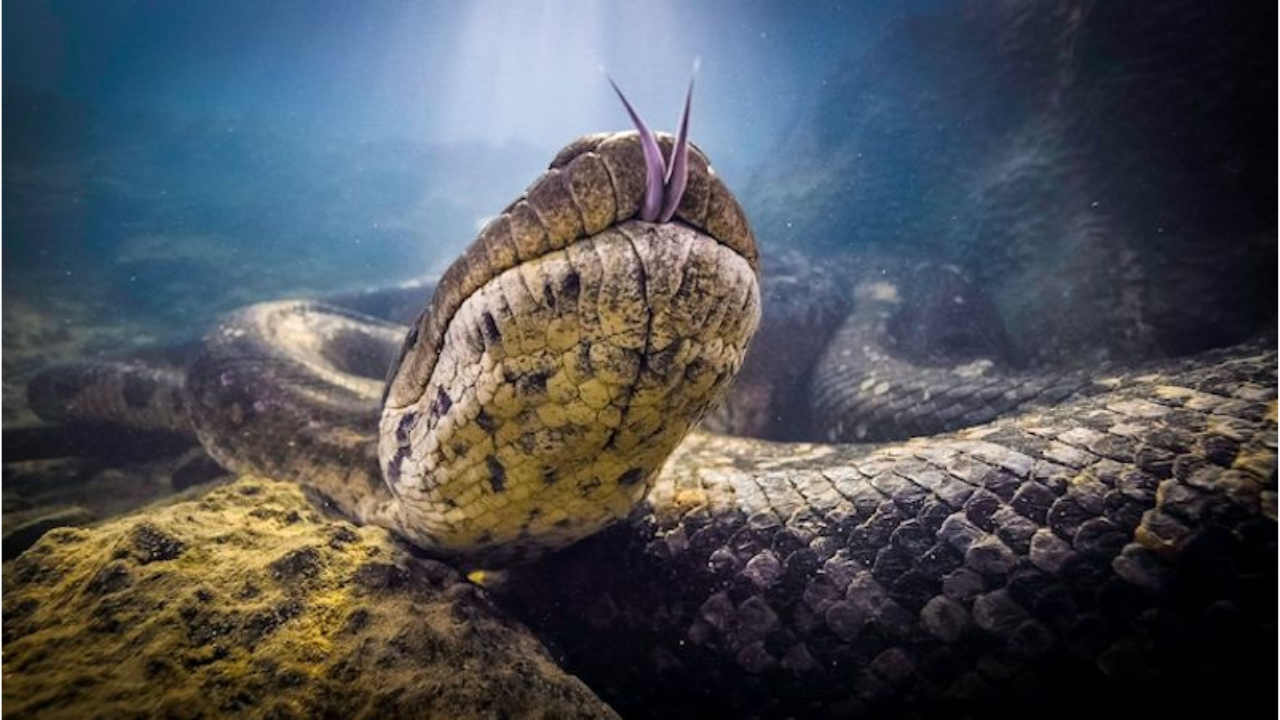


Discovery Points to the Eunectes akiyama, a Different Type of Green Anaconda with Ancient Genetic Separation and Direct Impact on Environmental Monitoring in the Region
The Amazon has gained a new protagonist: researchers have identified a new species of green anaconda in the forest of Ecuador, considered the largest snake in the world.
The revelation draws attention not only because of its impressive size but also for what it indicates about the evolutionary history of these animals and the environmental state of areas affected by oil spills.
Released images show the dimensions of these reptiles, including one record in which Dutch biologist Freek Vonk swims alongside a gigantic specimen.
-
While the world looks at oil, the war with Iran is already disrupting helium supply from Qatar, affecting car and iPhone chips, threatening AI expansion, and putting pressure on aluminum packaging at the highest value in four years.

-
Global warming will expose a treasure hidden under the ice of Antarctica and may spark an international dispute over gold and valuable minerals.

-
A street vendor from Praia Grande built a robot made of scrap from scooters and washing machines that pulls his popcorn cart on the beach, emits sounds, and interacts with customers, becoming an attraction on the coast of São Paulo.

-
The specifications of the Xiaomi 18 Pro Max have been leaked, and the highlight is a dual 200 MP camera with a new 22-nanometer technology that promises to consume less energy and capture details in shadows and bright areas using LOFIC HDR.


What Happened and Why It Caught Attention
The discovery occurred in the forest of Ecuador, where a giant green anaconda was identified that belongs to a different species than the one recognized as the only green hoary in the wild.
For a long time, the green anaconda was treated as a single species in the wild, Eunectes murinus. Now, the so-called northern green anaconda emerges, classified as Eunectes akiyama.
What is most surprising is that the two are practically identical in appearance, even having a very ancient genetic separation.
Size and Images That Show the Scale of the Animal

The released records exhibit an anaconda measuring 20 feet in length, which is equivalent to 6.1 meters. This dimension reinforces the idea of one of the largest known reptiles.
One of the cited examples involves an individual weighing 200 kilograms, about 441 pounds, reinforcing the extreme size observed in the natural environment.
The series of images helped to increase public interest, but the central point lies in the identified genetic difference.
Genetic Difference and a Separation of 10 Million Years
The analysis indicated that the new species separated from its closest relatives 10 million years ago, while still maintaining a practically identical visual aspect.
Despite the similarity, a genetic difference of 5.5% was detected, considered high for animals that appear so alike.
The contrast becomes even more evident when remembering that humans and chimpanzees have about 2% genetic difference, a data point used as a comparison to gauge the finding.
Why Anacondas Became Indicators of Oil Pollution
Anacondas have been used as indicator species to assess the damage associated with oil spills affecting the Yasuni region in Ecuador.
The presence and condition of these animals help to understand local ecological health and possible risks that may reach people.
In analyzed areas, there were records of strongly contaminated anacondas, suggesting direct contact with pollutants associated with the spills.

Impact on Health and Alert Involving the Fish Arapaima
Besides the snakes, it was observed that the fish arapaima can accumulate large amounts of metals linked to petrochemical compounds.
This type of accumulation raises concerns as it can reach the food chain and increase risks for more sensitive groups.
The highlighted guidance involves pregnant women, compared to precautions already known in other parts of the world to avoid exposure to substances like methylmercury.
The identification of Eunectes akiyama changes the way green anacondas are perceived in the Amazon and reinforces that there are still significant discoveries in environments that have already been extensively studied.
At the same time, the use of these animals as environmental indicators focuses on the concrete impacts of pollution, with effects that can affect both fauna and human health.








Impressiobados ficarão vcs,quando o monstro Leviatan sair das profundezas do pacífico e aparecer como é dito na Bíblia em Apocalipse!!!Vigiam meu povo
Cara,eu fico imaginando quando vocês colocam cobrasse de 6 metros como maior do mundo, eu ja vi duas vezes maior aqui no Pará
Iiiiiiiiiiiih kskskkkak
Moscow kkkkkk lá ele kkkk