





 Portuguese
  English
  Spanish
  7 min of reading
  1 comment


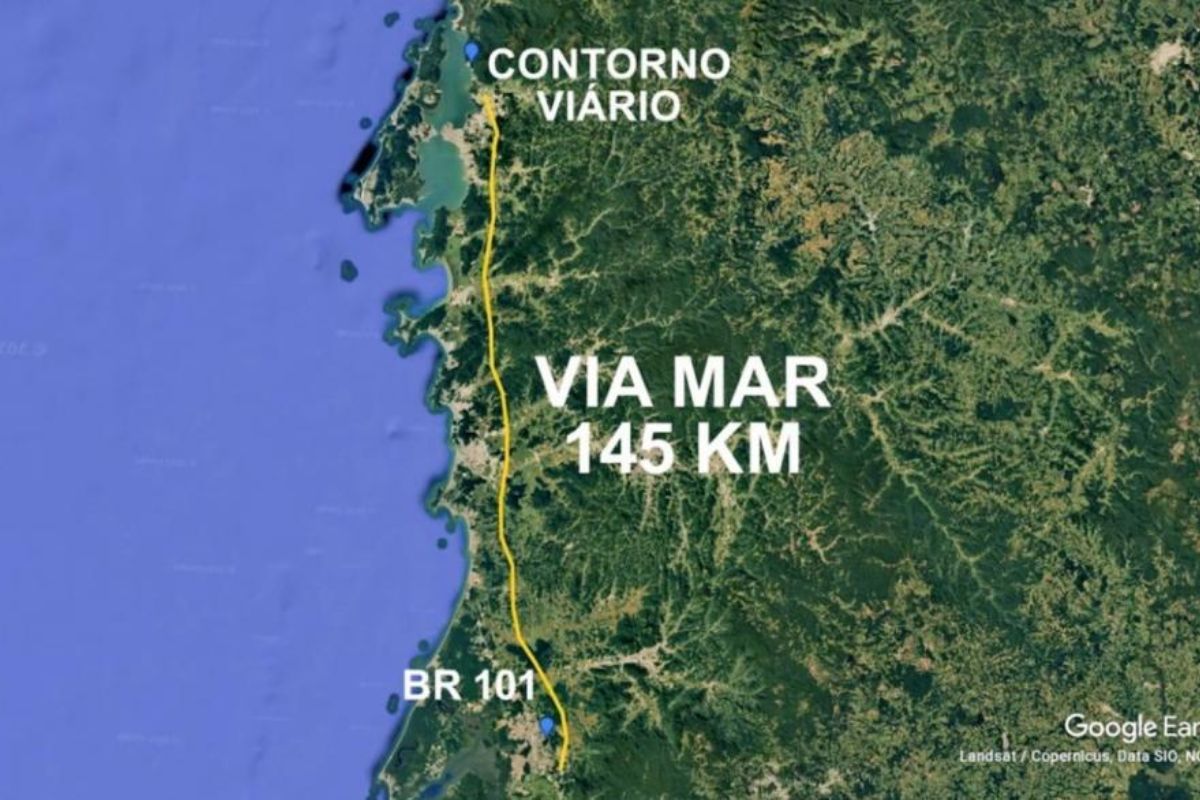


The new Brazilian road called Via Mar was planned in Santa Catarina to function as a parallel route to BR-101, connecting Joinville to the Coastal Ring Road of Greater Florianópolis, operating with sections of up to 120 km/h and reducing travel times, which currently reach three hours, to about 60 minutes in the state.
The new Brazilian road designed for the North Coast of Santa Catarina has entered the center of the discussion about regional mobility because it promises to tackle one of the state’s most sensitive points: the nearly permanent dependence on BR-101 in a corridor marked by congestion, tourist seasonality, and heavy freight traffic. The project is named Via Mar and was conceived to create a parallel route capable of shortening journeys that can currently take up to three hours.
The proposal connects Joinville to the Coastal Ring Road of Greater Florianópolis through a new corridor of 145 kilometers, with a projected speed of up to 120 km/h in certain sections. This is not just about opening another highway, but about repositioning circulation between industrial hubs, coastal municipalities, and areas already pressured by increasing traffic in the north and coastal region of Santa Catarina.
Why Santa Catarina Decided to Open an Alternative to BR-101
The main justification for the new Brazilian road lies in the operational exhaustion of BR-101 in strategic sections of Santa Catarina.
-
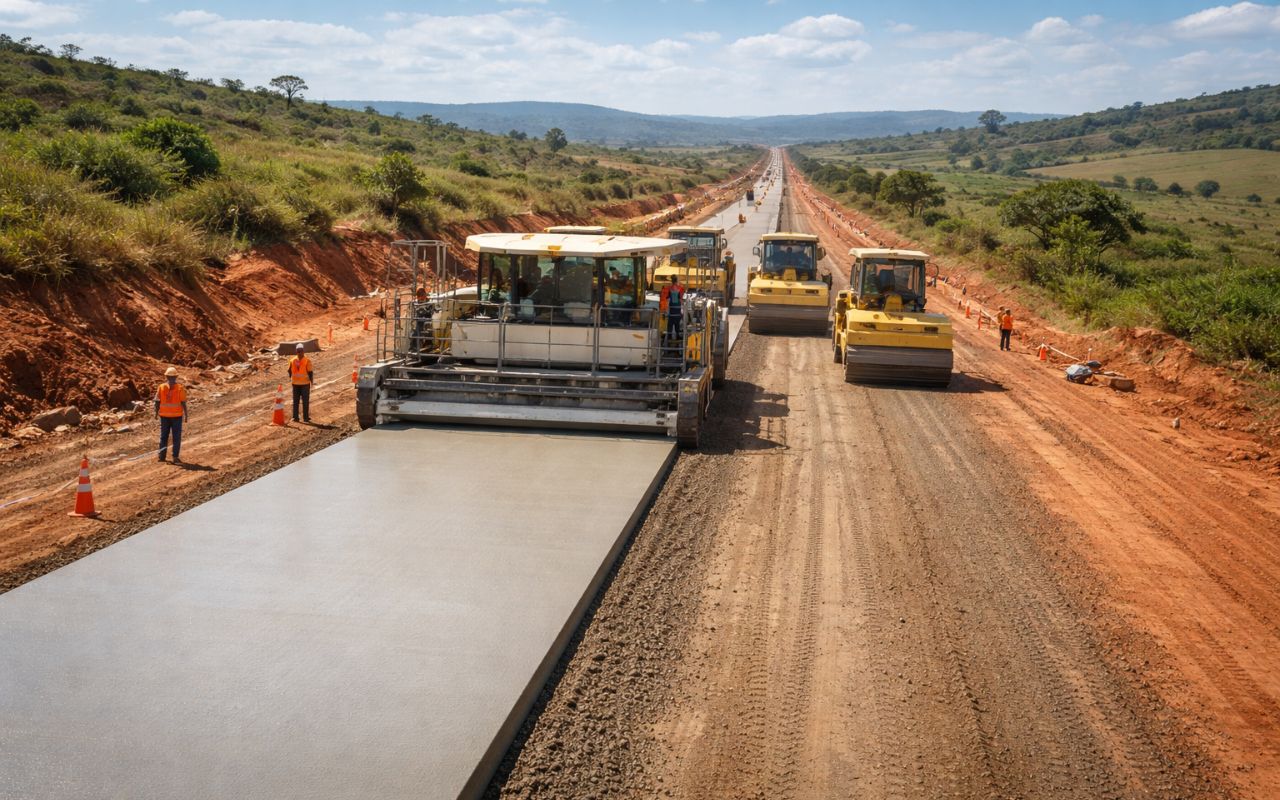
New CCR concrete paving technology promises roads up to 3x more durable, less maintenance, and cost reduction in Brazil.
-
Made from recycled plastic, plastic wood is gaining space in the construction industry because it does not rot, resists moisture, and reduces maintenance costs over the years.

-
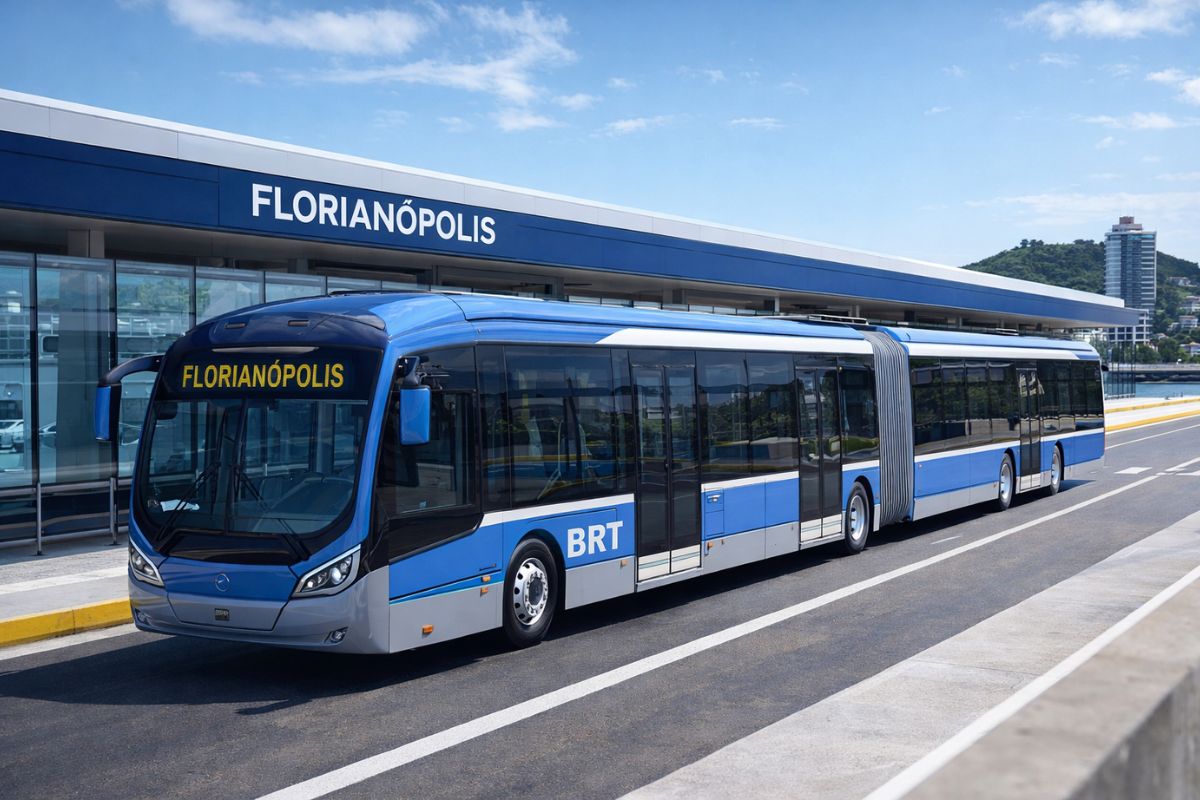
Florianópolis will receive a million-dollar BRT that will begin construction in 2026 with nearly 400 million in funding from the federal government and the Inter-American Development Bank, and the map already shows the routes for the exclusive bus corridors.
-
Without a blueprint, without an engineer, and using scrap from the dump, a father spends 15 years building an 18-room castle for his daughter, featuring tram tracks, 13 fireplaces, and over 700 m², which may now be demolished.

The federal highway concentrates intense traffic of passenger vehicles, trucks, buses, and travel related to tourism, especially during peak season periods.
When this volume accumulates, the corridor ceases to function as an axis of fluidity and begins to operate under frequent delays, affecting travel time, logistical costs, and predictability.
It is in this context that the Via Mar emerges as a structural intervention. The goal is to create a road alternative capable of redistributing part of the traffic currently concentrated on BR-101, reducing bottlenecks in one of the busiest sections in the South of the country.
The logic of the project is not to replace the existing highway, but to alleviate its overload and create a second circulation axis in a territorial area that can no longer rely on a single backbone.
The weight of this decision increases when one considers the economic role of the region. The state government views the project as strategic for both the flow of industrial production and tourism.
This helps to explain why the connection between Joinville and the Coastal Ring Road of Greater Florianópolis has been prioritized: it connects productive areas, port access, and metropolitan travel in the same solution.
What Will Be the Route of Via Mar Between Joinville and Greater Florianópolis
The new Brazilian road will be 145 kilometers long and is organized to connect Joinville in northern Santa Catarina to the Coastal Ring Road of Greater Florianópolis.
Throughout this route, the Via Mar has been divided into five sections, allowing for the fractionation of executive projects and, later, the implementation process.
Four of these sections have already had service orders signed, indicating that the technical modeling has begun to move out of the generic plan.
The most advanced section in Joinville shows 54% completion of the engineering project, with expected completion in October. This section will be 27 kilometers long and will connect BRs 101 and 280 through the western region of the municipality.
In addition, the route will connect access to the Industrial District of Joinville to Guaramirim, following a route parallel to BR-101 and SC-108, the Rice Road.
This design reveals how the Via Mar was conceived for much more than long-distance travel.
It aims to reorganize the regional connection network, touching on industrial areas, access corridors, and municipalities that currently rely on BR-101 for nearly everything.
Instead of being an isolated road on the map, the new connection was designed as a piece of articulation between productive infrastructure and daily circulation.
In the section between Itajaí and the capital’s ring road, the project includes the construction of a double tunnel of 1.2 kilometers in Itapema, the only one along the entire highway.
This indicates that the new Brazilian road will require specific engineering solutions to overcome local obstacles without breaking the continuity of the corridor.
In works of this magnitude, the tunnel is not a peripheral detail: it usually encompasses cost, timeline, and technical complexity.
How Much the Project Is Expected to Cost and How the Government Plans to Make the Highway Viable
The total estimated investment for the Via Mar ranges between R$ 7.5 billion and R$ 9.2 billion. The breadth of this range already indicates that the project is still in the phase of technical and financial maturation, which is compatible with the current stage of the executive projects.
Even so, the expected volume places the new Brazilian road among the most significant budgetary ventures discussed today in Santa Catarina.
The chosen model is a public-private partnership. In this arrangement, the state government takes on the cost of technical studies and projects, while the execution of the works and operation of the highway will be granted to the private sector.
The plan includes the establishment of toll plazas, a central point for the equation to work and for the concession to attract interested parties. Without a clear remuneration equation, a project of this size is unlikely to progress.
The first bidding notice is expected to be launched in March, and the section considered most advanced to get started is the one connecting the regions of Luiz Alves and Navegantes to Itajaí.
This suggests that implementation may occur in a staggered manner, as sections gain technical maturity and legal certainty. Practically speaking, the highway is likely to be built in phases, rather than being delivered all at once and simultaneously over the entire 145 kilometers.
What Changes in Practice for Logistics, Tourism, and Regional Displacements
If the new Brazilian road is implemented as planned, the main change will be the reduction in travel time on sections currently choked by the overload of BR-101.
The promise to cut journeys of up to three hours to about 60 minutes is the data that attracts attention the most, but the deeper effect may lie in predictability.
For logistics and mobility, it is not enough to travel faster; it is crucial to be able to predict travel time with less uncertainty.
This gain directly interests the productive sector of Joinville and the coast, where the connection between industry, distribution, and road circulation carries central weight. When a region relies on a saturated route, the cost does not just manifest as congestion.
It also arises in cargo delays, increased freight, operational wear, and lower efficiency in integrating economic hubs. The Via Mar aims to address exactly this type of blockage.
In tourism, the reasoning is similar. The North Coast of Santa Catarina concentrates high traffic during seasons and holidays, when BR-101 typically operates at its limits.
By creating a parallel route, the project seeks to reduce the pressure on the main corridor and, at the same time, increase access capacity to areas that currently suffer from repeated hold-ups. This does not automatically eliminate bottlenecks, but it changes the scale of the available response.
There is also an important territorial effect. By connecting Joinville to the Coastal Ring Road of Greater Florianópolis, the new Brazilian road brings together two decisive areas of circulation in Santa Catarina and creates a new spine of integration within the state.
When a highway begins to link productive areas, coastal municipalities, and metropolitan axes in the same design, it ceases to be merely a road work and starts to influence the pattern of regional development.
Between the Promise of Speed and the Challenge of Execution
The political strength of the Via Mar lies in the combination of scale, regional impact, and immediate appeal to those facing queues on BR-101.
However, the real progress of the project will depend on concrete factors: completion of executive projects, launch of bidding notices, structuring of the PPP, definition of the timeline, and the capacity to transform studies into construction.
In infrastructure, the promise of reduced time only gains value when the route begins to take shape.
Even so, the elements already presented explain why the highway has entered the debate strongly in Santa Catarina. There are 145 kilometers, five sections, projected speed of up to 120 km/h, the connection between Joinville and Greater Florianópolis, a double tunnel in Itapema, and billion-dollar investment.
It is too large a package to be treated as a mere traffic adjustment. The proposal aims to reorganize an entire stretch of the northern coastal region of Santa Catarina.









Como sempre no governo Lula. O presidente anterior só ia pra SC pra andar de jet ski