





 Portuguese
  English
  Spanish
  4 min of reading
  0 comments


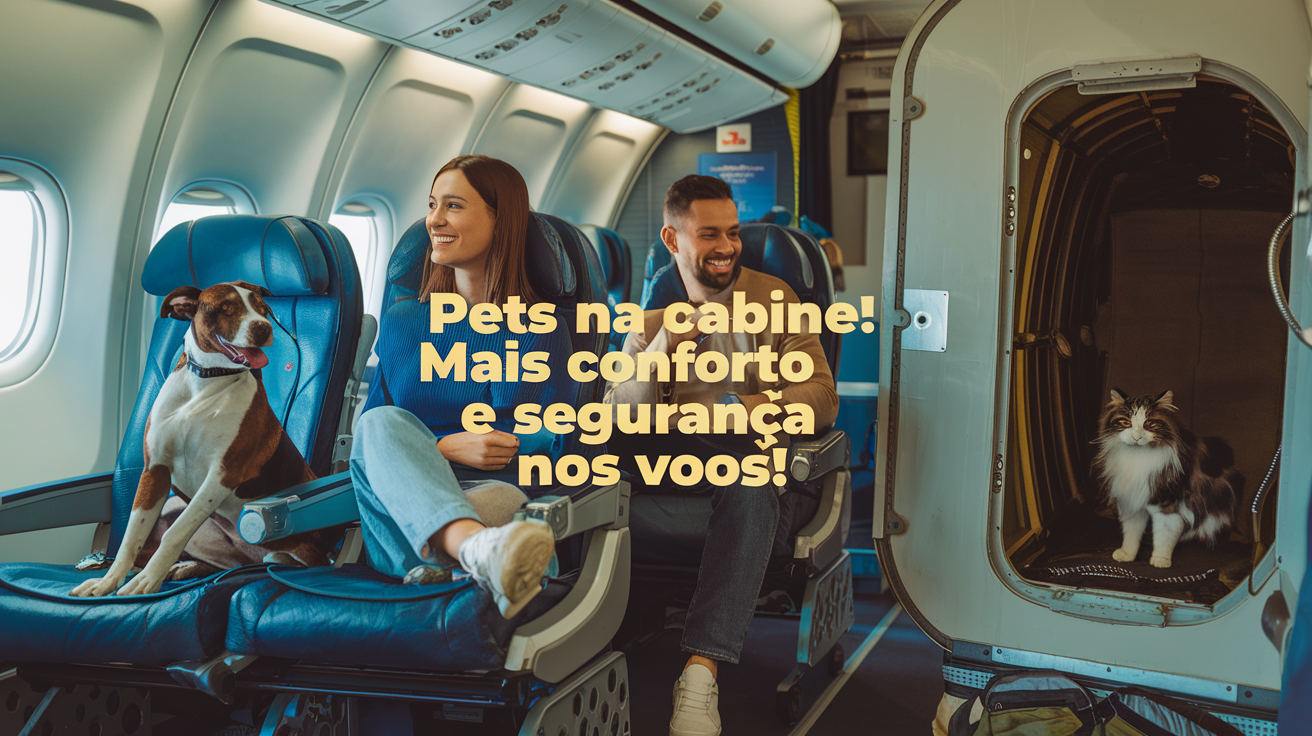
A revolutionary law promises to transform air transport for pets in Brazil! Named Pandora Law, it allows dogs and cats up to 15kg to fly in the cabin with their owners and severely punishes companies that violate the rules. Learn how this novelty impacts travelers and the airline sector in the state of São Paulo.
The transport of animals on airplanes, often marked by stories of suffering and neglect, is about to undergo a revolution in São Paulo.
A new legislation, nicknamed Pandora Law, promises to transform the experience of owners and pets, ensuring more safety and comfort during travels.
But what does this law change in practice and why is it being considered a milestone in the defense of animal rights?
-
Spain surprises the world by erecting 62 artificial dunes, mixing sand with natural remains of posidonia, and causing the structure to lose only 1.4% of its volume in 1 year.

-
With 16 Bulava missiles, improvements in acoustic stealth, and a design focused on silent patrols, Russia’s nuclear submarine was born to ensure Moscow’s invisible retaliation and has become one of the pillars of its maritime strength.

-
‘Populous’ city in Rio among the worst in Brazil in national ranking and exposes silent development crisis.

-
Couple buys house in the South Zone of São Paulo, opens a hidden door in the garage, and finds a secret wine cellar with dozens of old wines forgotten since the 1970s.


With the approval in the Legislative Assembly of the State of São Paulo (Alesp), Pandora Law is now headed for the governor’s sanction Tarcísio de Freitas (Republicans).
Inspired by cases of negligence that shocked the country, such as the disappearance of the dog Pandora and the death of the golden retriever Joca, the law establishes clear rules for the transport of small domestic animals on aircraft.
What Changes with Pandora Law
Approved based on Bill 587/2023, presented by Caio França (PSB) and Rafael Siqueira (União Brasil), the legislation establishes that small animals — defined as those weighing up to 15kg — may travel alongside their owners in the cabin.
Each passenger may transport up to two animals, with a limit of ten pets per flight. For boarding, the following must be presented:
- Health certificate issued by a veterinarian no more than 15 days ago;
- Updated vaccination card;
- Animal Transportation Guide (GTA), issued by MAPA or affiliated agency.
Additionally, the transport crates must meet safety and habitability standards established by airlines and international regulations.
Another relevant point is that companies may charge up to 50% of the proportional value of the owner’s ticket to accommodate the pet in the cabin.
Protection Measures for Cargo Transport
For cases where transport occurs in the cargo compartment, the law requires significant improvements.
Animals must be kept in spaces separate from luggage, with sound-reducing coverings, adequate lighting, and access to climate-controlled rooms during the waiting period before boarding.
Waiting time will be limited to one hour before takeoff and 30 minutes in the climate-controlled room before boarding.
These measures aim to prevent tragedies like the one that occurred in April this year with the golden retriever Joca, who died after being mistakenly boarded on a Gol Linhas Aéreas flight.
Severe Penalties for Airlines
Pandora Law also provides for severe penalties for airlines that neglect the rules.
If a domestic animal dies or escapes during transport on flights departing, arriving, or connecting in the state of São Paulo, the company may be fined 35,000 UFESP (approximately R$ 1.23 million).
In cases of recurrence within 30 days, the fine amount will be doubled and the collected resources will be allocated to animal protection and advocacy initiatives.
The Tribute to Pandora and Joca
The name of the law was not chosen by chance.
Pandora, a dog that was missing for 40 days in 2022 after escaping from a transport crate at Guarulhos airport, became a symbol of neglect in the air transport of animals.
Another notable case was that of the golden retriever Joca, who was supposed to travel to Sinop, Mato Grosso, but was mistakenly boarded on a flight to Fortaleza, Ceará.
His death sparked protests and reinforced the urgency for changes in the legislation.
Pandora Law, by honoring these cases, seeks to ensure that stories like these do not repeat.
Federal Regulation and National Impact
Although Pandora Law is a state initiative, it aligns with recent changes promoted by the federal government.
In October, the Animal Air Transport Plan (PATA) established national standards for the traceability and monitoring of pets on flights, increasing safety in transport.
Experts point out that the São Paulo regulation may serve as an example for other states, encouraging the adoption of similar measures nationwide.
A Milestone for Animal Rights
With stricter rules and severe penalties, Pandora Law represents a significant advance in the defense of animal welfare.
It not only ensures more safety for pets but also promotes a cultural shift in air transport, placing animal rights at the center of discussions.
Do you think these new rules are sufficient to prevent tragedies like the ones that inspired Pandora Law? Share your opinion in the comments!







Seja o primeiro a reagir!