





 Portuguese
  English
  Spanish
  7 min of reading
  31 comments


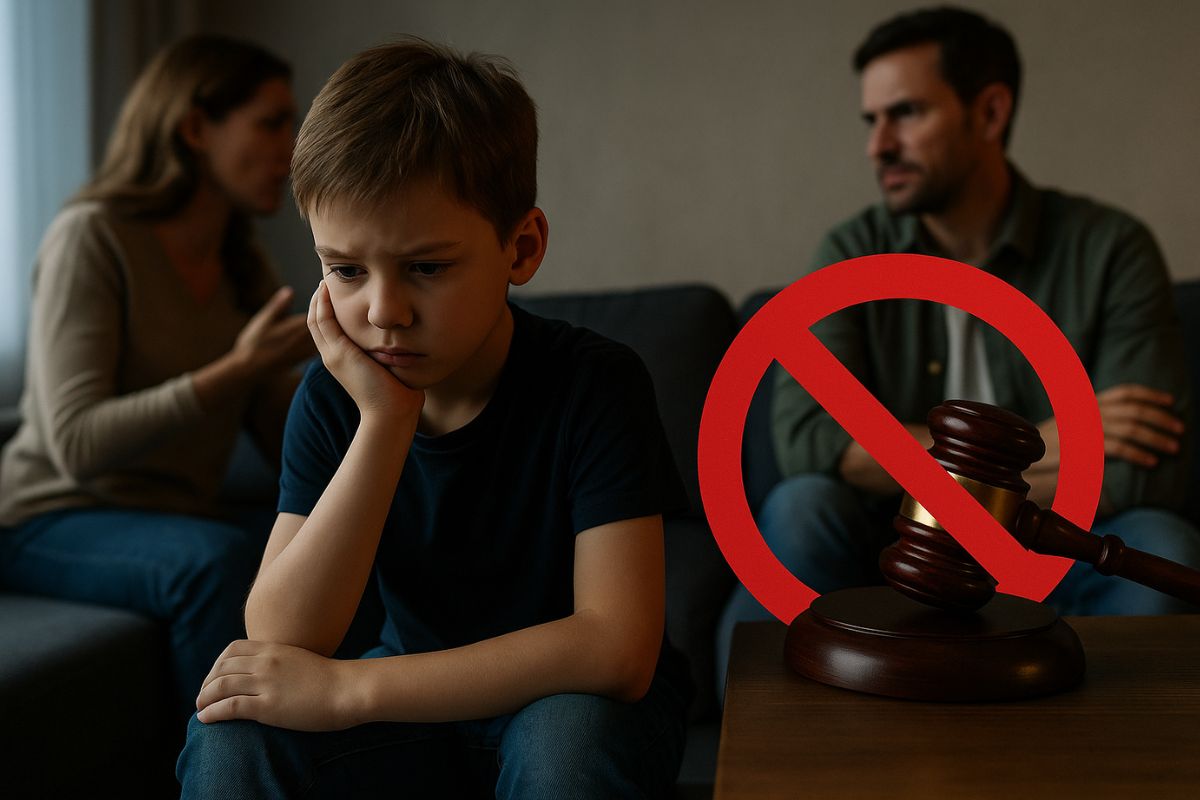


With The New Law 15.240/25, Emotional Abandonment Becomes Civil Illegality, Strengthens The Principle Of Affection, Consolidates Decisions Of The STJ And State Courts, Allows Compensation For Children Deeply Harmed, And Reduces Contradictions In Cases Of Absent Parents Who Pay Alimony But Completely Ignore Emotional Care And Daily Living.
In 2025, the sanction of the new law 15.240/25 put on paper a debate that had been growing in Brazilian courts for years, by recognizing emotional abandonment as a civil illegality subject to liability for moral damages. From this milestone, a father or mother who neglects emotional care and companionship, even acknowledging paternity, can be liable in the asset sphere when the child’s psychological suffering is proven.
The topic gained even more visibility after the public statements of Narcisa Tamborindeguy, who stated that her ex-partner, TV director Boninho, was an absent father, criticizing the lack of emotional and financial support throughout their child’s upbringing. Although this is a personal account, the case illustrates how the discussion about emotional abandonment has moved from the private sphere to the legal and social radar, at a time when the new law begins to guide judges’ analysis.
What The New Law Says About Emotional Abandonment
The new law on emotional abandonment makes it clear in the Brazilian legal order that parenthood is not limited to material support.
-
The new Civil Code could revolutionize marriages in Brazil with “express divorce” and changes that could exclude spouses from inheritance.

-
Banco do Brasil sues famous influencer for million-dollar debt and intensifies debate on delinquency, risks of seizure, and direct impact on Gkay’s credibility.

-
The Senate approves a bill that criminalizes misogyny, hatred, or aversion towards women, and includes the crime in the Racism Law with a penalty of up to 5 years.

-
Chamber Approves Bill That Allows Pepper Spray for Women Over 16 and Imposes Strict Rules for Purchase, Possession, and Use as Self-Defense


It established the duty of emotional support, stating that parents and legal guardians must provide guidance, support, presence, and emotional solidarity in exercising parenthood.
In practice, this includes monitoring school life, guiding educational, cultural, and professional choices, being present during times of suffering, addressing emotional needs, and ensuring, whenever possible, physical presence when the child or adolescent requests it.
Repeated neglect in these dimensions, when proven, can configure emotional abandonment as civil illegality.
According to attorney Maria Eduarda Omena, a specialist in Family Law and Successions, the new law aims to eliminate doubts that still persisted in jurisprudence.
By making it clear that emotional care is part of the legal duties of parenthood, the text shifts the subject from the abstract field of love to the concrete realm of civil responsibility, reinforcing that what is at stake is not the feeling, but the conduct of care.
The attorney also highlights that the law connects with article 4, paragraph 2 of the ECA, making it clear that, although the family, society, and state share the duty of protection, the responsibility for emotional support falls solely on the legal guardians of the child or adolescent.
It is these guardians who can be legally pursued in cases of negligence.
Jurisprudence That Paved The Way For The New Law
Long before the new law took effect, judicial decisions had already recognized emotional abandonment as a cause for compensation.
Since at least 2012, first-instance courts have started to hold civilly liable parents who, aware of their paternity, repeatedly distanced themselves from their children’s companionship and care, limiting the relationship to the obligation of alimony.
In one case, the judge emphasized that it is not about “putting a price on love”, but punishing the violation of a legal duty of care, especially when long-lasting psychological harm is proven.
In these cases, compensations were set between approximately 22 thousand and 100 thousand reais, varying according to the extent of abandonment and the impact on the victim’s life.
This understanding has been gaining traction in state courts. Courts such as TJ/MG, TJ/GO, and TJ/SP have started to uphold convictions for emotional abandonment even in situations where there was some degree of fulfillment of the material duty, such as paying alimony.
In these decisions, it became clear that fulfilling the alimony obligation does not exempt the obligation to provide emotional support, accompany the child’s development, and be present in daily life.
In some cases, the recognition of emotional abandonment even led to the removal of the father’s surname from the civil registry, due to the psychological suffering caused by maintaining a formal link void of emotional content.
For the judges, keeping the name of a completely absent parent reinforced the pain and feeling of rejection.
Turning Point In The STJ And Strengthening The Duty To Care
The decisive interpretive turn occurred in 2012, when the 3rd Panel of the STJ expressly recognized the possibility of compensation for emotional abandonment.
The case’s rapporteur, Minister Nancy Andrighi, stated that there are no impediments to the application of civil liability in Family Law and emphasized that care is an essential legal value, directly influencing the formation of the child’s personality.
Since then, the STJ has repeated the idea that the duty to love is not in question, but the legal duty to care, separating emotional abandonment from alimony obligations and parental authority.
The Court has highlighted that affection, as a feeling, is not enforceable, but parental negligence regarding minimal care, when proven, may generate compensable harm.
In a more recent ruling, the court also allowed the overturning of registered paternity when complete absence of socio-affective bond and violation of the principle of responsible parenthood were demonstrated.
With the new law, this set of precedents gains normative reinforcement, reducing the space for interpretations that denied the application of civil liability in cases of serious negligence.
Decisions That Denied Compensation And The Normative Vacuum
Despite these advances, jurisprudence has not been uniform over time. Before the new law, some rulings rejected requests for compensation for emotional abandonment on the grounds that the Judiciary could not interfere in the sphere of feelings or promote the so-called “judicialization of love.”
In 2017, for example, decisions from the 1st Civil Court of Ceilândia, in the Federal District, and TJ of Santa Catarina dismissed civil liability.
In these actions, although the duty of alimony was recognized, compensation for moral damages was denied for lack of sufficient evidence of harm or because it was understood that certain family conflicts would not find adequate resolution in the judicial process.
These rulings highlighted a normative vacuum. While some judges condemned absent parents based on constitutional principles and the best interest of the child, others rejected similar requests by considering that the law could not interfere in the affective realm.
The new law 15.240/25 emerges precisely to fill this space of uncertainty, defining the duty of emotional support and offering objective parameters for analyzing abandonment.
By bringing concrete obligations of guidance, support, presence, and emotional solidarity into the legal text, the new law shifts the debate from love as a feeling to care as a verifiable conduct, reducing the margin for contradictory decisions and expanding the legal security of those seeking reparation.
How The New Law Affects Parents, Mothers, And Legal Guardians
According to Maria Eduarda Omena, the new law makes it clear that the absence of consistent emotional support can generate relevant legal consequences.
In alimony, custody, or cohabitation regulation actions, the lack of emotional participation, when robustly demonstrated, may be recognized as emotional abandonment and give rise to claims for moral damages.
In these cases, children and adolescents, legally represented, may sue parents or legal guardians to seek reparation for damages caused by prolonged emotional distancing.
Civil liability does not replace alimony nor does it fully resolve family conflict, but it serves as a form of compensation for the psychological and social harm resulting from negligence.
The attorney emphasizes that, although the care of children and adolescents is a shared duty among family, society, and the state, the responsibility for emotional support falls solely on the legal guardians, according to the ECA.
This means that the responsibility sphere is well defined, preventing the duty of care from being transferred to third parties who do not hold legal responsibility.
In Omena’s assessment, the new law strengthens the principle of affection, already recognized by doctrine and jurisprudence, by giving it express provision.
The duty of support begins to interact with other parental obligations, adding to the duty of sustenance.
In other words, it is not enough to pay alimony. Guardians must provide affection, attention, companionship, and emotional support continuously, within each family’s real possibilities.
Media Cases And Practical Impact In The Coming Years
Episodes with significant public repercussion, such as the account of Narcisa Tamborindeguy about the alleged emotional and financial distancing of Boninho in raising their child, show that emotional abandonment is not just an abstract legal concept, but a concrete experience for many children who grew up without the presence of one of their parents.
At the same time, they reveal how complex family situations can gain new interpretation in light of the new law.
With the new legal framework in effect, the trend is that legal actions will gain greater predictability, as judges will have a clear legal basis to classify parental negligence as civil illegality.
Each case, however, will continue to depend on consistent evidence of the negligent conduct and the psychological harm suffered by the child or adolescent.
Experts believe that the new law may stimulate changes in behavior and extrajudicial agreements as well as increase the number of lawsuits for emotional abandonment.
The big challenge will be to balance the comprehensive protection of children and adolescents with the caution not to transform any family conflict into a compensation dispute, preserving the responsible use of this legal instrument.
In your view, does the new law on emotional abandonment tend to more fairly protect children and adolescents, or does it risk encouraging excessive judicialization of emotional conflicts within the family?










E quando a gente paga pensão pensão e a **** da mãe da criança faz a cabeça do adolescente pra ele não vim ficar com os pais qual a indenização a gente recebe ou essa **** de lei só é pra defender as **** que vivem as custas de pensão
Por isso que eu vou fazer vasectomia pra não ter essa dor de cabeça
Essa lei vai punir pais ausentes, onde elesp mais sentem, no bolso, porque na hora da diversao e muito bom, mais quando vem a responsabilidade eles(as) nao ligam principalmente para o emocional das criancas, entao, essa lei vai Proteger sim de forma justa criancas e adolescentes, o amor as criancas e adolescentes podem nao ter, mais a punicao ja era tempo e sera muito justa para genitores que acham que o sentimento e uma coisa banal. Falo isso porque sinto de perto a ausencia do pai para com as minhas criancas, e amigos que sao totalmente presentes como pai na vida deles(as)e a mae fugiu.#punicaosim