





 Portuguese
  English
  Spanish
  4 min of reading
  0 comments


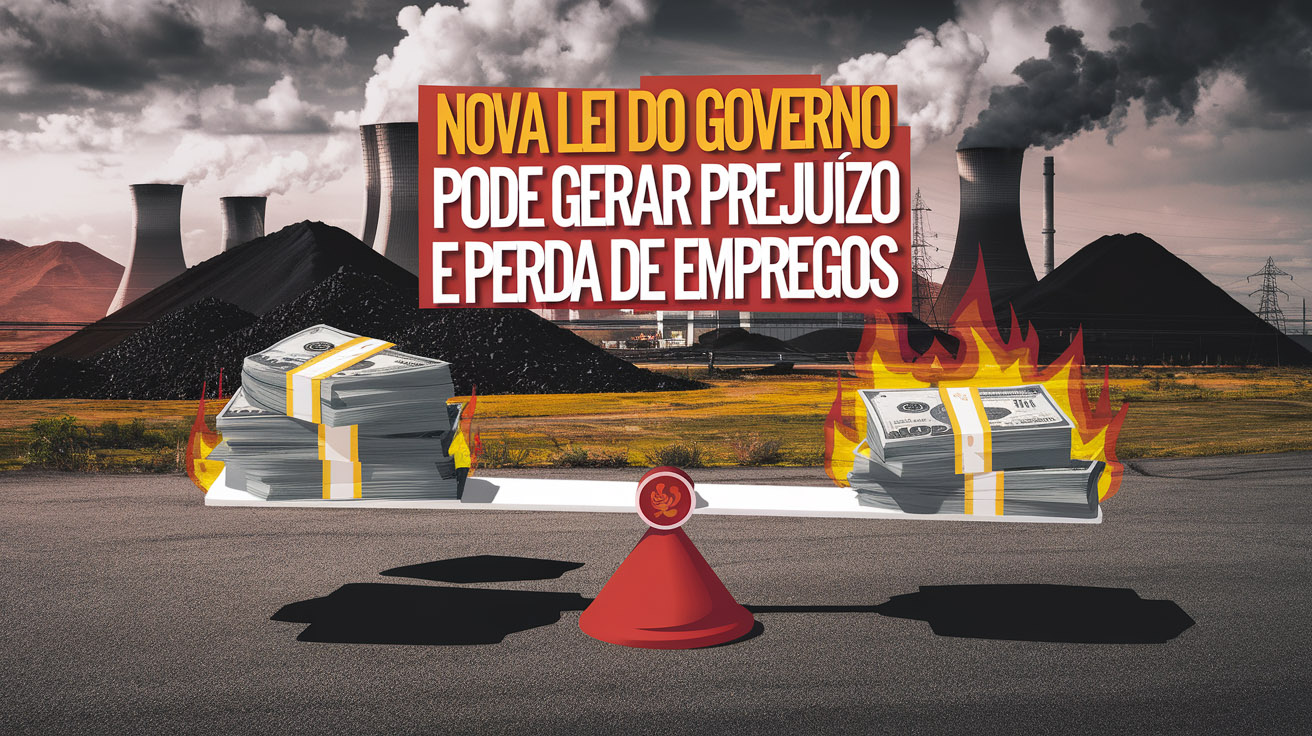
New Law Could Cost Billions to the Northeast and Compromise the Future of Renewable Energy in Brazil. With Job and Revenue Losses, Ceará and Maranhão Face a Blow to the Energy Transition.
An unexpected turnaround threatens to shake the foundations of the energy sector in Brazil, especially in the Northeast, a region that stands out as one of the biggest protagonists in the energy transition in the country.
With the recent approval of a controversial bill, the sustainability and economic future of states like Ceará and Maranhão are at risk.
In addition to jeopardizing job creation and revenue, the measure raises serious questions about governmental priorities for the energy sector and regional inequalities.
-
50 viaducts, 4 tunnels, 28 bridges, and 40 kilometers of bike paths: BR-262 in Espírito Santo will receive 8.6 billion reais for the largest engineering project in the state’s history, inspired by the Immigrant Highway in São Paulo.

-
Brazil produces too much clean energy and doesn’t know what to do with it: over 20% of solar and wind capacity was wasted in 2025 while investors flee and 509 renewable generation projects were abandoned in the last year.

-
Piauí will produce a new fuel that replaces diesel without needing to change anything in the truck’s engine and reduces pollutant gas emissions by half: truck drivers from all over the Northeast are already celebrating the news that will arrive later this decade.

-
A new Brazilian shopping center worth R$ 400 million will be built in an area equivalent to more than 4 football fields, featuring 90 stores, 5 cinemas, a supermarket, a college, and parking for 1,700 cars, potentially generating 3,000 jobs.


How Does the Law Impact the Northeast?
The Bill 576/21, known as the legal framework for offshore wind power, contains a provision that exclusively favors coal-fired thermal plants, concentrated mainly in the South of the country.
While the original text set 2027 as the final deadline for the operation of these plants, the new measure extends this deadline only for those using domestic coal.
According to the newspaper O Povo, Carlos Baldi, president of Energia Pecém, states that this decision creates a disastrous scenario for the Northeast.
In Ceará, the Pecém 1 plant, which operates on imported coal, does not qualify for the benefits outlined by the bill.
This directly threatens 1,800 jobs and could result in an annual revenue loss of R$ 200 million.
In Maranhão, where Energia Pecém also controls the Itaqui thermal plant, the estimated losses total R$ 160 million annually and the elimination of more than 650 job positions.
“This provision clearly and unfairly discriminates against the Northeast,” Baldi said, emphasizing the need for equality among the projects from different regions of the country.
Billion-Dollar Economic Losses at Stake
The exclusion of northeastern states from the benefits brought by the law threatens not only jobs and immediate revenue but also the future of sustainable energy in the region.
According to calculations from Energia Pecém, in 15 years, the negative impact on public coffers could exceed R$ 3 billion just in Ceará.
These figures include the loss of taxes that would no longer be collected by the federal government, states, and municipalities, as well as a significant reduction in income generation for thousands of families.
“Without changes to the text, the impact on revenue will exceed R$ 5 billion, harming the economic and social development of the Northeast,” Baldi reinforced.
Challenges in the Energy Transition
Despite the challenges posed by the new bill, Pecém 1 is already working on decarbonizing its operations.
Having operated on coal since its inception, the thermal plant recently signed a contract with the Ceará Gas Company to convert coal into natural gas, a less polluting alternative.
Additionally, the plant hosted Brazil’s first green hydrogen pilot project, inaugurated in early 2023.
According to experts, these advancements place Ceará at the forefront of the energy transition in the country, but the approval of the provision could slow down these strategic initiatives.
The exclusion of the Northeast from tax exemptions, in turn, limits the modernization plans for the plant and compromises its competitiveness in the national energy market.
Why is Domestic Coal a Problem?
The coal used in the South of Brazil is of inferior quality compared to imported coal, according to sector analyses.
According to Baldi, the imported coal used by Pecém 1 offers greater calorific value and lower environmental impact, in addition to being more economical.
Therefore, the decision to import the fuel was a strategic choice to reduce operational costs and increase energy efficiency.
However, with the tax benefit restricted to domestic coal, northeastern plants become less competitive and may lose ground in the market.
Worrisome Scenario for Green Hydrogen
The measure may also jeopardize the development of the green hydrogen hub in the Pecém Industrial and Port Complex, which has already attracted billions in investments and positions Ceará as a reference in this strategic sector.
The project, which began implementation in 2023, represents an opportunity to establish Brazil as a leader in sustainable technologies.
However, the lack of adequate incentives threatens to delay the growth of this initiative and, with it, the chance of generating thousands of jobs in the region.
Uncertain Future and Regional Inequality
The approval of Bill 576/21 in its current terms not only exacerbates regional inequalities but also calls into question Brazil’s commitment to the energy transition.
While the South benefits from exclusive advantages, the Northeast, already facing historical development challenges, is penalized by a measure that does not take its specificities and technological advancements into account.
Is Brazil willing to sacrifice sustainability and the future of the Northeast in favor of localized interests?









Seja o primeiro a reagir!