





 Portuguese
  English
  Spanish
  3 min of reading
  0 comments


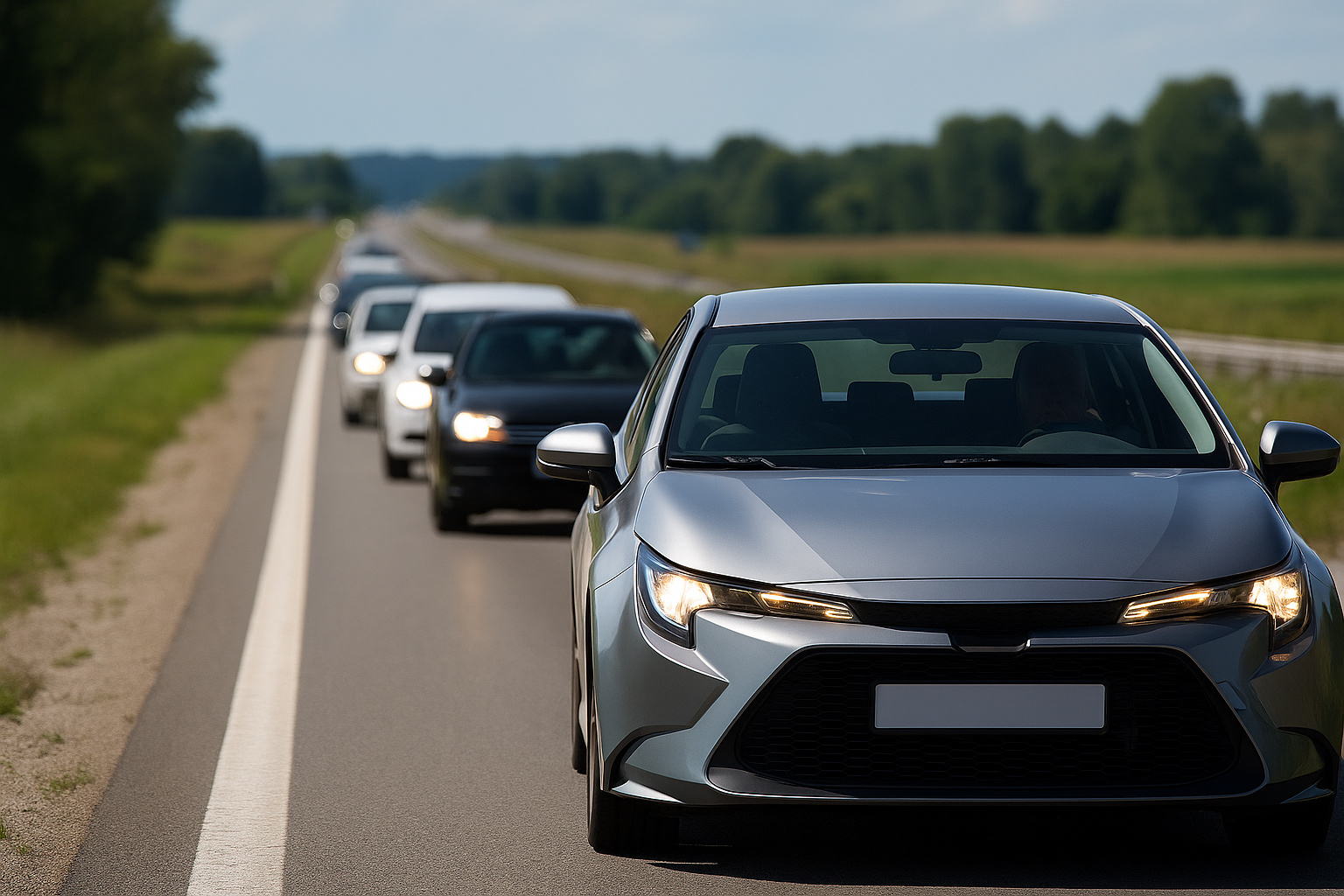
New Law Redefines The Use Of Headlights During The Day And Changes The Behavior Of Drivers On Highways
Since April 2021, the Brazilian Traffic Code (CTB) has undergone important changes.
Among them is the flexibility of the use of headlights during the day.
The National Congress approved the amendment in 2020, and the then-president signed the measure shortly thereafter.
The new rule came into effect on April 12, 2021, modifying Law No. 13,290/2016.
Previously, all drivers were required to keep their headlights on on any highway.
What Changed In Practice
Prior to the update, drivers were required to drive with their headlights on during the day, including on two-lane roads.
Now, this requirement only applies in specific situations, as Article 40 of the CTB has been changed to eliminate the obligation on dual-carriageways.
This modification brought more clarity and reduced doubts among drivers.
Furthermore, the government sought to align Brazil with international standards that encourage the rational use of vehicle lights.
This practice ensures energy efficiency and improves safety on the roads.
-
The noise law will no longer be in effect at 10 PM starting in June with a new rule valid during the 2026 World Cup.
-
The Chamber opens a debate on driver’s licenses at 16 years old as part of a reform that includes around 270 proposals to change the Brazilian Traffic Code and may redesign rules for licensing, enforcement, and circulation in the country.
-
The new Civil Code could revolutionize marriages in Brazil with “express divorce” and changes that could exclude spouses from inheritance.

-
Banco do Brasil sues famous influencer for million-dollar debt and intensifies debate on delinquency, risks of seizure, and direct impact on Gkay’s credibility.


When Headlights Are Still Mandatory
Despite the flexibility, the use of daytime headlights is still mandatory in various scenarios.
- On single-lane roads, regardless of visibility.
- During rain, even light rain.
- On foggy or misty days when visibility is reduced.
- Inside tunnels, regardless of internal lighting.
Thus, drivers who disregard these conditions may be fined.
According to Article 250 of the CTB, this is classified as a medium offense.
The penalty includes a fine and four points on the license.
Why So Many Drivers Still Turn On Their Headlights During The Day
Even with the new rule, many drivers continue to keep their headlights on.
This is more common on two-lane highways.
This behavior occurs because the change is still not well known.
Additionally, many drivers believe that continuous use increases safety.
It makes the vehicle more visible during overtaking or in varying lighting conditions.
This habit can indeed contribute to reducing accidents.
Legal Context And Timeline Of The Change
The amendment was proposed by Project Law 3267/2019, approved in 2020 by the National Congress.
Subsequently, it was enacted in April 2021 by then-President Jair Bolsonaro and came into effect on April 12, 2025.
The decision was based on technical opinions from the National Traffic Secretariat (Senatran).
As a result, legislation began to differentiate between single-lane and dual-lane roads.
This distinction allows for a more logical and safe application of the standard.
How To Drive Within The Law
To avoid fines and drive legally, drivers should follow a simple checklist.
- Check if the road is a single-lane road. If so, turn on the headlights.
- Observe the weather conditions. Rain, fog, or mist require lights on.
- When entering tunnels, turn on the headlights immediately.
- On dual-lane highways and clear weather, headlights may remain off.
Complying with the law is simple, safe, and economical.
This way, the driver ensures visibility and compliance with the CTB.
A Warning About Inattention And Safety
Although improper use does not cause significant harm, inattention to the rules can result in penalties.
Therefore, it is essential to keep up with updates to the traffic code.
Experts from the National Traffic Department (Denatran) emphasize this importance.
According to them, understanding the standard prevents unjust fines and improves traffic flow.










Seja o primeiro a reagir!